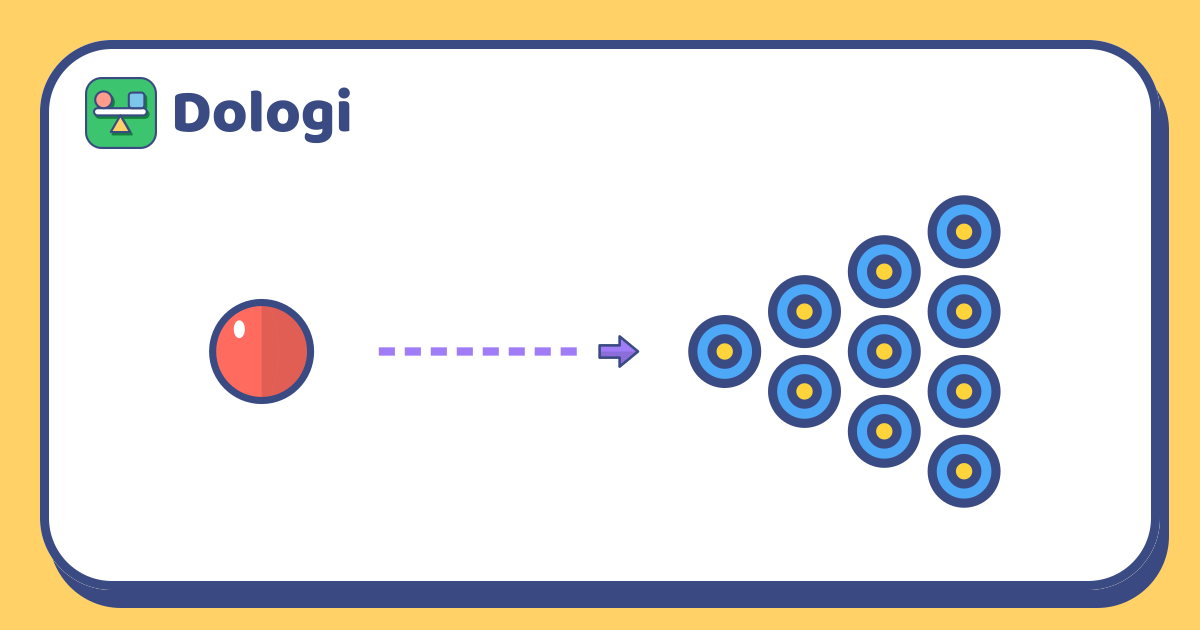
Ten empty plastic bottles, a soft ball and a hallway: that is a bowling alley. And every roll produces numbers. How many fell? How many are still standing? How many in two rolls?
It is a maths lesson that children ask to do again. This article explains how to set the game up, where the maths is hiding, and how to keep score.
Setting up
- Ten empty bottles of the same size, rinsed, with their lids on. A little water or sand in each one, about two fingers deep, makes them steadier. More weight makes them harder to knock over.
- A soft ball. A foam ball or a pair of rolled-up socks is ideal indoors.
- A hallway, or any space with a wall behind the bottles to stop the ball.
- A starting line made of tape, two or three metres away. Closer for younger children.
Stand the bottles in a triangle with the point towards the player: one at the front, then two, then three, then four. Put a small sticker on the floor under each bottle, and your child will be able to set them up again without help.
It is worth noticing together that 1 + 2 + 3 + 4 makes exactly 10. For a four-year-old, start with three or six bottles instead.
The maths in every roll
| Question to ask | What it practises |
|---|---|
| How many fell? | Counting |
| How many are still standing? | Pairs of numbers that make ten |
| How many in your two rolls together? | Adding |
| Who knocked down more? How many more? | Comparing and finding the difference |
| How many more do you need for all ten? | Finding the missing number |
The second question is the most valuable. Seven down means three standing. Four down means six standing. After a few games, many children stop counting the standing bottles and simply say the number. They have learned the pairs that make ten without a single worksheet.
One more idea: before each roll, ask for a prediction. "How many do you think you'll knock down?" Then compare the guess with what happened.
Keeping score
Each turn is two rolls. After each roll, write a tally mark for every bottle that fell, in groups of five. Then add the two rolls.
| Round | First roll | Second roll | Total |
|---|---|---|---|
| 1 | 4 | 3 | 7 |
| 2 | 6 | 4 | 10 |
| 3 | 2 | 5 | 7 |
Play five rounds and add everything up at the end. Older children can keep a running total after each round instead: 7, then 17, then 24.
Let your child be the scorekeeper, including for your rolls. Checking an adult's adding is a job children take very seriously.
Versions for different ages
| Rough age | What to try |
|---|---|
| 4–5 | Three to six bottles; touch and count the fallen ones; no score yet |
| 6–7 | Ten bottles; fallen and standing; two rolls added; tally marks |
| 8–9 | Coloured stickers on the lids: some bottles are worth 2 points and some 5; running totals |
| 10 and up | The first to reach exactly 50 wins, so near the end you have to work out how many you still need |
Ages are only a rough guide, and every child is different.
Playing fair
- Whoever rolled sets the bottles up for the next player.
- Even things out. Adults roll with the weaker hand, or from further back.
- Count together when it's close. If two people disagree about a score, count again side by side.
In Dologi, "Add and answer" puzzles in the Math topic ask children to add small groups of objects and give the total. Bottle bowling practises the same adding with a ball in your hand.
In short
- Ten bottles in a triangle, a soft ball and a taped line are all you need.
- Ask how many fell and how many are still standing: that is how pairs that make ten are learned.
- Keep score with tally marks and let your child do the adding.
- Change the number of bottles, the points and the target to suit your child's age.
Read more: Dice games for children: counting and mental math with a pair of dice