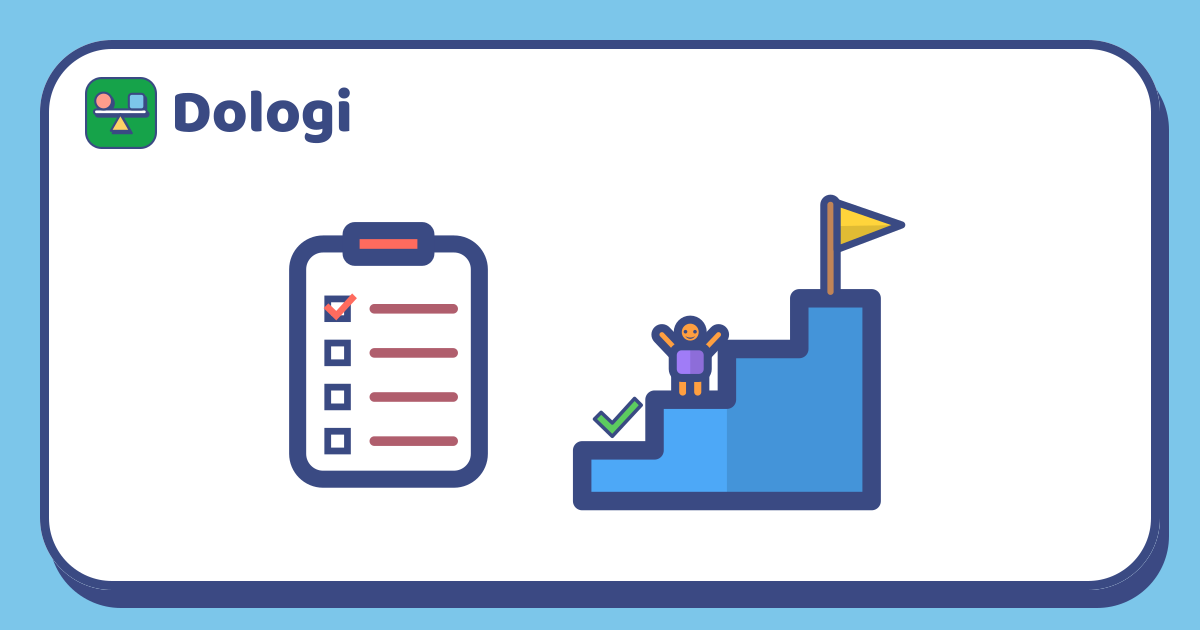
"Tidy your room." To an adult, it's one job. To a child standing in a sea of toys, clothes and books, it can feel like a mountain with no path up. Many children react by freezing, getting distracted or saying "I can't".
Learning to break a big job into small steps is a thinking skill that helps with chores, homework, projects and, later, almost everything. This article explains why big jobs feel overwhelming, offers a simple way to split them up together, and shows how to gradually let your child do the planning.
Why big jobs feel too big
- No clear starting point. "Tidy up" doesn't say what to do first.
- Too much to hold in mind. Children's working memory, the mental notepad we use to keep track of things, holds less than an adult's. Long instructions slip away.
- The finish line is far away. Without small wins along the way, motivation fades.
None of this means your child is lazy. It usually means the job hasn't been cut into pieces they can see and do.
How to break a job into steps
Do this together, out loud, especially the first few times.
- Name the goal clearly. "The floor is clear and the bed is made."
- Ask: "What's the very first thing?" Pick something small and concrete: "Put all the books on the shelf."
- List three to five steps. More than that is too many for younger children. Bigger jobs can be split into rounds.
- Make the steps visible. Write or draw them on paper, or use sticky notes.
- Tick each step when it's done. Ticking off is satisfying and shows progress.
- Notice the finish. "Look, every step is ticked. You did the whole thing."
A useful test for each step: could someone watching tell when it's done? "Put the cars in the blue box" passes; "be tidy" doesn't.
Three examples to try
| Big job | Small steps |
|---|---|
| Tidy the bedroom | 1. Books on the shelf. 2. Clothes in the basket. 3. Toys in their boxes. 4. Straighten the bed. |
| Make a birthday card | 1. Fold the paper. 2. Draw a picture on the front. 3. Write or dictate a message inside. 4. Put it in an envelope. |
| Pack the school bag | 1. Check tomorrow's timetable. 2. Put in books and notebooks. 3. Add the pencil case and water bottle. 4. Close the bag and put it by the door. |
These are only starting points. Your child's list might have different steps or a different order, and that's fine if it works.
Picture lists for younger children
Children who can't read yet can still follow a list.
- Draw simple pictures for each step: a book, a shirt, a box.
- Take photos of your child doing each step and print them as a strip.
- Use a pocket or peg that moves from step to step as each one is done.
- Keep the list where the job happens: on the bedroom door, by the bathroom sink, next to the coat hooks.
For many 4- and 5-year-olds, two or three picture steps are plenty. As they grow, the list can get longer and more detailed.
Hand the planning over bit by bit
The goal is for your child to break down jobs on their own one day.
- Start by making the list together, with you leading.
- Then ask your child to suggest the steps while you write: "What comes first? Then what?"
- Later, let them make the list alone and show it to you.
- When they get stuck, ask questions rather than giving the answer: "What would make this job a little smaller?"
- Talk about what worked: "Was it easier with the list? What would you change next time?"
Dologi sessions are built in small pieces too: each day, your child plays one short session of puzzles at the right level, then takes a break. A short, clear task with a visible end is easier to start, and easier to finish.
In short
- Big jobs feel overwhelming because there's no clear first step and too much to remember.
- Name the goal, ask "what's the very first thing?", and list three to five steps you can see.
- Make the list visible, use pictures for younger children, and tick each step as it's done.
- Gradually let your child suggest and then write the steps themselves.
Read more: Problem-solving skills for children: four steps to practise with small everyday problems