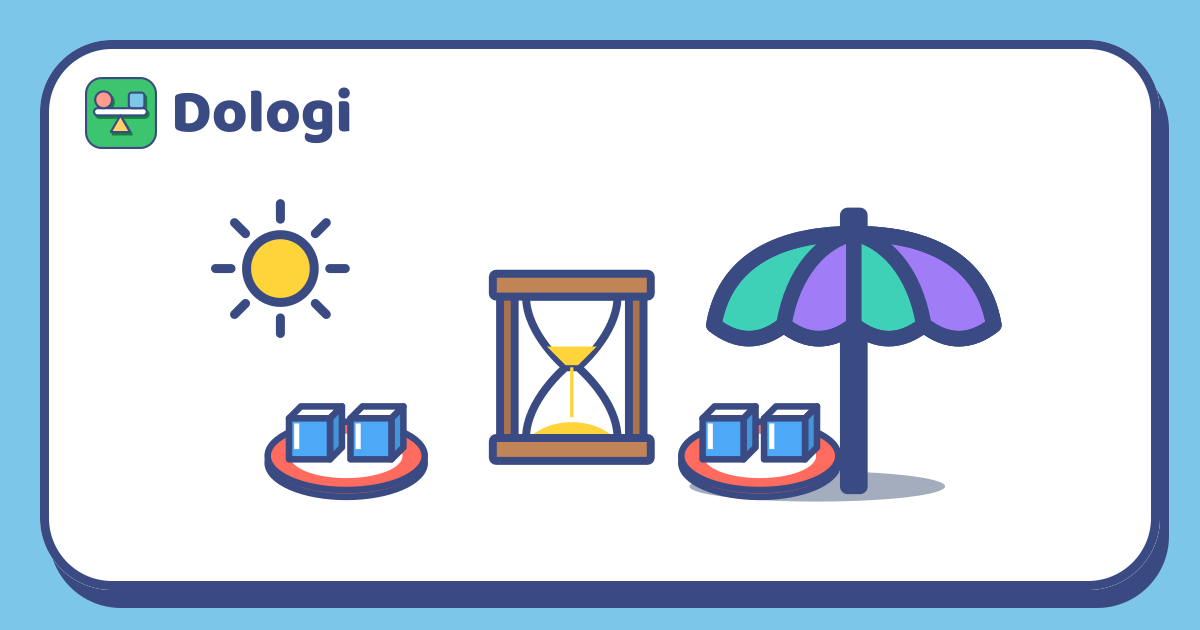
"The ice in the sun melted first, so the sun melts ice faster!" Maybe. But what if the cube in the sun was also smaller, or sat on a metal tray while the other sat on a thick plate? Then the result doesn't really tell us anything, because more than one thing was different.
That's the idea behind a fair test: keep everything the same except the one thing you want to find out about. Children from around age 7 can start to get the idea, and by 10 or 11 many can plan a fair test on their own, though every child is different. This article shows how to practise it at home with things you already have.
What makes a test fair
In any experiment, there are three kinds of things:
| Kind | What it means | Ice cube example |
|---|---|---|
| The thing you change | Only one, on purpose | Where the plate goes: sun or shade |
| The thing you measure | What you watch or count | How long until the ice is gone |
| The things you keep the same | Everything else | Size of the cubes, kind of plate, start time |
A simple sentence helps children remember: "Change one thing, keep the rest the same, then measure."
If two things change at once, you can't tell which one made the difference. That's the whole point, and children understand it quickly once they see it go wrong.
Test 1: where does ice melt faster?
- Take two ice cubes from the same tray, so they're the same size.
- Use two plates that are the same.
- Put one plate in the sun and one in the shade, at the same moment.
- Check every five or ten minutes using a clock or a kitchen timer.
- Write down when each cube is completely gone.
Before you start, ask your child: "What are we changing? What are we keeping the same?" Let them check: same cubes, same plates, same start time. Only the place is different.
Test 2: does a toy car roll further from a high ramp or a low one?
You need a board, a tray or a stiff piece of cardboard as a ramp, a few books of the same thickness, a small toy car and a tape measure (or count floor tiles or footsteps).
- Make a low ramp by resting the board on one book.
- Mark a start line at the top with tape, so the car always starts in the same spot.
- Let go without pushing. Pushing changes the speed, and that's a second thing changing.
- Measure how far the car rolls from the bottom of the ramp.
- Add a second book, then a third, and repeat.
Keep the same car, the same floor and the same start line every time. Only the number of books changes.
Measure, repeat and write it down
Results can be a little different each time, even in a fair test. A car might hit a crack in the floor or roll at an angle. So:
- Try each version three times. If one result is very different, talk about why.
- Use a simple table. Younger children can use tally marks or draw a dot for each tile.
| Books under the ramp | Try 1 | Try 2 | Try 3 |
|---|---|---|---|
| 1 | |||
| 2 | |||
| 3 |
- Put the result into words: "When the ramp was higher, the car rolled…"
- Ask what's next: "What else could we change? The car? The floor?" Then plan a new fair test, changing only that one thing.
The "spot the unfair part" game
Once your child knows the idea, set up a test that is wrong on purpose and let them find the problem. Children often enjoy catching a grown-up making a mistake.
- Ice cubes: put a big cube in the sun and a small one in the shade.
- Ramp: let one car go gently and give the other a little push.
- Floor: roll the car onto the carpet for one ramp and onto tiles for the other.
- Plants: water two plants differently, but also put them by different windows.
- Paper planes: compare two plane designs, but fold them from different paper and have different people throw them.
Ask your child to say "It's not fair because…" and then fix the setup. Then swap roles: your child designs an unfair test and you have to spot the problem. Designing a sneaky mistake is good practice too, because they have to think about every part of the test.
In Dologi, "Spot the difference" puzzles in the Focus topic show two pictures that are almost the same, and children tap each place where they differ: the same careful comparing your child does when checking that two setups really match.
In short
- A fair test changes only one thing and keeps everything else the same.
- Before starting, name what you change, what you measure and what stays the same.
- Repeat each version a few times and record the results in a simple table.
- Play "spot the unfair part" by making mistakes on purpose, then swap roles.
Read more: Making a hypothesis: teaching children to guess with a reason, then test it