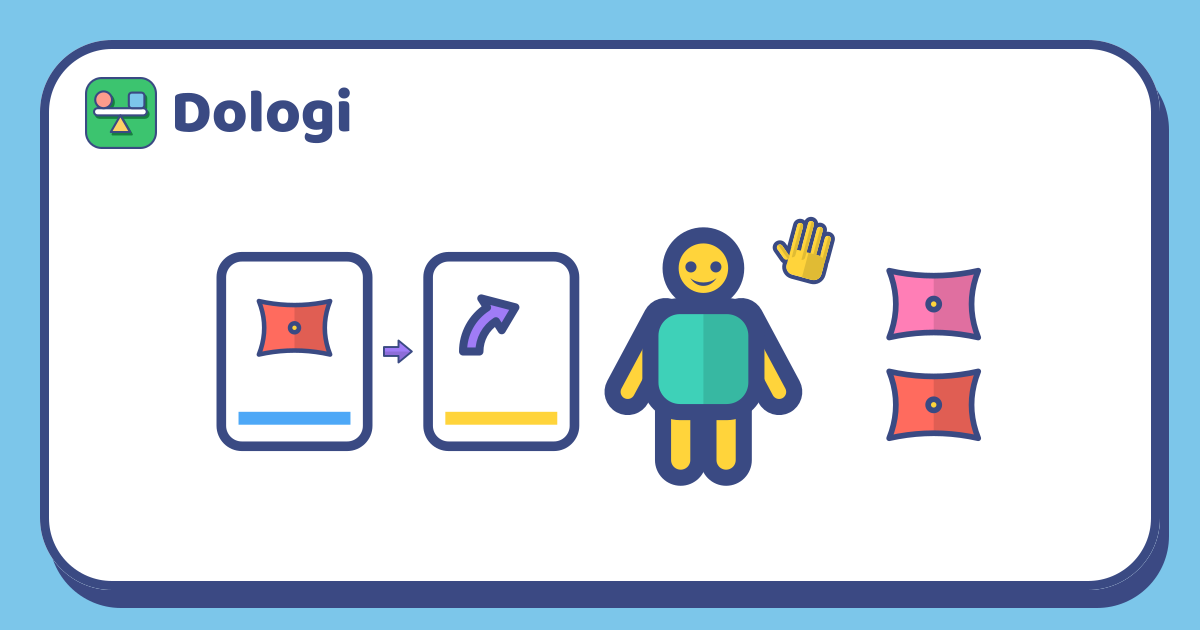
Many coding activities for children are about giving a list of steps: forward, forward, turn left. Real robots often work differently. A robot vacuum doesn't know the layout of your living room in advance; it follows rules like "when you bump into something, turn". The human robot game lets children try this second way of programming with nothing but paper, a pencil and a few cushions.
One person plays the robot. Everyone else writes the robot's rules. The robot does exactly what the rules say, no more and no less, and that is where the fun begins.
How the game works
- The robot walks slowly around the room and may only act on the rules on the paper. It doesn't guess and doesn't help.
- The programmers (your child, or the whole family) write the rules before the robot starts. Once the robot is moving, they can only watch.
- The rules all have the same shape: "When… then…". For example: "When there is a wall in front of you, then turn right."
A parent makes a good first robot, because children love giving instructions to a grown-up. Later, swap roles so your child feels what it's like to follow rules to the letter.
Setting up the room
- Walls: line up cushions, pillows or folded blankets on the floor. Chairs and the sofa count as walls too.
- Rule paper: one sheet, with each rule on its own line. Children who can't read yet can draw: a cushion, then an arrow curving right.
- Safety: the robot walks slowly, with no running and nowhere near stairs or sharp corners.
Say "robot, start!" and the robot steps forward one step at a time until a rule tells it to do something else.
First rules to try
Start with one or two rules, then add more once everyone has the idea.
| When… | Then… |
|---|---|
| there is a wall in front | turn right |
| a person is in front | wave |
| you are standing on a towel | jump once |
| nothing else applies | take one step forward |
The last line is the "otherwise" rule: what the robot does when none of the other rules fit. Without it, the robot doesn't know what to do and simply stands still. Many children discover that for themselves, which is a great moment to talk about why programs need a rule for "everything else".
Why the order of rules matters
Now place a person right in front of a cushion wall. There is a wall in front, and a person in front. Which rule does the robot follow?
Agree on one simple law: the robot reads the rules from the top and follows the first one that fits. Then try swapping two lines:
- If "wall → turn right" comes first, the robot turns away without waving.
- If "person → wave" comes first, the robot waves, and then stands there waving forever, because the person is still in front.
Children see that the same rules in a different order give a different result. Ask "which order do you want, and why?". That question is exactly the kind of thinking programmers do every day.
When the robot gets stuck
Sooner or later the robot will walk into a corner and turn round and round, or march straight into the sofa because no rule mentions it. Don't fix it for your child. Ask instead:
- "Which rule was the robot following just then?"
- "Was the robot wrong, or was the rule missing something?"
- "What could you add or change so it gets out?"
Then change one rule and run the robot again. Finding and fixing a mistake like this is called debugging. It is not a sign the game went wrong; it is the most useful part of it.
Adapting it for each age
The ages below are only a rough guide; every child is different.
- 4 to 6: one or two rules drawn as pictures. The grown-up plays the robot and makes the mistakes funny.
- 7 to 9: three or four rules plus "otherwise". Give the robot a goal, such as reaching the kitchen door, and let your child arrange the walls.
- 10 to 12: two robots at once, rules about each other ("when a robot is in front, wait"), or a challenge to reach the goal with the fewest rules.
In Dologi, the "Robot room" in the Create corner works the same way: your child writes "When…" rules for little robots in a room, puts the rules in order, adds an "Otherwise" rule and presses play to watch what happens. Children who have played the human robot game at home often recognise the idea straight away.
In short
- One person plays the robot, the others write "when… then…" rules, and the robot follows them exactly.
- Cushions make walls; children who can't read can draw their rules.
- The robot follows the first rule that fits, so the order of rules changes what happens.
- When the robot gets stuck, change one rule at a time and try again: that is debugging.
Read more: Coding without a computer: algorithm games for children aged 5 to 10