"How can you make 10 with two numbers?" "Five and five!" Your child is right, and many children stop there, happy to be done. But 10 is also 6 and 4, 7 and 3, 9 and 1. Finding one answer is good. Knowing that there may be other answers, and looking for them, is a thinking habit that grows more valuable every year.
This article is about that habit: teaching children not to stop at the first way, and to compare different solutions to choose the one that fits best.
Why children stop at the first answer
- Relief. Finding an answer feels like finishing, and finishing feels good.
- One-answer questions. Many questions children hear have only one right answer: "What colour is this?" "How many are there?" Children learn that the job is to find the answer.
- Fear of being wrong. If the first answer was right, looking for another can feel risky.
None of this is a problem in itself. We just want to add a second step: "Is there another way?"
Everyday problems with many good answers
Real life is full of problems with several solutions. Try exploring a few together:
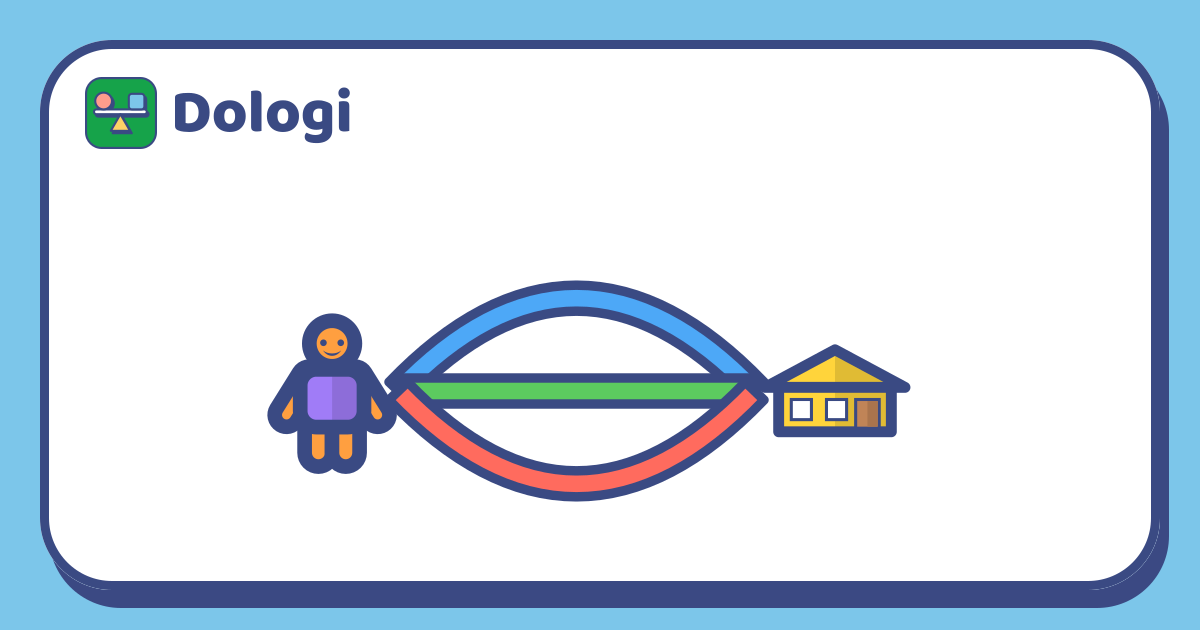
- Three ways to get to school (or to the park). Which streets could you take? Could you walk, cycle or take the bus? Draw a simple map with each route in a different colour.
- Three ways to share a cake between four people. Cut it into four with a cross. Cut it into four strips. Cut it into eight pieces and give everyone two. Are all the shares fair?
- Three ways to tidy the bookshelf. By size, by colour, or by topic. Each one makes sense.
- Three ways to carry the shopping. One heavy bag, two medium bags, or a backpack and a bag.
Let your child suggest the ways. Your role is to keep asking, "And another way?"
Which way is best, and for what?
Once you have several solutions, compare them. Often the "best" one depends on what matters most right now.
| Way to the park | Fastest? | Safest? | Most fun? |
|---|---|---|---|
| Along the main road | Yes | Busy crossings | Not really |
| Through the small streets | A bit slower | Quieter | Some cats to see |
| Along the river path | Slowest | No cars | Ducks! |
Ask: "If we're late, which way would you choose? And on a sunny Sunday?" Children learn that there isn't always one best answer; it depends on the goal.
Many ways in maths
Maths is a wonderful place to practise this habit.
- Make a number in many ways: "How many ways can you make 8 with two numbers?" (4 and 4, 5 and 3, 6 and 2, 7 and 1, 8 and 0.) Did you find them all? How do you know?
- Solve a sum in more than one way: 9 + 6 can be counting on from 9, or "9 needs 1 to make 10, so 10 + 5 = 15", or "10 + 6 = 16, then take 1 away".
- Check with a second way. If two different ways give the same answer, your child can be more confident it's right.
Talk about which way felt easiest. Different children prefer different ways, and that's fine.
The "one more way" habit
- Ask after success, not after a mistake. "That works! Can you find another way?" feels like a challenge, not a correction.
- Collect first, judge later. Write down or draw each way before discussing which is best.
- Don't ask every time. Sometimes one answer is enough, and children need the joy of simply finishing.
- Show your own thinking. "I was going to go this way, but I just thought of another one…"
In Dologi, "Color the map" puzzles in the Logic topic ask children to colour every region so that neighbouring regions are different colours. When one colour doesn't work, there is usually another to try, which is good practice in not stopping at the first idea.
In short
- Many problems have more than one good solution; teach children to ask, "Is there another way?"
- Explore everyday problems together: routes, sharing, tidying, carrying.
- Compare solutions and talk about which is best for which goal.
- In maths, make numbers in many ways and check answers with a second method.
Read more: Creative thinking: helping children find more than one way