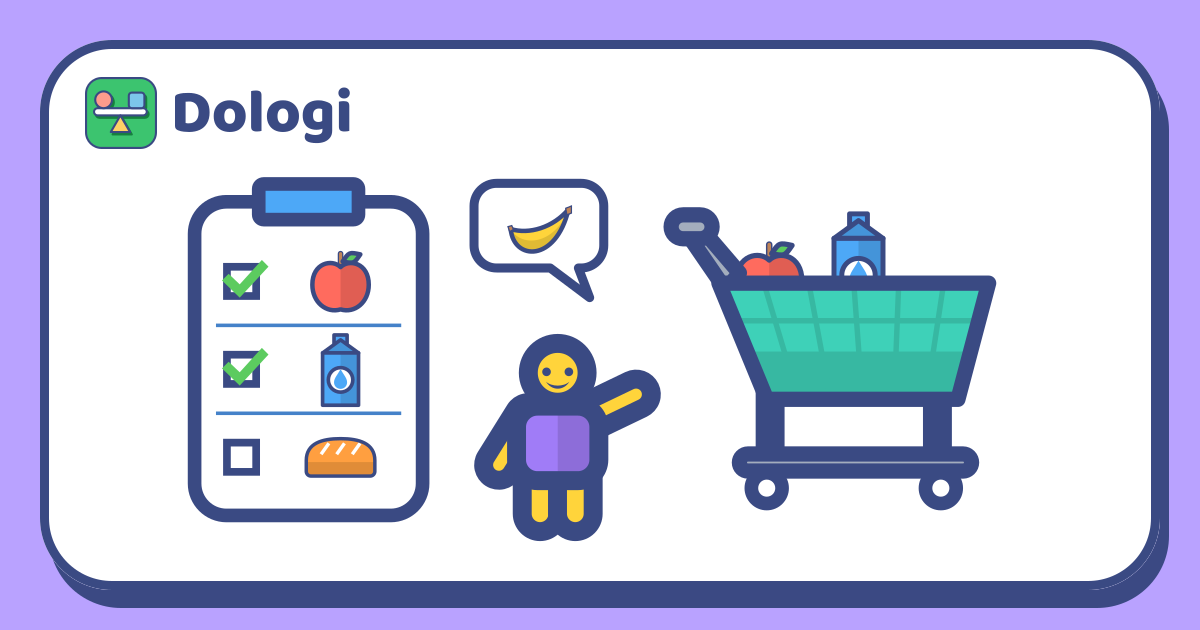
"Apples, ticked! Milk, ticked! And I remembered the bananas all by myself!"
A trip to the supermarket can feel like something to get through as quickly as possible, with a bored child pulling at the trolley. Give that child a list of their own, drawn in pictures, and the same trip becomes a game. They look for each item, tick it off when it's found and, as an extra challenge, keep one item in their head that isn't on the paper.
It's practice in looking carefully, holding a plan in mind and checking that a job is finished, and it fits into a shop you were going to do anyway. Below: how to make the list, how to play in the aisles, and a few memory games for the way home.
Making the list together
Make the list at home, before you leave, and let your child do as much as they can.
- Look first. Open the fridge and the cupboard together: "What's run out? What do we need for tomorrow's breakfast?"
- One picture per line. Your child draws each item: a round red apple, a milk carton, a loaf of bread. Simple drawings are fine. If drawing is hard, you draw and they colour.
- A box to tick. Draw a small square next to each picture.
- Keep it short. Two or three items for younger children, five or six for older ones. Your own full list can stay on your phone or in your pocket.
- Show how many with dots. Three dots next to the apple means three apples. No numbers needed.
- Use something firm. A piece of card or a clipboard and a crayon make ticking easy while walking.
In the shop: find it, tick it
Your child's job is to look at the next picture, find the item and tick it off. Your job is to slow down a little and let them do it.
- Let them search. Instead of walking straight to the milk, ask: "Where do you think the milk might be? Why?" Children start to notice that shops group things together: fruit with fruit, cold things in the fridges.
- Count into the bag. Three dots means three apples: your child counts them in, then ticks the box.
- Check before paying. At the checkout, ask: "Is everything ticked? Is anything missing?" Comparing the list with the trolley is a small memory and attention task of its own.
- Stay together. Agree before you go in that your child stays next to you and the trolley. A busy shop is no place to search alone.
The extra item: one thing kept in mind
This is the memory part. Just before you leave home, add one item out loud, but don't draw it: "We also need bananas. That one isn't on the list, so you'll have to remember it."
To help it stick, your child can:
- Say it back. "Bananas, bananas."
- Picture it. "Close your eyes and see a bunch of yellow bananas."
- Link it to something. "Bananas, like the ones we had at Grandma's."
Halfway through the shop, ask: "What's our secret item?" If your child has forgotten, give a clue rather than the answer: "It's yellow and curved." Finding it with a small hint still feels like their success.
When one extra item is easy, add a second. Older children can try a whole short list said aloud, with no paper at all, and see how much they can bring home.
Memory games on the way home
The shop itself gives you plenty to remember.
- What did we buy? Without looking in the bags, take turns naming one thing each. At home, unpack and check together.
- In order. "What did we find first? And after that?" Remembering the order is harder than remembering the items.
- By colour or by place. "Name everything red we bought." "What came from the fridges?"
- Where does it live? While unpacking, your child decides where each item goes: fridge, cupboard or fruit bowl.
Keeping it fun
- Pick a calm moment. A short shop at a quiet time works better than a big shop when everyone is tired or hungry.
- Shrink the job when needed. On a hard day, keep just the ticking and skip the extra item, or let your child find only two things.
- Celebrate what they did. "You found everything on the list and remembered the bananas." Say what they did, not just "good job".
| Rough age | What to try |
|---|---|
| 3–4 | Two or three pictures; point to each item when they spot it; tick with your help; one extra item said just before going in |
| 5–6 | Four to six pictures; tick the boxes themselves; one extra item from home; what did we buy? on the way back |
| 7–8 | Dots for how many; draw the whole list themselves; one or two extra items; check the trolley against the list before paying |
| 9 and up | Words beside the pictures; three extra items or a short list with no paper; guess which part of the shop each item is in before going in |
Ages are only a rough guide, and every child is different.
In Dologi, "What vanished?" puzzles in the Memory topic train the same kind of noticing: a few objects are shown, then covered, and the scene comes back with one missing. Children pick the object that was there before, much as they spot which item on the list isn't in the trolley yet.
In short
- Draw a short picture list together, with a box to tick next to each item and dots for how many.
- In the shop, your child finds each item, ticks it off and checks the list against the trolley before paying.
- Add one item out loud that isn't on the paper, and help your child keep it in mind by saying it, picturing it and linking it to something.
- On the way home, take turns remembering what you bought, in order, by colour or by where it came from.
Read more: Teaching children about money: recognising coins, saving and shopping together