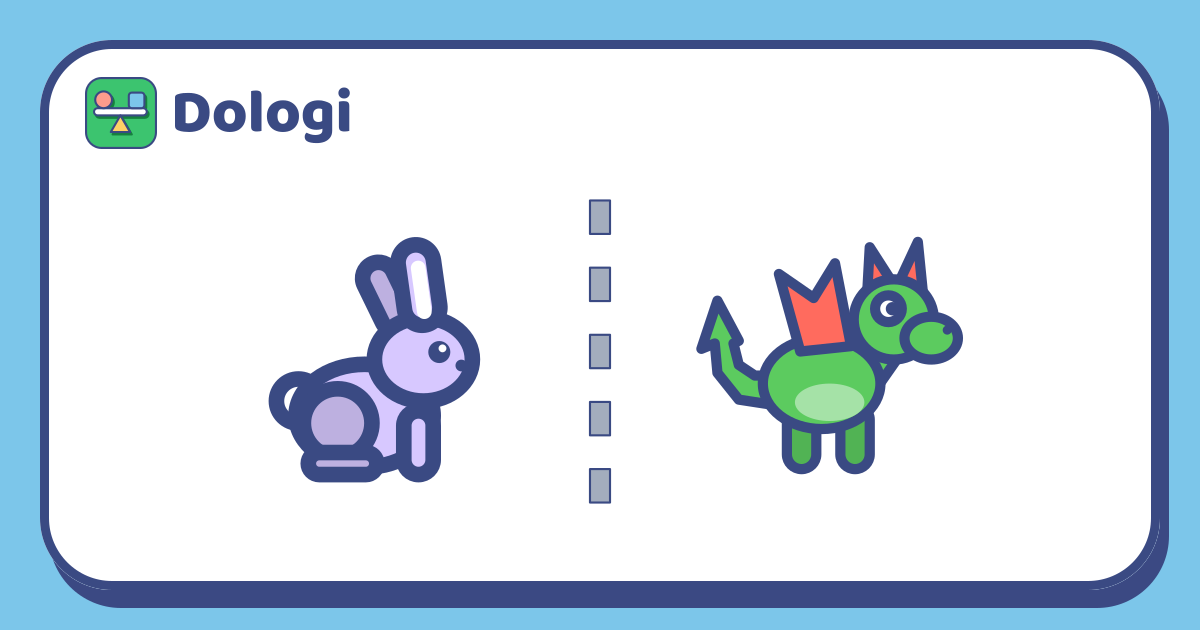
"There's a dragon living in our garden." "My teddy told me a secret." "I saw a monster in the cupboard." Children of four, five and six often slide between real and pretend within the same sentence. Sometimes they know perfectly well they are playing; sometimes they are not quite sure.
Learning where the line is happens gradually, through experience and conversation. Parents can help a lot, without squashing the imagination that makes this age so special.
Why the line is blurry
- Play is pretend. Much of a young child's day is spent imagining: being a lion, cooking pretend soup, talking to toys.
- Stories mix both. Books and cartoons show talking animals next to real cars and houses.
- They are still collecting facts. A child who has never seen a whale may find a dragon just as believable.
- Feelings feel real. A pretend monster can still cause a very real fear.
Every child moves at their own pace. Mixing real and pretend at this age is common and usually settles as children gain experience.
Imagination still matters
Before correcting, remember that pretend play is valuable. It helps children try out ideas, practise language, understand other people's feelings and make sense of the world. The aim isn't to stop pretending, but to help children know when they are doing it.
A simple way to honour both: "That's a great pretend story. Is it a pretend one or a real one?"
A sorting game: real, pretend or not sure?
Cut out pictures or draw simple cards and sort them into three piles:
| Real | Pretend | Not sure (let's find out) |
|---|---|---|
| A cat | A dragon | A whale as big as a bus |
| A rainbow | A talking teddy | A fish that can walk on land |
| A robot vacuum cleaner | A flying carpet | A bird that can't fly |
The "not sure" pile is the most interesting. Look things up together in a book, ask someone who knows, or watch a nature film. Some surprising things turn out to be real.
Questions that help
- Could this happen in real life? "Can a dog really talk? What can real dogs do?"
- Have you ever seen one? "Where would we see a real dragon? In a book or in the park?"
- How could we find out? Looking, asking and checking are habits that last.
- Who made it up? Stories, films and games are made by people. "Who drew this dragon?"
Pretend fears and tall tales
- Fears. If your child is scared of a pretend monster, take the feeling seriously. "I know you feel scared. Monsters are pretend, and I'm here." Checking the cupboard together can help; laughing at the fear doesn't.
- Tall tales. "I flew to the moon yesterday!" is rarely a lie at this age. Enjoy the story, then gently label it: "What an adventure story! Shall we draw it?"
- Big questions. Sometimes children ask straight out whether a favourite character is real. Answer according to your family's choices, and keep the conversation open.
Ideas by age
Ages are rough guides; every child is different.
- Around 4: sort a few very clear cards (cat, dragon), say "pretend" and "real" during play.
- Around 5: add a "not sure" pile and find out together, talk about who makes up stories.
- Around 6: spot pretend parts in real-looking stories, invent their own pretend creatures and explain which parts are made up.
In Dologi, the Logic topic has "Sort into groups" puzzles, where children put each thing into the box whose label fits it. Sorting by a clear rule is the same thinking as sorting real from pretend.
In short
- Young children move easily between real and pretend; it settles gradually with experience.
- Value imagination, and help children notice when they are pretending.
- Play the sorting game with a "not sure" pile and find out together.
- Take pretend fears seriously and enjoy tall tales as stories.
Read more: Stories with a silly mistake: training children to spot what doesn't make sense