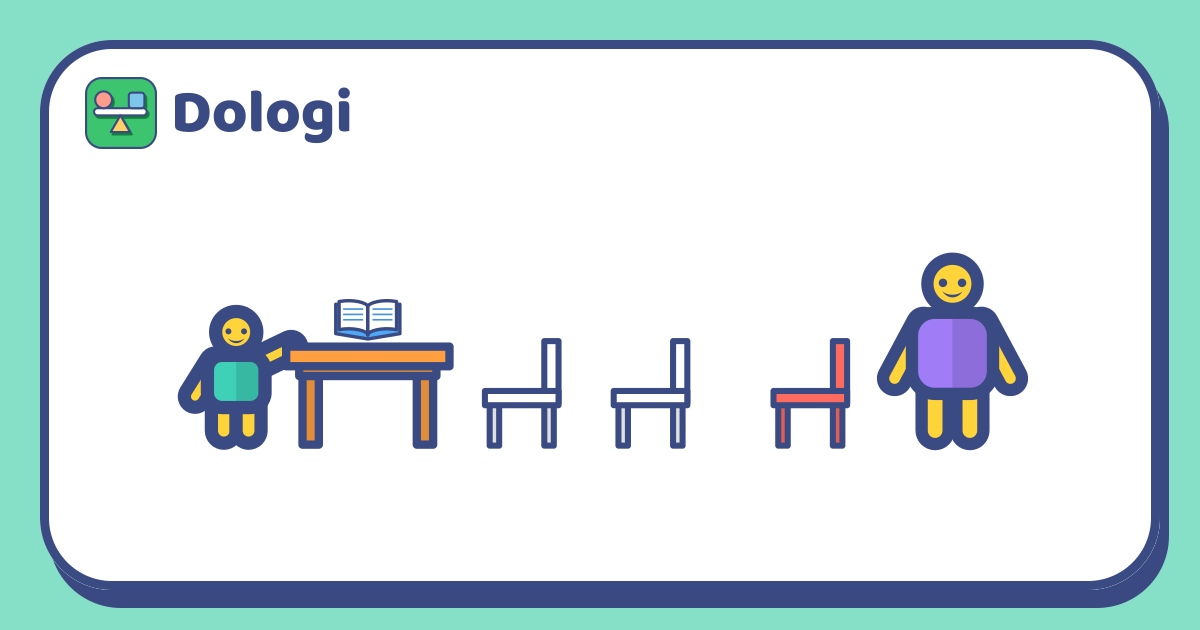
Your child sits down to do homework, and with you beside them, the work gets done. The moment you get up to start dinner, the pencil goes down. Then comes "Mum, how do I do this one?", or a long stare out of the window. Many parents of children around 6 to 10 know this scene well.
Wanting your child to work alone doesn't mean standing up one evening and leaving them to it. A gentler way is to step back gradually, one small move at a time, so your child has time to adjust. This article sets out four concrete stages and a few simple agreements that help them go smoothly.
Why your child wants you there
It is normal for children to want a parent nearby while they work. It isn't laziness or bad behaviour. Usually a few reasons are mixed together:
- Getting started is hard. Starting something you don't feel like doing is often the toughest part. An adult sitting there helps your child through the first few minutes.
- Fear of mistakes. Your child wants someone to check each answer before moving on to the next.
- Habit. Ever since they started school, someone has always sat with them. They have never tried it any other way.
- Wanting to be close to you. Evenings are one of the few times the family is together, and homework time is part of that.
Knowing the reasons helps you choose how to step back. A child who is afraid of mistakes needs a clear plan for when you will check. A child who struggles to start needs you to stay for the first few minutes before you move away.
Four stages of stepping back
Stay at each stage for about a week, depending on your child. If a stage still feels shaky, stay there longer.
| Stage | Where you are | What you do |
|---|---|---|
| 1 | Next to your child | Read the task together, then let them work. Watch only: don't pick up the pencil or correct straight away |
| 2 | Across the same table | Do something of your own, such as reading or writing. If they ask, answer with a guiding question |
| 3 | In a corner of the room | Still in the room, but further away. Your child calls you only after finishing a section |
| 4 | In another room | Come only when your child says they've finished, then look over the work together |
Stage 2 is often the hardest for parents, because you are close enough to help but are not meant to. Bring something of your own to do so your hands and eyes are busy. When your child sees you doing your own "work", it is easier for them to settle.
Tell your child before moving to the next stage: "This week I'll still be at the table, but I'll sit on the other side and read." Letting them help choose the day you move on makes them feel included rather than left behind.
"Call me after three questions"
Children often call out again and again because they don't know when they are allowed to. A clear agreement solves this:
- Split the work into small chunks. "Call me when you've done three questions" is much easier than "Call me when it's all done". Once that works, go up to five questions, then a whole page.
- Keep your side of the deal. When your child calls at the agreed point, come straight away. If they are left waiting, next time they will call earlier, just in case.
- Have a plan for getting stuck. If a question is hard, your child marks it, moves on to the next one, and asks about it at the next check. That way they don't sit waiting or give up.
- Use a timer if it helps. For younger children, a sand timer or a ten-minute timer is easier to follow than a number of questions.
When you come over, look first at what your child did on their own, and only then at any mistakes. Keep your comment specific: "You did four questions by yourself before you called me."
Set things up so your child can manage alone
Children often call for help for reasons that have nothing to do with the work: no eraser, thirsty, not sure what comes next. A little preparation cuts down on these calls:
- A well-stocked spot. Pencils, eraser, ruler, scrap paper and a glass of water ready on the table.
- A list for the session. Write two or three tasks on a sheet of paper. Your child ticks each one off when it's done.
- Start with the easy part. A smooth first question gives your child momentum for the rest.
- Your child repeats the task before you step back. "What does this one ask you to do?" If they can explain it, they are ready to work alone.
When your child resists or slips back
- Go back a stage on hard days. A new topic, a tired evening, a test tomorrow: sitting a little closer is fine. Pick up again from where you were the next day.
- Don't use sitting together as a reward or punishment. Avoid "If you're not good, I won't sit with you any more." Your child needs to know you are stepping back because you trust them, not because you are cross.
- Keep closeness in other ways. If your child wants time with you, give them ten minutes of reading or chatting after homework. When that need is met, homework time doesn't have to carry it.
- If your child seems very anxious. If they panic or cry for a long time whenever you leave, or this goes on and affects daily life, talk to their teacher or a qualified professional for advice.
Puzzle time can be practice in working alone, too. Each new type of puzzle in Dologi has its own how-to screen, so your child can learn how it works and try it on their own, and you only need to look back over it together at the end.
In short
- Wanting a parent nearby during homework is normal; step back gradually rather than all at once.
- Four stages: next to your child, across the table, in a corner of the room, in another room; about a week each, depending on your child.
- A "call me after three questions" agreement, kept on your side too, cuts down on constant calls.
- Prepare the space and a task list, and go back a stage on hard days.
Read more: Homework without the shouting: how much should parents help?