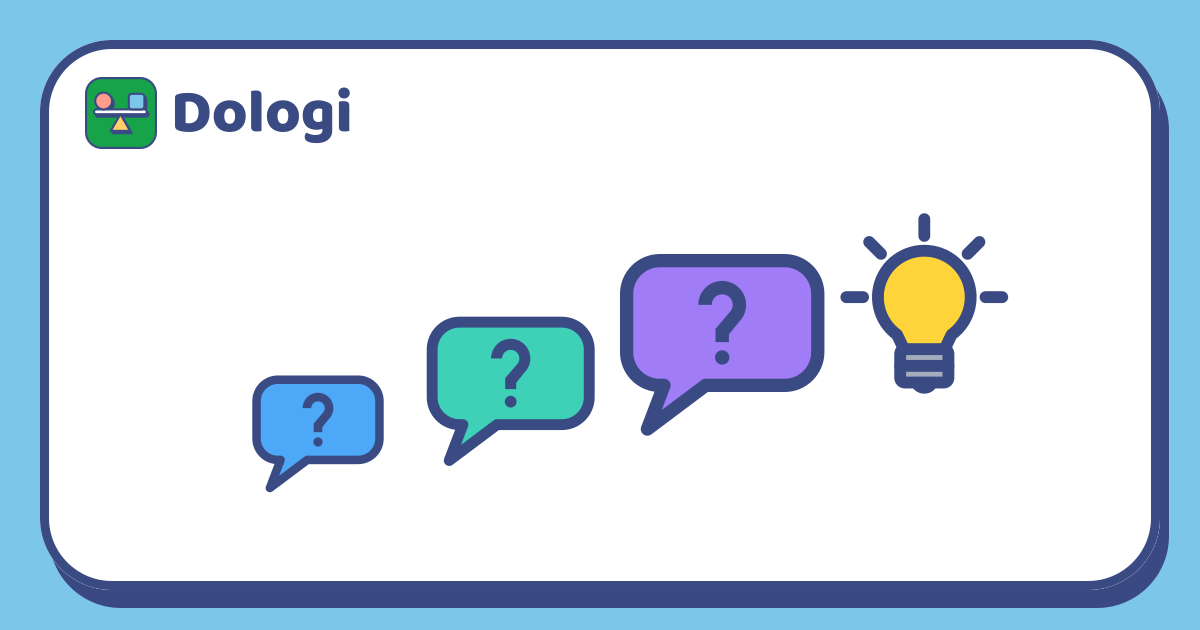
Children are born question-askers. "What's that?" comes early, "why?" follows soon after, and some days the questions never seem to stop. It's tempting to see them as something to answer and move on from. But the questions themselves are worth looking at: a good question is often the start of real thinking.
This article is about helping your child ask better questions, not just get better answers. It describes three simple levels of questions, shows how to encourage each one, and suggests a few games and habits you can start at home this week.
Why questions matter
When children ask a question, they are doing several things at once:
- Noticing a gap: "I don't know this yet."
- Putting it into words: turning a vague feeling of curiosity into something clear.
- Choosing what to find out: a question points their attention somewhere.
Answers from adults are useful, but a child who can ask a sharp question can keep learning when no adult is around. That's why it's worth treating questions as a skill to practise, not a habit to put up with.
Three levels of questions
Questions are not all the same. A simple way to think about them is as three steps, each one asking for a little more thinking.
| Level | Question words | What it looks for | Example about a puddle |
|---|---|---|---|
| 1. Facts | What? Where? Who? When? How many? | Something you can see or look up | "Where did this puddle come from?" |
| 2. Reasons | Why? How? | Causes and explanations | "Why is this puddle getting smaller?" |
| 3. Possibilities | What if? Could we? What else? | New ideas and predictions | "What if we put a lid over half of it?" |
Every level is useful. Younger children usually start with level 1, and that's fine. You can help them climb by adding one step to their question: "Yes, it came from the rain. Why do you think it's still here when the other one has gone?"
Praise the question, not only the answer
Children quickly learn what grown-ups value. If we only praise right answers, they may stop asking things they're unsure about.
- Name what was good: "That's a great question, because we can actually test it."
- Show interest: stop what you're doing for a moment and look at your child.
- Think aloud together: "Hmm, I'm not sure. How could we find out?"
- Thank them for questions that made you think, even tricky ones.
Avoid replies like "Because I said so" or "You ask too many questions" when you can. Everyone gets tired, so if it's a bad moment, try: "Good question. Let's talk about it at dinner." And then do.
Keep a question notebook
A small notebook (or a sheet on the fridge) makes questions feel important.
- Write down your child's questions, or let them draw them if they can't write yet.
- Add the date. Children love looking back at what they wondered about months ago.
- Mark the level with a simple sign: one dot for "what", two for "why", three for "what if".
- Pick one question a week to explore together: look in a book, do a small experiment, ask someone who knows.
Over time, you'll both notice the questions getting deeper.
Games that build better questions
- Ask the object. Put one everyday thing on the table, such as a spoon or a shell. Take turns asking as many questions about it as you can in two minutes. Then sort them into the three levels.
- Turn it around. Give an answer, and your child invents the question: "The answer is 'because it's cold'. What's the question?"
- Question walk. On the way to school, each person has to ask one "why" and one "what if" about something they see.
- Interview time. Your child prepares three questions for a grandparent or neighbour about their childhood, then asks them.
Keep it light. If a game turns into a test, children stop enjoying it.
When you don't know the answer
You don't need to know everything. In fact, saying "I don't know" can be a gift.
- Show how to find out: a book, a careful search together, asking an expert, or testing it.
- Separate guessing from knowing: "My guess is… but let's check."
- Leave some questions open. Some questions don't have one answer, and that's interesting too.
In Dologi, many puzzles let your child choose an answer first and then tap "Check". That small pause is a natural moment for your child to ask "Why is it this one?" before you check together.
In short
- Questions are a thinking skill: they show what your child notices and wants to find out.
- Think of three levels: facts (what), reasons (why) and possibilities (what if), and help your child climb one step at a time.
- Praise good questions, not only right answers, and keep a family question notebook.
- Play question games and show that "I don't know, let's find out" is a great answer.
Read more: Open-ended questions for children: 30 questions that help them think deeper