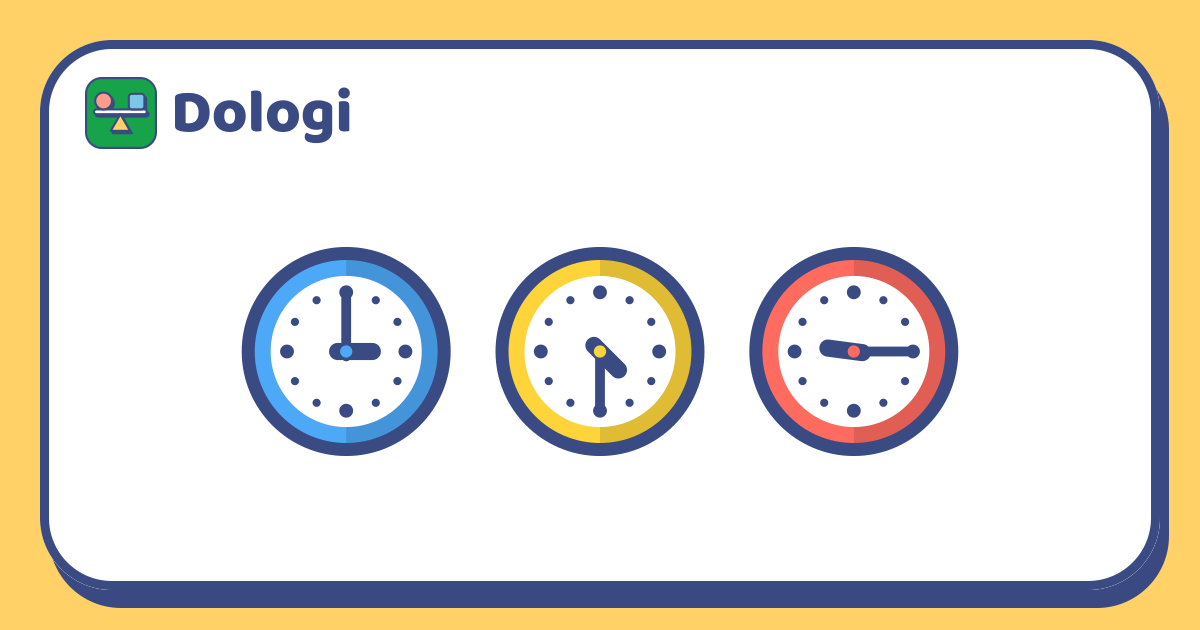
"Is it time yet?" Children ask about time long before they can read a clock. Learning to tell time is a big step: it combines numbers, counting by fives, fractions like half and quarter, and the idea that two hands mean two different things. Taken step by step and linked to daily life, it becomes much less confusing.
Before the clock: a feel for time
Children first need to understand time itself:
- Order: before and after, first and then, yesterday, today and tomorrow.
- Parts of the day: morning, afternoon, evening, night.
- Routines: "After breakfast we brush our teeth, then we go to school."
- How long things take: "as long as one song", "until the timer rings".
You can build this by talking through the day, using a simple picture schedule and counting "sleeps until the weekend". Children who can describe their day in order are ready for the clock.
Step by step
Each step builds on the one before. Ages are rough guides only; every child moves at their own pace.
| Step | What your child learns | Often around |
|---|---|---|
| 1 | The order of the day and words like morning and evening | 4–5 |
| 2 | Whole hours: the short hand points to the hour, the long hand is on 12 | 5–6 |
| 3 | Half past: the long hand points down to 6 | 6–7 |
| 4 | Quarter past and quarter to | 6–7 |
| 5 | Five-minute steps: counting by fives around the clock | 7–8 |
| 6 | Single minutes, and digital times like 7:45 | 8–9 |
| 7 | How long something takes: from 3:15 to 3:40 | 8–10 |
Tips that make it easier
- Put a real clock with hands where your child can see it, at eye level if possible.
- Start with the short hand only. "The short hand is just after the 3, so it's a bit after three o'clock." Children can understand rough times before they read minutes.
- Link times to routines. "At 7 o'clock we have dinner. Look where the hands are."
- Make a paper clock with a split pin so your child can move the hands. Moving the long hand all the way round shows that the short hand moves one step.
- Practise counting by fives separately: 5, 10, 15 … 60. Then show that each number on the clock is "one more jump of five".
- Use half and quarter with food. Cut a round pancake or pizza in halves and quarters. "Quarter past" is the first slice of the circle.
Games and activities
- Set the clock. Say a time and let your child move the hands of the paper clock. Then swap: they set it and you read it, sometimes making a mistake on purpose.
- Picture schedule. Draw the main moments of the day with a clock next to each one. Your child puts them in order.
- How long is a minute? Start a timer, close your eyes and stand up when you think a minute has passed. Many children are surprised.
- Match the times. Write times on cards ("half past 4") and draw clocks on others. Mix them and match.
- Countdown helpers. "We leave in 10 minutes. Where will the long hand be?"
- Clock spotting. Look for clocks on walls, ovens and stations, and read them together.
Common mix-ups
- Swapping the hands. Talk about the short hand as the "hour hand" and the long hand as the "minute hand", and point to each.
- "The 1 means 1 minute." Explain that the numbers count hours for the short hand, but jumps of five minutes for the long hand.
- After the half hour. At 4:40 the short hand is closer to 5 than to 4. Children often read "5". Remind them the hour only changes when the long hand reaches 12.
- Digital and analog. "7:45" and "quarter to eight" are the same time. Practise saying both.
Keep sessions short and connected to real moments. Reading the clock before leaving the house is more meaningful than a worksheet with twenty clocks.
In short
- First build a feel for time: order, parts of the day, routines and duration.
- Learn in steps: hours, half past, quarter past and to, five-minute steps, minutes.
- A real clock, a paper clock, counting by fives and daily routines make it concrete.
- Expect mix-ups with the hands and after the half hour; they are a normal part of learning.
Read more: Math with everyday things: counting, comparing and sharing at home.