"There were a thousand cars on the road!" "I've got a million toys!" When children use big numbers, they usually mean "a lot". That's natural: a hundred, a thousand and a million are all far beyond anything they can count or see at once.
Helping children picture big numbers matters more than it might seem. It supports place value at school ("why does the 3 in 300 mean three hundreds?"), estimation and a general sense of whether an answer is sensible. And the best way to build that picture is with real things they can see and touch.
The secret is groups of ten
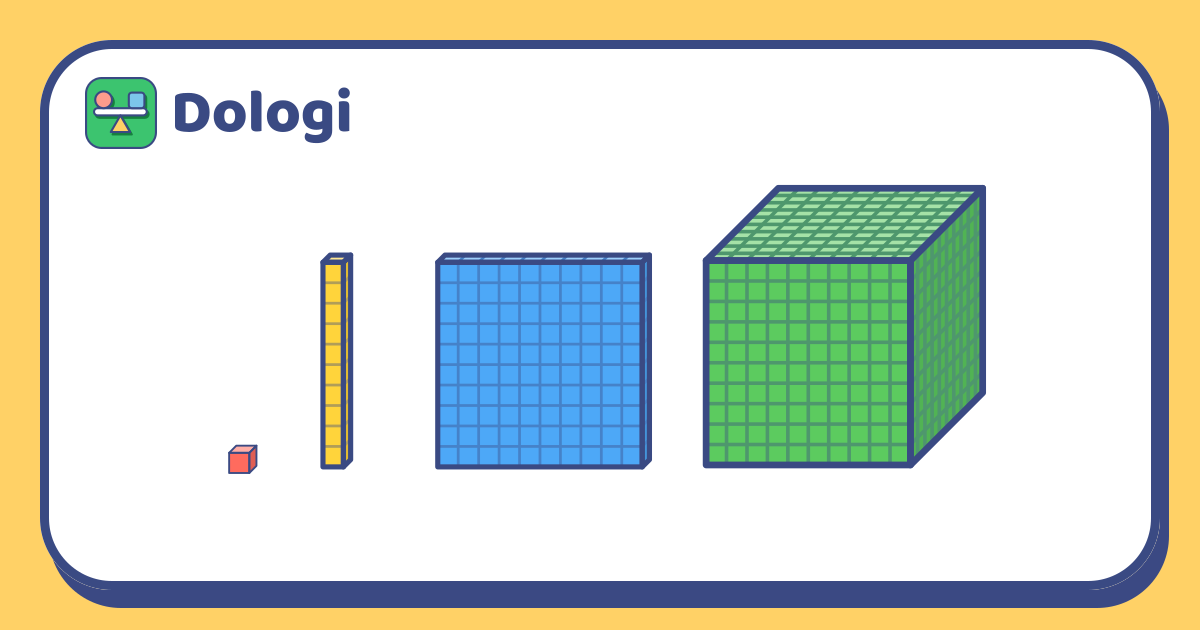
Big numbers become manageable when children see them as groups of groups. Our number system works in tens:
| Number | How it's made | What you could use |
|---|---|---|
| 1 | One thing | One bean |
| 10 | Ten ones | A cup of 10 beans, or ten fingers |
| 100 | Ten tens | A bag holding 10 cups' worth |
| 1,000 | Ten hundreds | 10 bags of 100 |
Once children understand that each step is "ten of the one before", a thousand stops being a mysterious word and becomes something you can build.
Build a real thousand
This is a family project that can take a few days, which is part of the fun.
- Choose small objects you have plenty of: dried beans, pasta shapes, paper clips or buttons. (Use larger items with younger children who might put small things in their mouths.)
- Count out groups of ten into small cups or egg-box holes.
- When you have ten groups of ten, pour them into a bag and label it "100" with a drawing or a sticker.
- Keep going until you have ten bags. Put them all together: that's a thousand.
Along the way, keep a simple record: a tally mark for every hundred. Ask questions as you go: "How many bags so far? How many more do we need?"
The moment all ten bags sit side by side is often a real "wow" for children. A thousand is a lot more than they imagined, and they built it themselves.
Other ways to see a thousand
You don't need a big project every time. Here are quicker ways to make a thousand visible:
- A thousand dots. On squared paper, draw a dot in each square of a 10 by 10 block to make 100. Ten sheets of 100 dots make 1,000.
- A thousand steps. On a walk, count steps in tens, making a mark on your hand or saying "ten, twenty, thirty" aloud. How far did you get?
- A stack of paper. Count out 10 sheets and look at how thin the stack is. Then look at a whole pack and check the number on its label. How tall would 1,000 sheets be?
- A thousand seconds. Use a timer: a thousand seconds is about 17 minutes. Is that longer or shorter than your child expected?
Compare and estimate
Big numbers become more meaningful when children compare them:
- "Is a hundred beans a little or a lot? What about a thousand?"
- "If one cup holds a hundred beans, how many cups for a thousand?"
- "Which is longer: a thousand steps or a thousand seconds?"
For children around 9 and older, the same idea stretches further: a million is a thousand thousands. If your bags of beans filled a box, a million would need a thousand of those boxes. Children don't need to picture it exactly; they just need to see that each step up is far bigger than the last.
Ideas by age
- Ages 4–5: focus on 10 and 20. Count out 10, group them, and compare with a pile of 2 or 3.
- Ages 6–7: build 100 with groups of ten, and talk about how many tens make a hundred.
- Ages 8 and up: build or draw a thousand, try estimating ("How many beans in this jar?") and check by counting in groups.
In Dologi, "Count the cubes" puzzles show stacks of cubes, including some hidden behind and underneath others, so children learn to count in rows and layers instead of one by one, the same idea that makes big numbers manageable.
In short
- Big numbers feel like "a lot" until children can see them.
- Groups of ten are the key: ten ones, ten tens, ten hundreds.
- Build a real thousand from beans or pasta, or draw it with dots on squared paper.
- Compare and estimate with big numbers, and stretch the idea to a million for older children.
Read more: When can children count to 10, 20 or 100? Reciting numbers vs really counting