"Is the speaker in the kitchen alive?" "How does the phone know it's Grandma in the photo?" Children hear the words "artificial intelligence" (often just "AI") everywhere, and they have questions. Many parents aren't sure how to answer in a way that is simple but still true.
You don't need to know how AI is built to explain it well. This article gives you a short explanation, everyday examples your child already knows, the main things AI can and can't do, and what to say at each age.
A simple explanation
Most computer programs follow rules that a person wrote, step by step: "when this button is pressed, play the song". Artificial intelligence works differently. Instead of being given every rule, the program is shown a huge number of examples and finds the patterns in them by itself.
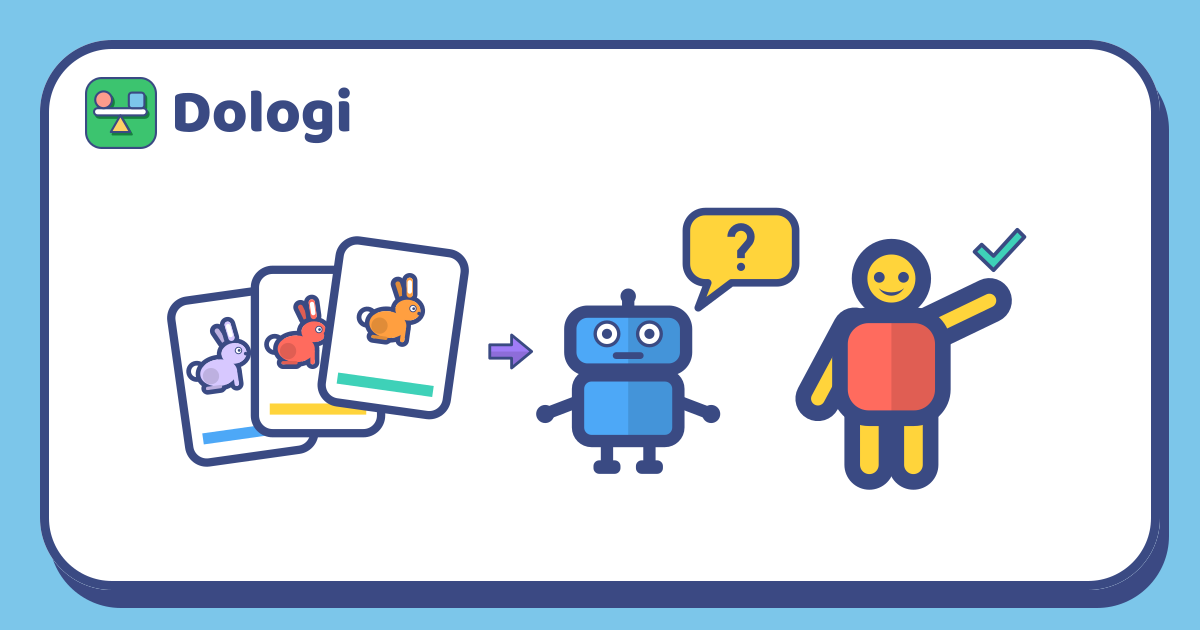
Show it thousands of pictures labelled "rabbit" and thousands labelled "not a rabbit", and it gradually learns what rabbit pictures tend to have in common. Then, given a new picture, it makes a guess: "probably a rabbit".
It's a bit like how your child learned what a dog is, by seeing many dogs. The difference is that the machine needs far more examples, and it doesn't understand what a dog is the way a person does. It only spots patterns.
Where children meet AI
Your child probably uses AI already without knowing it:
- Voice assistants that answer questions, set timers or play music when you speak to them.
- Photo apps that group pictures of the same face or the same pet.
- Automatic translation and captions that appear under videos.
- Suggestions for the next video, song or game.
- Chat programs that write answers to questions.
Not every clever machine is AI. A night light that switches on when it gets dark follows one simple rule a person wrote. Spotting the difference together ("did someone write this rule, or did the machine learn it from examples?") is a nice game for older children.
What AI can and can't do
| AI is good at | AI is not good at |
|---|---|
| Spotting patterns in lots of examples | Understanding what things really mean |
| Working fast without getting tired | Knowing when it is wrong; it can sound sure and still be wrong |
| Doing the same kind of task again and again | Things it has never seen examples of |
| Making a good guess | Feelings: it doesn't feel happy, sad or hurt |
This table also answers questions children often ask. Is it alive? No, it's a program. Does it know everything? No, only patterns from the examples it was given. Will it be upset if I'm rude? It has no feelings, but speaking kindly is still a good habit, because that habit is ours.
It can be wrong, and people decide
Because AI learns from examples, it learns their gaps too. If a program only saw pictures of white rabbits, it might not recognise a brown one. A voice assistant might mishear a child's voice. A chat program might give an answer that sounds right but isn't.
That's why people stay in charge: people choose the examples, check the answers and decide what to do with them. You can turn this into a habit at home:
- When an answer seems odd, ask "how could we check that?" and look in a book or ask someone who knows.
- Don't tell voice assistants or chat programs private things like your full name, address or school.
- If something a machine says is confusing or upsetting, tell a grown-up.
What to say at each age
The ages below are only a rough guide; follow your child's questions.
- 4 to 6: "It's a computer program that learned by looking at lots and lots of pictures. It's not alive, and sometimes it gets things wrong."
- 7 to 9: Play "guess my rule": show a few examples that fit a secret rule (say, things that are round) and let your child guess. Then explain that AI learns in a similar way, only with millions of examples.
- 10 to 12: Talk about where the examples come from. What happens if they are all of one kind? Who checks the answers? These are questions grown-ups who build AI ask too.
In Dologi, "Guess the rule" puzzles show a few examples and ask your child to work out what they have in common. It's the same idea of learning from examples, except that here your child is the one doing the thinking.
In short
- AI is a program that learns patterns from lots of examples, instead of being given every rule.
- It is fast and good at guessing, but it doesn't understand, has no feelings and can be wrong.
- People choose the examples, check the answers and make the decisions.
- Keep explanations short and true, and build the habit of asking "how could we check?".
Read more: What is computational thinking? Four skills children use even without a computer