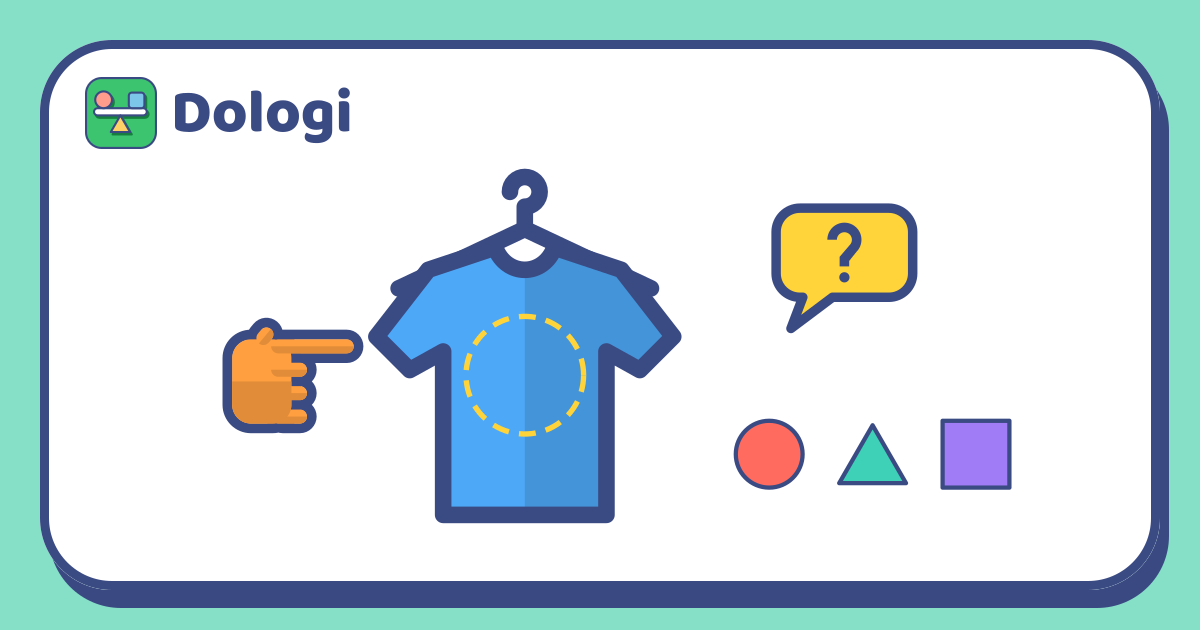
One person sits down. The other draws a line on their back with a finger. "What was that?"
The game needs no materials and no table, and it is quiet enough for a waiting room, a queue or the last minutes before sleep. It also asks for real concentration. There is no picture to look at. The shape arrives one touch at a time and has to be put together in the head.
How to play
- The guesser sits with their back to the drawer.
- The drawer first "wipes the board" with a flat hand. That means a new drawing is starting.
- Then the drawer draws with one finger, slowly and firmly, as large as the back allows.
- The guesser says what they felt, or draws it on paper. After three drawings, swap roles.
Ask before you start. Not every child likes being touched on the back. The palm of the hand or the forearm works just as well, and anyone can say "stop" at any time.
Six levels
| Level | What is drawn | What the guesser works out |
|---|---|---|
| 1 | One line: across, up and down, or slanted | Which way did it go? |
| 2 | One, two or three taps or lines | How many were there? |
| 3 | A circle, a triangle or a square | Which shape was it? |
| 4 | Two shapes, one after the other | Both shapes, in the right order |
| 5 | A numeral or a letter the child knows | Which one? |
| 6 | A small picture in three or four strokes: a sun, a house, a fish | What is it? |
On level 3, put three cards with the shapes in front of the guesser. Choosing from three is much easier than naming from nothing, and the cards can go once the shapes are familiar.
Why it is harder than it looks
The shape comes in pieces. By the time the finger finishes a square, the first side is long gone. The guesser has to keep the beginning in mind while feeling the end.
Left and right get mixed up. Draw an arrow towards one shoulder and ask which shoulder it points to. Many children, and adults, hesitate. That is a nice moment to talk about how the same drawing looks from the front and from behind.
The drawer is learning too. A hurried, wobbly drawing can't be guessed. The drawer has to plan the strokes and make them clear, which is practice in explaining something so that another person can follow.
Variations
- The telephone line. Three or more people sit in a row. A drawing is passed from back to back, and the last person draws it on paper. Compare it with the first.
- Tap counting. Tap a short rhythm on the back, slow, slow, quick, quick. The guesser claps it back.
- Draw along. The guesser has paper and pencil and draws at the same time as they feel.
- A secret code. Agree on three signs: a circle means "I'm thirsty", a line means "let's go". Use them in the queue.
| Rough age | What to try |
|---|---|
| 4–5 | Lines and their direction; one to three taps; choosing a shape from three cards |
| 6–7 | Shapes without cards; two shapes in a row; numerals |
| 8–9 | Letters and small pictures; the telephone line |
| 10 and up | Short words, letter by letter; a secret code of signs |
Ages are only a rough guide, and every child is different.
In Dologi, "Trace in one go" puzzles ask children to trace a whole figure without lifting their finger. It is the same following of a line from its start to its end, with the eyes joining in.
In short
- One finger and one back are enough for a quiet game of concentration.
- Start with a single line and build up to shapes, numerals and small pictures.
- The guesser has to keep the first strokes in mind while feeling the last ones.
- Ask first, offer the palm as an alternative, and swap roles so that both get to draw and to guess.
Read more: What's in the bag? A guessing game for hands only