Many evenings end the same way: "Five more minutes", "I'm thirsty", "Just one more story". Bedtime turns into a long negotiation, and everyone goes to sleep a little cross. A bedtime routine will not make every night easy, but it takes a lot of the bargaining out of it.
A routine is simply a few steps your child does in the same order every evening, starting at about the same time. This article explains why that helps, how to choose the steps, how to turn them into a picture chart your child can follow, and what to do when the routine slips.
Why a routine helps
Children feel safer when they can predict what happens next. If every evening goes "bath, pajamas, teeth, story, lights out", your child does not need to be told each step. They already know, and many children enjoy saying it before you do.
A routine also changes who is in charge of the evening. Instead of a parent giving one instruction after another, the chart on the wall says what comes next. "What does the chart say?" is a much calmer question than "How many times do I have to tell you?"
This article is about the order of the evening, not about how many hours a child should sleep. If you are worried about your child's sleep, ask your doctor.
Choose a few steps and keep the order
Keep the routine short, especially for younger children: four to six steps is plenty. Here is one example you can adapt:
| Step | What happens | Tip |
|---|---|---|
| Wind down | Toys go back in their box, the big lights are dimmed | A song or a timer can be the signal |
| Wash | Bath or shower, or just face and hands | Same place, same towel |
| Pajamas | Change and put clothes in the basket | Let your child choose between two pairs |
| Teeth and toilet | Brush teeth, go to the toilet | Keep the toothbrush in the same spot |
| Story | One or two books, agreed in advance | Your child picks the book |
| Lights out | Hug, the same goodnight words, night light on | Keep it short and warm |
What matters most is not which steps you choose, but that they come in the same order every night. The order is what lets your child predict the evening. Quiet steps belong near the end, and lively games or screens belong well before the routine starts.
Draw a picture chart together
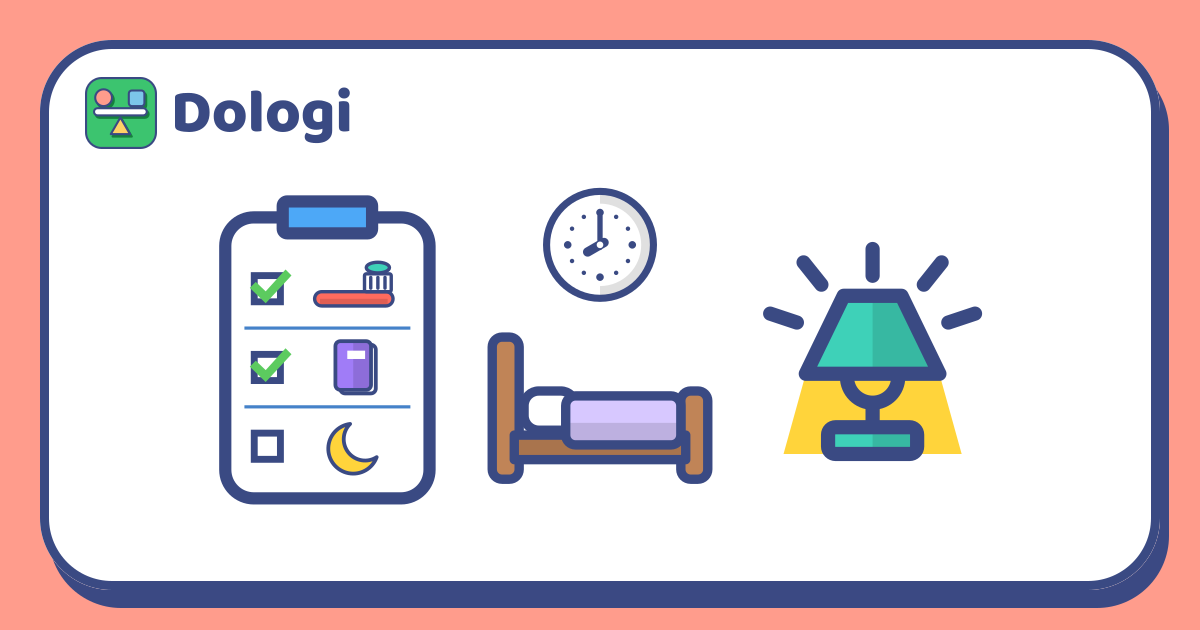
Children who cannot read yet can still follow a chart made of pictures. Sit down together and draw one small picture for each step: a bathtub, pajamas, a toothbrush, a book, a moon. Stick the pictures in a column on a sheet of paper, in the right order.
- Put the chart where the routine happens, for example on the bedroom door.
- Let your child check each step or move a clothes peg down the chart as they go.
- When your child is ready to read, add one word next to each picture. Older children can write the whole chart themselves.
Making the chart together matters. A child who drew the toothbrush is more likely to remember the step than one who was simply told about it. It is also a gentle lesson in order: what has to happen before something else, and what can swap places.
Start at the same time
The routine works best when it begins at about the same time each evening. You do not need to watch the clock to the minute. What helps is a clear starting signal: a timer, a particular song, or "when the dishes are done, the routine starts".
A few things help the start go smoothly:
- A warning first. "In ten minutes we start the bedtime routine" is easier to accept than a sudden "Bedtime, now".
- Screens off before the routine. Ending screen time is often the hardest moment, so let it happen first, not in the middle.
- Weekends close to weekdays. A little later is fine, but if the routine moves a lot on Friday and Saturday, Monday evening is usually harder.
Keeping the routine going
Some nights will not go to plan, and that is normal. A few ideas for the most common problems:
- "One more story." Agree on the number of books before the story starts, and stick to it kindly. If you say yes to one more once, expect to be asked again tomorrow.
- Getting up again and again. Go back calmly, say the same short goodnight words, and keep the chat for tomorrow.
- Late evenings, visits, vacations. Keep a short version of the routine: teeth, one story, the same goodnight words. The familiar ending still helps.
- Choices inside the steps. Let your child decide which pajamas, which book, which stuffed toy. They get some control while the steps themselves stay the same.
The routine can also grow with your child. Between about 6 and 12, many children want more say in their evening, and that is a good thing. Your child might add reading on their own after the story, pack their school bag for tomorrow, or have a few minutes to chat with you about the day before lights out. Older children can plan their own chart and decide when the routine starts, with you agreeing to it.
Following a set of steps in order is also good practice for thinking. Children learn that some things depend on others and that a plan helps them get through a task without being reminded. In Dologi, the Patterns topic has "what comes next" puzzles that practice the same idea of order on screen. They are best kept for daytime, so the evening can stay screen-free.
In short
- A bedtime routine is a few steps in the same order every evening, starting at about the same time.
- Keep it short, put the quiet steps at the end and switch screens off before the routine starts.
- Draw a picture chart together so your child can follow the steps without being reminded.
- On busy nights, keep a short version, and let the routine grow as your child gets older.
Read more: Screen-free bedtime games