A 6–7-year-old with good focus isn't a child who never gets distracted; it's a child who comes back to the task and checks before answering. Puzzles full of details that look almost alike are a good chance to practice slowing down and checking every condition before choosing. The five puzzles below come straight from the Dologi app and go from easy to harder.
How to use this post: show your child one picture at a time and let them say what they need to find before they start. The answer is behind the "Show answer" button under each picture. If they get it wrong, ask "which places did you check?" instead of correcting them right away.
Puzzle 1: Top string
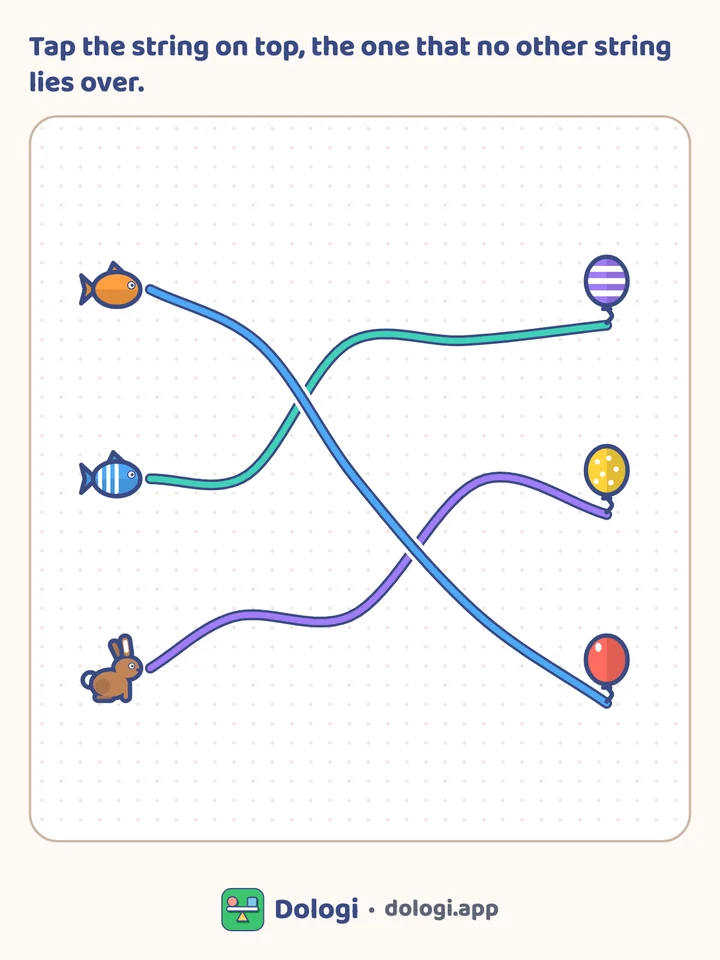
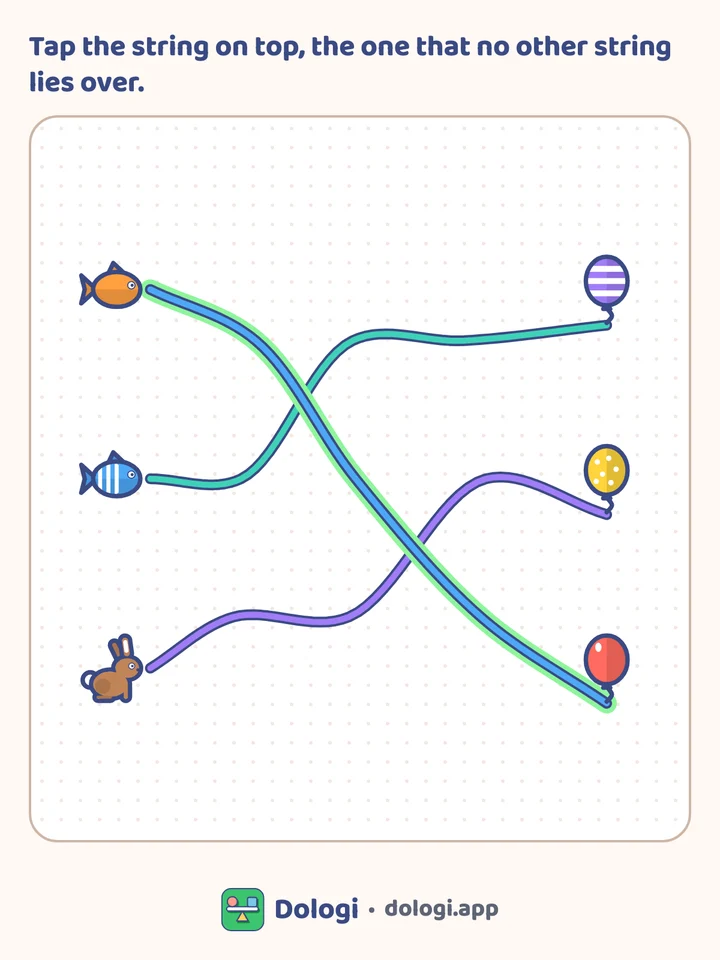
Ages 6–7
What it builds: Your child looks at each spot where two strings cross to see which one goes over, and only chooses after checking every crossing rather than guessing from the first one. Checking everything before deciding helps them read all the options of a question before answering. Keep playing: lay three sheets of colored paper overlapping on the table, ask which one is on top, then lift them to check.
Puzzle 2: Shape pile
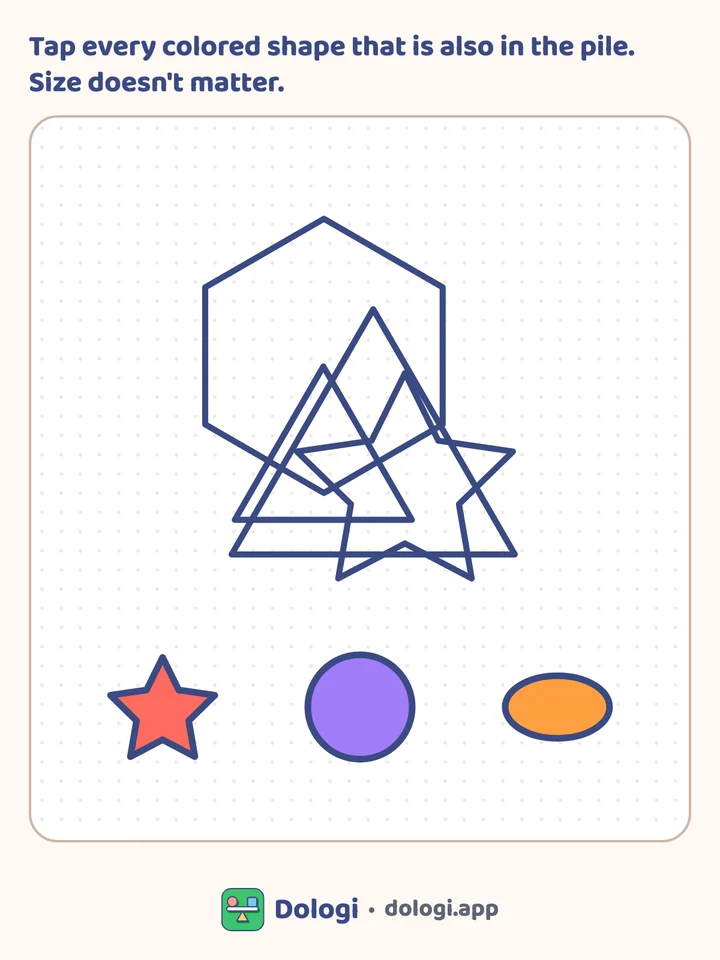
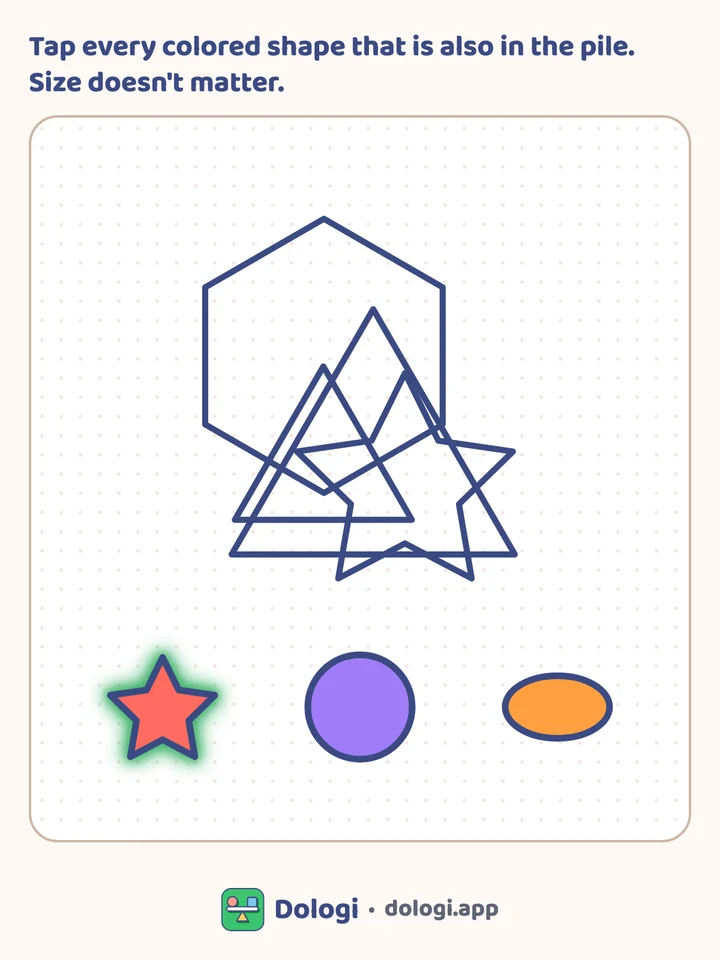
Ages 6–7
What it builds: Your child looks at each colored shape and searches for its outline in the tangled pile, remembering that the shape in the pile may be bigger or smaller. Recognizing the same shape at a different size is the base of the first geometry lessons at school. Keep playing: cut paper circles, triangles and stars in different sizes, pile them up and ask your child to name which kinds of shapes are there.
Puzzle 3: Spot the difference
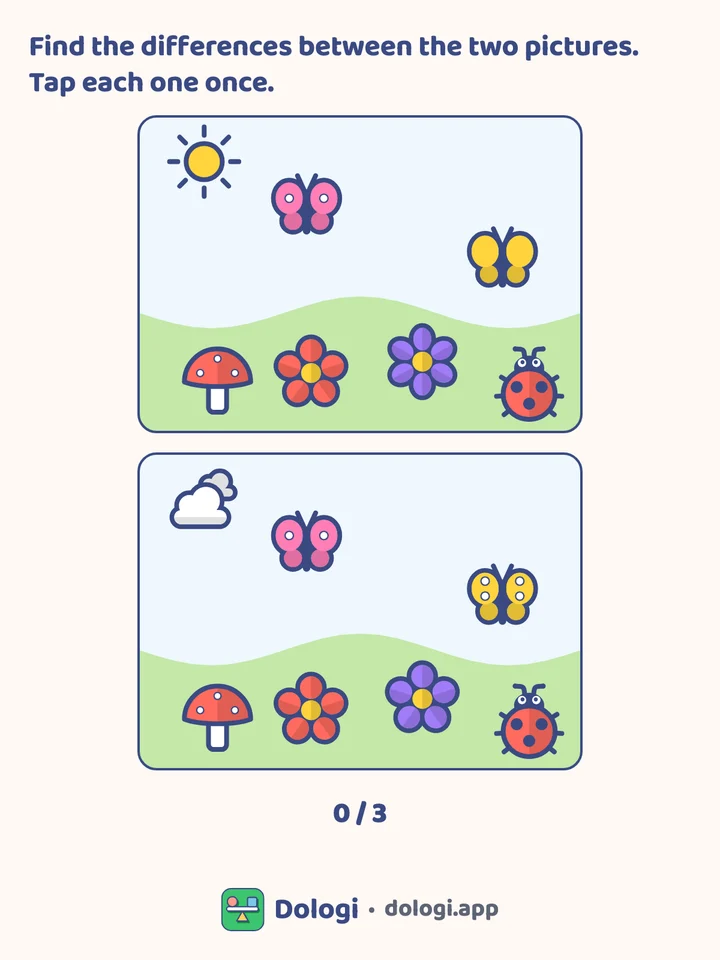
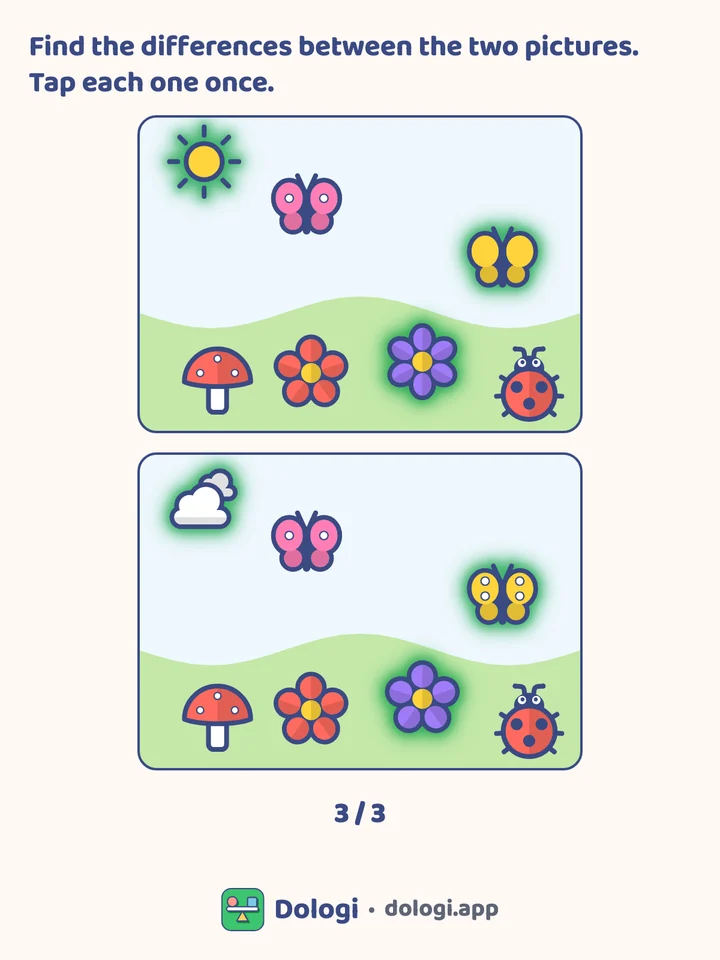
Ages 6–7
What it builds: The two pictures have three differences, and one of them is only a tiny detail, so your child has to compare each thing closely, not just check whether it's there. Looking down to the smallest detail helps them notice accents and punctuation when reading and writing. Keep playing: take two photos of a corner of a room, move a few small things between shots, then compare the photos together.
Puzzle 4: Secret message
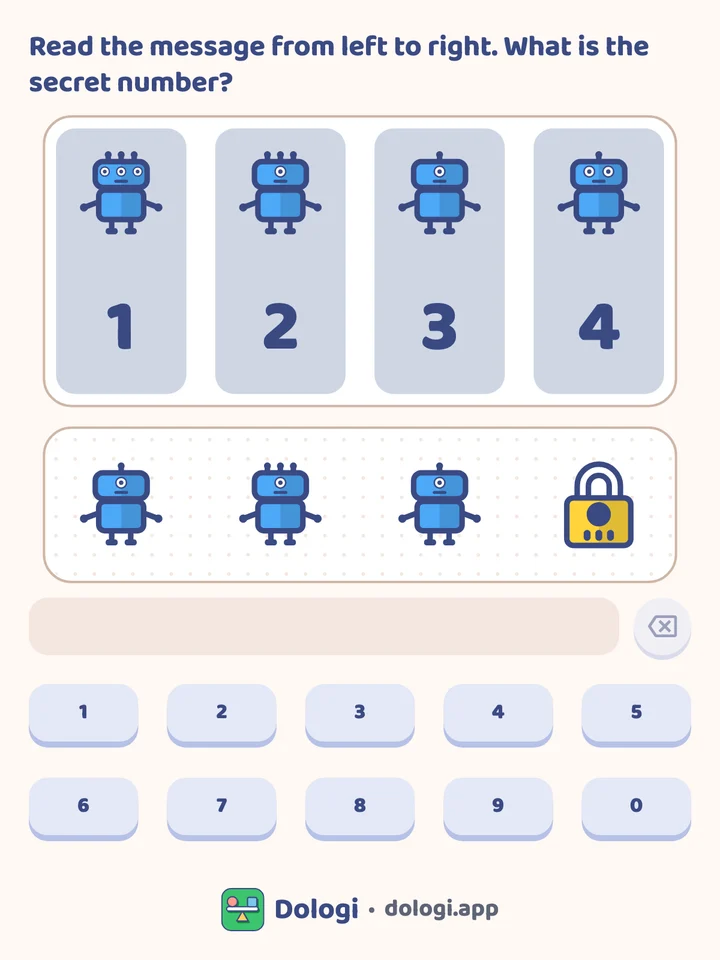
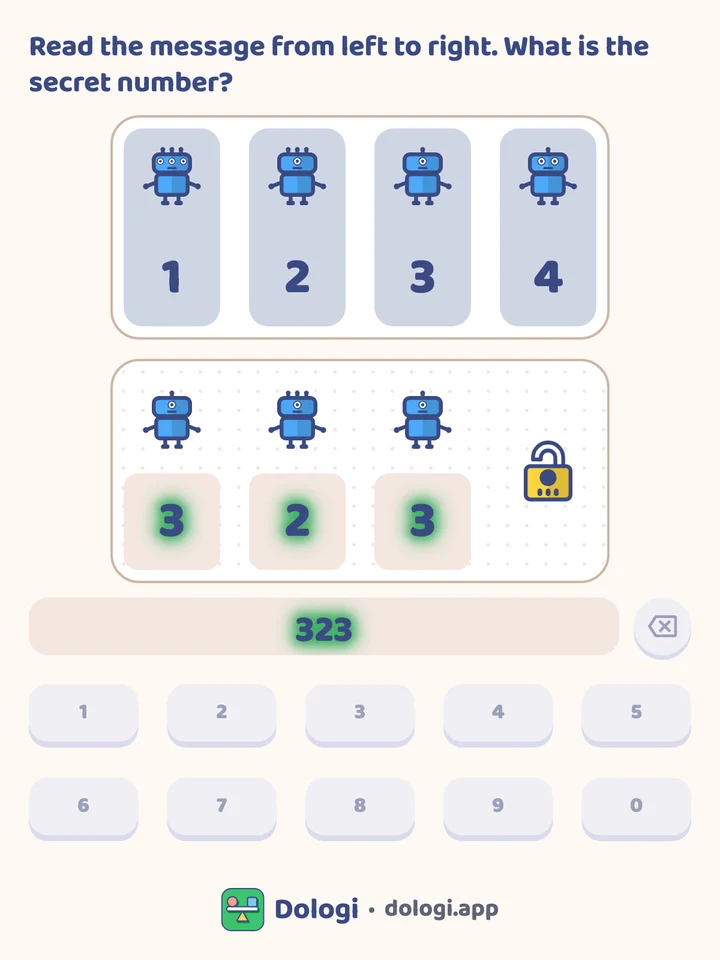
Ages 6–7
What it builds: The robots in the code key differ only in their number of eyes and antennas, so your child has to count both before choosing a number. Paying attention to two features at once helps them tell apart letters and numbers that differ by a single stroke. Keep playing: draw four faces that differ only in their eyes and hair, number them and ask your child to find face number three.
Puzzle 5: Tap them all
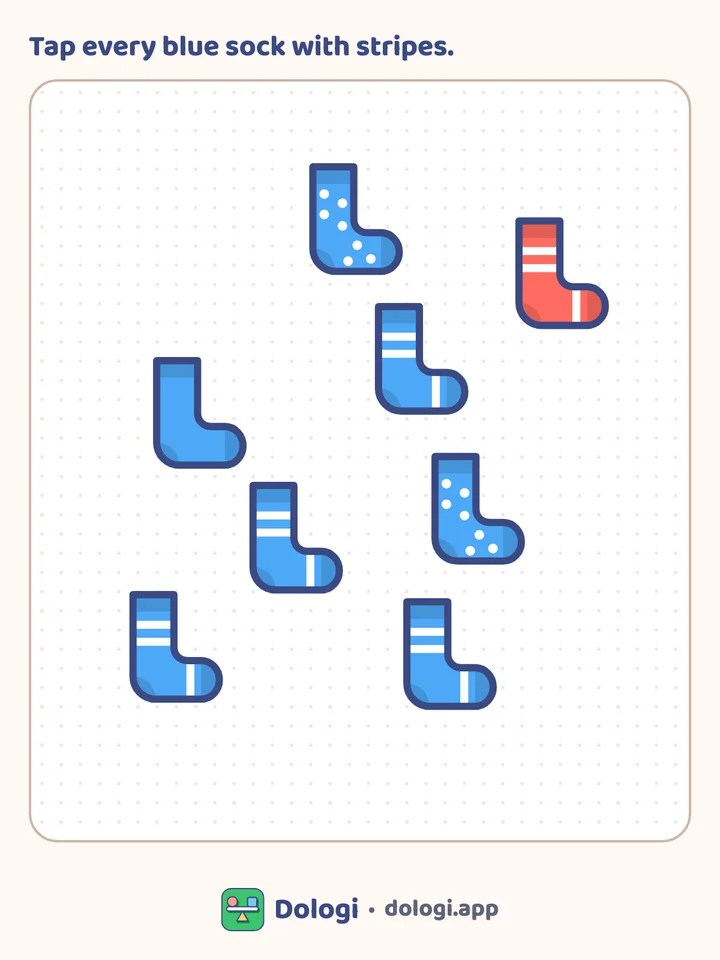
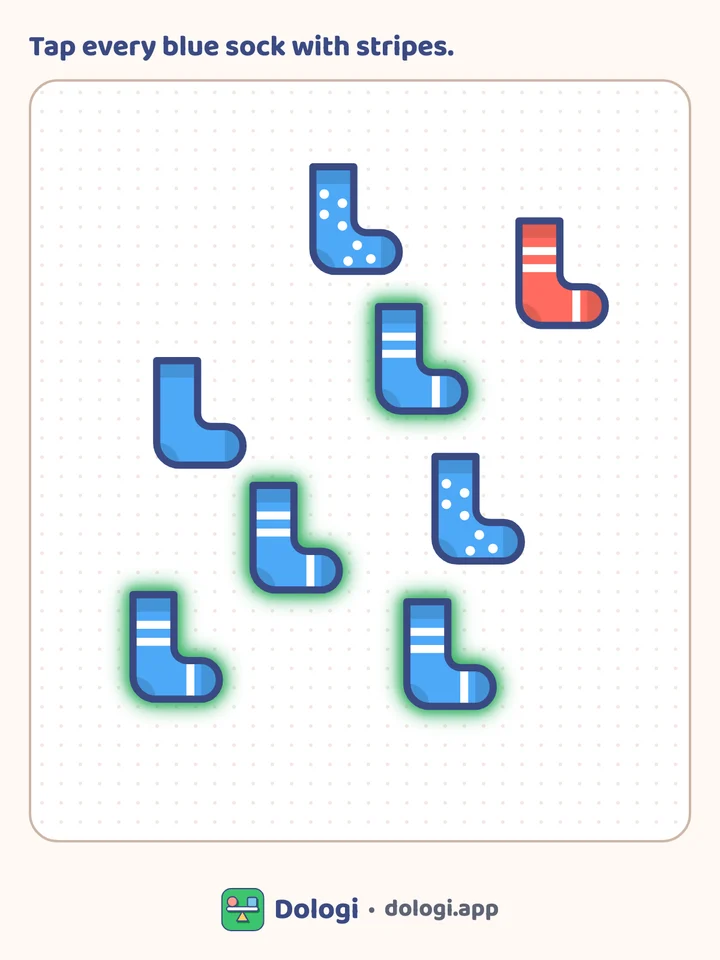
Ages 6–7
What it builds: The question has two conditions at once, so your child has to check both the color and the pattern of each sock before tapping. Following an instruction with two conditions is what they need for word problems and for the teacher's instructions in class. Keep playing: tip out the sock basket and ask your child to pick every sock that has both the color and the pattern you name, then change the conditions.
Did your child enjoy these check-carefully puzzles? The Dologi app has many more of the same kinds, with more strings, messier piles of shapes and harder conditions, getting harder with age and with how your child plays, so they can practice focus a little every day.