The first year of school asks children to do lots of things by a rule: copy the model exactly, follow the order, don't mix up details. Puzzles with clear rules are a fun way to practice keeping one rule in mind from start to finish. The five puzzles below come straight from the Dologi app and go from easy to harder.
How to use this post: show your child one picture at a time and let them say the rule of the puzzle before starting. The answer is behind the "Show answer" button under each picture. If they get lost partway, don't do it for them: just ask "which step are you on?"
Puzzle 1: Follow the string
Ages 6–7
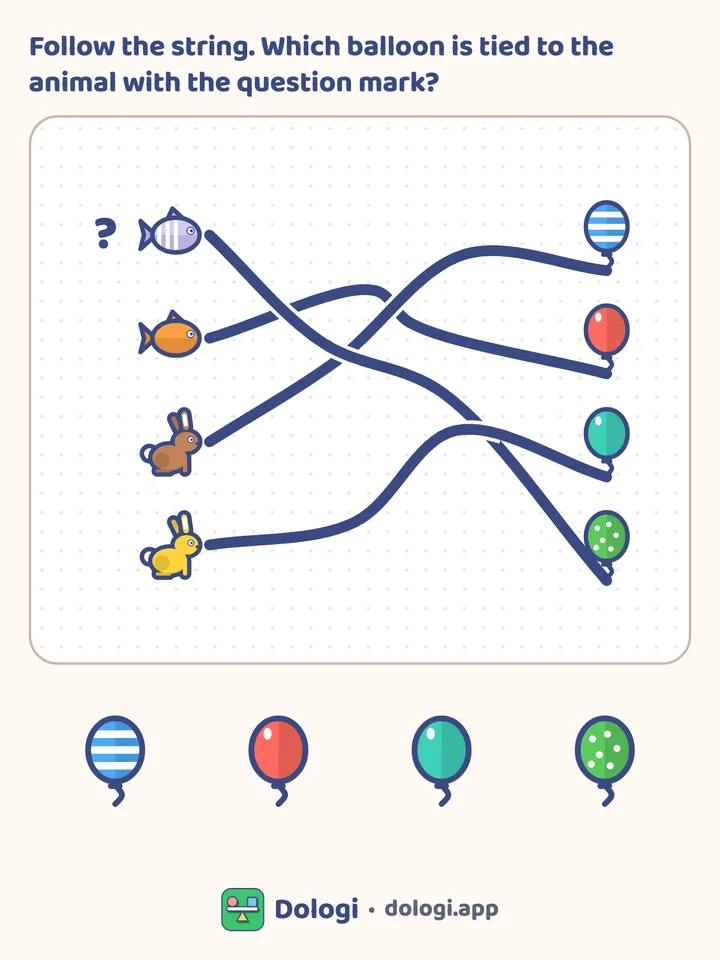
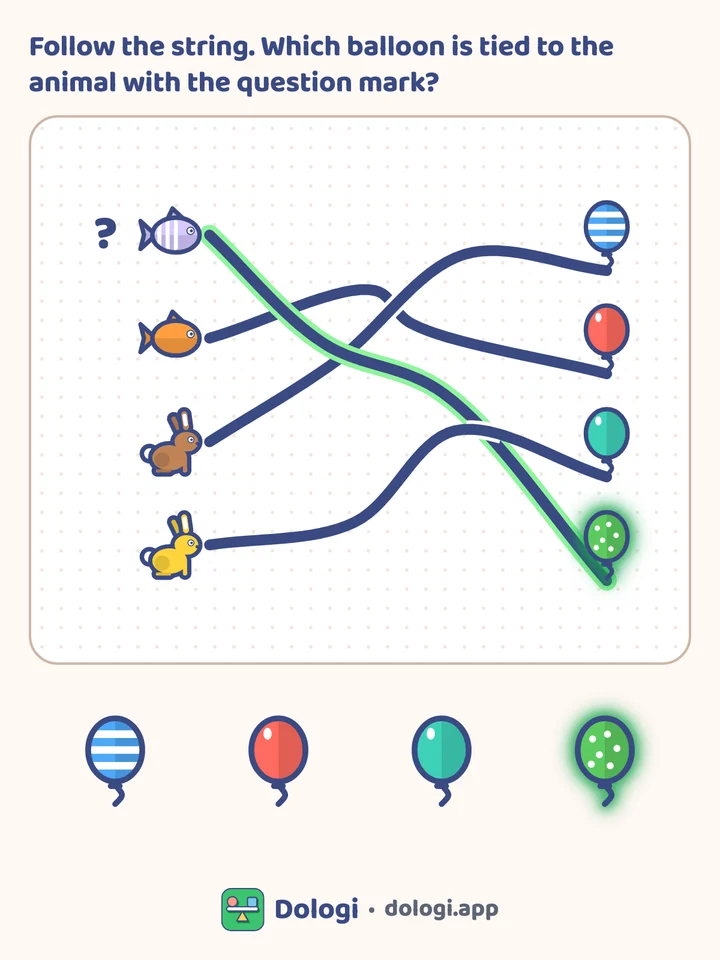
What it builds: All the strings are the same color, so your child can't guess by color and has to keep their eyes on one string through every crossing. Keeping their eyes on a line with no landmarks helps them read long lines of text without jumping lines. Keep playing: draw a few overlapping curvy lines in pencil together, put an animal at each end, and take turns finding where each line goes.
Puzzle 2: Tap in order
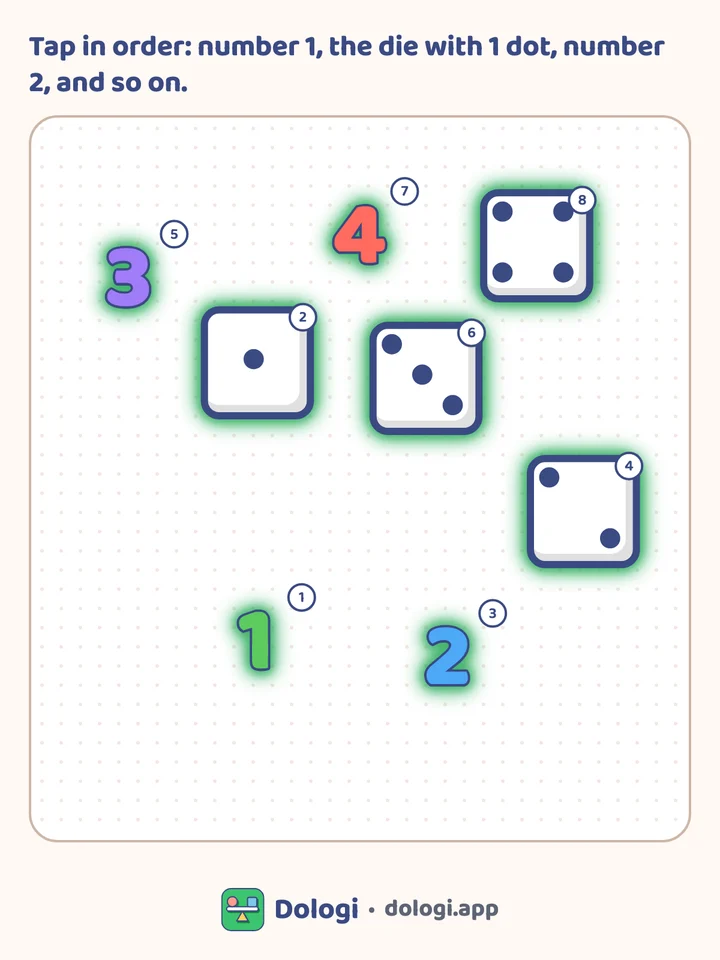
Ages 6–7
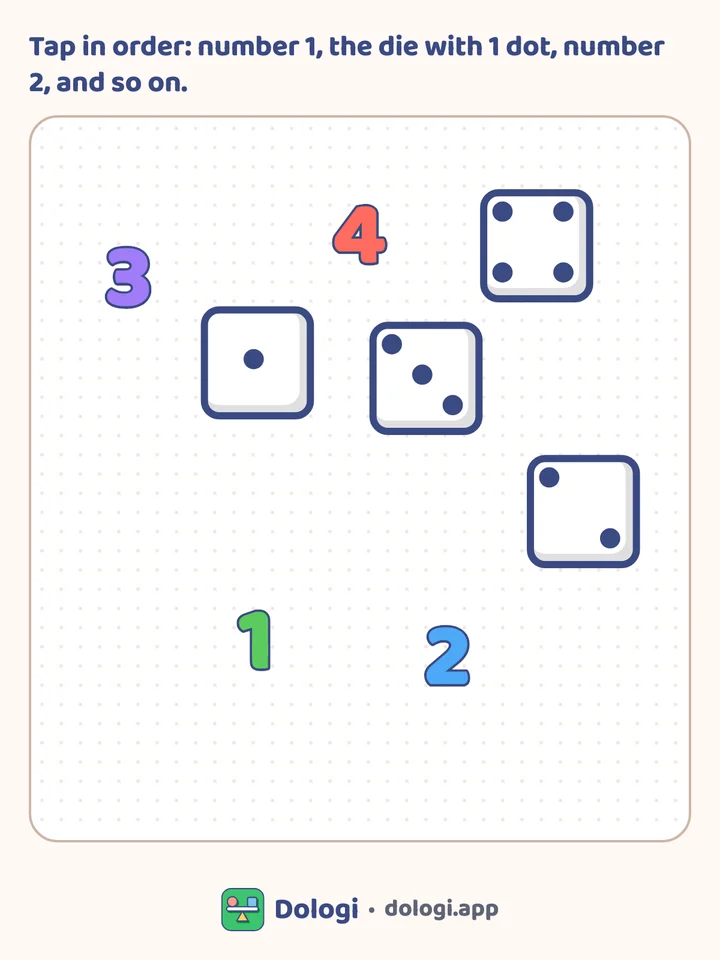
What it builds: The rule alternates numbers and dice: number 1, a die with 1 dot, number 2, and so on. Your child holds two sequences in mind at once and counts the dots on each die. Following an alternating rule helps with first-grade tasks like continuing a row of shapes or numbers. Keep playing: lay number cards and objects on the floor in turn, 1 card then 1 spoon, 2 then 2 spoons, and let your child continue.
Puzzle 3: Find the shadow
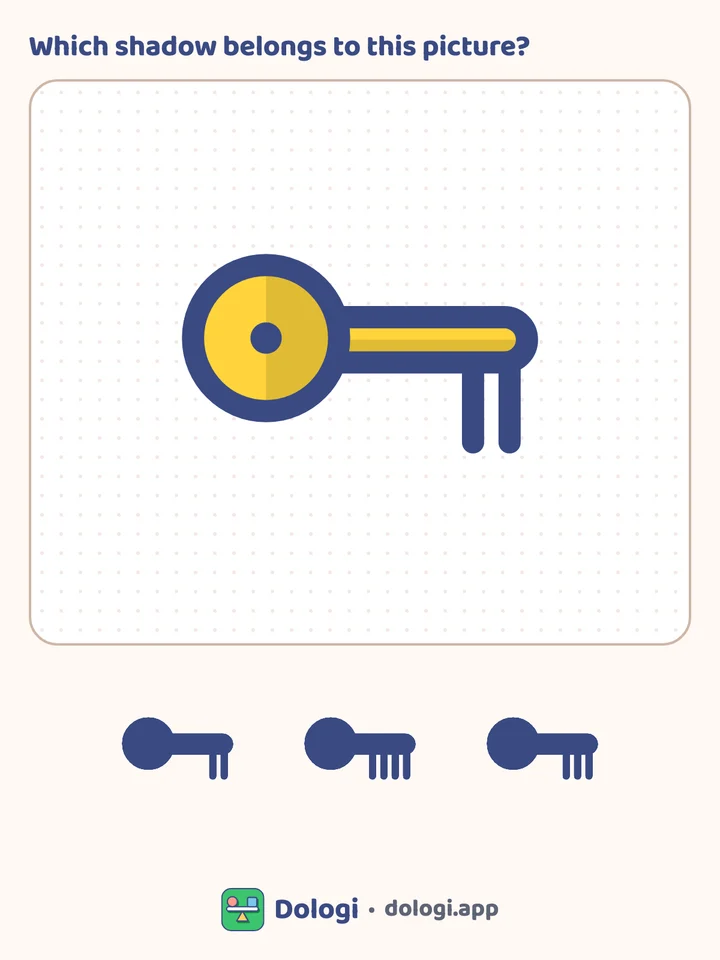
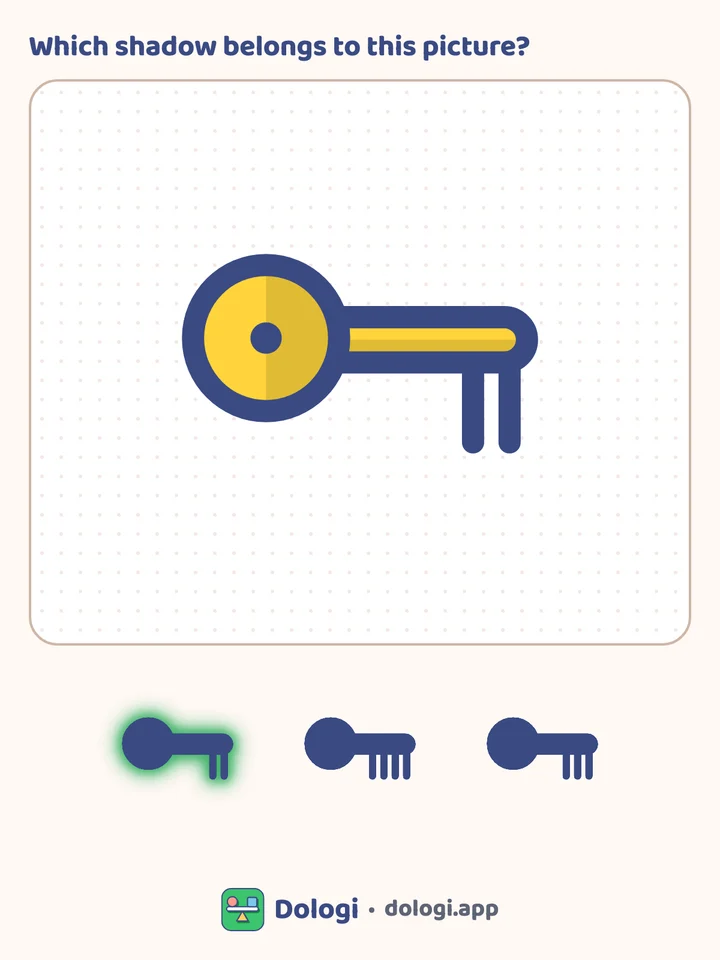
Ages 6–7
What it builds: The three key shadows differ only in their number of teeth, so your child counts the teeth on the colored key and then on each shadow. Counting to compare instead of glancing helps them avoid picking the wrong one among near-identical things. Keep playing: put your house keys on the table, count the teeth on each and ask your child to find the one with the most.
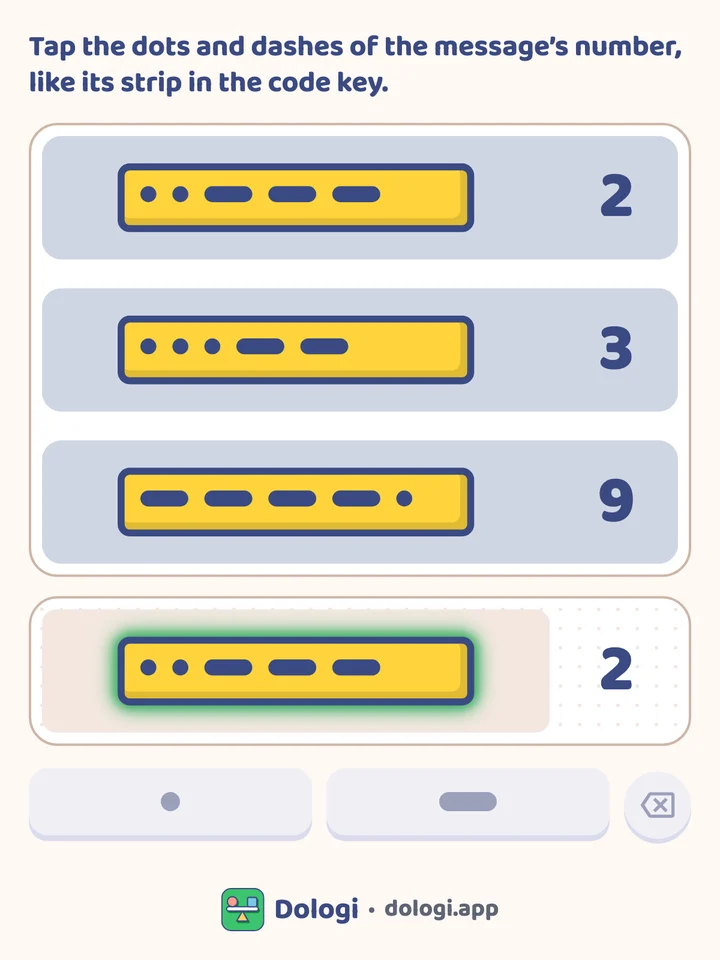
Puzzle 4: Tap the dot-dash code
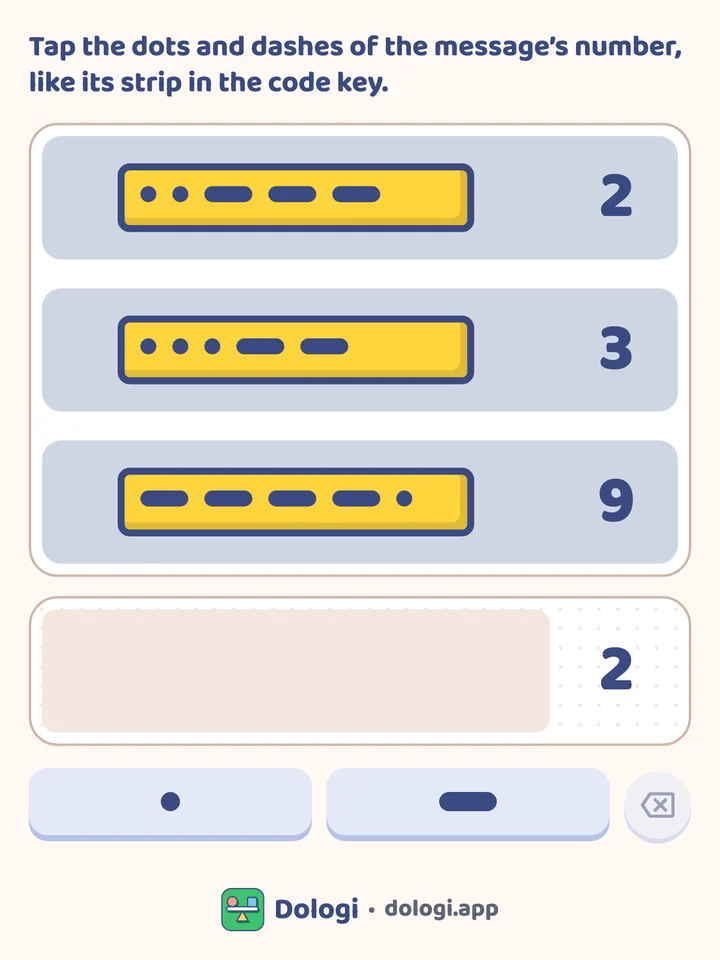
Ages 6–7
What it builds: Your child reads the number in the message, finds its strip in the code key and taps every dot and dash back in order. Copying a model exactly down to the last mark is what they do every day when copying from the board into a notebook. Keep playing: tap a short-long rhythm on the table, let your child tap it back exactly, then swap roles.
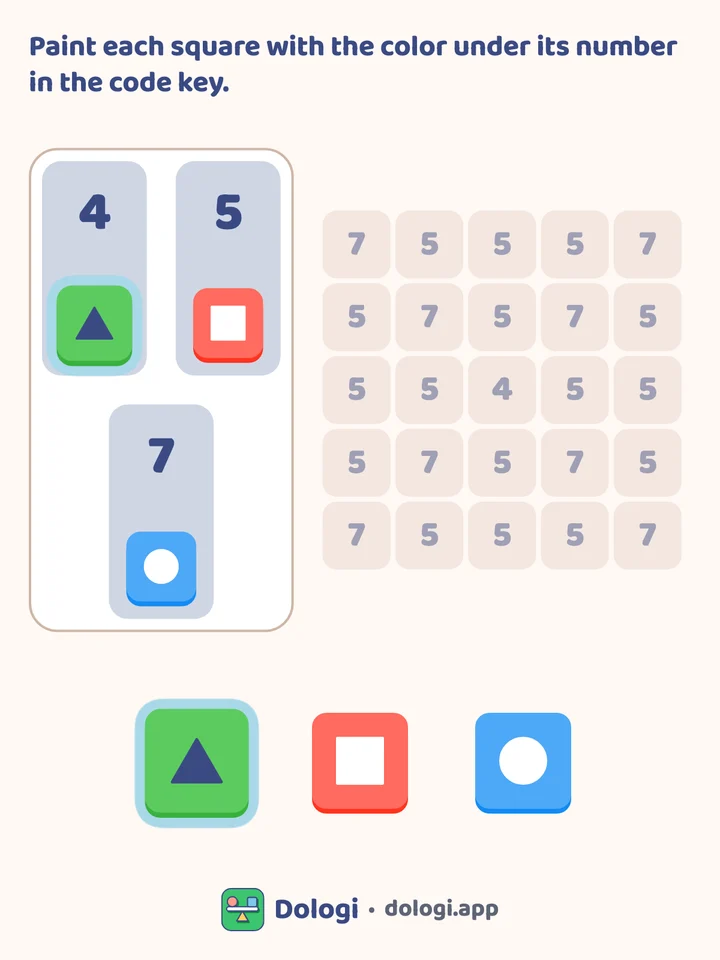
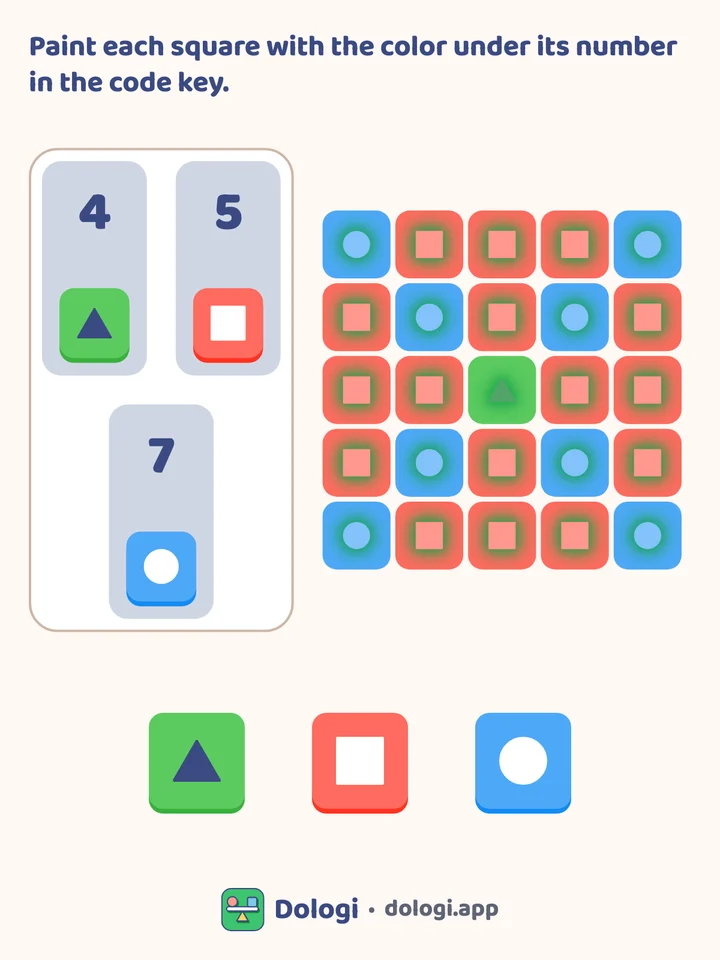
Puzzle 5: Secret picture
Ages 6–7
What it builds: The grid has twenty-five squares and three numbers; your child remembers which number goes with which color and paints every square without missing one. When it's done, a symmetrical picture appears, a reward for sticking with it. Staying with a long task to the end helps them finish a whole page of schoolwork. Keep playing: draw a five-by-five grid, think of a picture together and write numbers in the squares for the other person to paint.
Did your child enjoy these rule-following puzzles? The Dologi app has many more of the same kinds, with longer alternating rules, code keys with more strips and bigger grids, getting harder with age and with how your child plays, so they can practice focus a little every day.