At ages 7–8, children start to meet tasks with a "trap": instructions that go against habit, pictures that look almost the same, or things added just to distract. Focus at this age means reading the instruction carefully, holding on to it through the whole task and not letting their eyes get pulled away. The five puzzles below come straight from the Dologi app and go from easy to harder.
How to use this post: let your child read the question and say it back in their own words before starting. The answer is behind the "Show answer" button under each picture. If they get it wrong, look together for where the trap was; that's where the most learning happens.
Puzzle 1: Secret picture
Ages 7–8
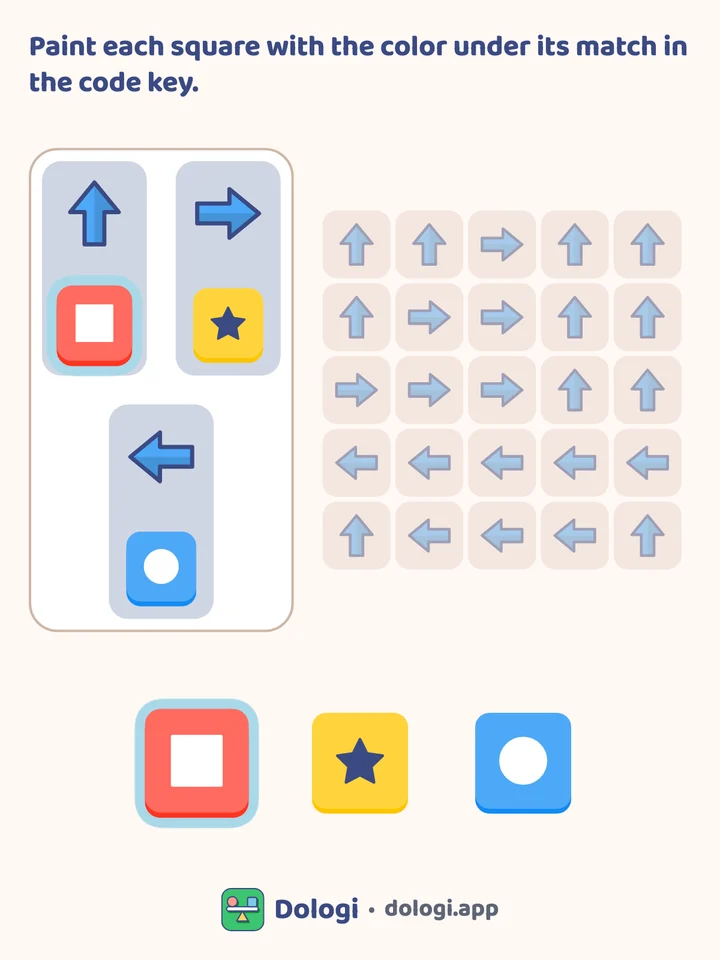
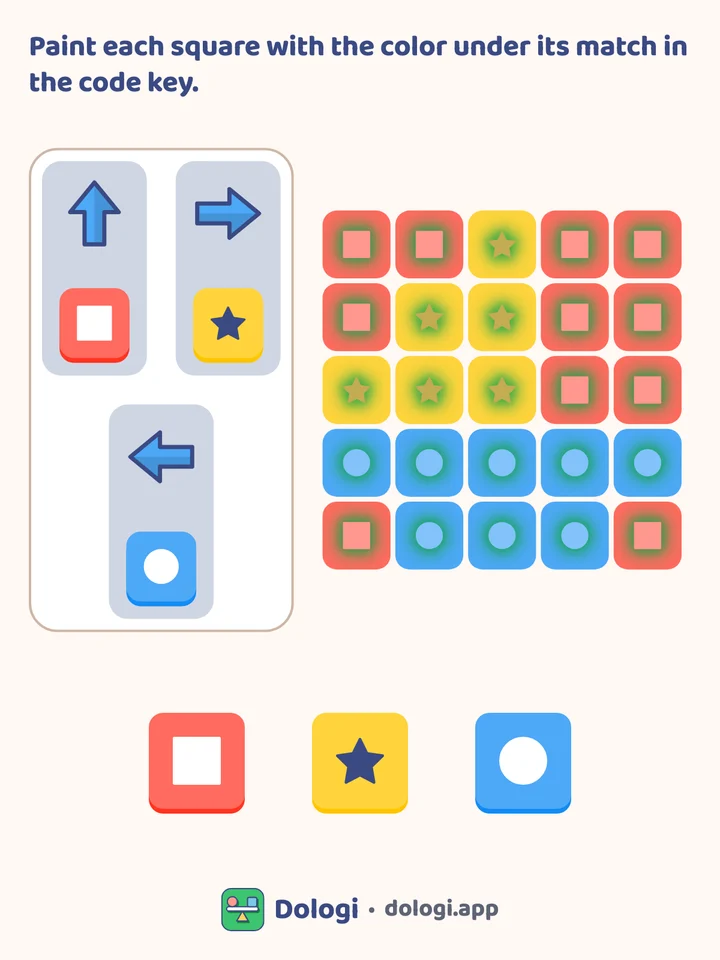
What it builds: This time the code key uses arrows instead of numbers, so your child checks the direction of each arrow in the grid and paints the matching color. Telling left, right and up apart quickly and surely helps them read maps and diagrams and get direction questions right. Keep playing: draw a grid, put an arrow in each square, choose a color for each direction and let your child paint to see what appears.
Puzzle 2: Tap in order
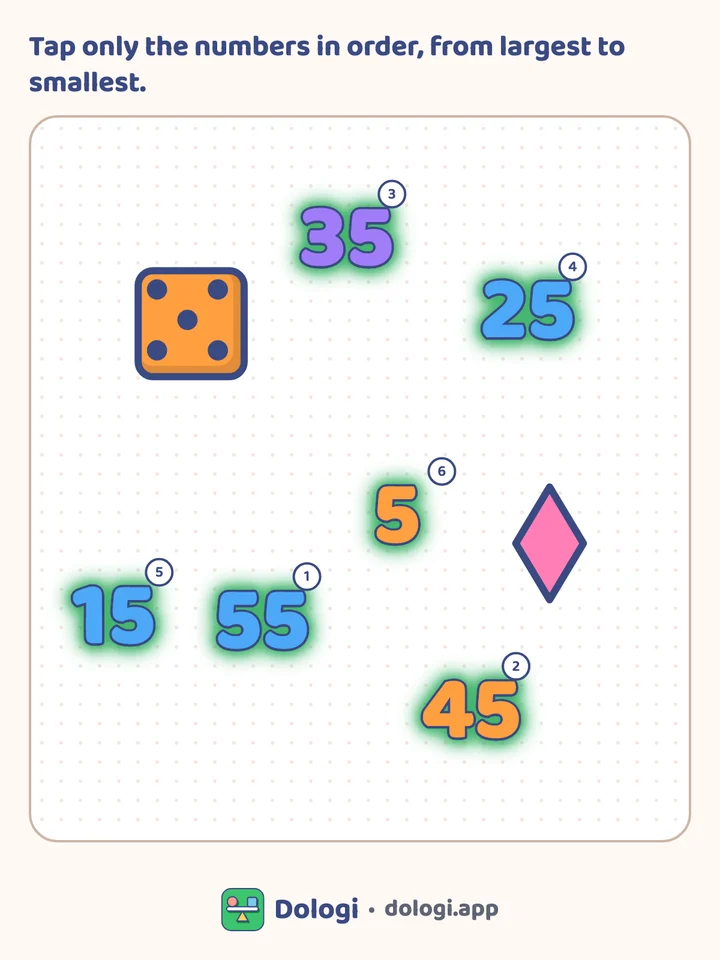
Ages 7–8
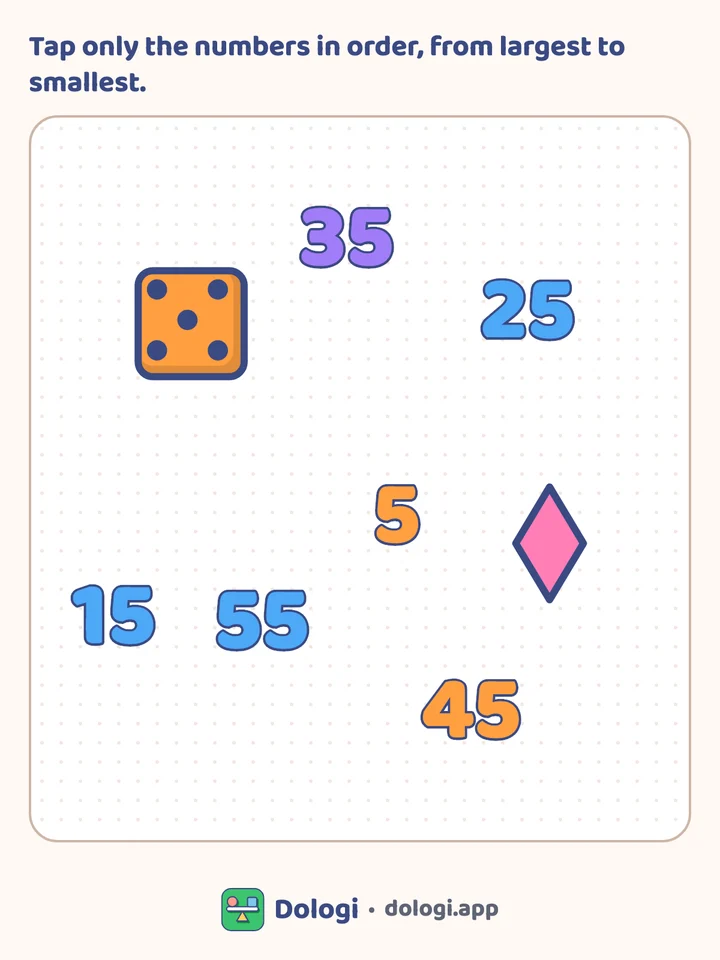
What it builds: The question asks for biggest to smallest, against habit, and a triangle and a die sneak into the frame. Sticking to an unusual instruction and ignoring what isn't a number helps them read math problems carefully instead of working on autopilot. Keep playing: write a few two-digit numbers on sticky notes around the house and let your child collect them and order them from biggest to smallest.
Puzzle 3: Shape pile
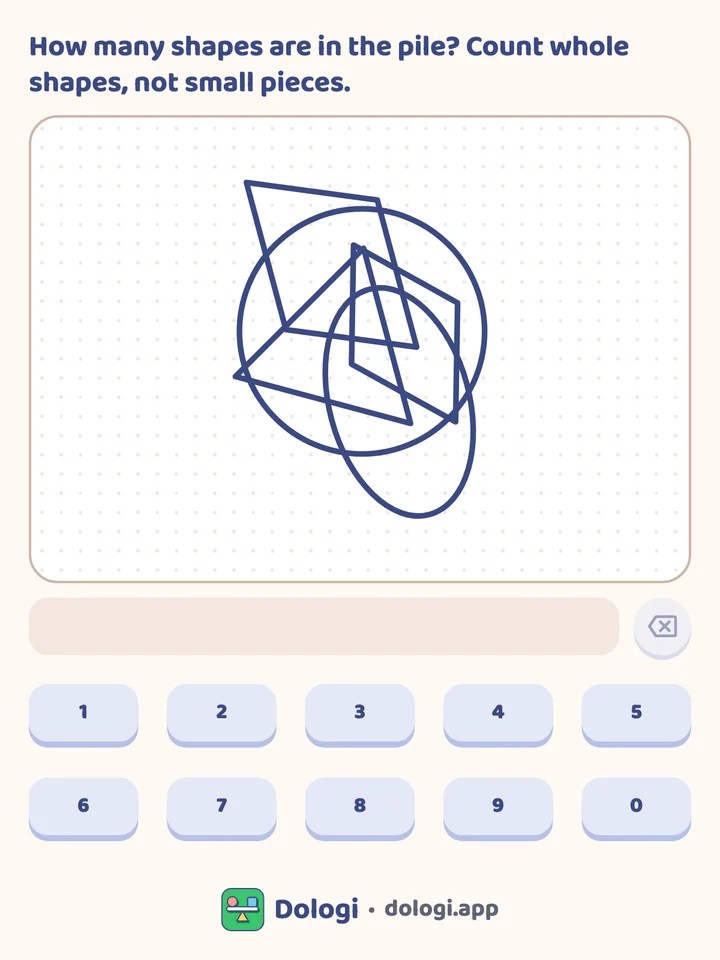
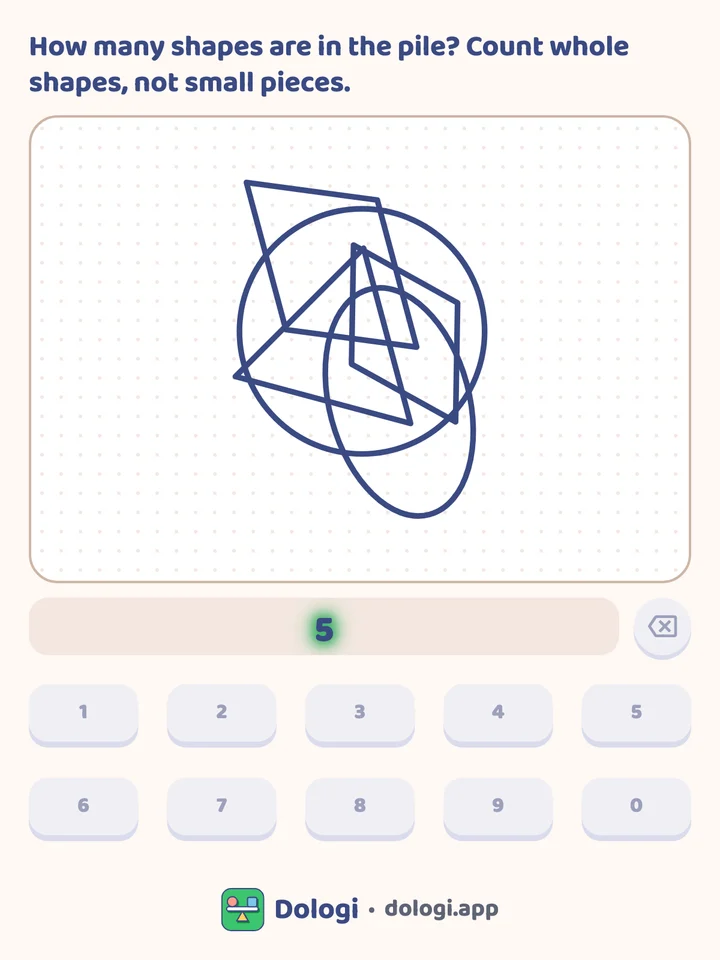
Ages 7–8
What it builds: The overlapping shapes create lots of small pieces; your child traces each complete outline and only counts whole shapes. Telling what to count apart from what only looks similar is the skill they need when counting shapes in geometry problems. Keep playing: draw a few overlapping shapes and let your child go over each one in a different color, then count the colors.
Puzzle 4: Write a secret message
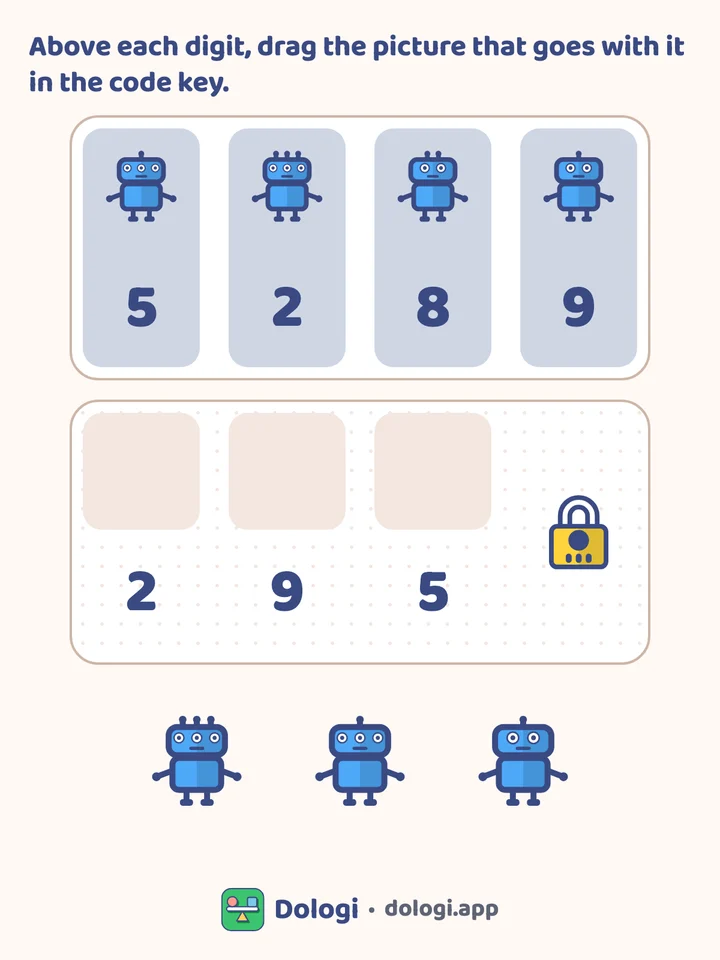
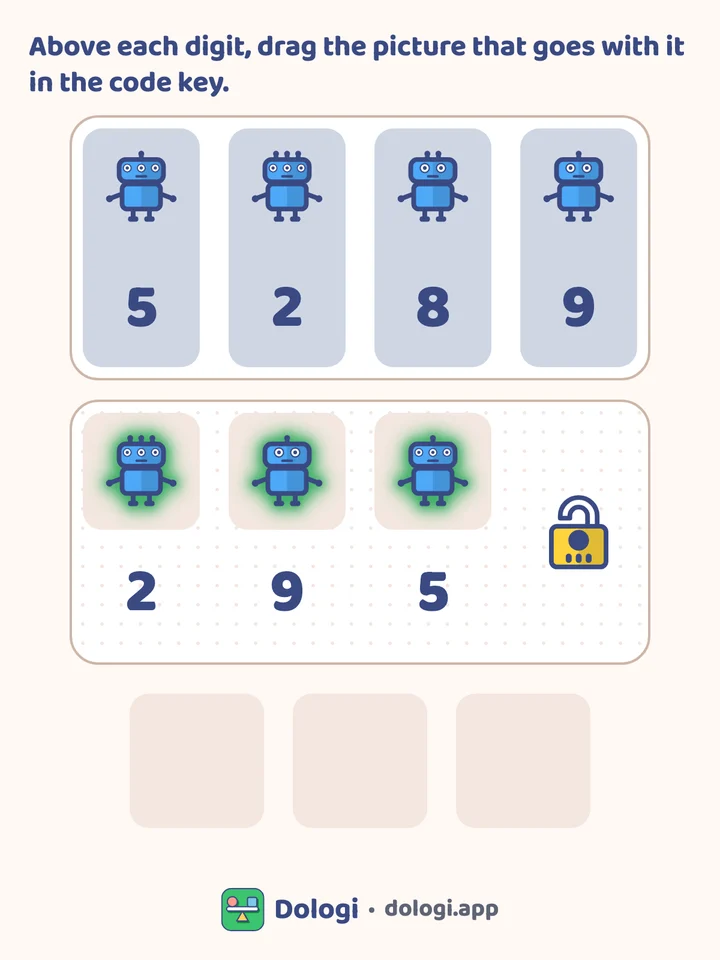
Ages 7–8
What it builds: The robots in the code key differ only in their number of eyes and antennas, so your child checks both features before dragging a robot above each digit. Checking two things at once keeps them from mixing up letters or numbers that differ by a single detail. Keep playing: draw four robots that differ only in eyes and antennas, give each a number, then read out a row of numbers for your child to draw the matching robots.
Puzzle 5: Find the shadow
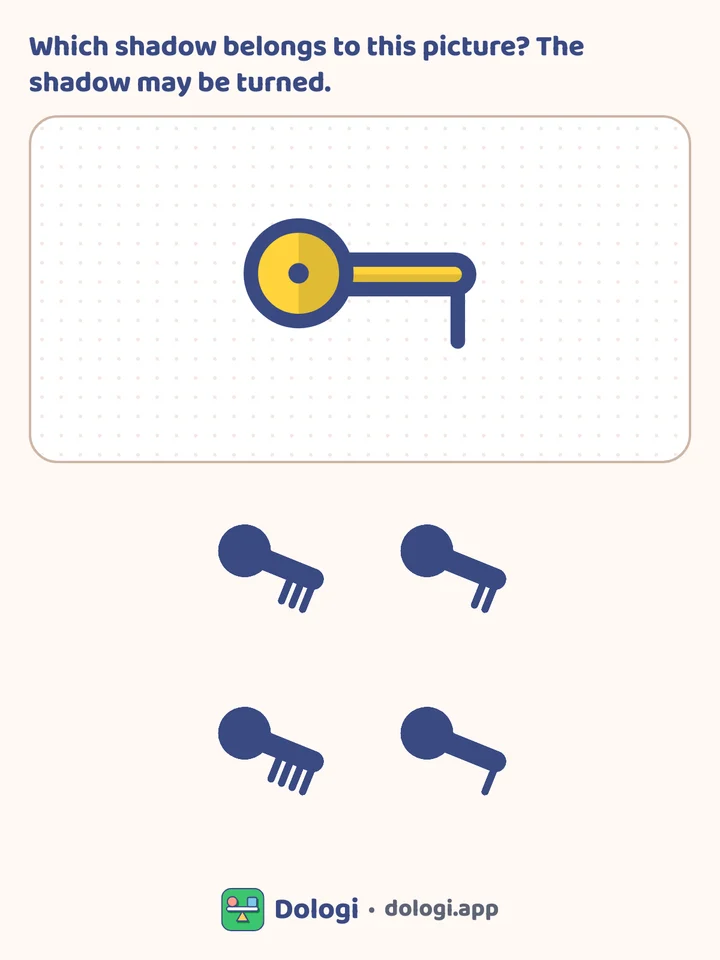
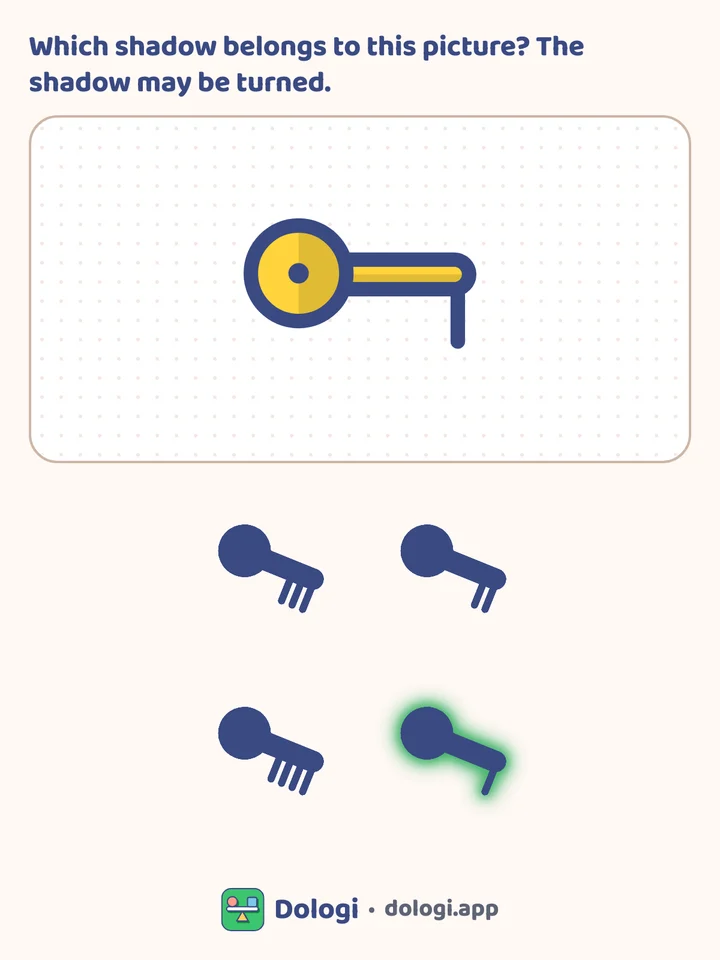
Ages 7–8
What it builds: The shadows are turned at an angle and the keys differ only in their number of teeth, so your child imagines turning the shadow back and counts every tooth. Turning a shape in their head while keeping details exact helps them recognize geometric shapes drawn in another direction. Keep playing: lay your house keys on paper, trace each one, then turn the paper and ask your child to find the right key.
Did your child enjoy these puzzles with little traps? The Dologi app has many more of the same kinds, with bigger grids, longer number rows and more overlapping shapes, getting harder with age and with how your child plays, so they can practice focus a little every day.