At ages 7–8, schoolwork gets longer and full of details that look alike: a table of numbers, a diagram, a word problem. Focus now is less about sitting still and more about checking each detail against a model, holding the instructions in mind and not letting the eyes wander off. The ten puzzles below come straight from the Dologi app, ordered from easy to hard: reading and writing codes, painting by code, counting overlapping shapes, finding shadows and untangling strings.
How to use this post: show your child one picture at a time and let them read the prompt and think it through on their own; tracing with a finger on the screen is fine. Once they have an answer, tap "Show answer" under the picture to check together. There is no need to do all ten at once; a few a day is plenty.
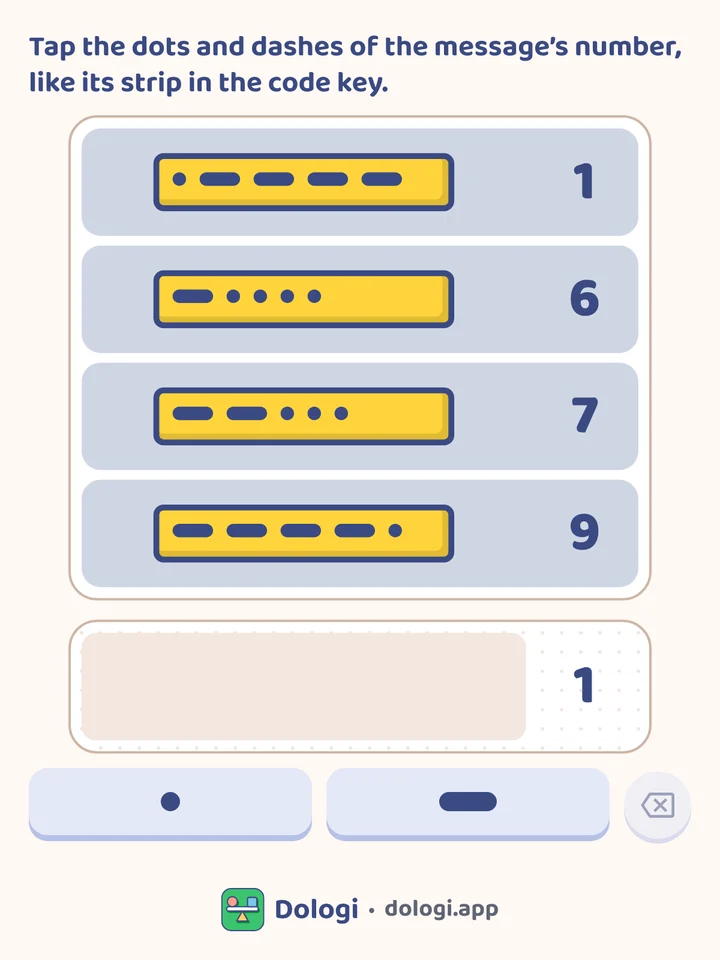
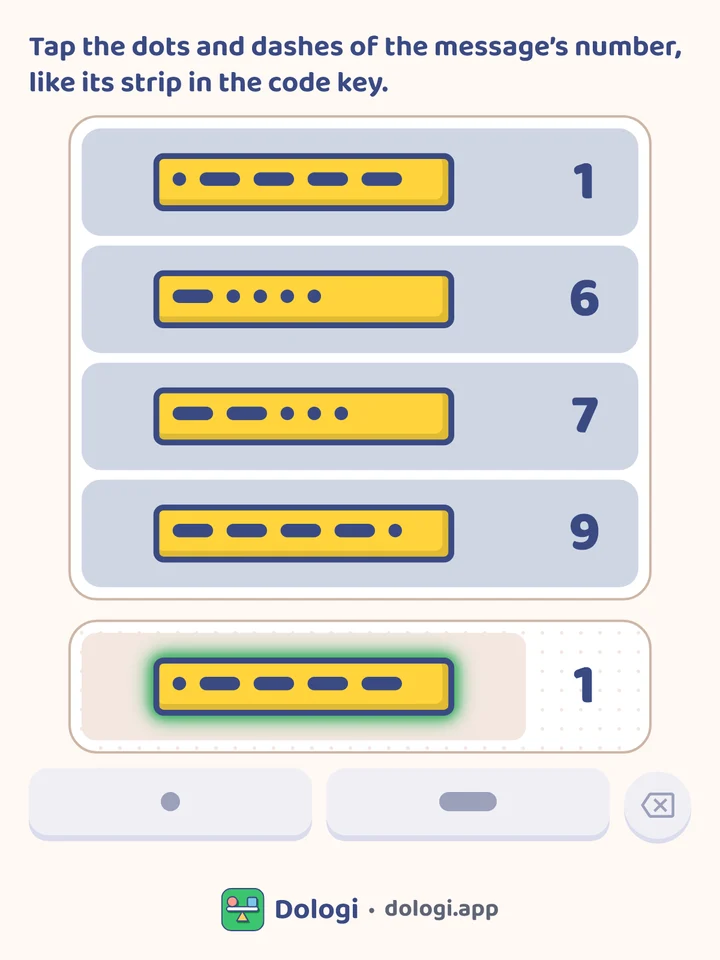
Puzzle 1: Tap the dot-dash code
Ages 7–8
What it builds: Your child finds the message’s number in the code key, then taps out its strip of dots and dashes in exactly the same order. Copying symbols precisely from a model is the skill they use to copy from the board, write down a phone number or type a Wi-Fi password. Keep playing: knock a short rhythm of quick and long taps on the table, have your child knock it back, then swap roles.
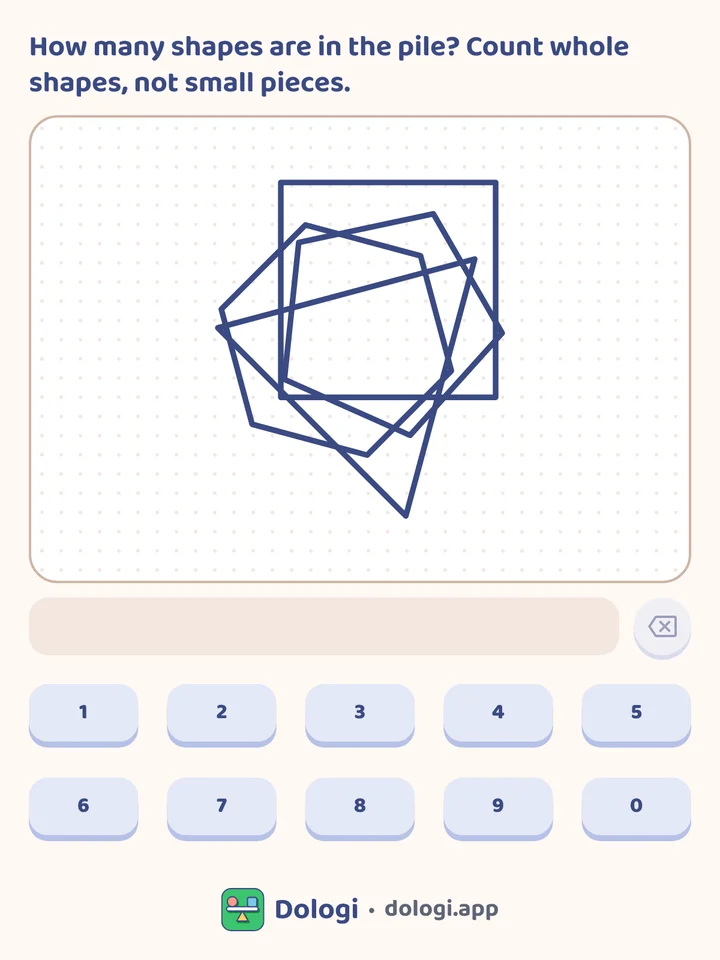
Puzzle 2: Shape pile
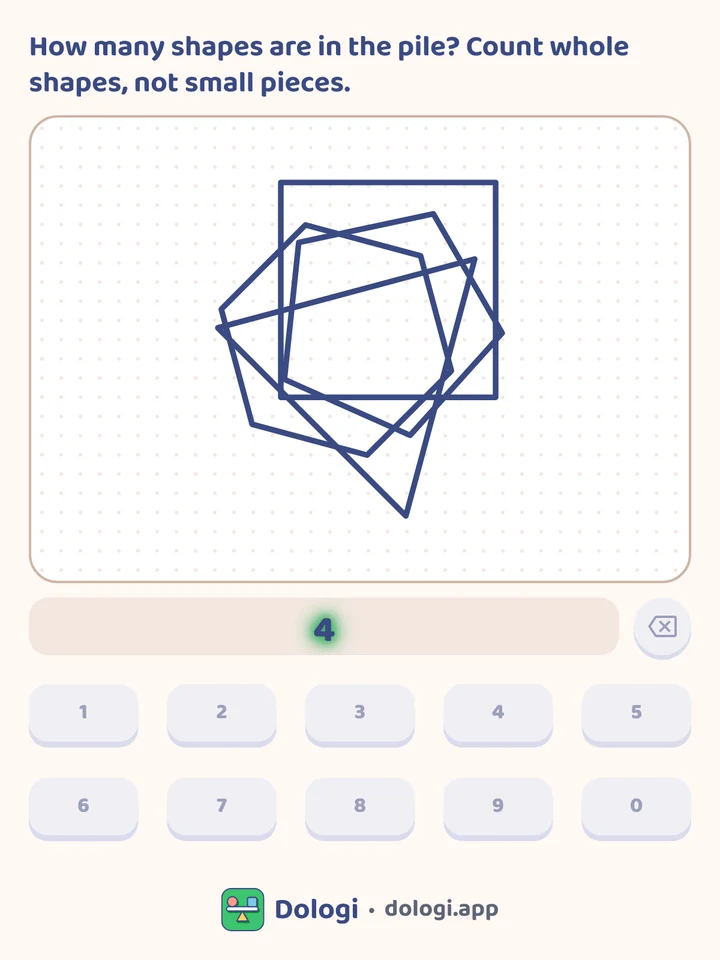
Ages 7–8
What it builds: The outlines cross so often that they make lots of little pieces, so your child has to pick one corner, trace a whole shape all the way round and only then move on to the next. Keeping their eyes on one line while other lines cut across it helps them count shapes accurately in geometry and make sense of busy diagrams. Keep playing: cut a few shapes from different colored card, pile them up and ask your child to guess how many there are before lifting them off to check.
Puzzle 3: Tap in order
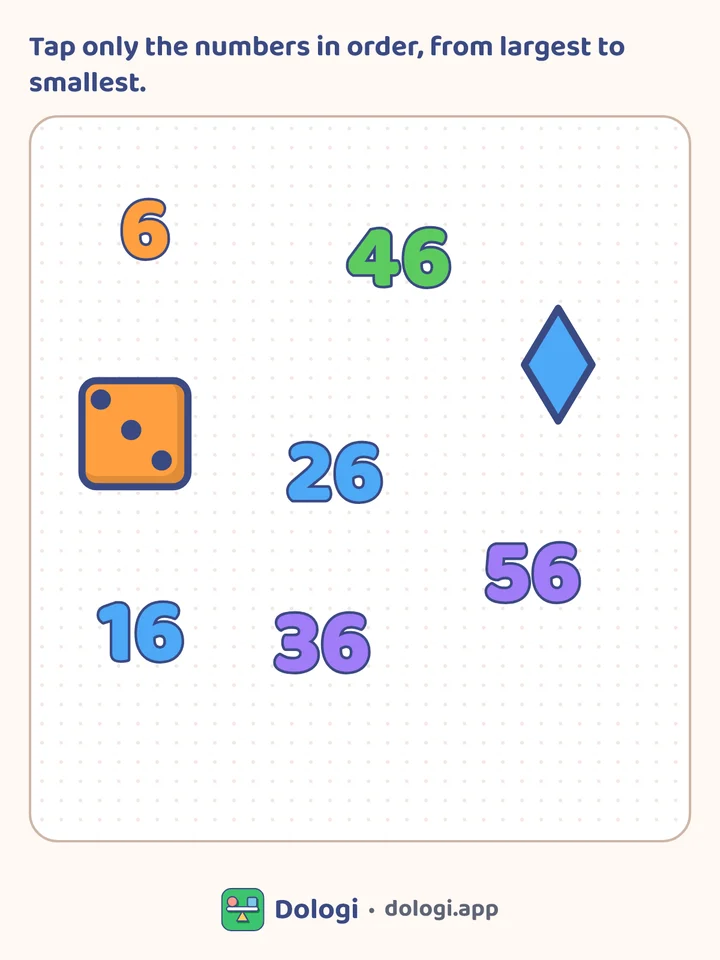
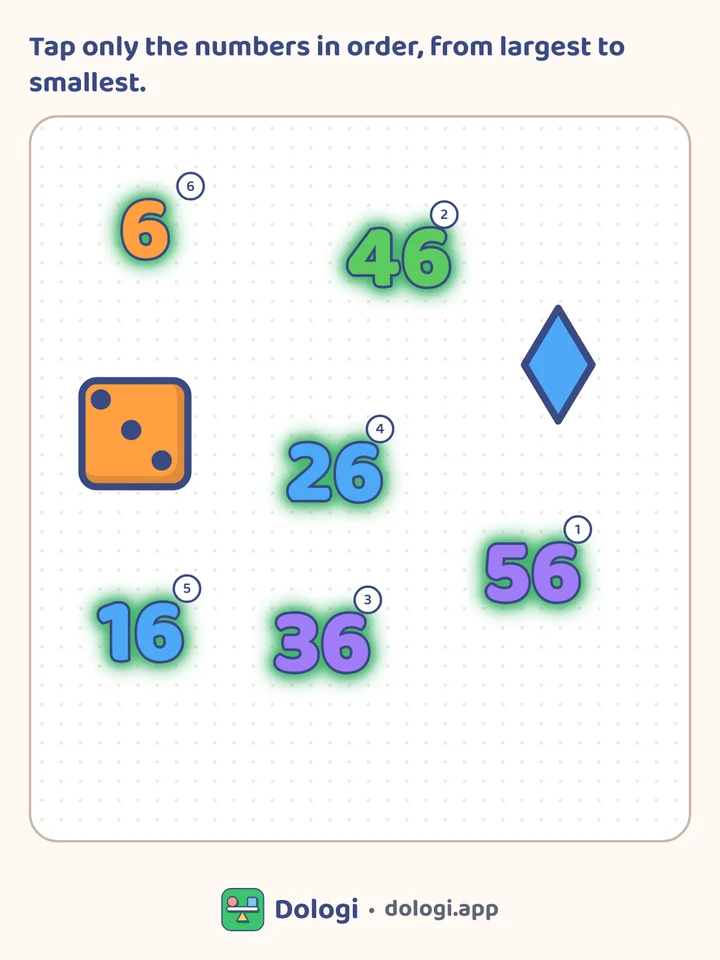
Ages 7–8
What it builds: One- and two-digit numbers are scattered across the frame, with a die and a diamond mixed in just to distract, so your child has to compare the whole group and remember how far they have got. Comparing while keeping track of progress is exactly what they need for ordering numbers or checking a long string of calculations. Keep playing: spread a few number cards among small toys on the table and time how quickly your child can put them in order.
Puzzle 4: Dot-dash code
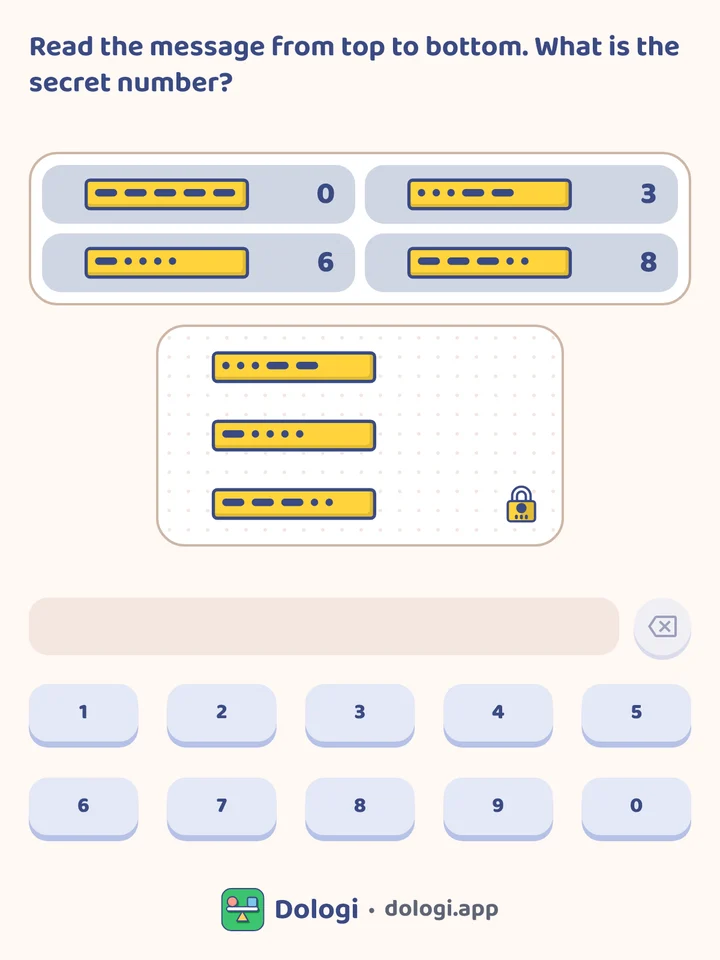
Ages 7–8
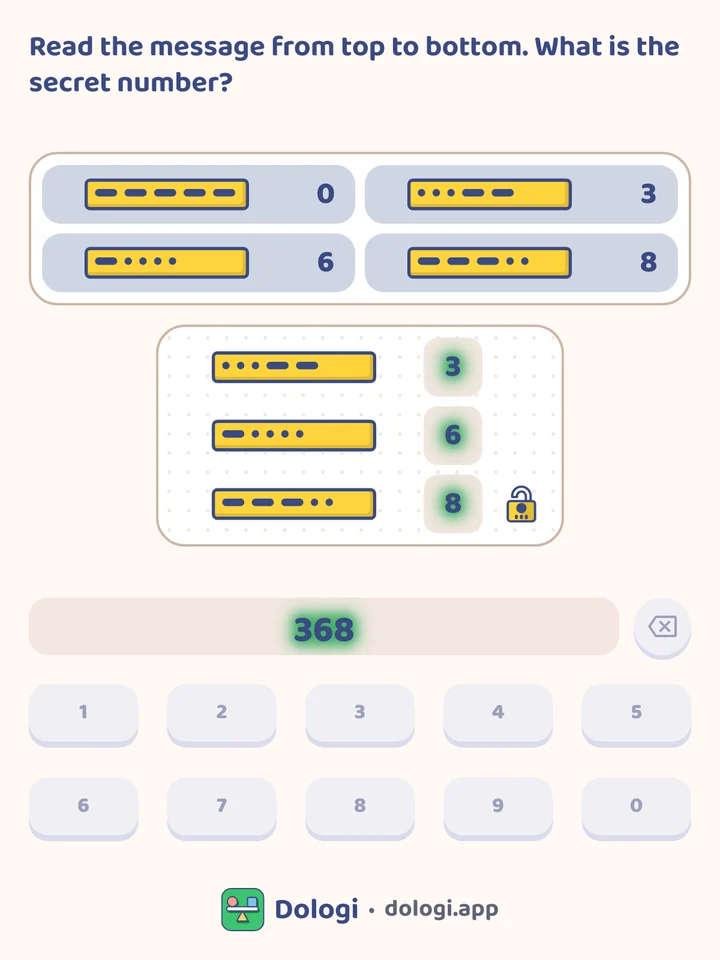
What it builds: Each line of the message is a strip of dots and dashes; your child matches every strip to the code key and puts the digits together from top to bottom. The strips differ only in how many dots there are and where the dashes sit, so careful counting beats a quick glance, just like telling apart long numbers or letters that look alike. Keep playing: invent your own dot-dash code for a few digits, write a secret number on a slip of paper and hide it somewhere at home for your child to crack.
Puzzle 5: Secret message
Ages 7–8
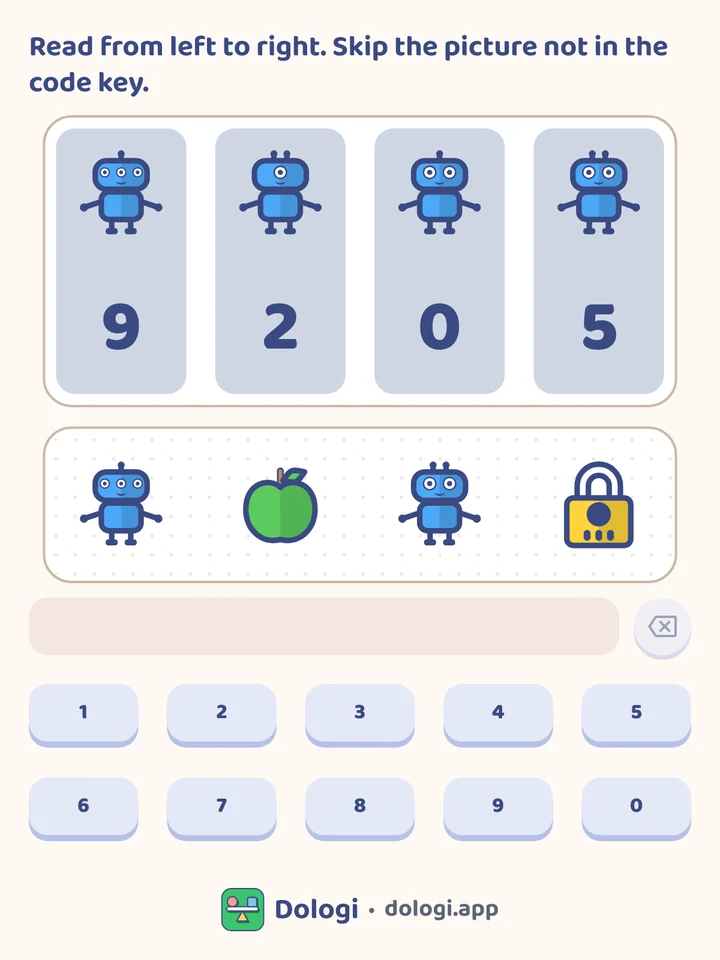
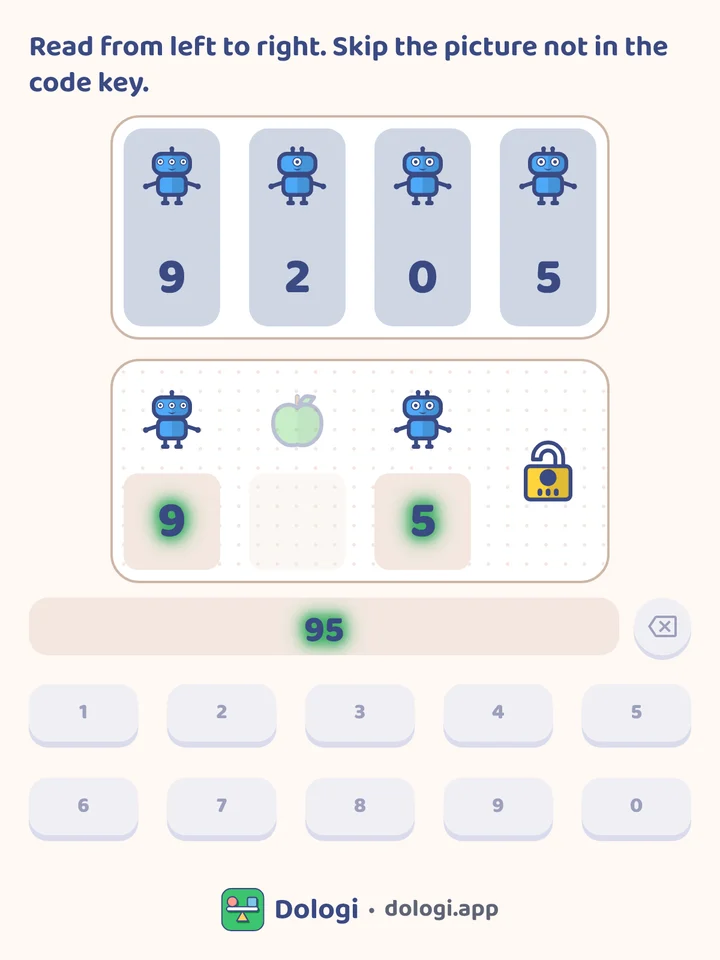
What it builds: The four robots in the key differ only in their number of eyes and antennae, and the message also contains a picture that isn’t in the key at all. Checking every detail and knowing what to leave out is the same skill your child needs to pull the useful facts from a long word problem. Keep playing: draw a row of symbols with a few "fake" ones mixed in and let your child read the code, keeping only the symbols that are in the key.
Puzzle 6: Write a secret message
Ages 7–8
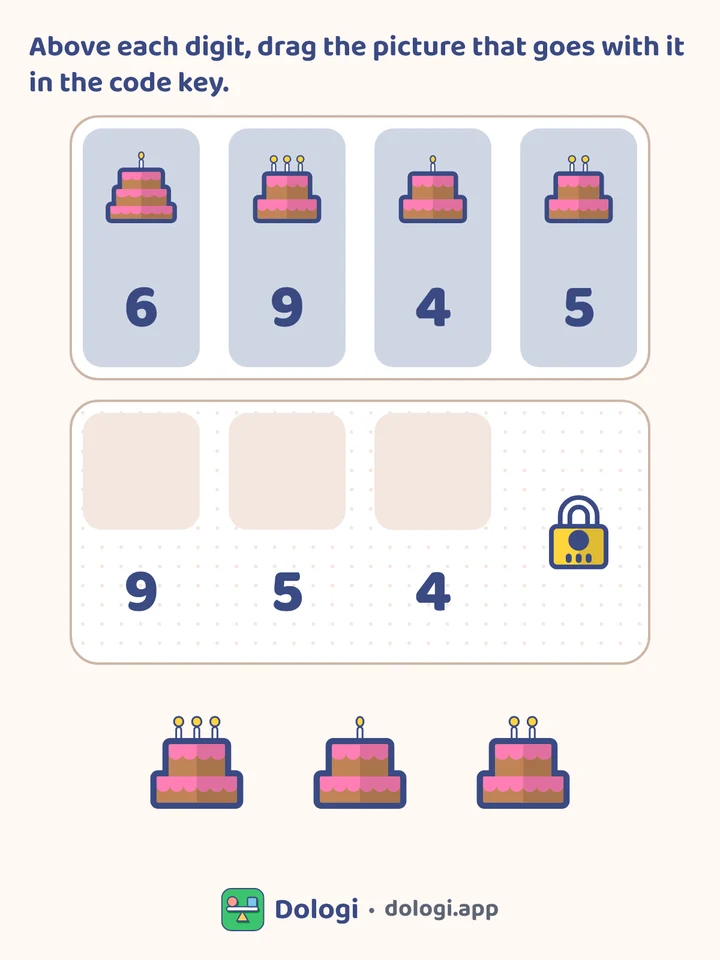
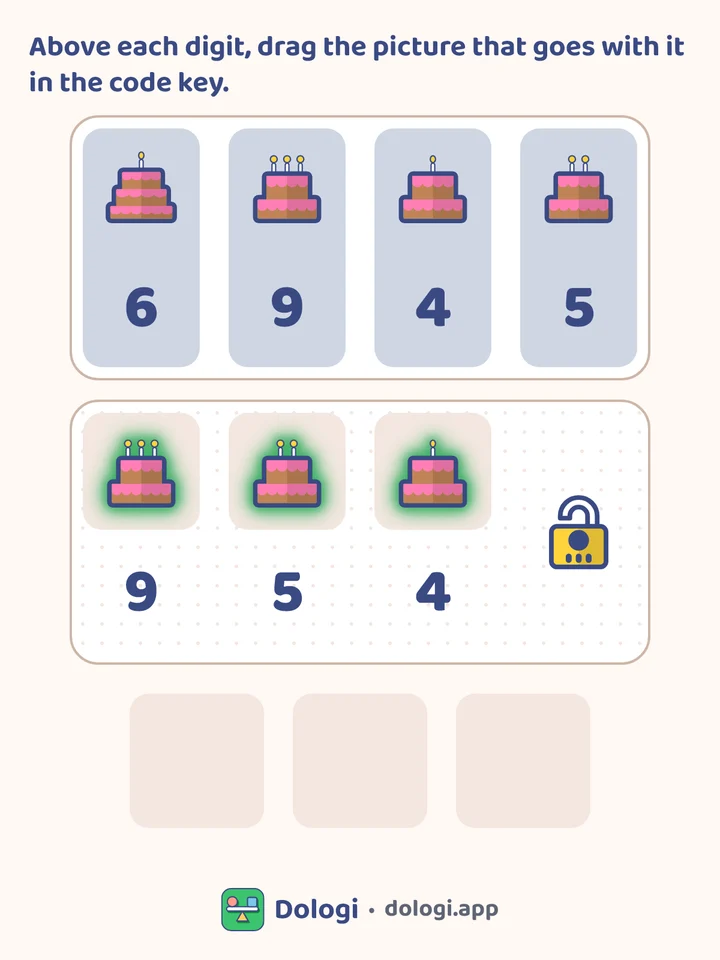
What it builds: This time it works the other way round: your child looks at a digit and hunts for the right cake in the key, where the cakes differ only in their candles and tiers. Going from number to picture means holding a digit in mind while scanning the key, which trains the working memory they use for copying and multi-step sums. Keep playing: make up a family code together, one drawing per digit, then let your child write their birthday in code.
Puzzle 7: Secret picture
Ages 7–8
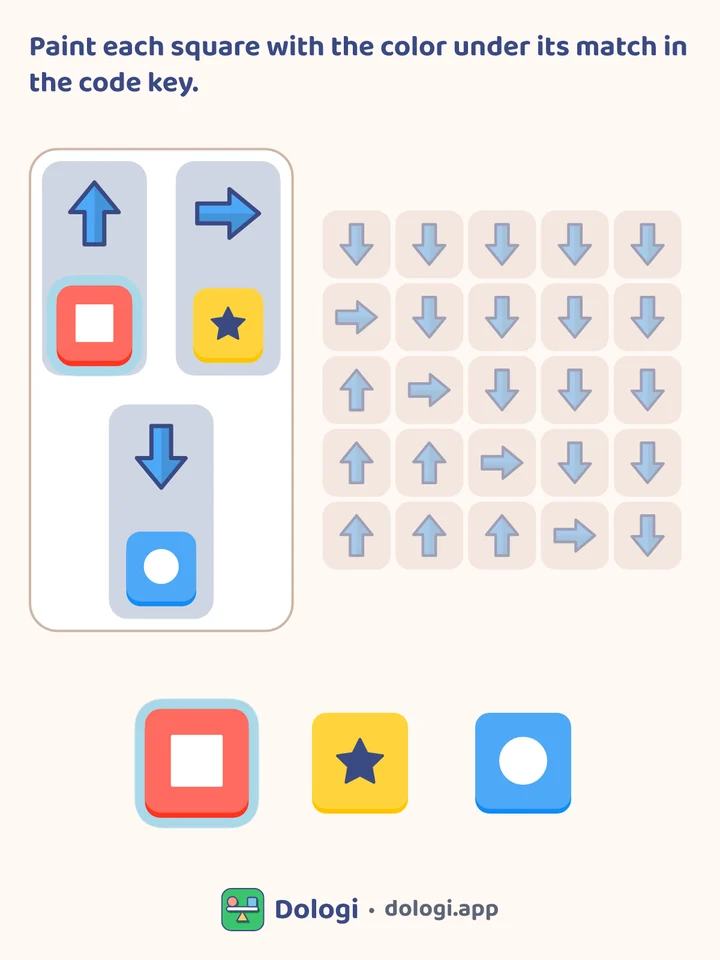
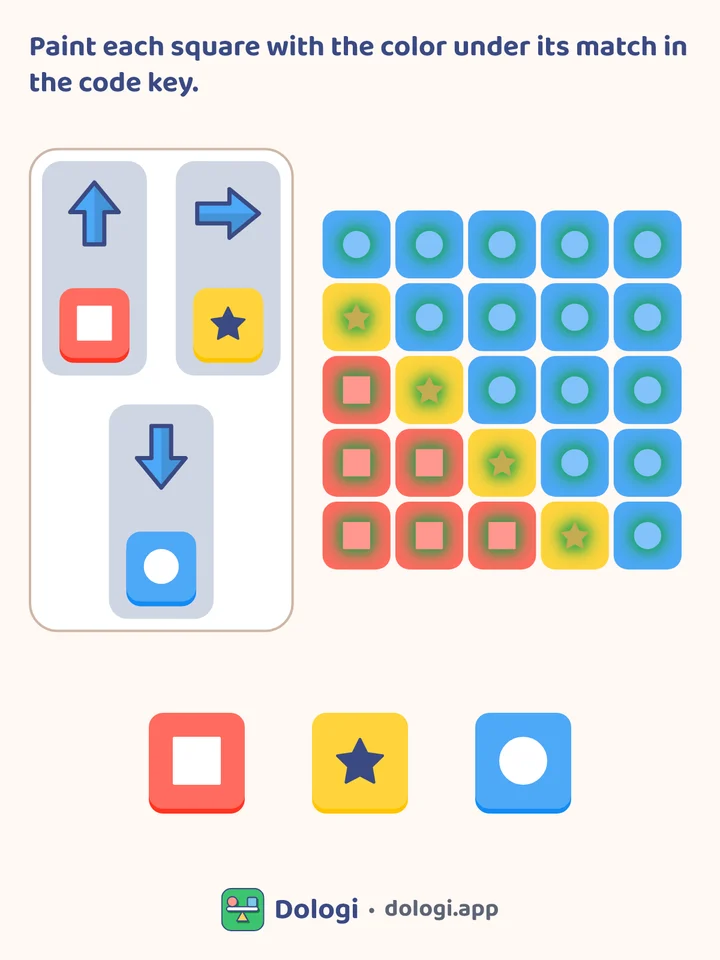
What it builds: Every square holds an arrow, and your child paints it with the color under the arrow pointing the same way in the key. Working steadily square by square without skipping a row builds the stamina they need for a long page of exercises, and a picture appears at the end as a reward. Keep playing: on squared paper, write a letter in each square and give each letter a color, then let your child paint and guess the picture before it is finished.
Puzzle 8: Find the shadow
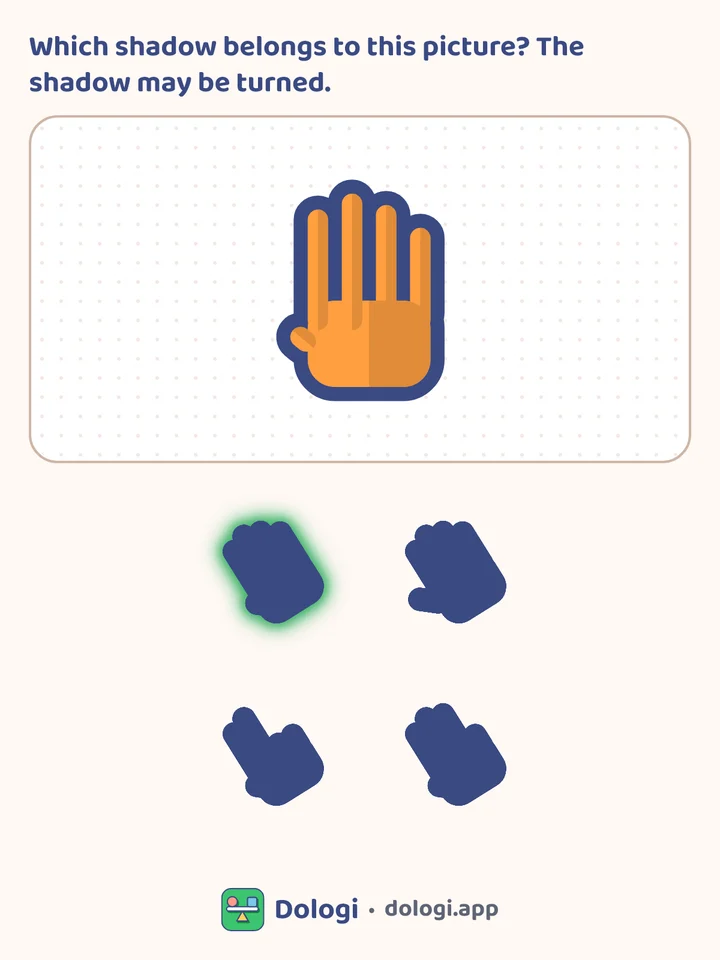
Ages 7–8
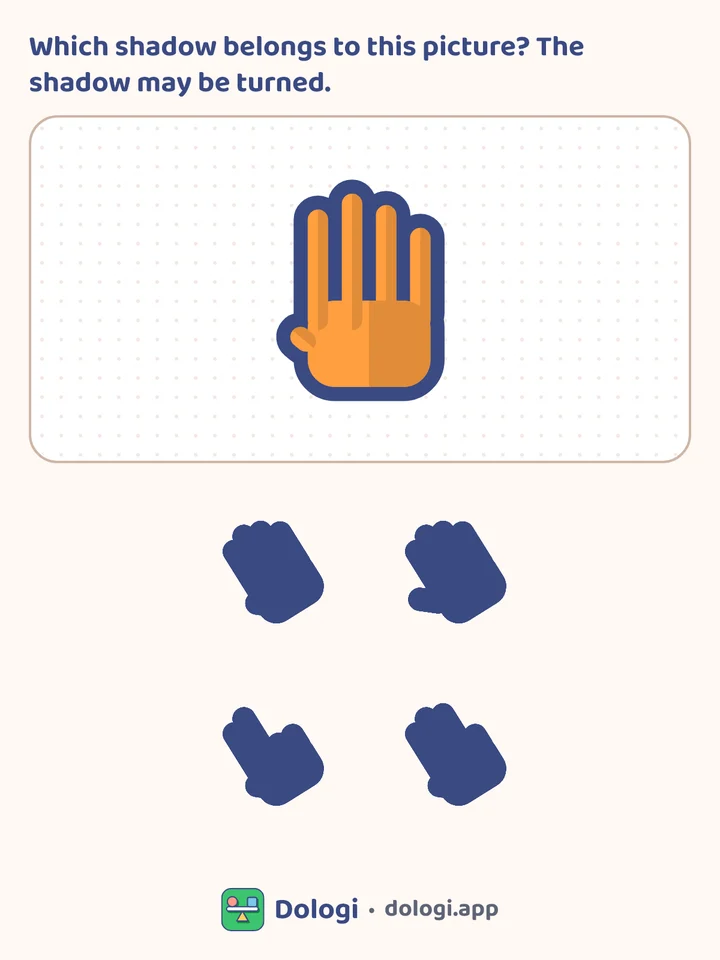
What it builds: All four shadows are turned at an angle and look very alike, so your child has to compare small details such as the number of fingers and where the thumb is. Turning a shape in their head while keeping every detail exact helps them recognize letters and geometric figures drawn at any angle. Keep playing: draw around your hand on paper in a few different poses, turn the paper around and ask your child which pose each outline shows.
Puzzle 9: Untangle the strings one by one
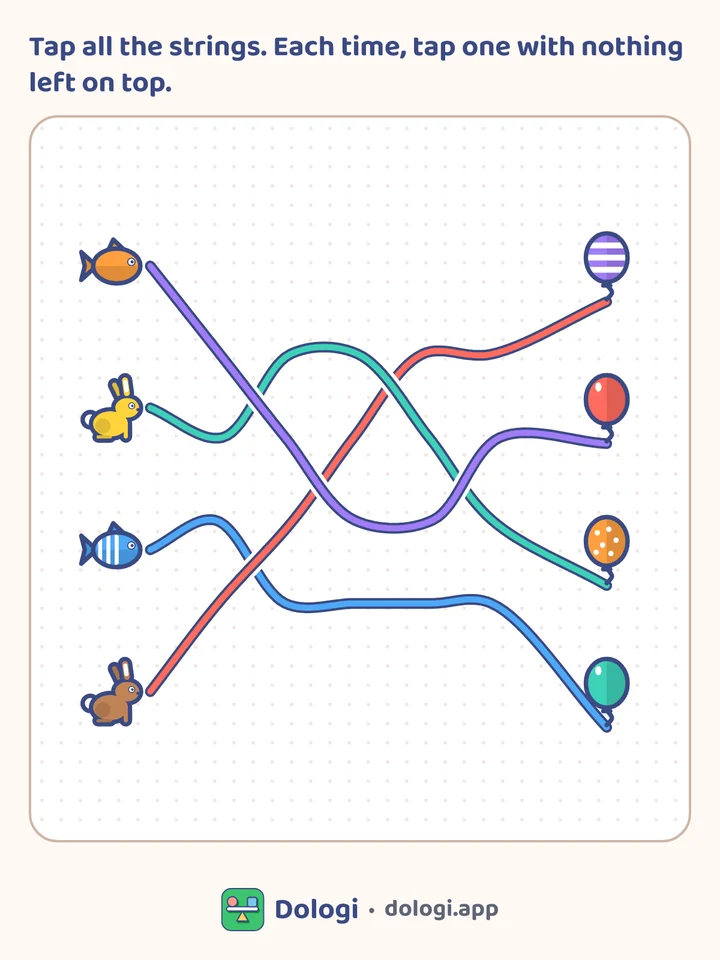
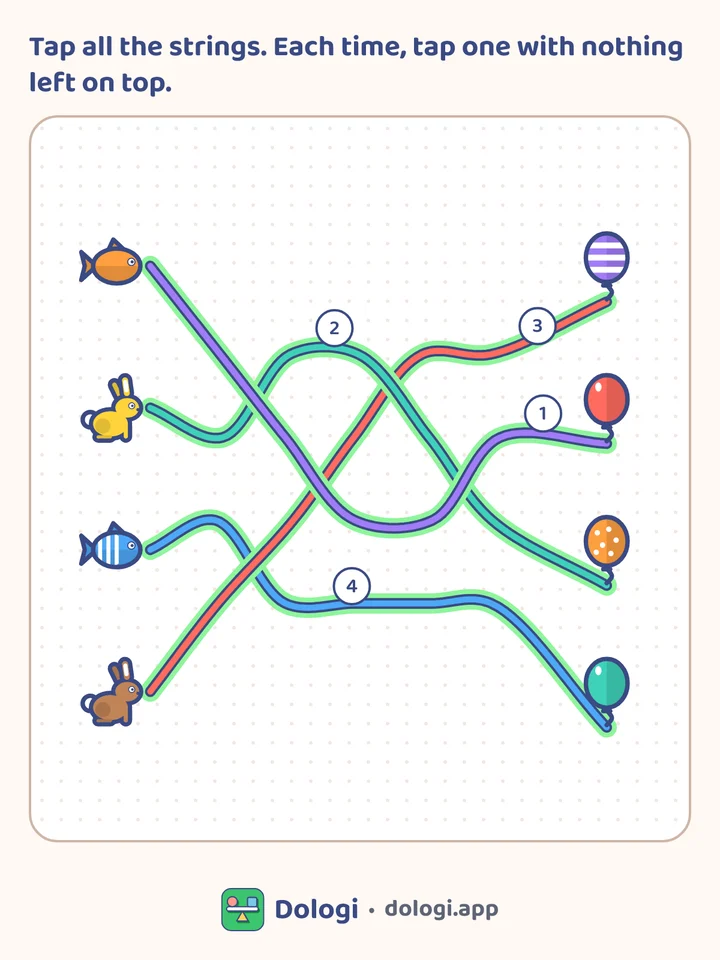
Ages 7–8
What it builds: At every crossing your child has to see which string lies on top, then lift the strings off one at a time, starting with one that nothing covers. After each lift the tangle changes, so they need to look at the whole picture again instead of sticking to an old plan, a habit that helps them recheck their work after every step. Keep playing: drop a few shoelaces or ribbons in a pile on the table and let your child lift them one by one without moving the others.
Puzzle 10: Follow the string
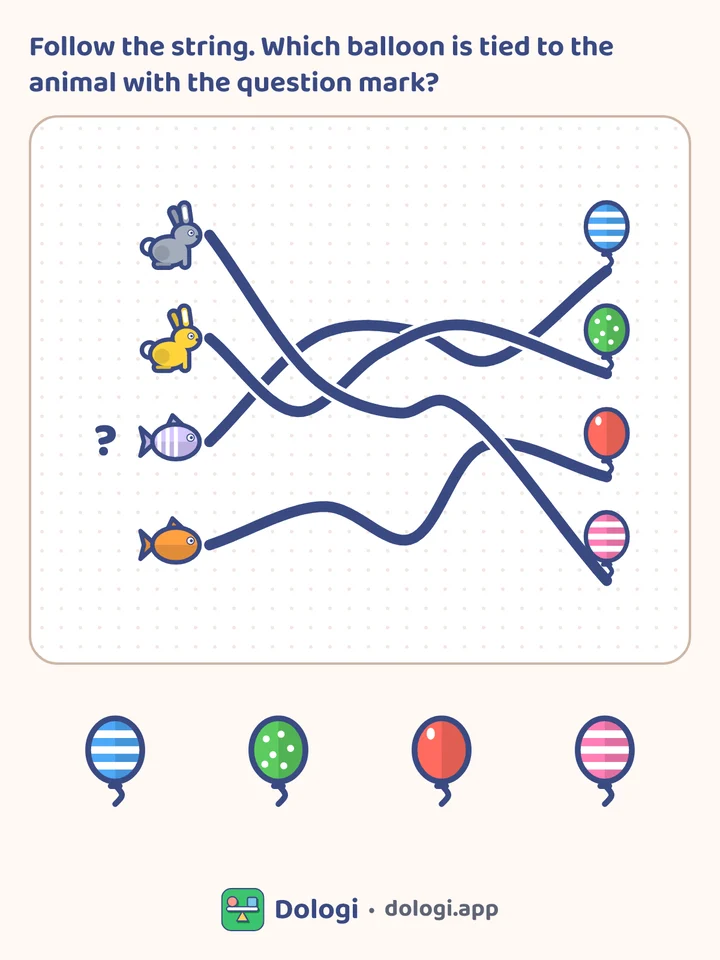
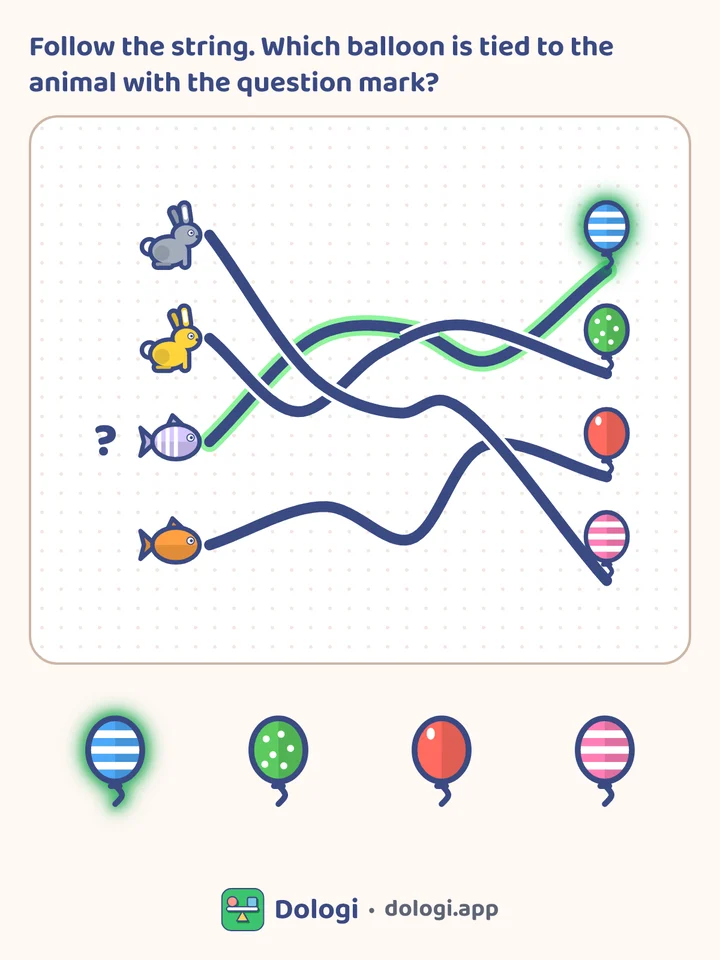
Ages 7–8
What it builds: The strings are all the same color and cross many times, so your child has to follow a single string with their eyes, or a finger, from the animal with the question mark all the way to its balloon. Keeping their eyes on one line without slipping onto another is what they need for reading across a table, following a map or keeping their place in a long text. Keep playing: draw a tangle of lines on paper with an animal at each end, let your child guess first, then trace the line in crayon to check.
If your child enjoyed cracking codes and untangling strings, the Dologi app has many more puzzles like these, with longer codes, bigger grids to paint and more strings to follow, getting harder with age and with how your child plays. A short session each day is enough to turn looking carefully into a habit.