Kids ages 8–10 can focus for longer, but they also meet more things that can trick them: facts that look alike, pictures that are turned, numbers that sneak in and don't follow the rule. Focus at this age means choosing what to look at and ignoring the rest. The five puzzles below come straight from the Dologi app and go from easy to harder.
How to use this post: show your child one picture at a time and let them solve it on their own. The answer is behind the "Show answer" button under each picture. Try a fun timer if they like, but right matters more than fast: when they finish, they check once more before opening the answer.
Puzzle 1: Follow the string
Ages 8–10
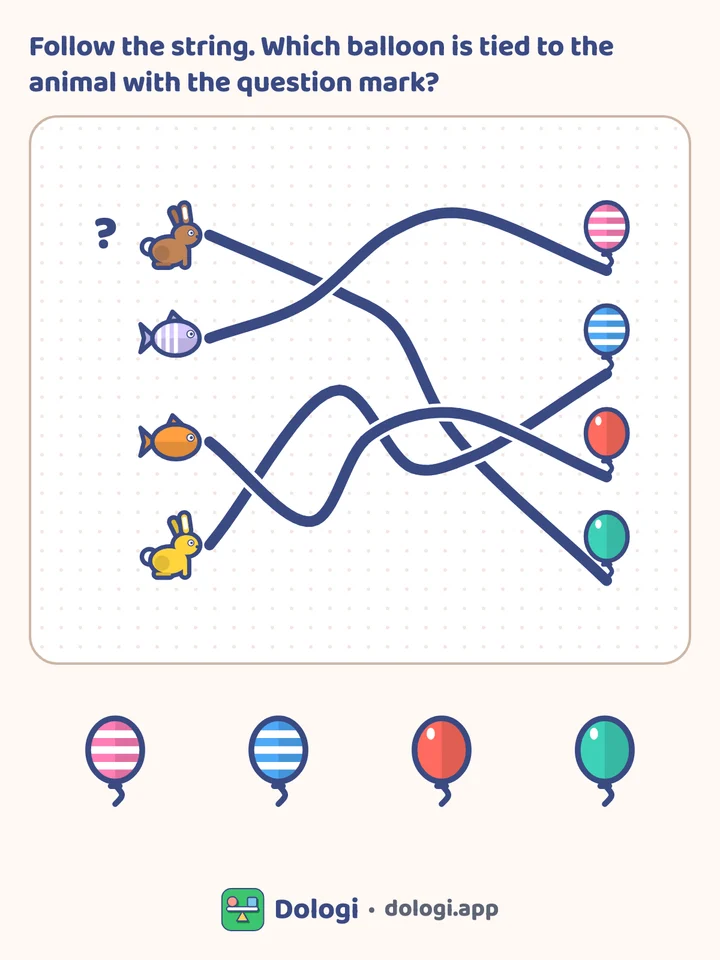
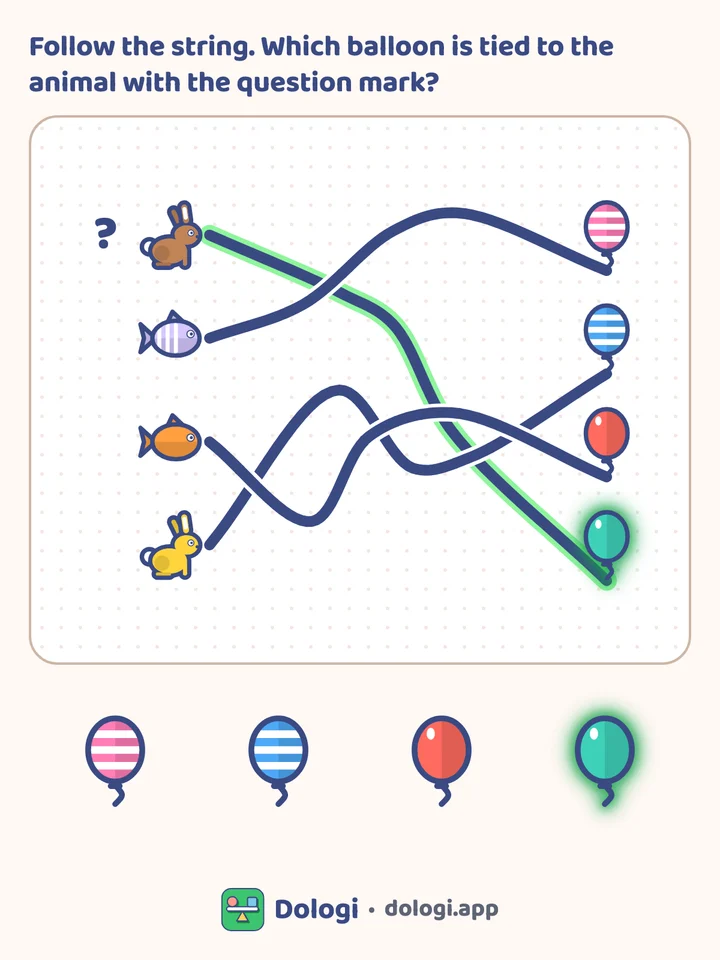
What it builds: This time all the strings are the same color, so your child can't rely on color and has to keep their eyes on one string through every crossing. Following a line with no landmarks helps them read across the right row of a data table and follow a line graph. Keep playing: draw a one-color tangle of strings in pencil together and take turns finding where a string ends.
Puzzle 2: Find the shadow
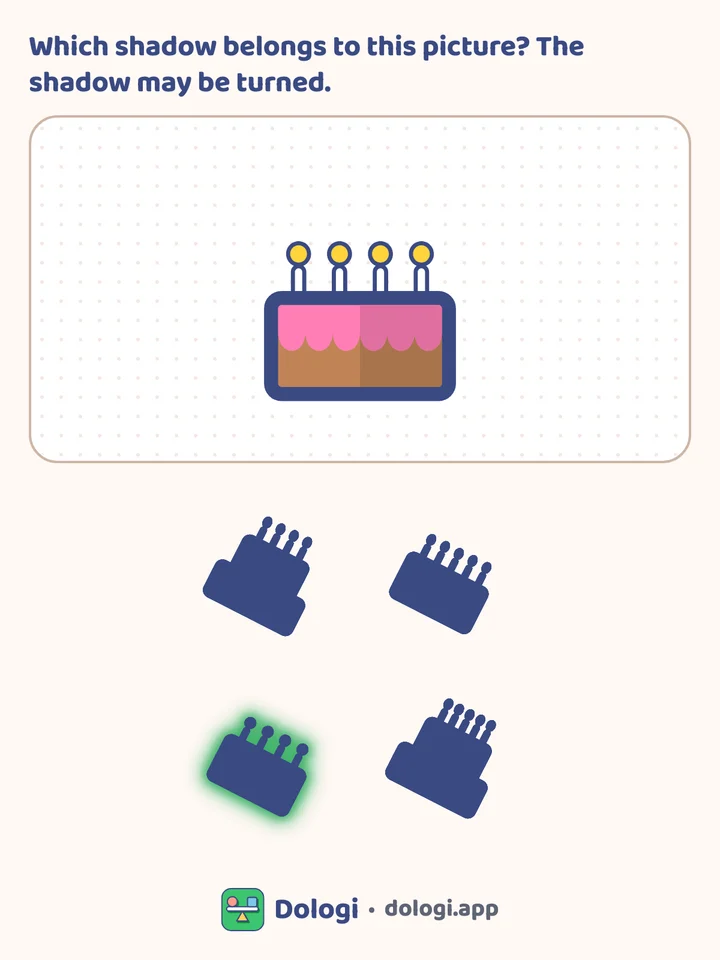
Ages 8–10
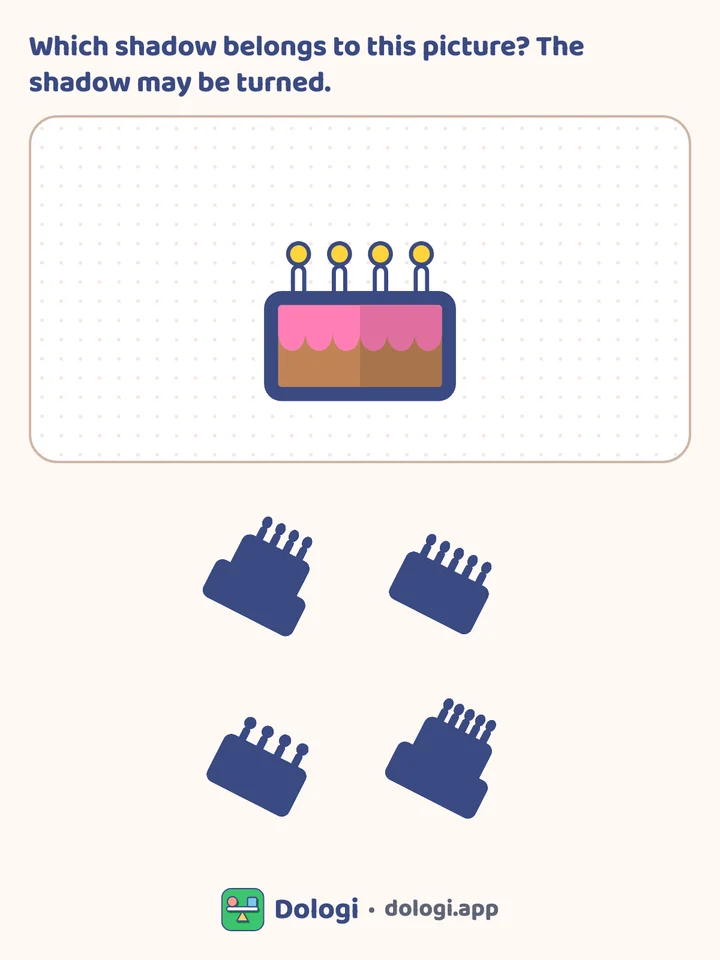
What it builds: The shadows are all turned at an angle, so your child imagines turning them back upright and counts details like layers and candles. Turning a picture in their head while keeping every detail right is what they need for geometry and for reading maps. Keep playing: put a toy on the table, shine a flashlight from different directions and ask your child to predict what the shadow will look like.
Puzzle 3: Tap in order
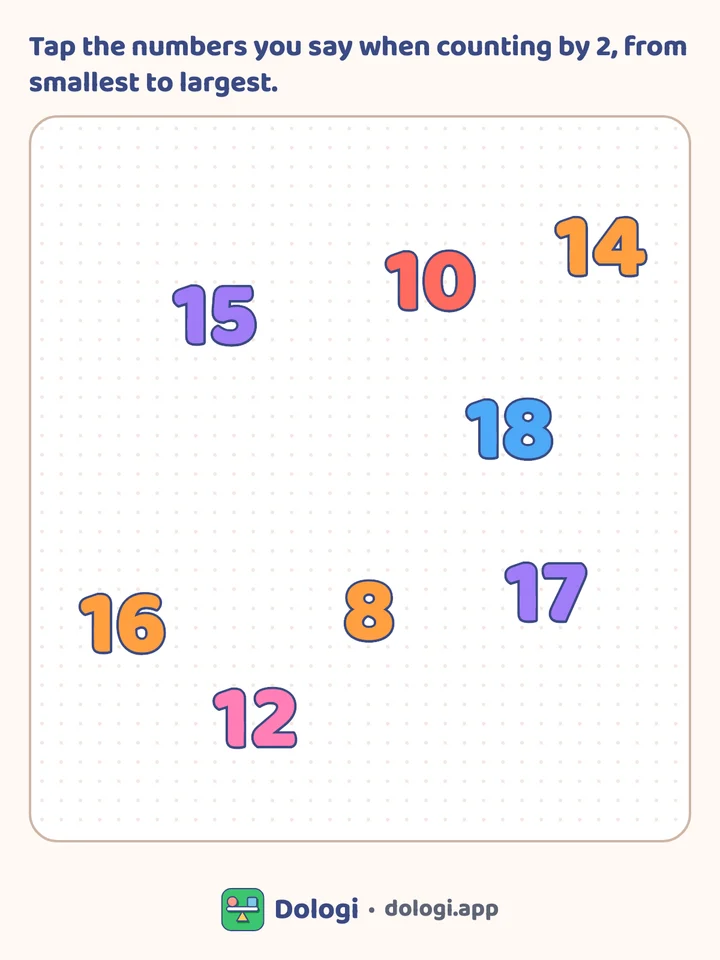
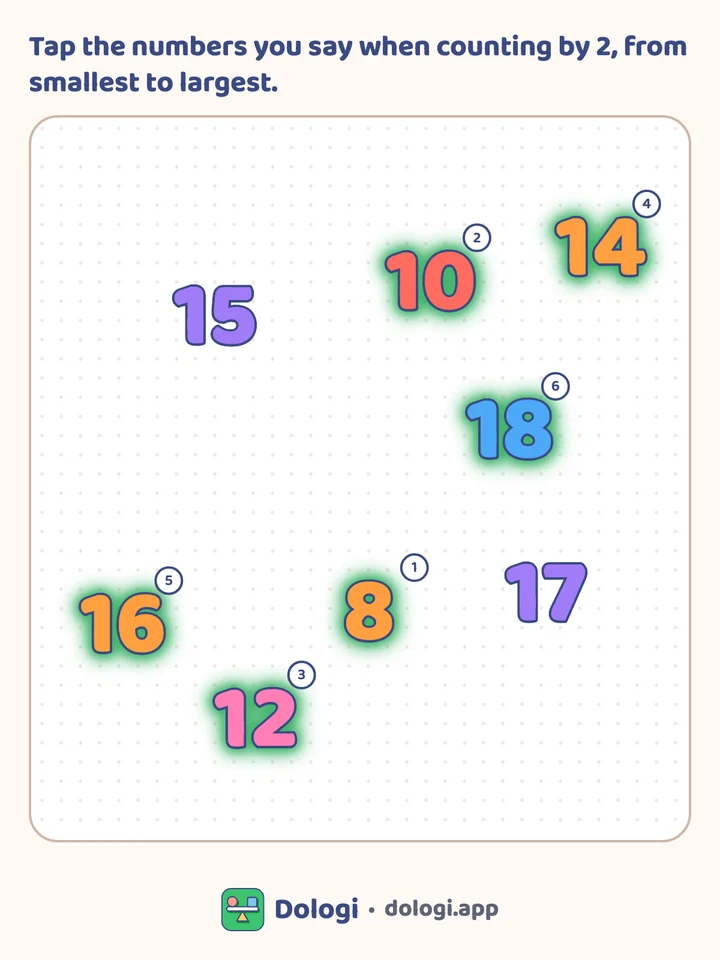
Ages 8–10
What it builds: Some odd numbers sneak into the frame, so your child has to know the next number when counting by 2s and skip the ones that don't belong. Holding a counting rule in mind without being pulled off by other numbers helps them learn times tables and do mental math faster. Keep playing: on a walk, count even or odd house numbers together; whoever slips passes the turn.
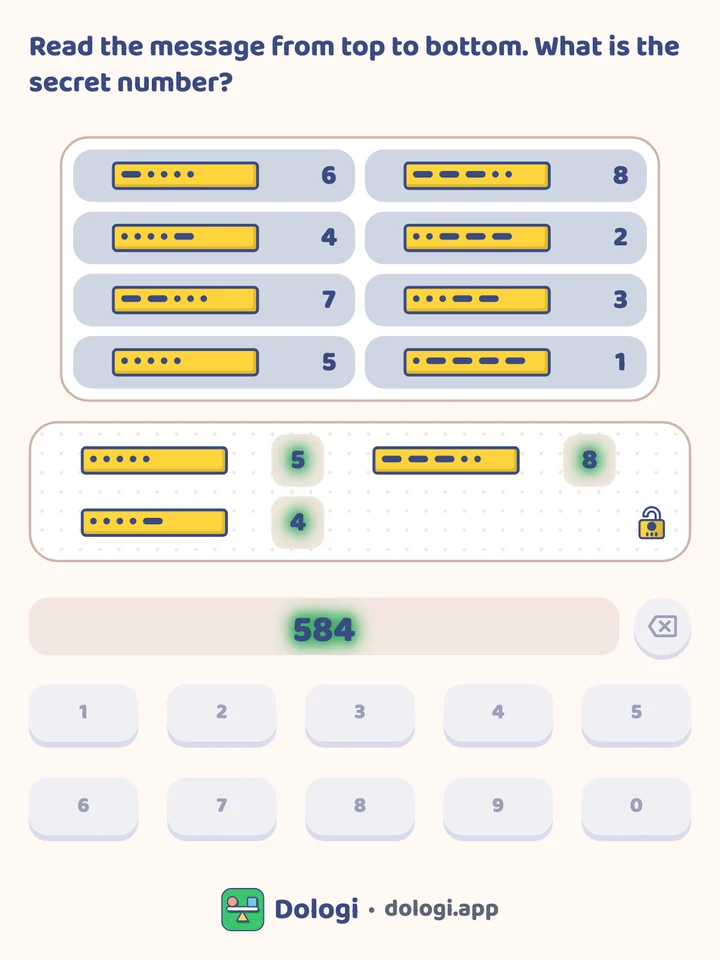
Puzzle 4: Dot-dash code
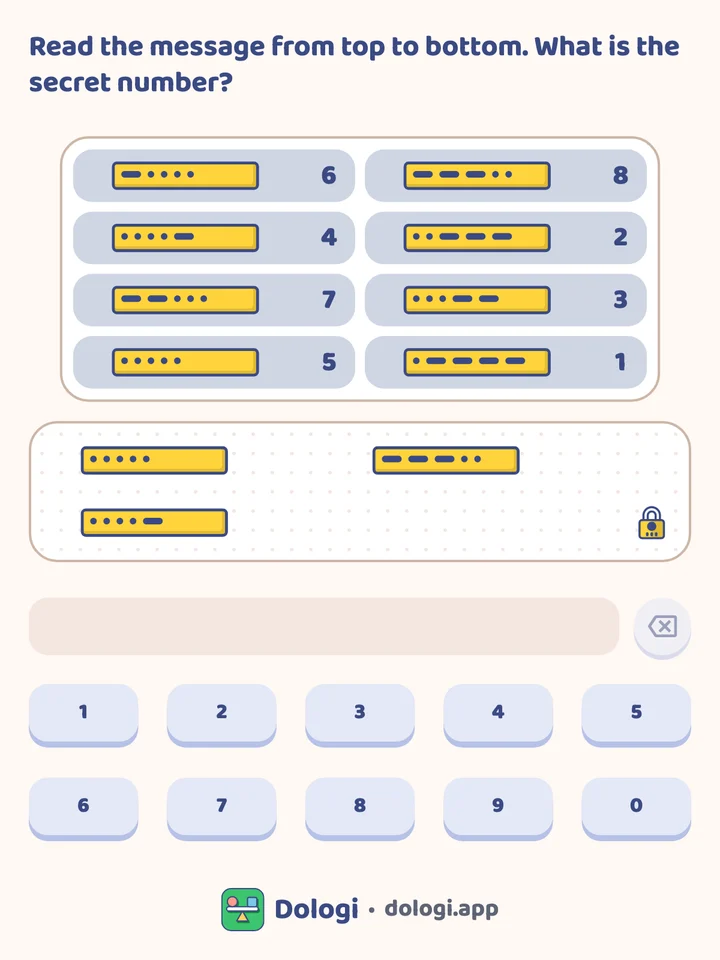
Ages 9–10
What it builds: The code key has eight strips, and several differ only in where one dash sits, so your child compares both how many dots and dashes there are and their order. Paying attention to order, not just amount, keeps them from mixing up 36 and 63 or switching letters when writing. Keep playing: write the same set of digits in a few different orders and ask your child to find the two rows that match exactly.
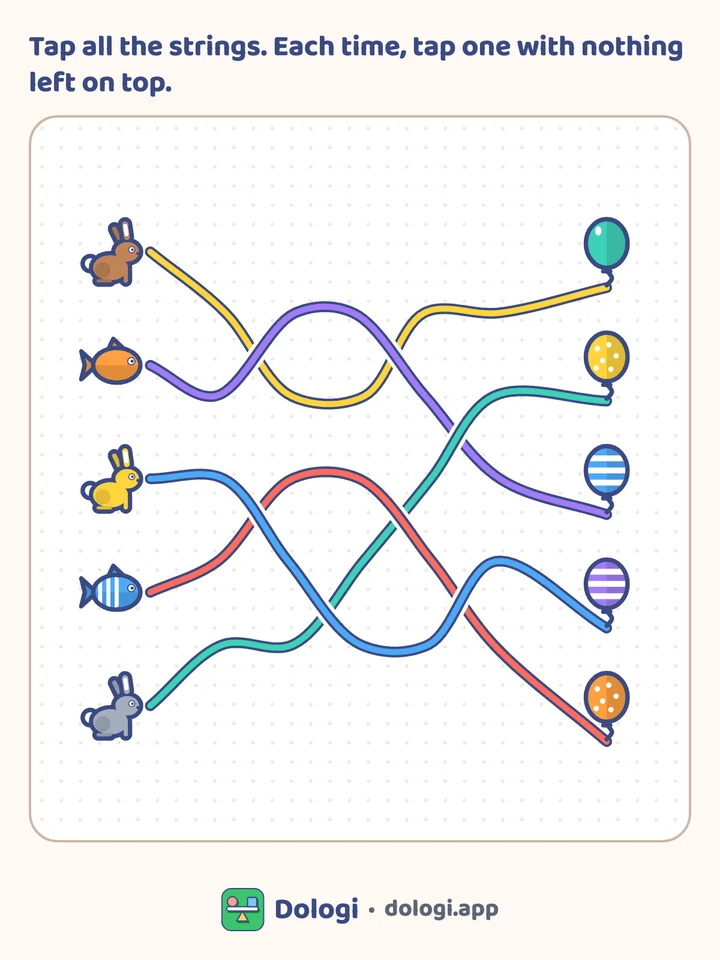
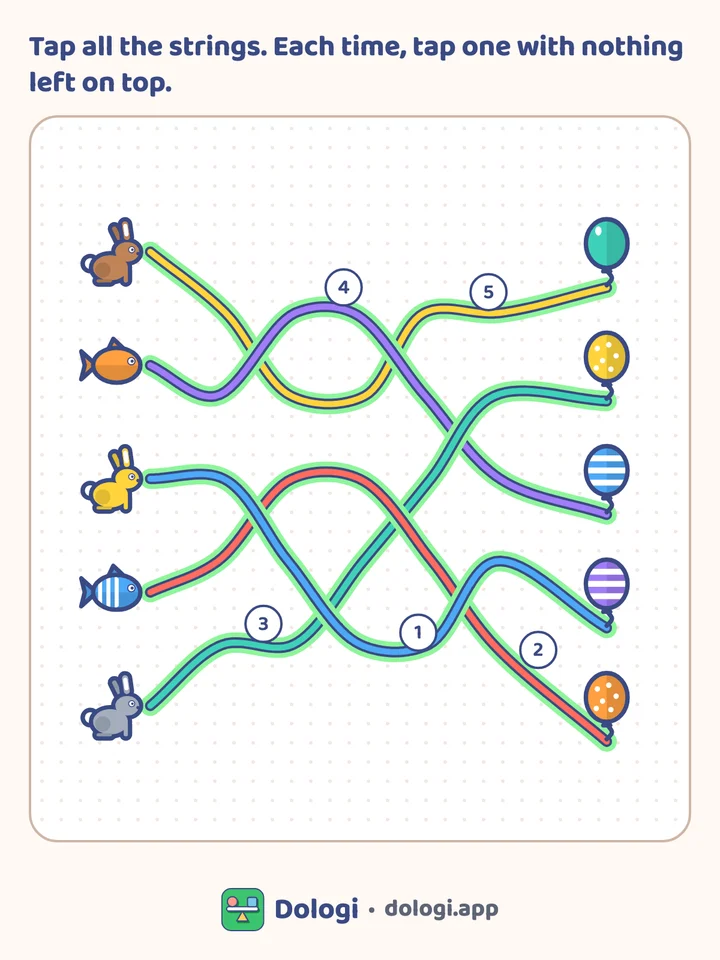
Puzzle 5: Top string
Ages 9–10
What it builds: Five strings are densely woven and some are covered in several places; your child finds the top string, removes it, then looks at the whole picture again before each next move. Rechecking the situation after each step, instead of sticking to an old plan, is a good habit for multi-step problems. Keep playing: build a stack of wooden blocks or craft sticks and take turns pulling one out, saying which one is safe and why before each turn.
Did your child enjoy these focus challenges? The Dologi app has many more of the same kinds, with more strings, trickier turned shadows and longer number sequences, getting harder with age and with how your child plays, so they can practice focus a little every day.