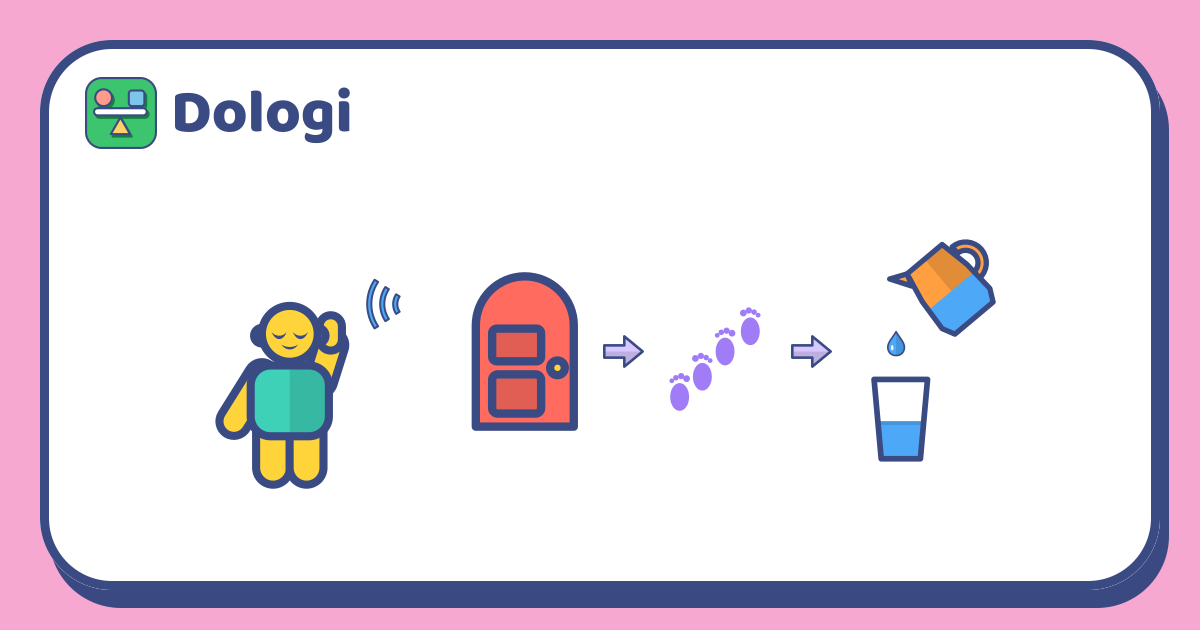
Close your eyes for a moment and imagine this: a door creaks, a few footsteps cross the floor, water trickles, and something clinks gently onto the table. Without seeing anything, you already have a story: someone came in and poured themselves a drink. Our ears are constantly feeding us clues like this, and we stitch them together without noticing.
Turning that everyday habit into a game gives children aged roughly 6 to 12 a fun way to practice three things at once: listening closely, remembering the order of events, and explaining a conclusion from evidence. All you need is a quiet room and a few household objects.
How to play the first round
- Set the scene. Your child sits comfortably with eyes closed, or faces a wall if keeping eyes shut is hard. Agree that they stay quiet until you say "Done".
- Make a short chain of sounds. Start with two or three familiar ones, with a small pause between each. For example: open and close a door, walk a few steps, pour cold water from a jug into a cup, set the cup down on the table.
- Ask for the story. Your child opens their eyes and tells you what happened, from first to last: "Someone came in, walked to the table and poured some water."
- Check together. Repeat the chain slowly with their eyes open. Which sounds did they catch? Which did they miss or swap around?
Keep the first rounds easy so your child feels successful. The aim is not to trick them but to help them notice how much information is hiding in ordinary sounds.
Ask "How do you know?"
The real thinking happens when your child explains their answer. After each round, ask: "How do you know it was water and not rice?" or "How did you know the door came first?"
Help them separate what they heard from what they guessed. "I heard a trickle, so something was poured" is a clue. "It was orange juice" is a guess that the sound alone cannot prove.
| Sound heard | Clue | What it might mean |
|---|---|---|
| A creak, then a click | Hinges moving, a latch closing | A door opened and shut |
| Steps getting louder | Someone moving closer | A person walked towards you |
| A trickle that rises in pitch | A container filling up | Water poured into a cup |
| A soft knock on wood | Something light set down | The cup was put on the table |
Sometimes two stories fit the same sounds. That is a good moment to ask: "What sound would tell us which story is right?" This is the heart of reasoning: looking for the clue that separates one explanation from another.
Making it harder, step by step
Once your child is confident, raise the challenge a little at a time:
- Longer chains: four, five, then six sounds in a row.
- A sound that doesn't belong: make a "getting ready for breakfast" chain and slip in something odd, such as a bicycle bell. Can your child spot the sound that doesn't fit the story?
- Sounds that are easy to confuse: a drawer and a door, pouring water and pouring rice, tapping with a spoon and tapping with a pencil.
- Details, not just events: How many steps? Were they fast or slow? Did the person walk towards them or away?
- Retell it backwards: start from the last sound and work back to the first.
If your child gets frustrated, go back one level. A round that ends in success is worth more than one that ends in a muddle.
Swap roles: your child sets the puzzle
Children often enjoy this part most. Ask your child to plan their own "sound story" of three to five sounds. Younger children can draw each sound as a small picture in a row before performing it, which helps them keep the order clear.
Now you close your eyes and guess. Explain your answer out loud, so your child hears how you link each sound to a conclusion. Let them decide whether you got it right.
Planning a puzzle is its own kind of thinking: your child has to choose sounds that are clear enough to recognize, put them in a sensible order and perhaps add a twist. Keep it safe: use cold water, plastic cups and objects they are allowed to handle, and stay nearby.
What to try by age
| Age (rough guide) | Ideas to try |
|---|---|
| 6–7 | Two or three familiar sounds; tell what happened; check together with eyes open |
| 8–9 | Four or five sounds; explain "how I know"; spot one sound that doesn't belong |
| 10–12 | Longer chains with similar sounds; notice details such as direction and speed; create puzzles with a twist and discuss other possible explanations |
Every child is different, so let your child's enjoyment guide the pace rather than the table.
In Dologi, the Listening topic includes puzzles where your child hears a short tune and plays it back in the same order, or picks out the note that sounds different. They draw on the same habit of holding a sequence of sounds in mind and noticing what has changed.
In short
- A short chain of everyday sounds turns into a story when your child listens closely and remembers the order.
- Asking "How do you know?" helps your child separate what they heard from what they guessed.
- Raise the challenge gradually: longer chains, a sound that doesn't belong, sounds that are easy to confuse, retelling backwards.
- Swapping roles lets your child plan their own sound puzzles and hear how you reason out loud.
Read more: Listening skills for children: sound games to play at home, Retelling the day in order