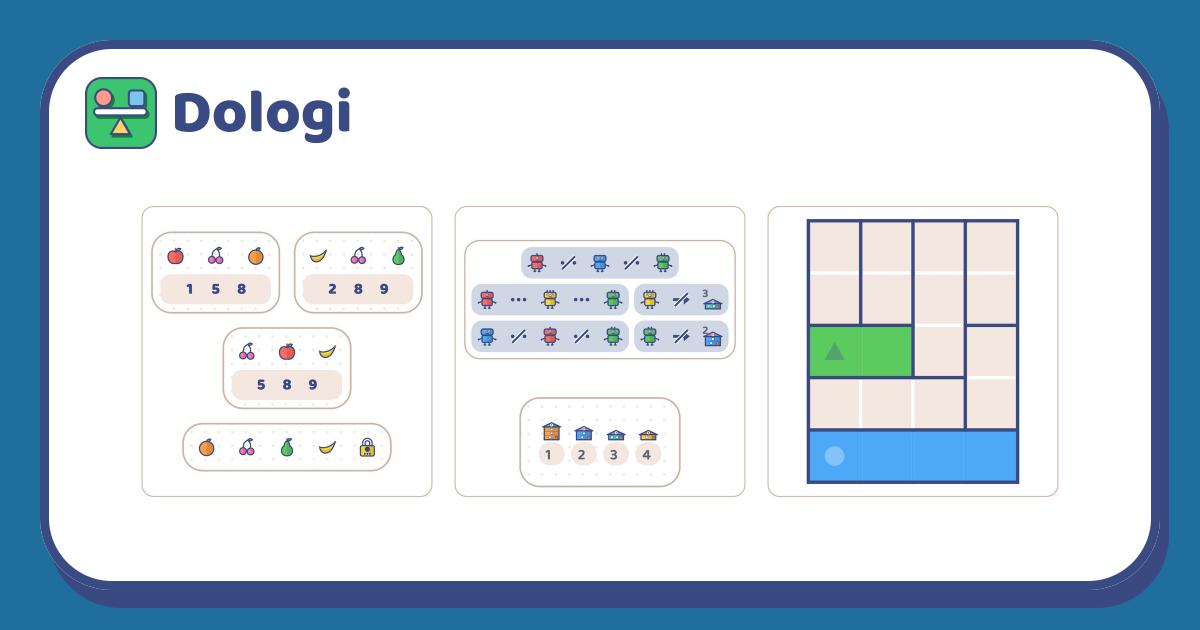
By ages 10–12, children can hold several conditions in mind at once, test a hypothesis and check it themselves, and follow a long chain of reasoning. The five puzzles below come straight from the Dologi app at its hardest levels, suit kids ages 10–12, and go from easy to harder.
How to use this post: let your child work through each puzzle alone; pencil and paper for notes help. The answer is behind the "Show answer" button under each picture. When they finish, don't just ask whether they got it right: ask them to explain how they thought it through, because being able to retell each step is when reasoning really sticks.
Puzzle 1: Crack the code
Ages 10–11
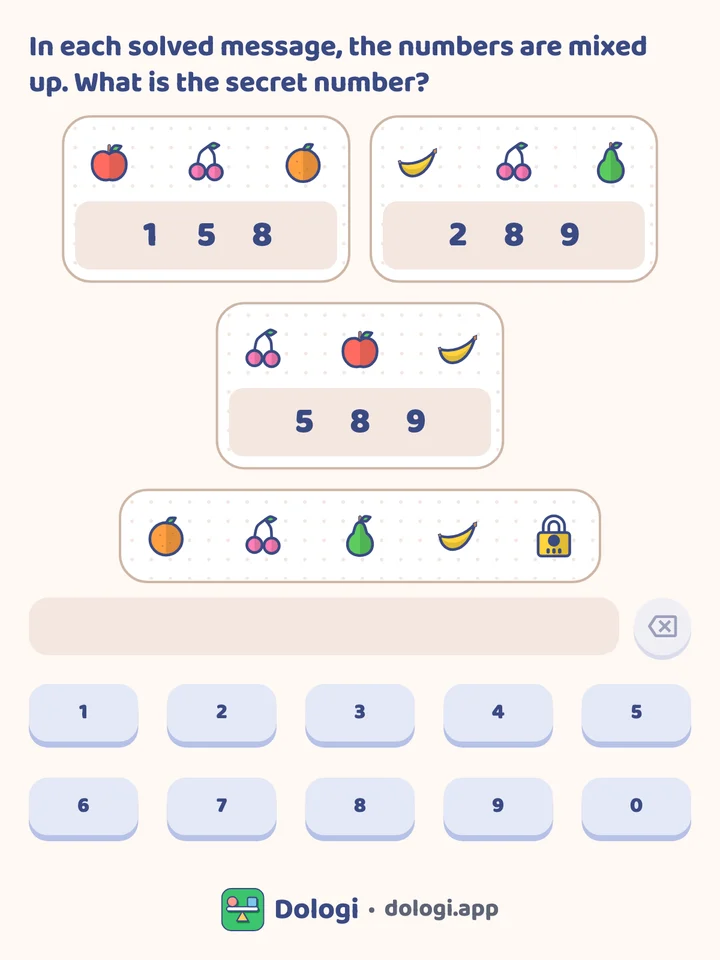
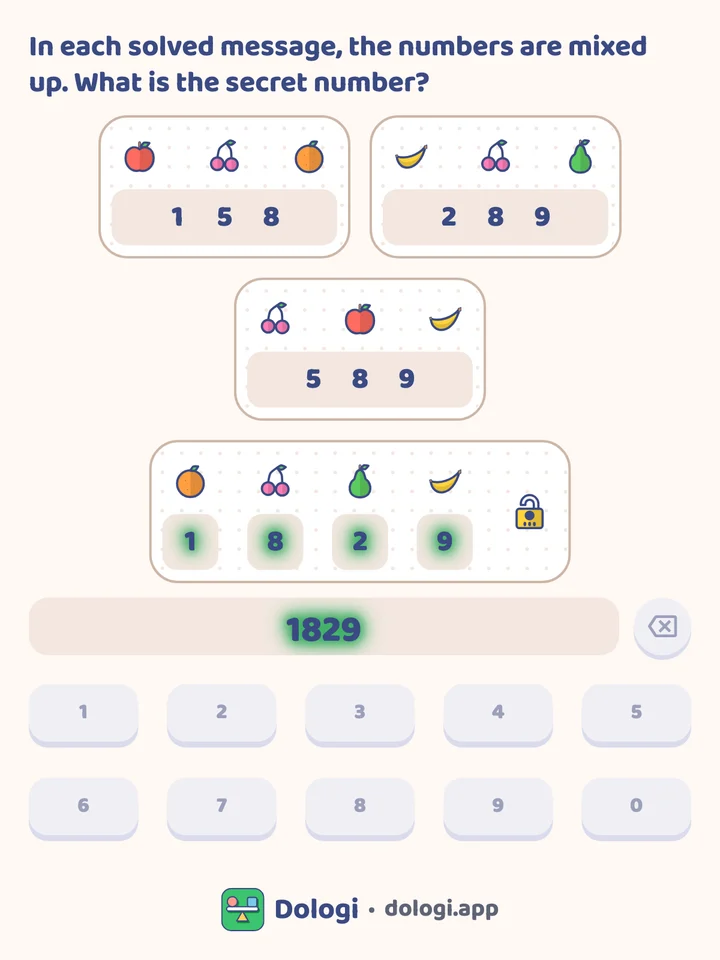
What it builds: Each sample note shows a group of pictures matching a group of numbers without saying which number goes with which picture; your child compares notes that share pictures to find the overlap and pins down one digit at a time. This is working with sets and elimination, the groundwork of algebra and of cryptography. Keep playing: make up a code that turns letters into numbers, write three coded words with their meanings, and let your child read a fourth.
Puzzle 2: Guess the rule
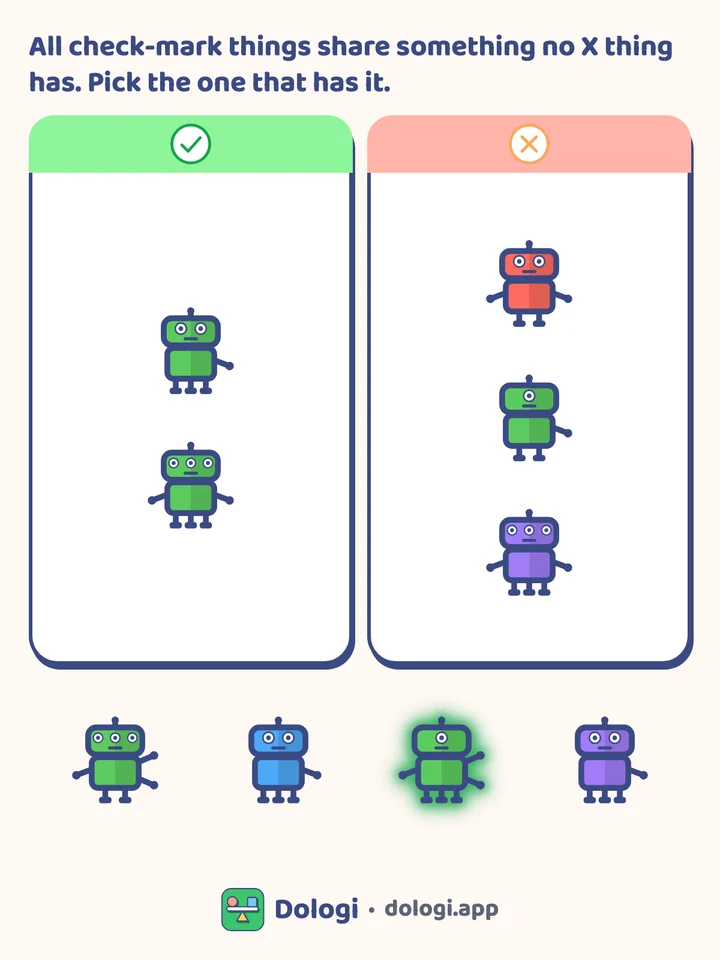
Ages 10–11
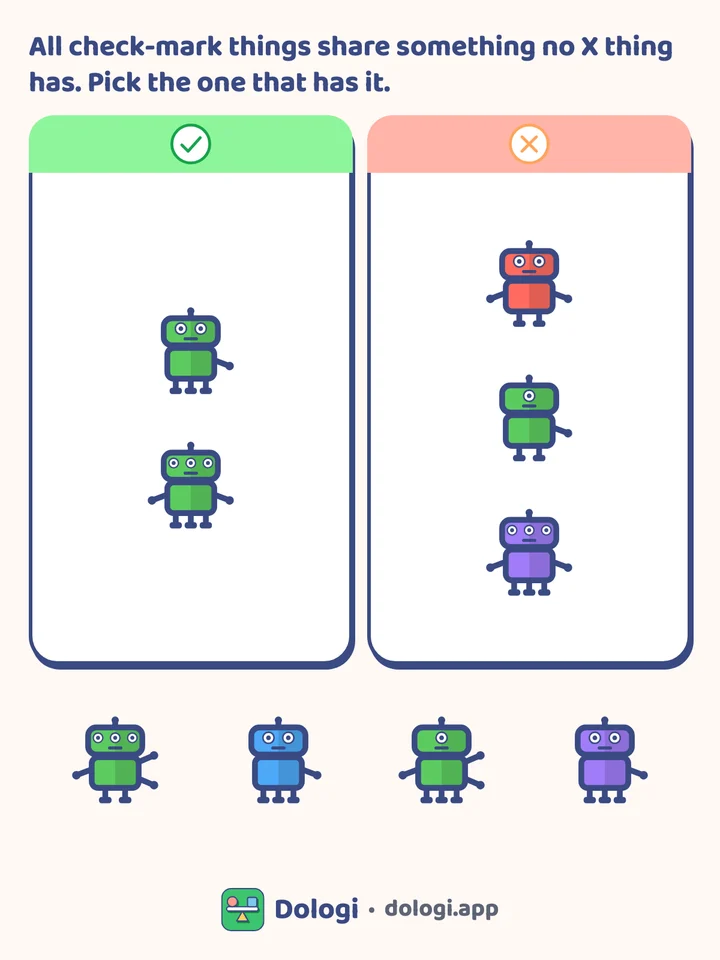
What it builds: No single feature is enough to separate the two columns, so your child tests each hypothesis against both the check column and the X column, dropping any idea that one item disproves. Testing, checking and discarding hypotheses is how scientists work, and how your child checks a grammar rule or a math formula. Keep playing: play "secret rule": you think of a rule, your child offers objects one at a time, and you only answer "yes" or "no".
Puzzle 3: Who lives where?
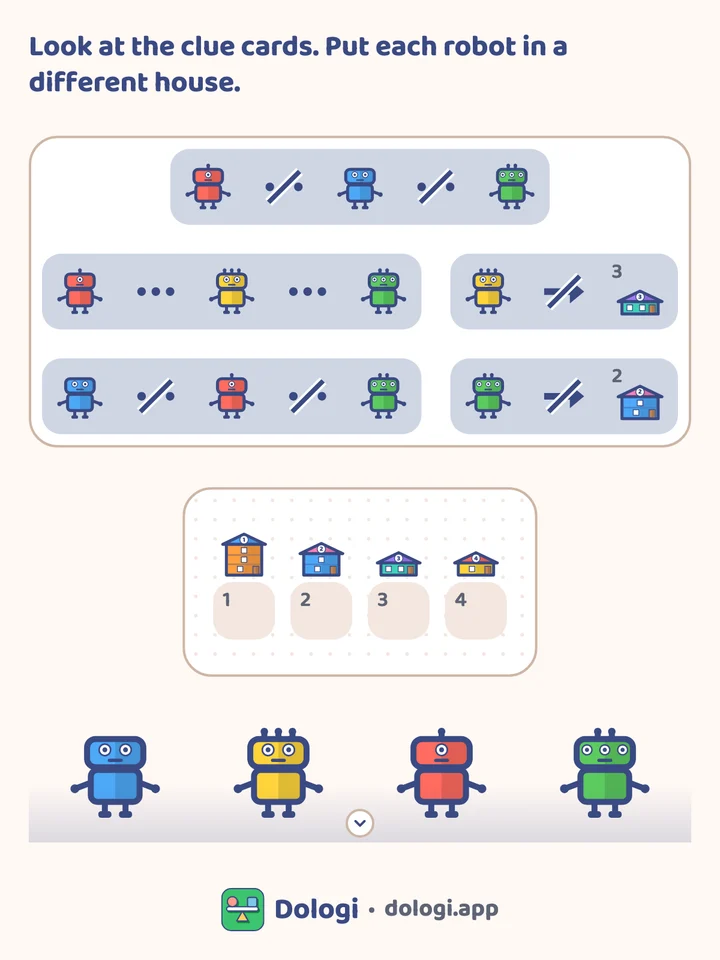
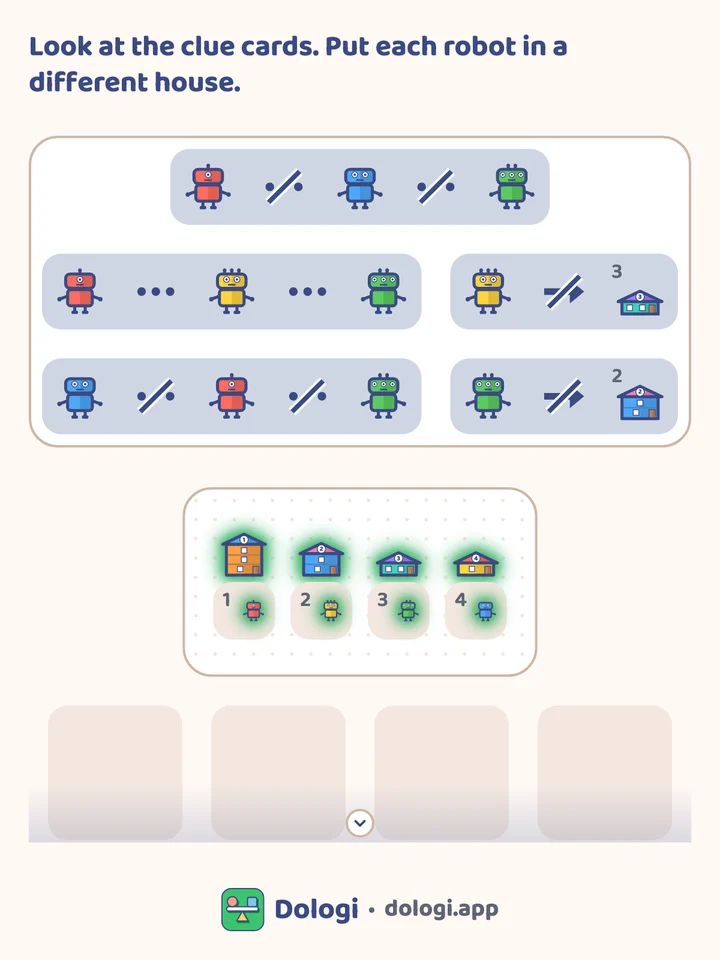
Ages 10–11
What it builds: Your child has to combine several kinds of clues: who lives between whom, who does not, who does not live in a certain house; some clues only help once another is settled. Combining conditions like this is the skill behind grid logic puzzles, and it trains careful reading so no fact gets missed in any subject. Keep playing: draw a grid of four family members and four favorite foods, let each person give one clue, and have your child fill the grid until everything is found.
Hint: Dots on both sides: the middle one lives between the other two. A line across means not.
Puzzle 4: Which robot follows the rules?
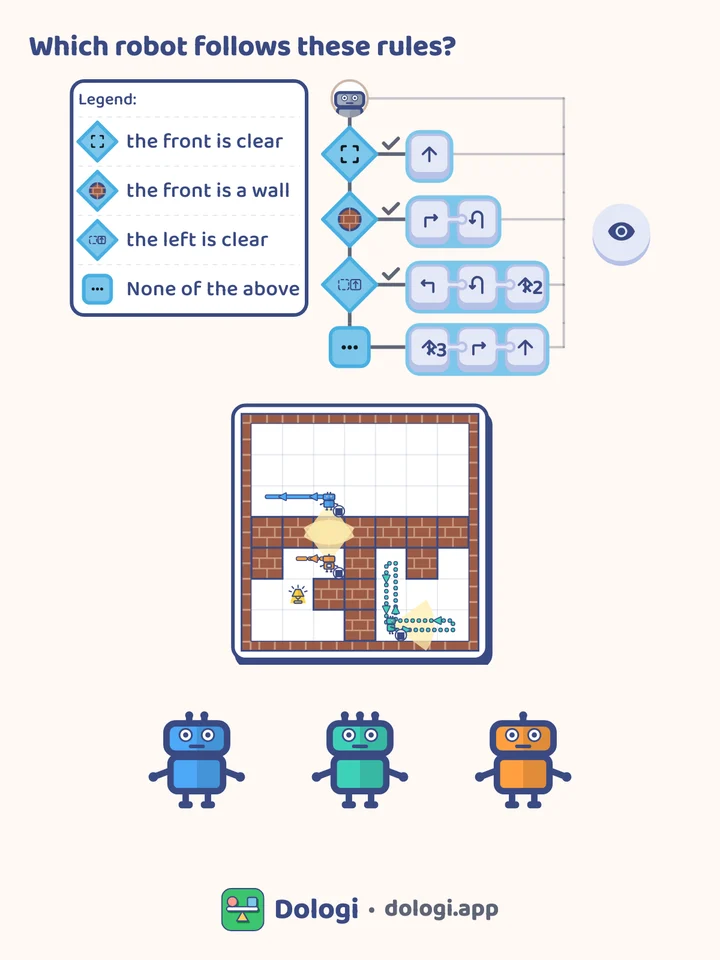
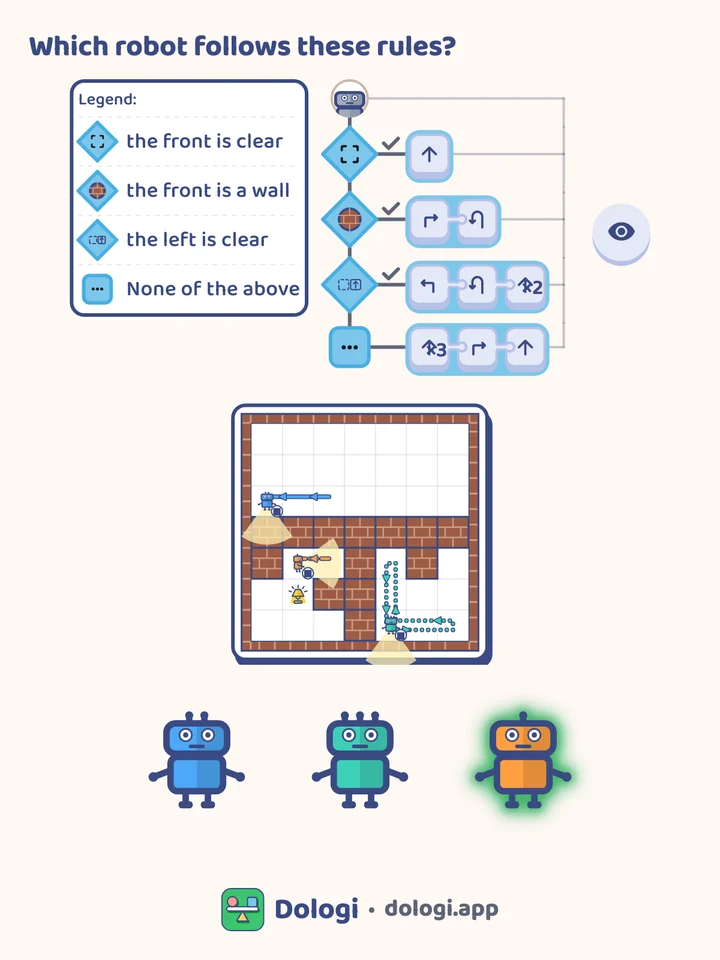
Ages 11–12
What it builds: Your child runs the rule set in their head for each robot, compares every step with the trail drawn on the board, and rules out any robot that breaks a rule even once. Simulating a program and spotting where it goes wrong is what programmers do when debugging, and how your child checks their own work for a slip. Keep playing: write a "program" for making lemonade with several conditional steps, slip in one wrong step on purpose, and let your child find it.
Puzzle 5: Color the map
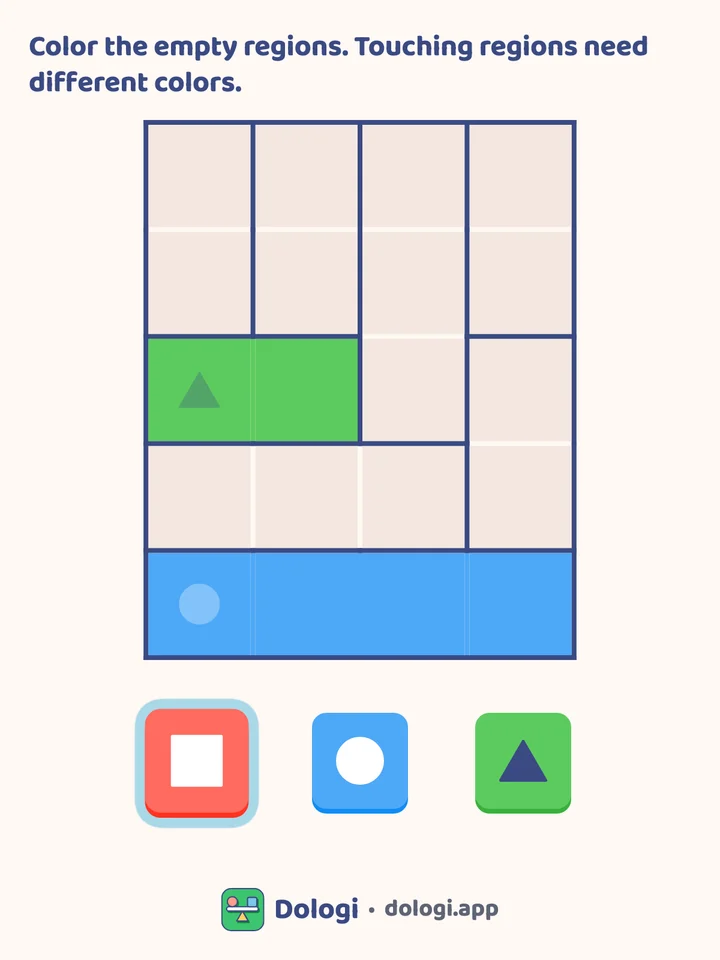
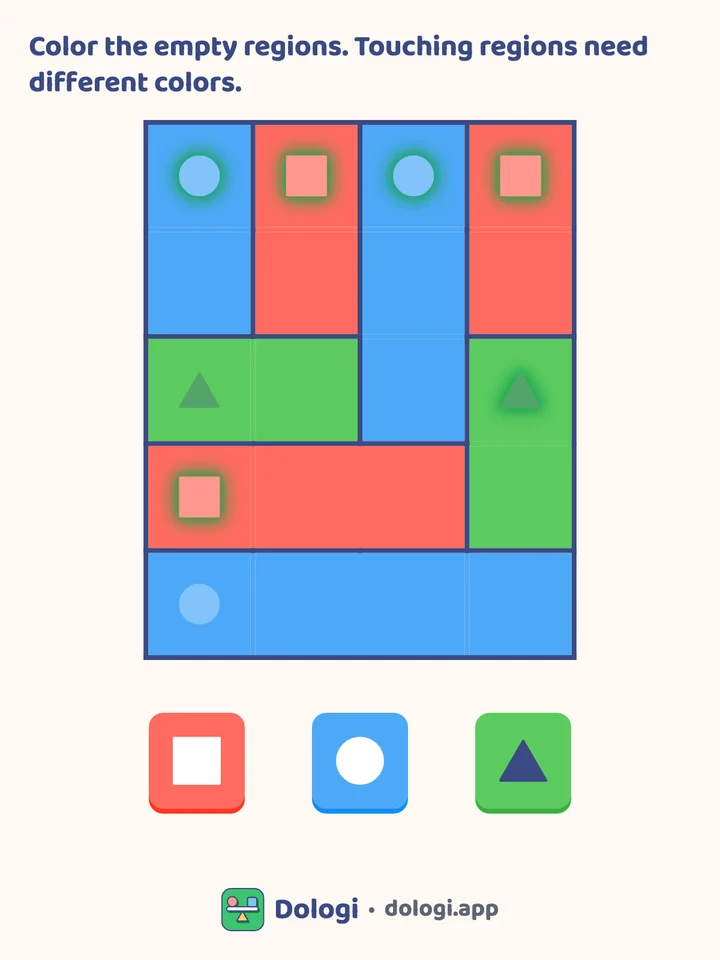
Ages 11–12
What it builds: Your child starts with the region that has the fewest choices, the one touching the most colored neighbors, and works outward; picking the right starting point avoids recoloring. This is constraint solving, like planning a timetable or a seating plan that works for everyone. Keep playing: draw an imaginary map with many regions and challenge your child to color it with only three colors, then see whether any map ever needs a fourth.
Did your child enjoy these logic puzzles? The Dologi app has many more of the same kinds at every level, from easy to very hard, adjusting to how your child plays, so there is always a challenge that fits and a little reasoning practice each day.