This is part 2 of our logic puzzles for kids ages 10–12. These ones take more staying power: a nine-by-nine number grid, a garden with four visitors and many conditions, a robot with a four-level rule set. The five puzzles below come straight from the Dologi app at its hardest levels and go from easy to harder.
How to use this post: let your child work alone, ideally with pencil and paper, and there is no need to finish in one sitting. The answer is behind the "Show answer" button under each picture. When they finish, ask them to tell you the first step they were sure of and why: that is when they see their own reasoning clearly.
Puzzle 1: Trace in one go
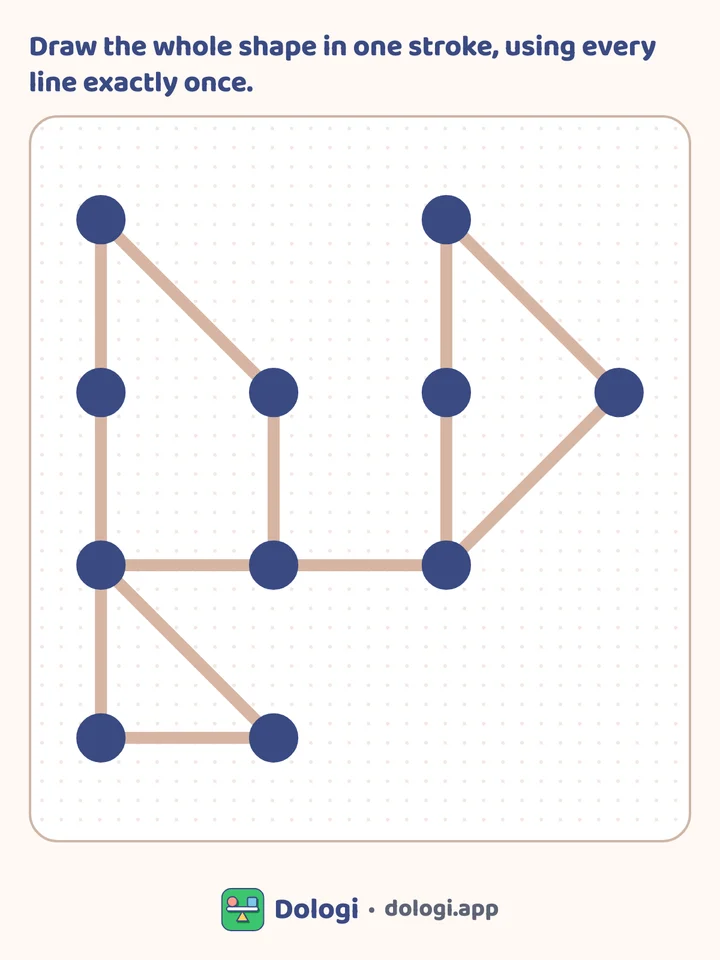
Ages 10–11
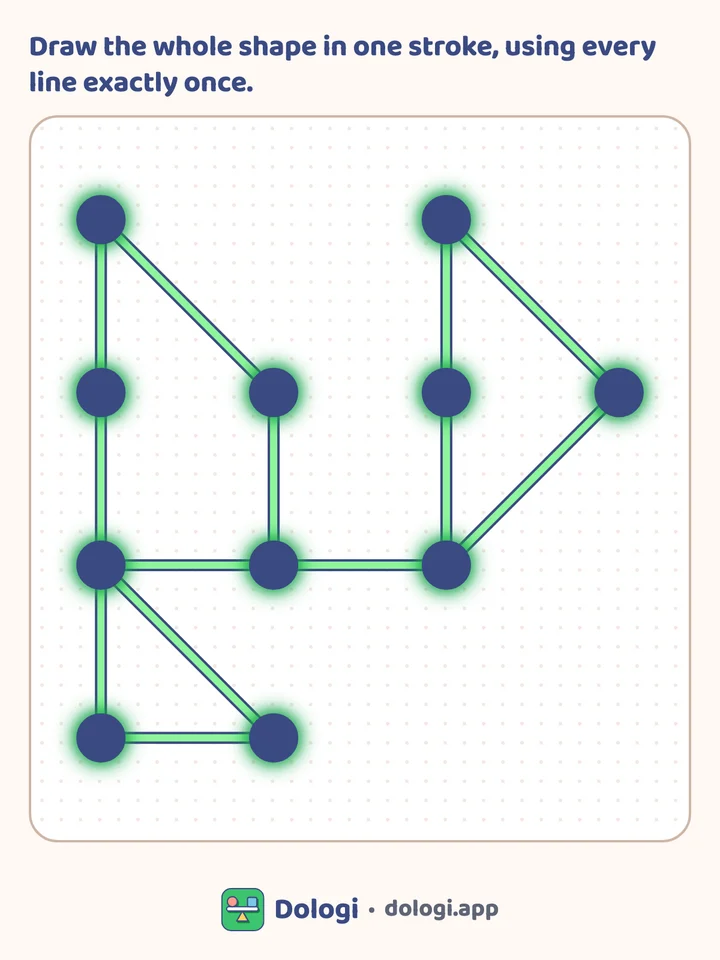
What it builds: The shape has many lines and branches, so your child must pick the right starting point and plan the order of the branches so they don't get stuck at a dead end. Seeing the whole structure before starting is the skill they use to outline an essay or break a big project into parts. Keep playing: draw a map of the streets around your neighborhood together and see whether any route walks each street exactly once.
Puzzle 2: Number square
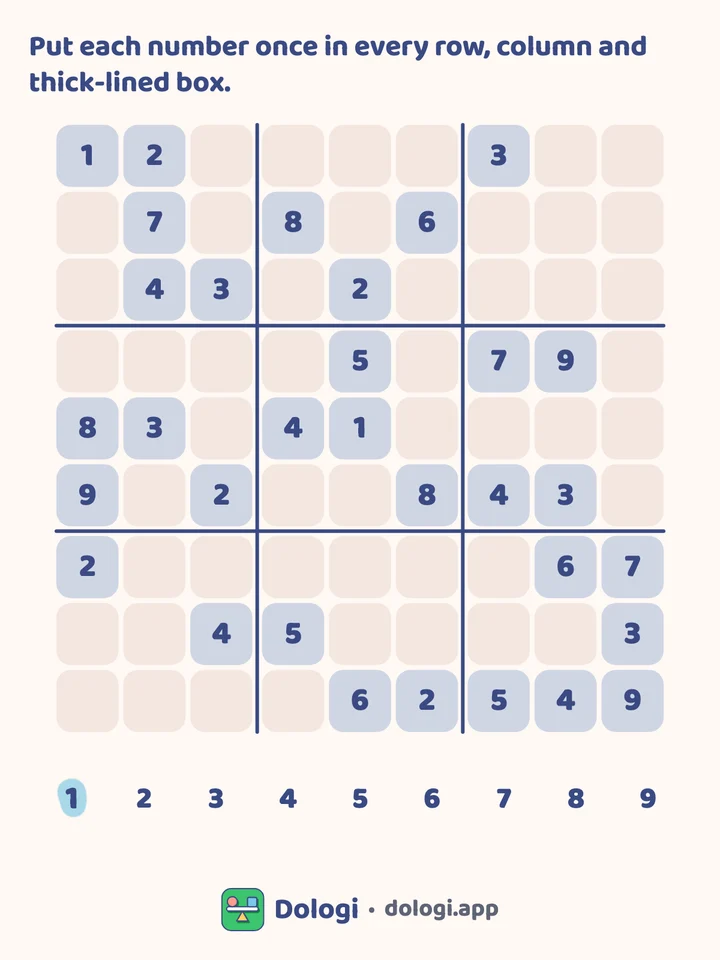
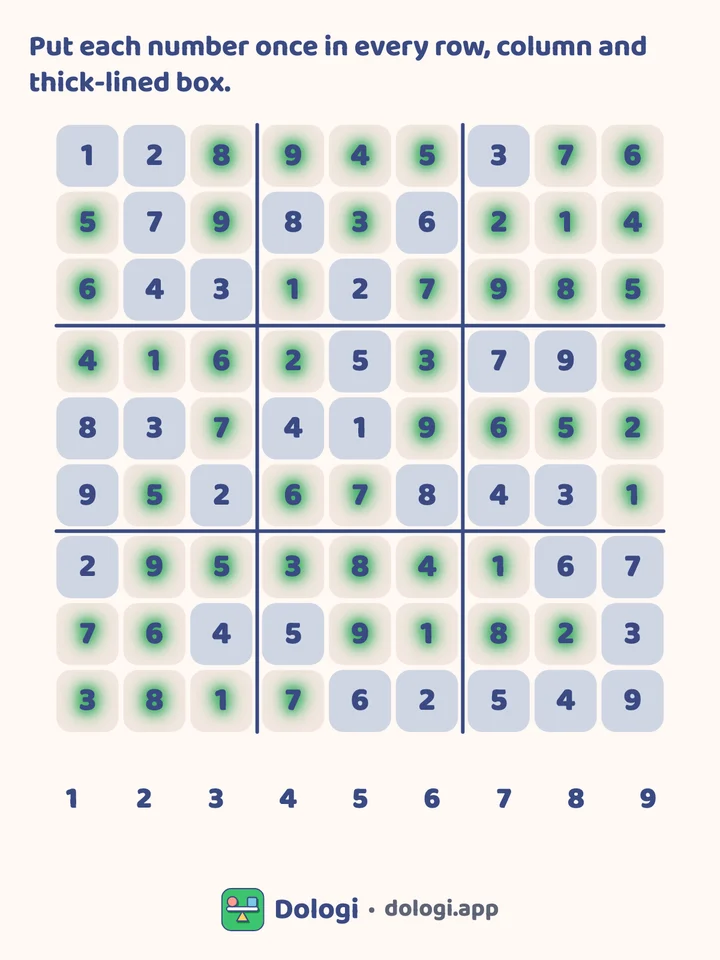
Ages 10–11
What it builds: A nine-by-nine grid where every row, column and bold box needs all nine numbers; your child looks for a cell with only one possibility or a number with only one place, and lets each filled cell open up the next. Sticking with a long puzzle and checking three directions at once builds the focus and care they need in tests. Keep playing: print a blank grid, each of you fills in a few starting numbers, then swap and solve each other's.
Puzzle 3: Unjam the gears
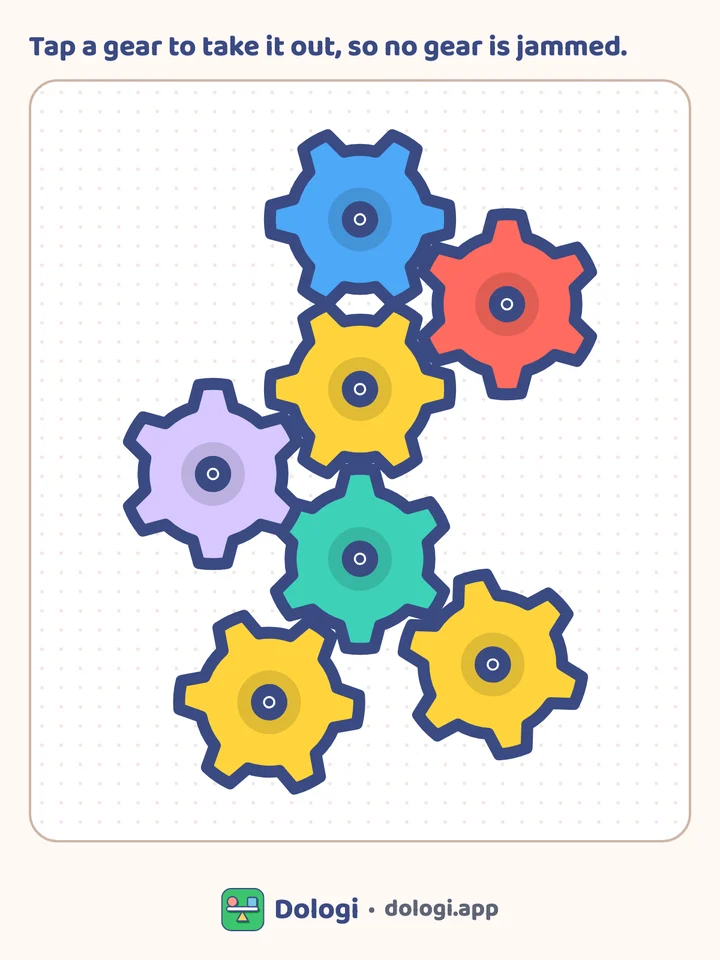
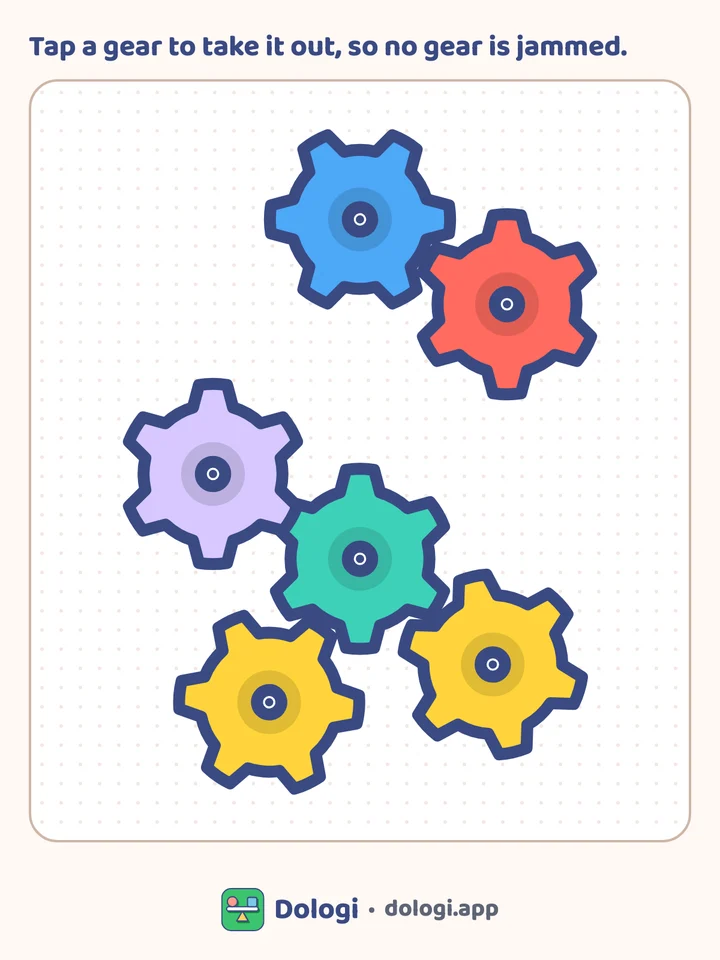
Ages 10–11
What it builds: Gears that touch turn in opposite directions, so three gears touching in a loop jam; here several loops overlap, and your child must find the gear shared by every jamming loop. Finding one shared cause behind many symptoms is diagnostic thinking, used in repairs, programming and even in finding why a math answer went wrong in several places. Keep playing: line up coins touching on a table, mark the direction each would turn and find where two directions clash.
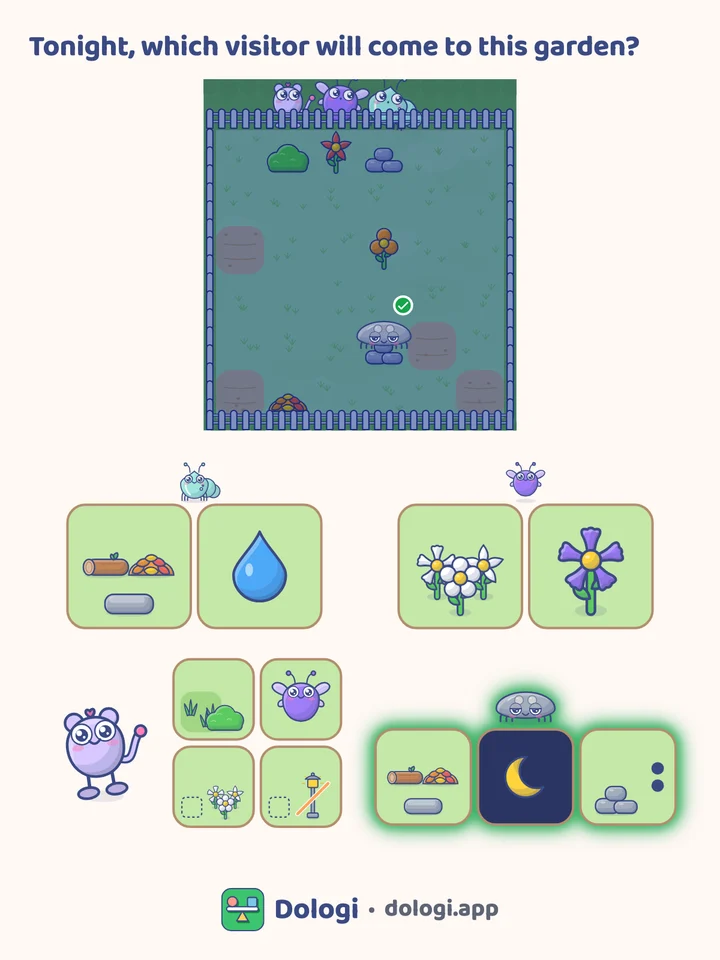
Puzzle 4: Which visitor comes?
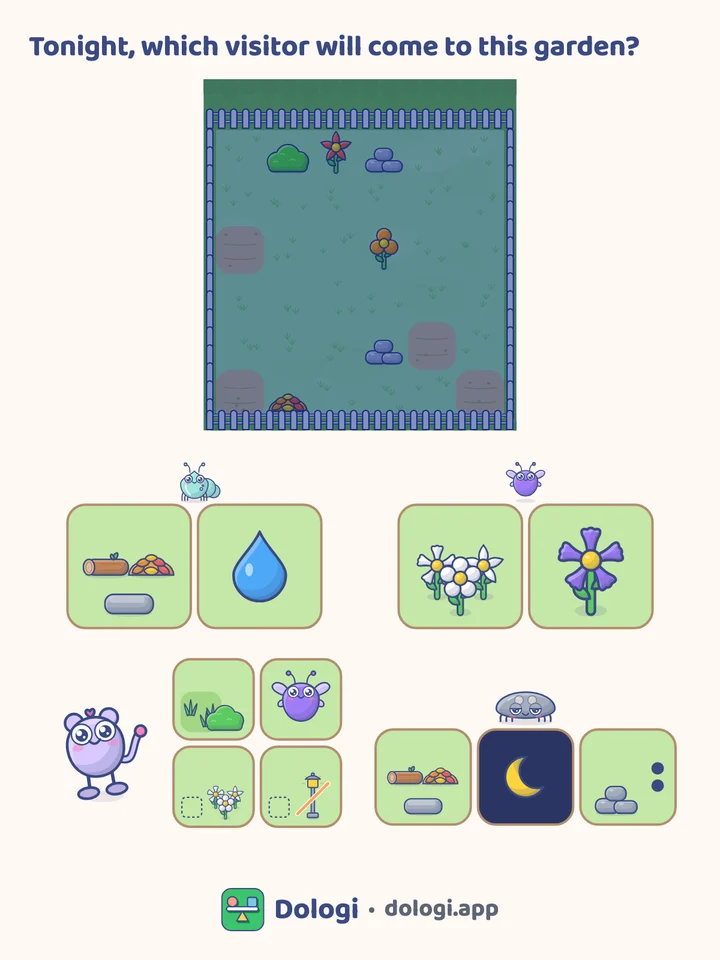
Ages 11–12
What it builds: Four visitors, each with their own conditions: some things must be there, some must not, some are needed in a certain number, and it is evening; your child checks every condition against the garden and rules visitors out one by one. Checking criteria systematically is how to read an exam question, a set of rules or a product comparison without missing anything. Keep playing: draw a table of four toys and four criteria, and let your child tick each box to find the toy that meets them all.
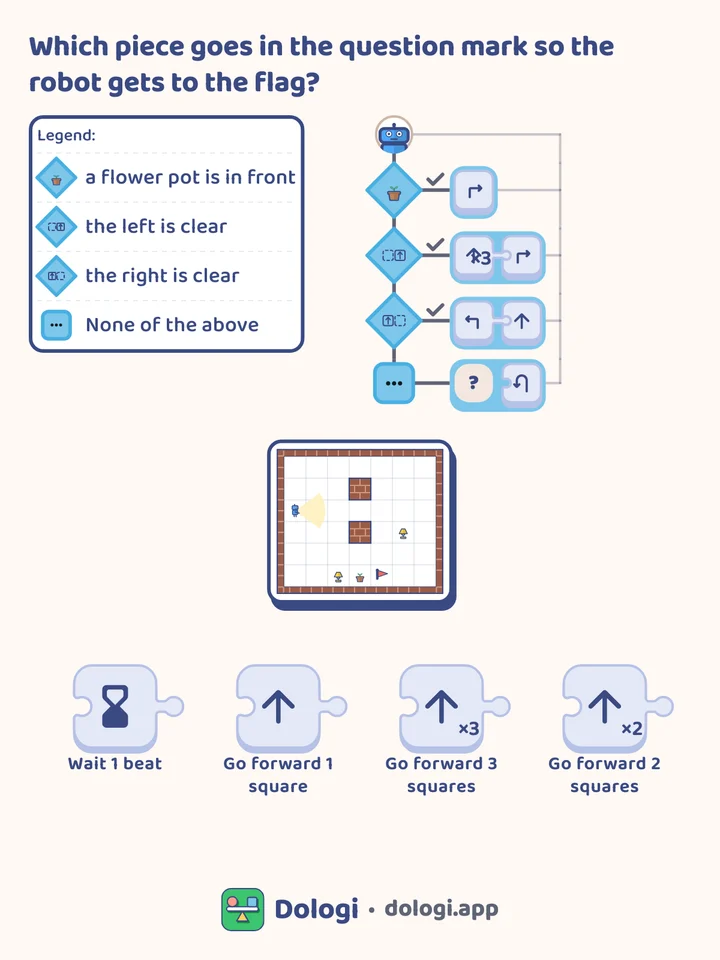
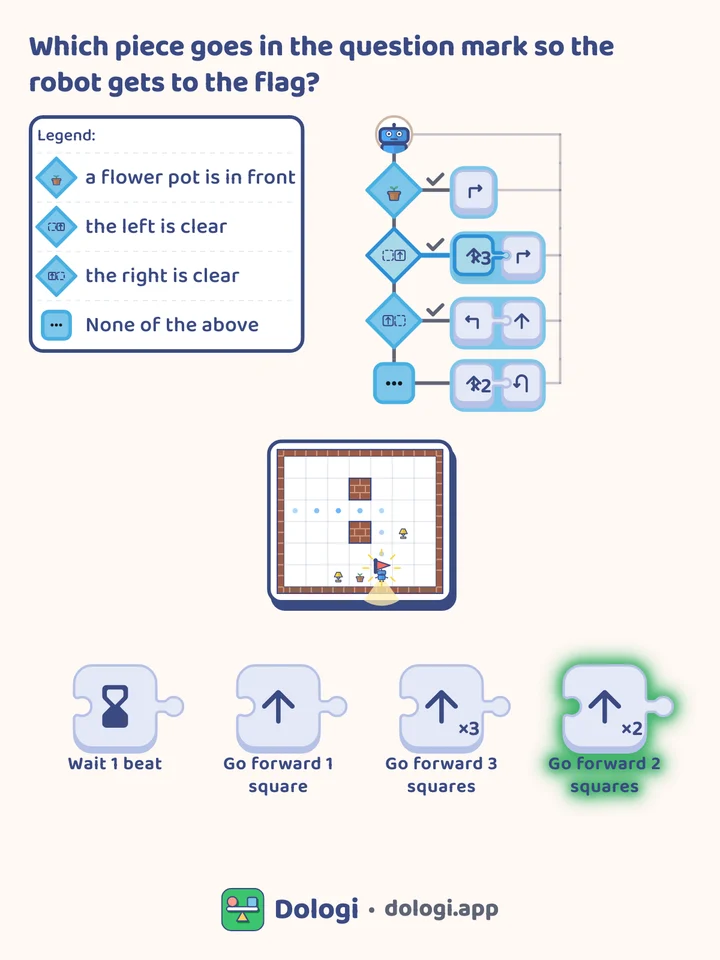
Puzzle 5: Which piece is missing?
Ages 11–12
What it builds: The robot has four rules checked from top to bottom, with the question-mark slot in the last one; your child tries each piece, runs the whole rule set in their head and counts squares carefully to see which piece brings the robot to the flag. Holding several conditions at once and simulating many steps is the foundation of algorithmic thinking, and how they check a solution before concluding. Keep playing: write a four-line "program" to get from the living room to the kitchen, leave one line blank and let your child fill it in.
Did your child enjoy these logic puzzles? The Dologi app has many more of the same kinds at every level, from easy to very hard, adjusting to how your child plays, so there is always a challenge that fits and a little reasoning practice each day.