These ten logic puzzles come straight from the Dologi app and go from easy to hard: the first one suits 4- and 5-year-olds, the last one will challenge 11- and 12-year-olds. Each puzzle trains a different way of thinking: comparing, ruling things out, reasoning in several steps, and reading a rule and then applying it.
How to use this page: show your child the puzzle picture and let them explain their thinking before they answer. The answer is behind the "Show answer" button under each picture. Don't rush to press it: the moments when your child is still figuring it out are when they learn the most.
Puzzle 1: Match the pairs
Ages 4–5
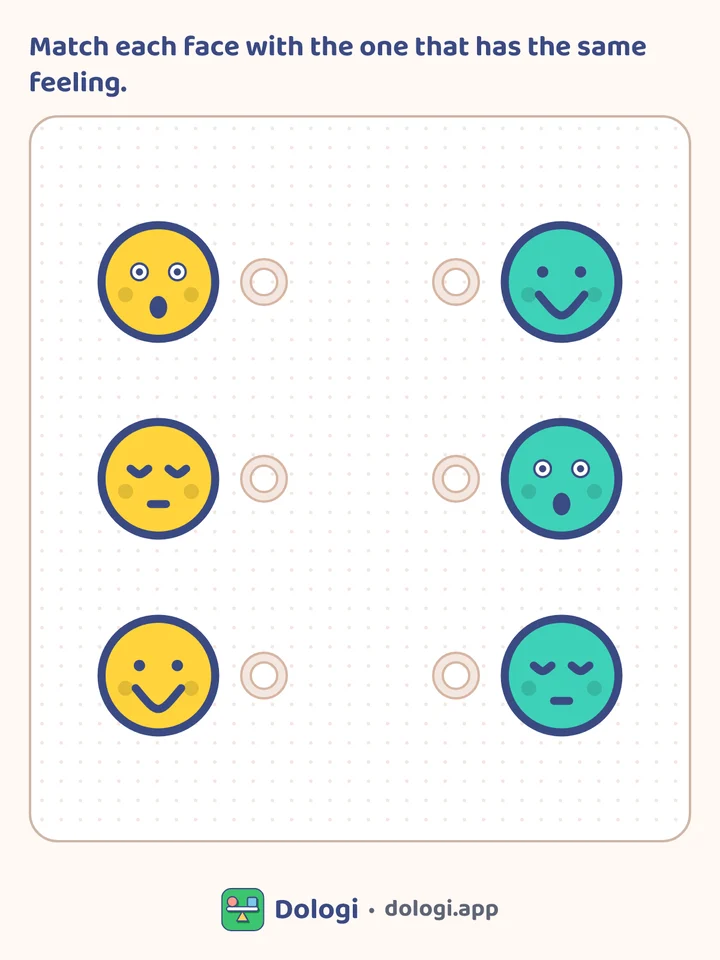
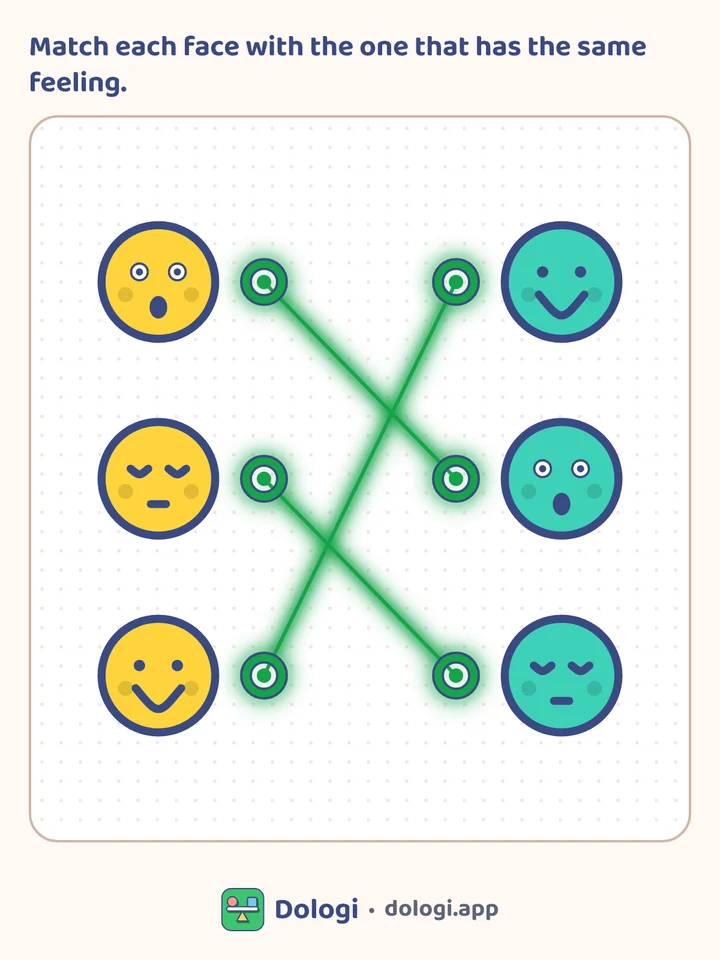
What it builds: Your child looks closely at the eyes and mouth to find the same feeling on two faces of different colors, ignoring what doesn't matter (the color) to find what really matches. It is also a first step toward reading other people's emotions. Keep playing: make a face and let your child name the feeling, then copy it.
Puzzle 2: Balance scales
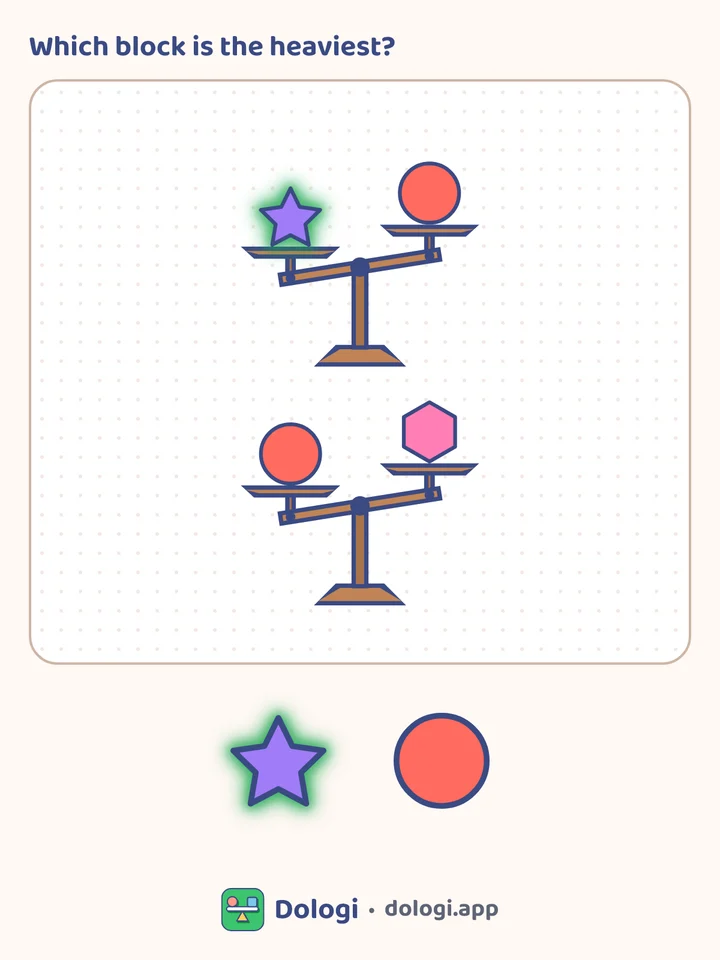
Ages 4–5
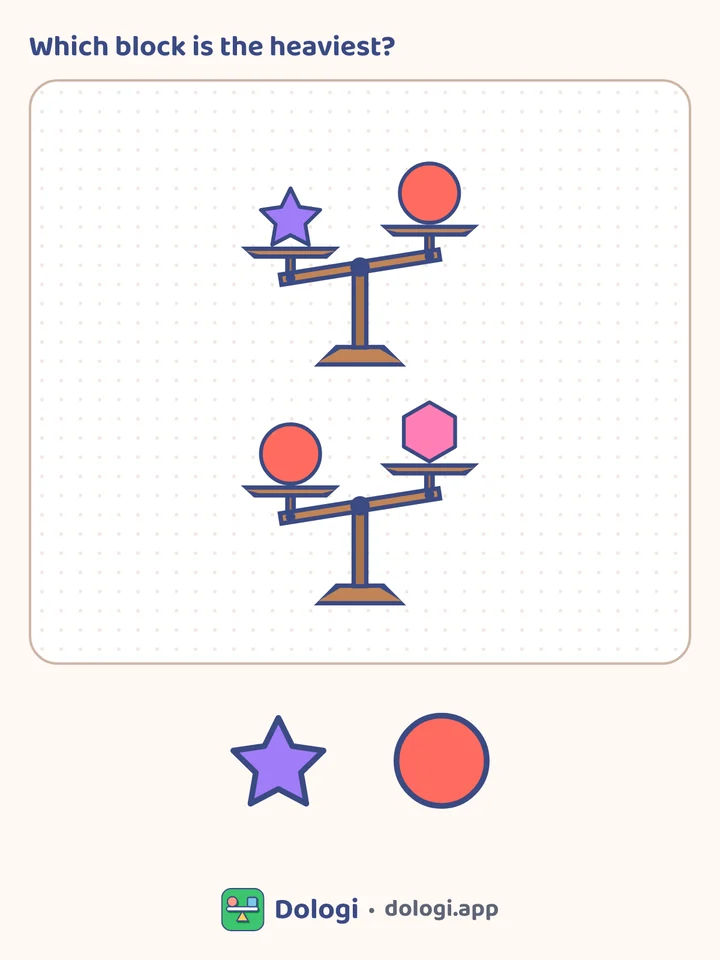
What it builds: Each scale only shows which side is heavier, so your child has to combine two weighings to find the heaviest block. This is transitive reasoning: if A is heavier than B and B is heavier than C, then A is heavier than C. Keep playing: hand your child three things from around the house, let them compare pairs by hand, then line them up from lightest to heaviest.
Puzzle 3: Number square
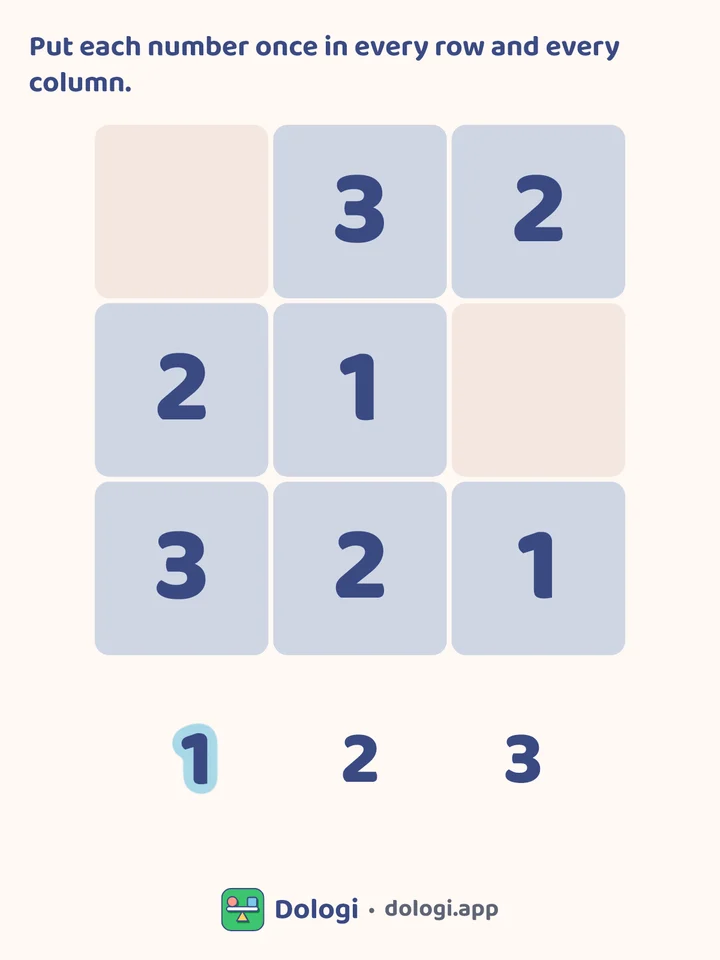
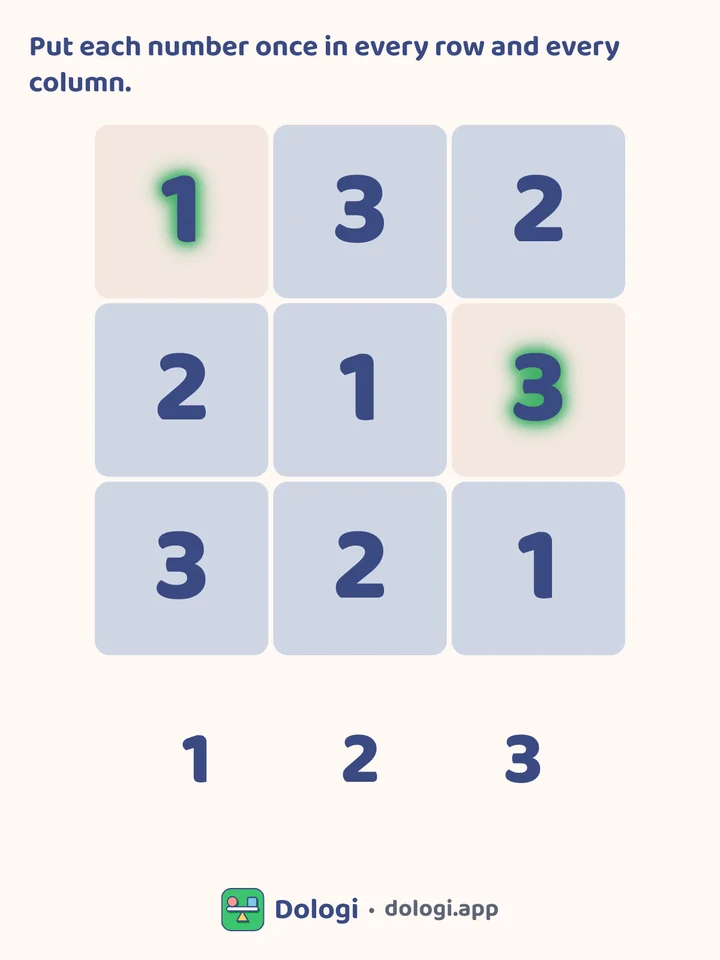
Ages 5–6
What it builds: Each number appears once in every row and column, so your child looks for a square with only one possible number and fills the grid one square at a time. They practice ruling things out: crossing off what can't be true to find what must be. Keep playing: draw a 3 × 3 grid on paper and use three pen colors instead of three numbers.
Puzzle 4: What does it need?
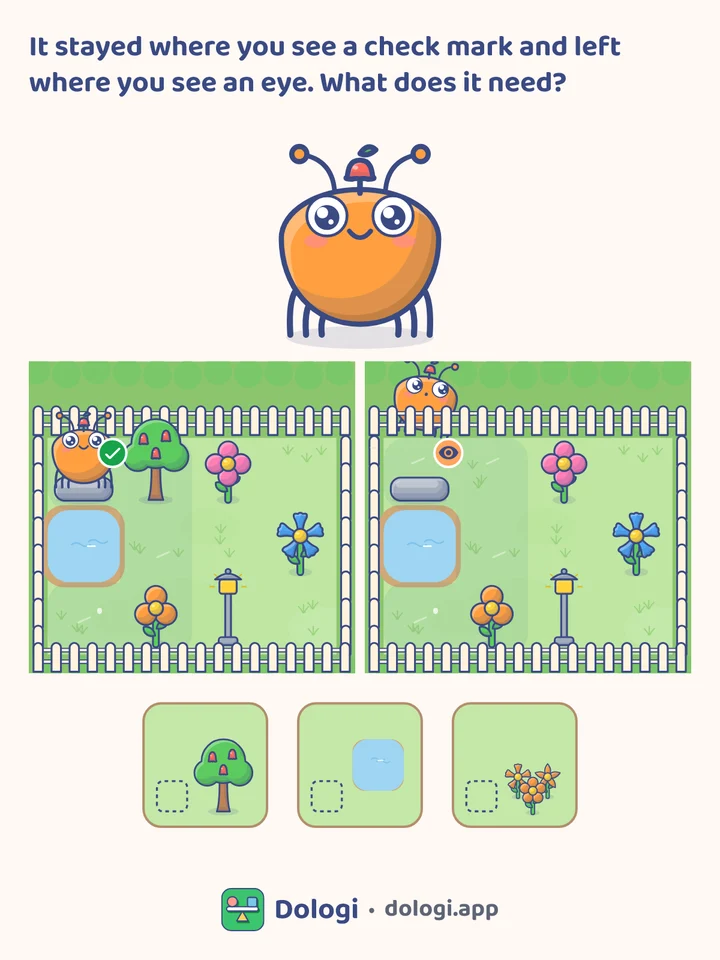
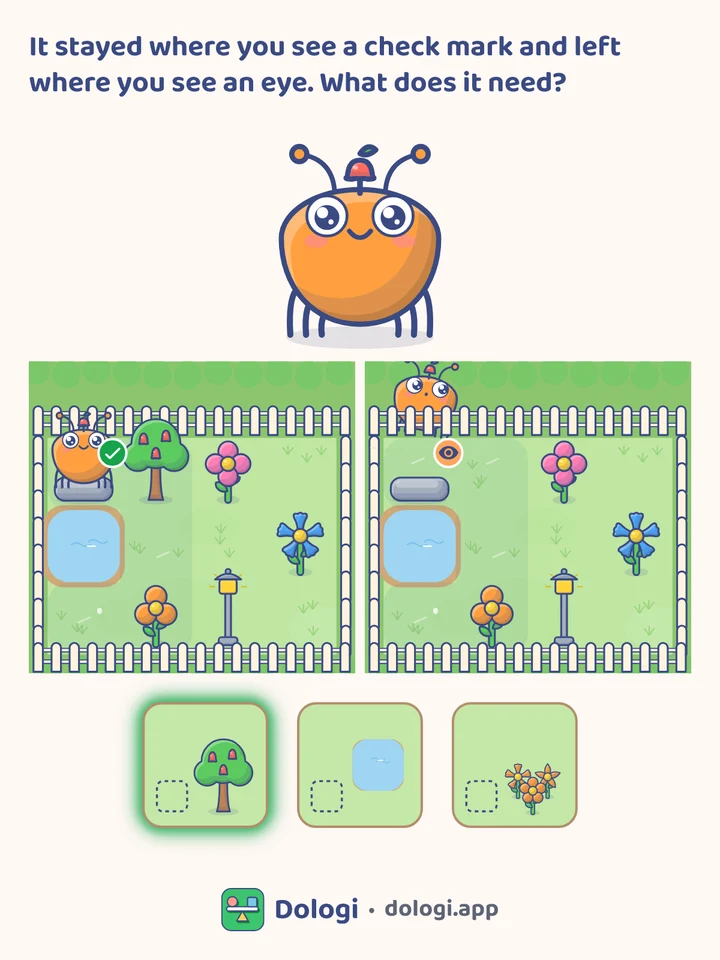
Ages 6–7
What it builds: Your child compares the two gardens: the visitor stays in one and leaves the other, so whatever the first garden has and the second one lacks is what the visitor needs. This is how scientists find causes, by comparing two cases that differ in just one thing. Keep playing: ask your child why one potted plant is thriving while another is wilting.
Puzzle 5: Unjam the gears
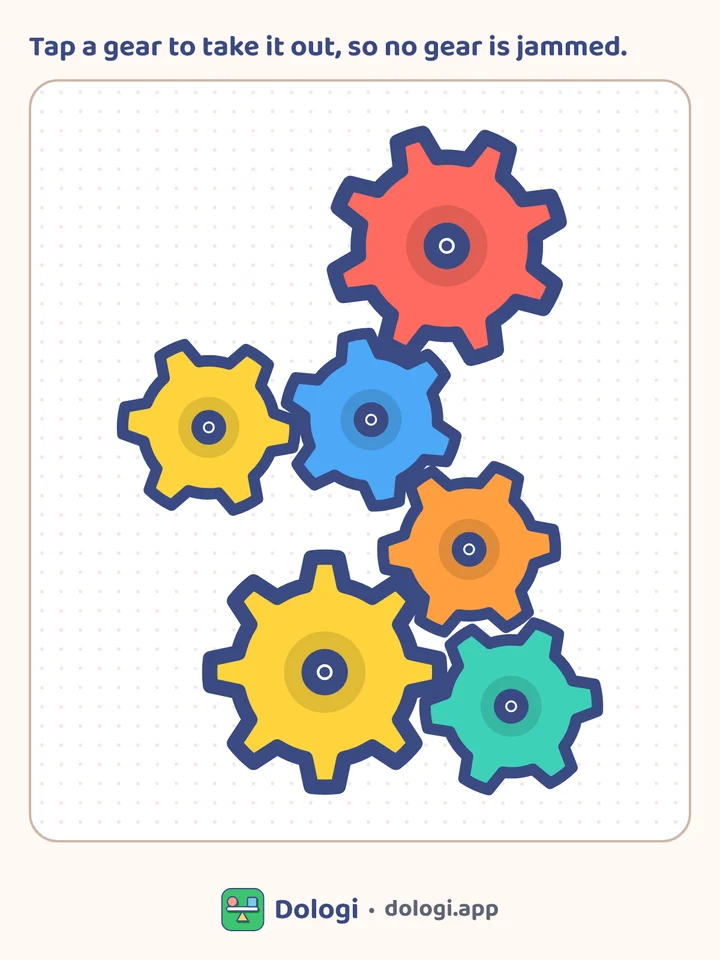
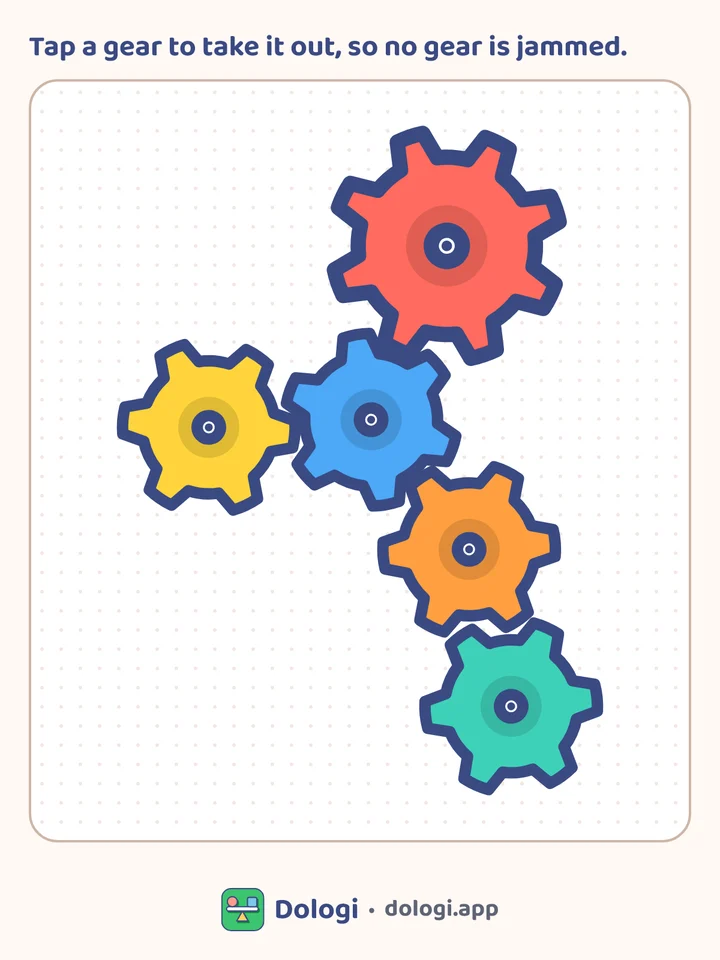
Ages 6–7
What it builds: Gears that touch turn in opposite directions, so a ring of gears can lock up. Your child has to spot which loop causes the jam and remove exactly one gear so everything turns, practicing cause-and-effect reasoning. Keep playing: cut a few gears out of cardboard, pin them to a box lid and turn them together.
Puzzle 6: Two rings
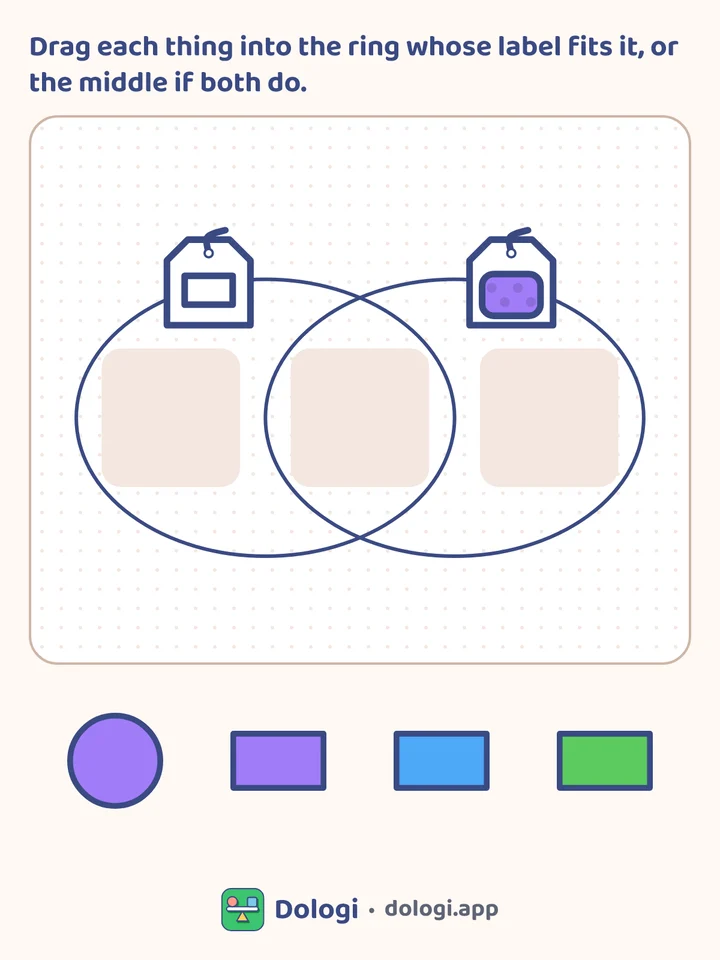
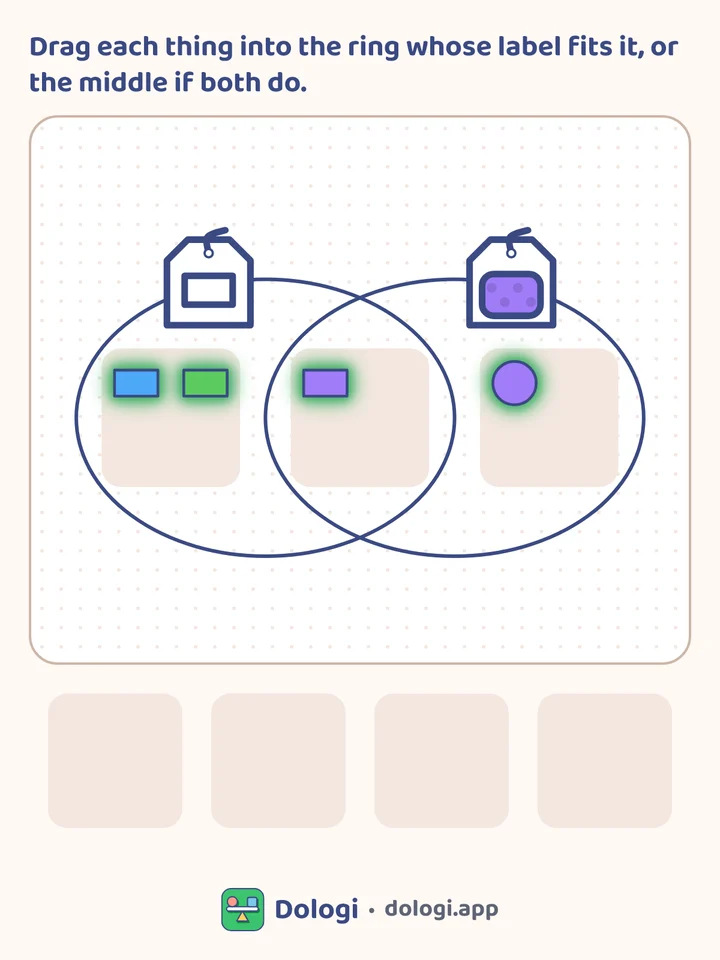
Ages 7–8
What it builds: Each object goes into the circle whose label it matches, and an object that matches both labels goes where the circles overlap. Your child practices thinking about two features at once, the basis of the Venn diagrams they will meet at school. Keep playing: lay two loops of string on the floor and sort toys by color and by type.
Puzzle 7: Which robot follows the rules?
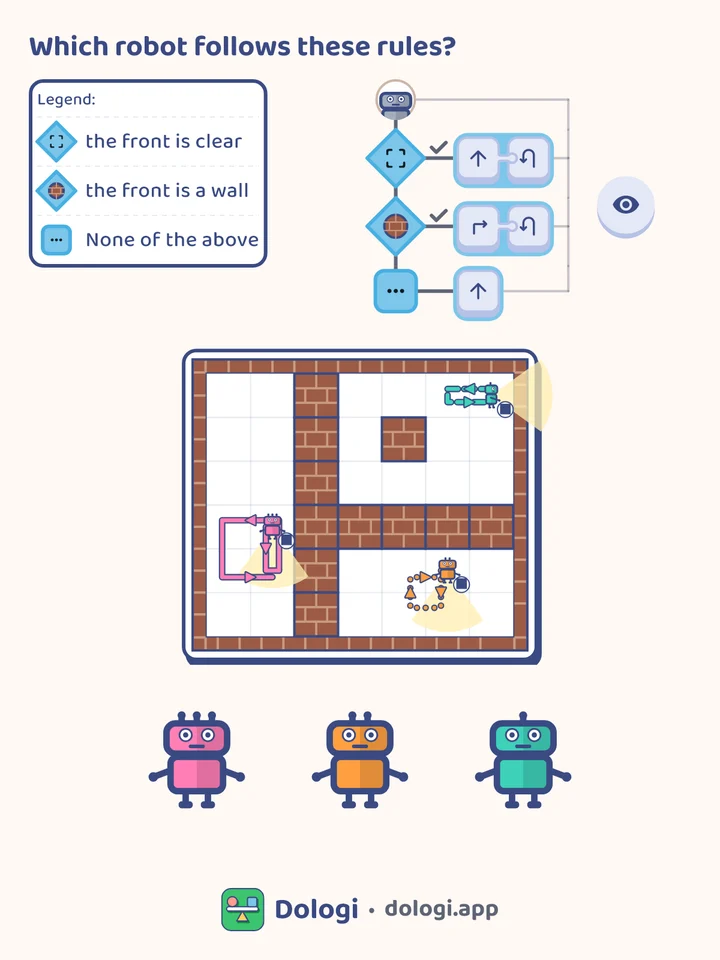
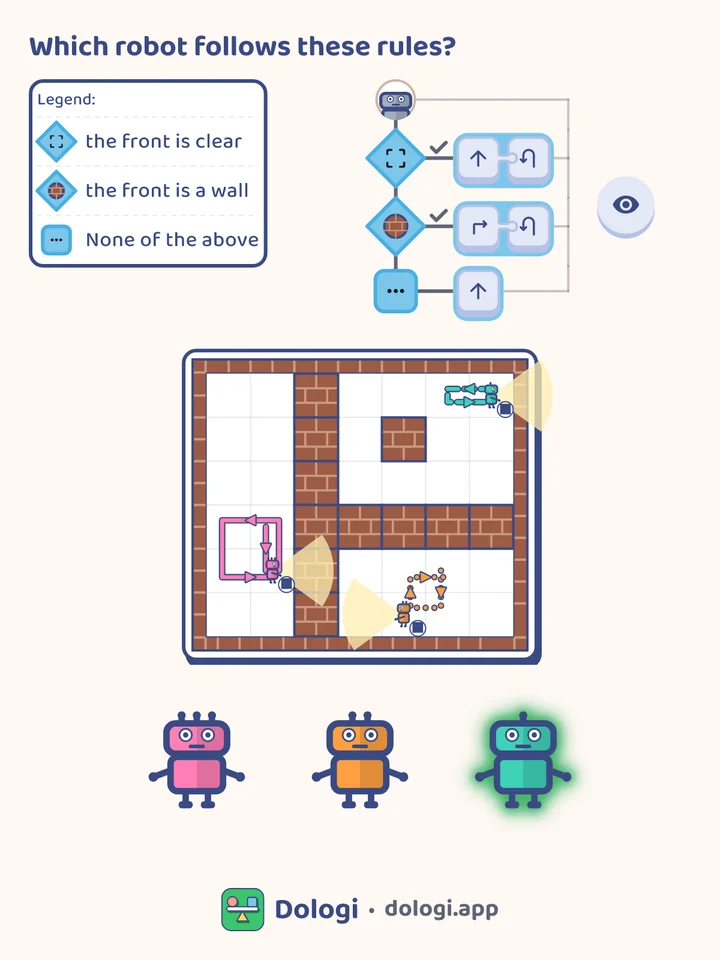
Ages 7–8
What it builds: Your child reads the robot's rules (what to do when the way ahead is clear, what to do at a wall) and checks them against each robot's path on the map. This is how programmers test a program: running it step by step in their head. Keep playing: your child plays the robot while you read out the rules and they walk around the room.
Puzzle 8: Math number square
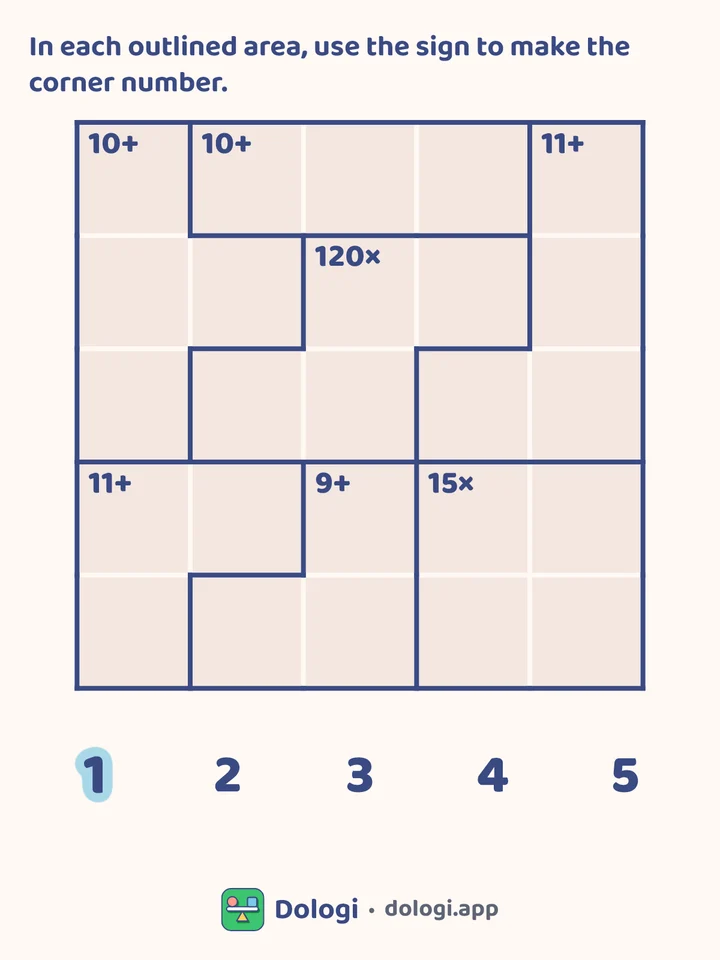
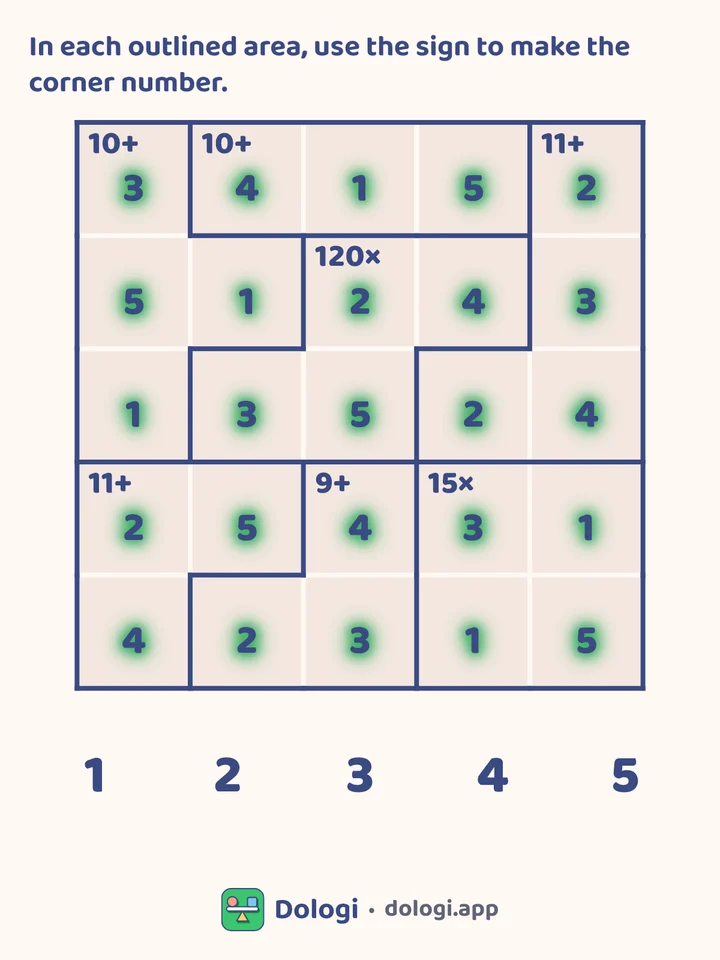
Ages 9–10
What it builds: Each outlined area has a number and an operation in its corner, and your child picks numbers for its squares so they make that result, without repeating a number in any row or column. They do mental math while keeping several conditions in mind at once. Keep playing: ask your child for two numbers that add up to 7, then two numbers that multiply to 12.
Puzzle 9: Crack the code
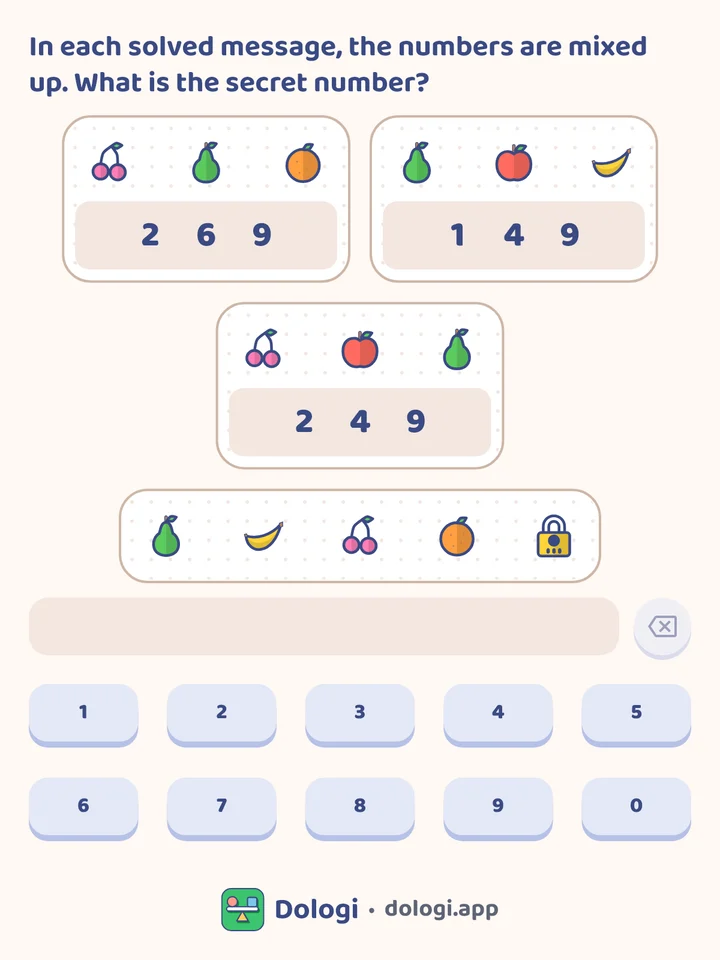
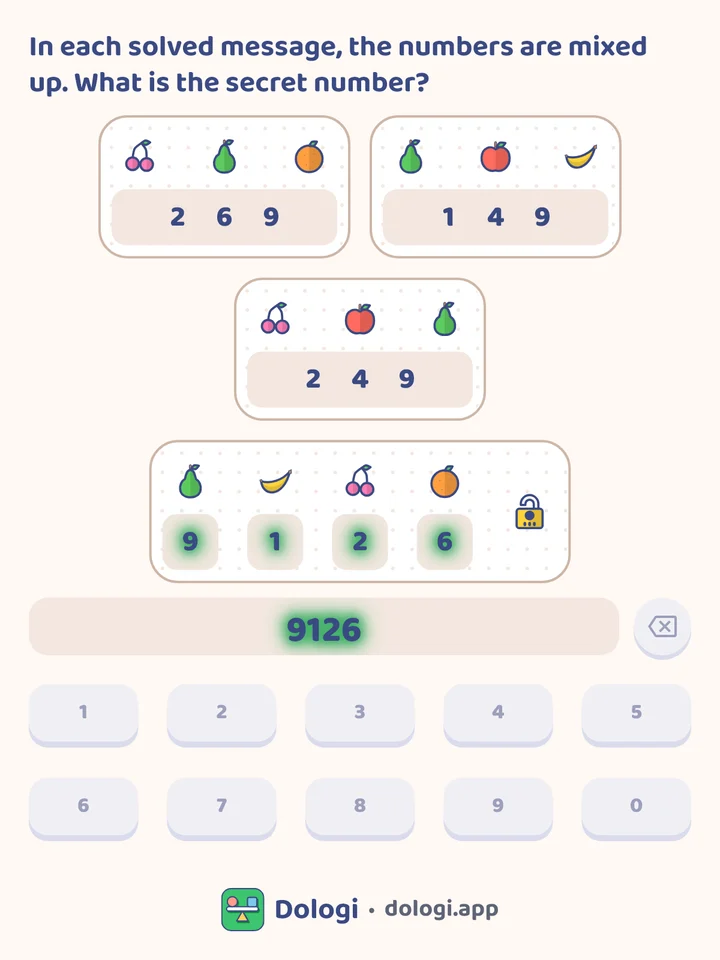
Ages 10–11
What it builds: Each sample letter matches a group of pictures with a group of numbers, but the order is scrambled. Your child compares letters that share pictures and numbers to pin down each pair before reading the lock's code, the same multi-step elimination used to crack secret messages. Keep playing: invent a picture-to-number code together and send each other secret notes.
Puzzle 10: Which visitor comes?
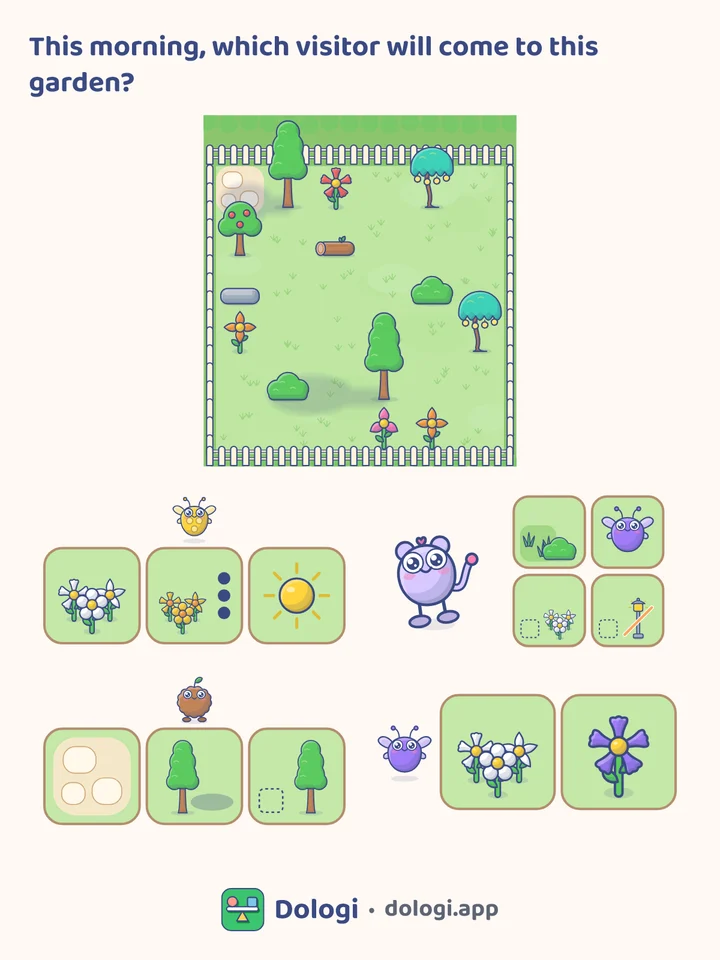
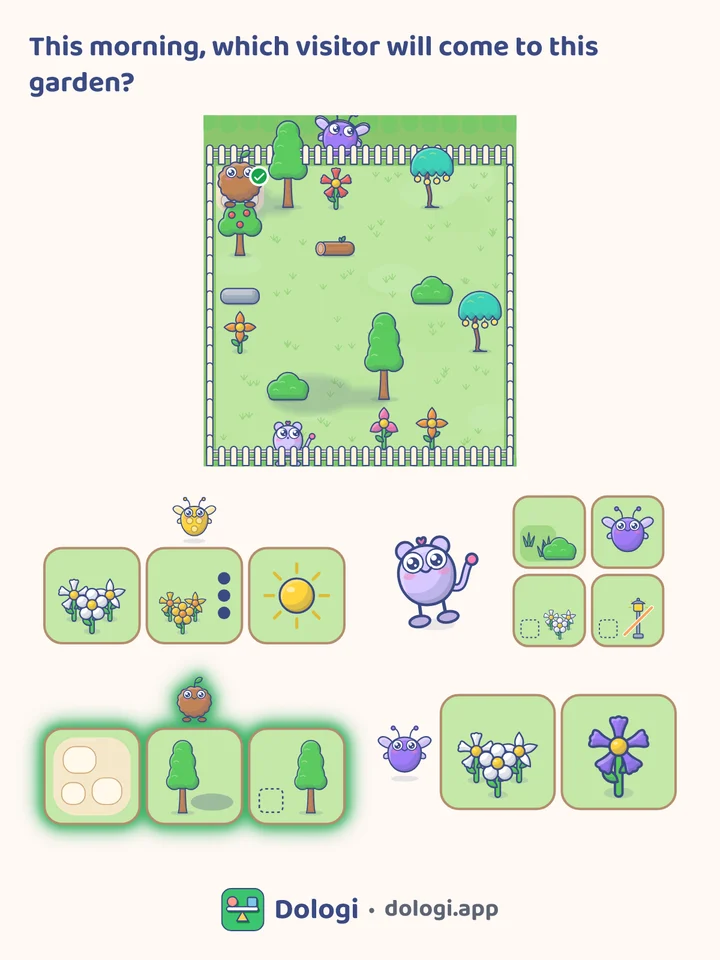
Ages 11–12
What it builds: Each visitor needs certain things in the garden, and some only come at a certain time of day, so your child has to check every visitor against both the garden and the time in the question. This is the hardest puzzle here: it trains checking each condition in turn without missing one. Keep playing: describe an animal with three clues and let your child guess what it is.
Did your child enjoy these? The Dologi app has many more puzzles of the same kinds, getting harder with age and with how your child plays, so a little practice each day never gets boring.