At preschool age, logical thinking starts with small things: putting things of the same kind together, using what you know to work out what you don't, and following a rule all the way through. The five puzzles below come straight from the Dologi app, suit kids ages 4–5, and go from easy to harder.
How to use this post: show your child one picture at a time, let them think it through and say out loud why they choose what they choose. The answer is behind the "Show answer" button under each picture. If your child gets it wrong, hold off on the answer: ask "what do we already know for sure?" and let them try again.
Puzzle 1: Sort into groups
Ages 4–5
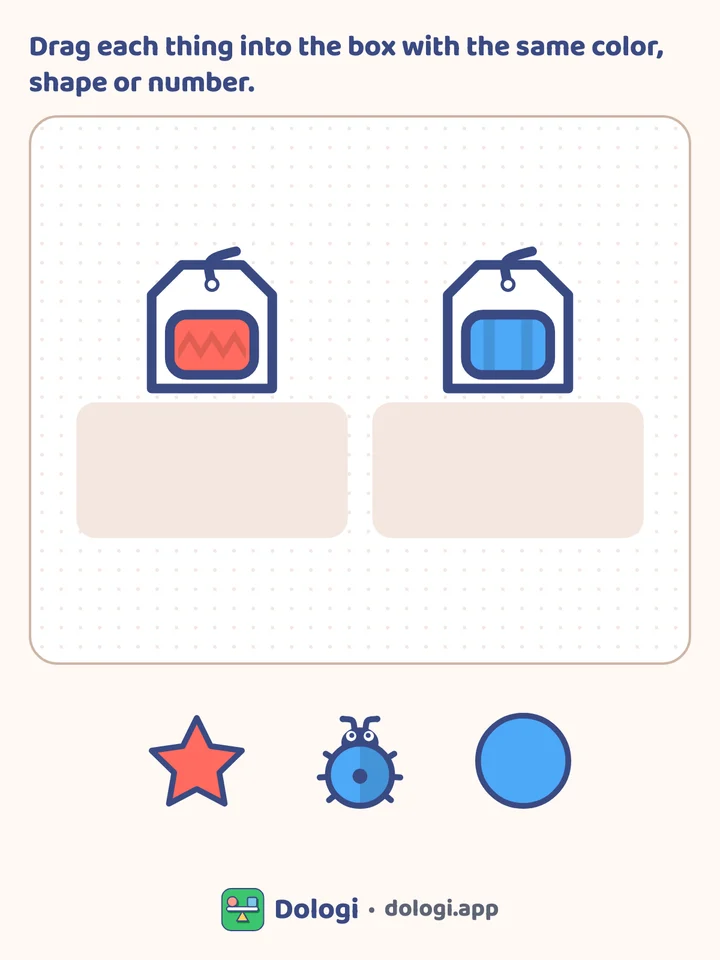
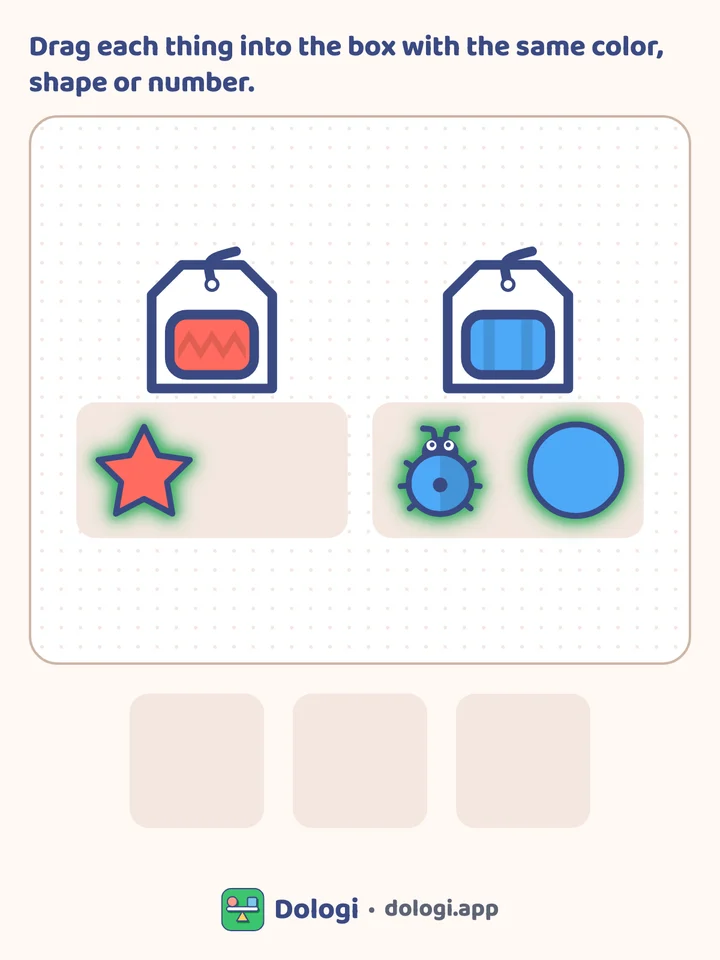
What it builds: Your child looks at the color label on each box and pays attention only to each thing's color, setting its shape aside. Sorting by one feature is the root of classifying and comparing, which they will use when learning to count and in science at school. Keep playing: tip a basket of toys onto the floor, sort them into piles by color together, then sort them again by size.
Hint: The colored label on each box shows which things go in.
Puzzle 2: Who lives here?
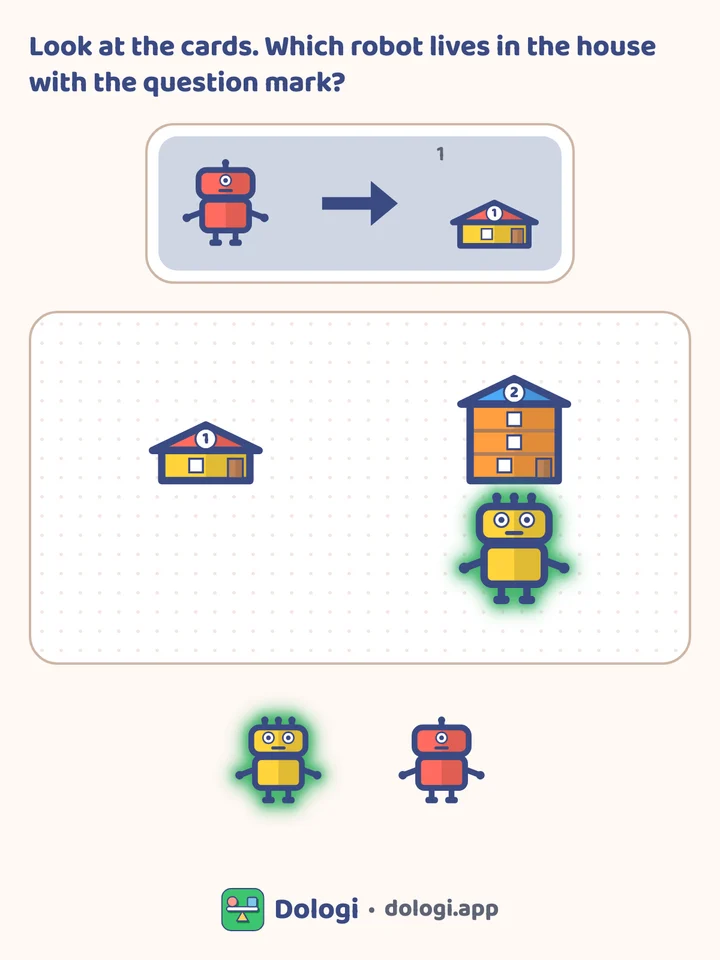
Ages 4–5
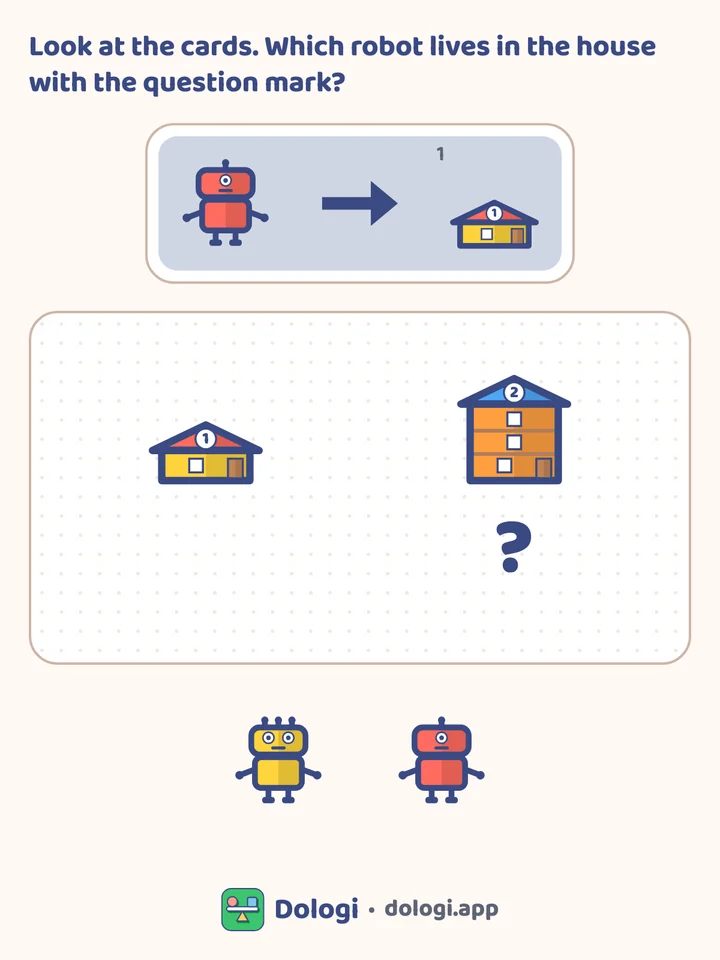
What it builds: The clue card tells about only one character; your child works out where the other one lives because each house has just one resident. This is reasoning by elimination, the kind of thinking kids use every day to find lost things or guess who did what. Keep playing: turn two cups upside down, hide a toy under one, lift the other for your child to see and ask where the toy is.
Hint: An arrow to a house means it lives in that house. Each one lives in a different house.
Puzzle 3: Who lives where?
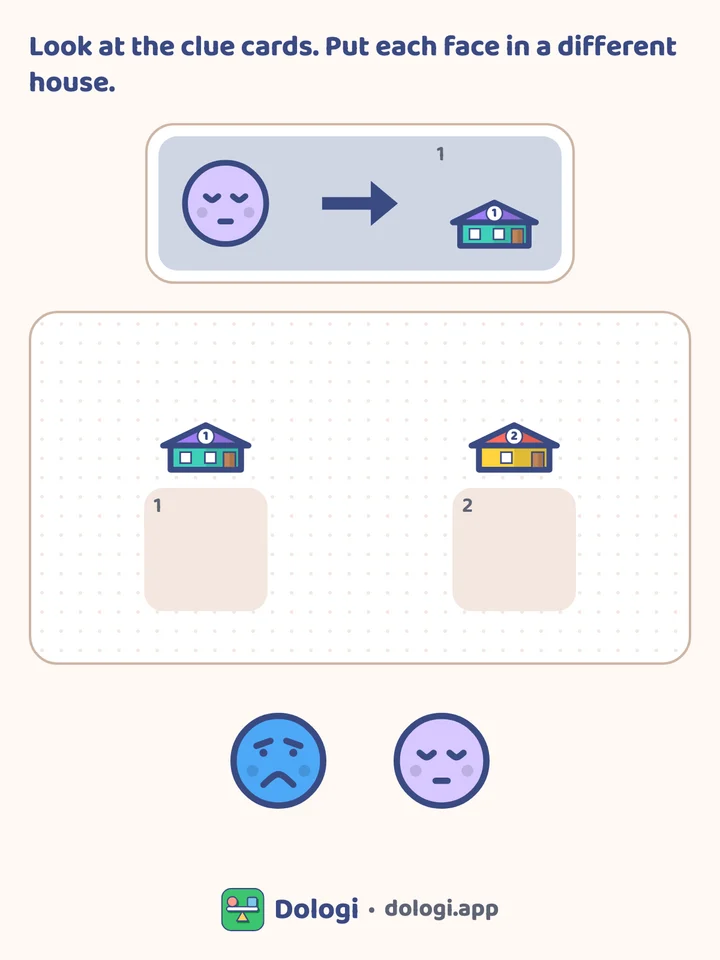
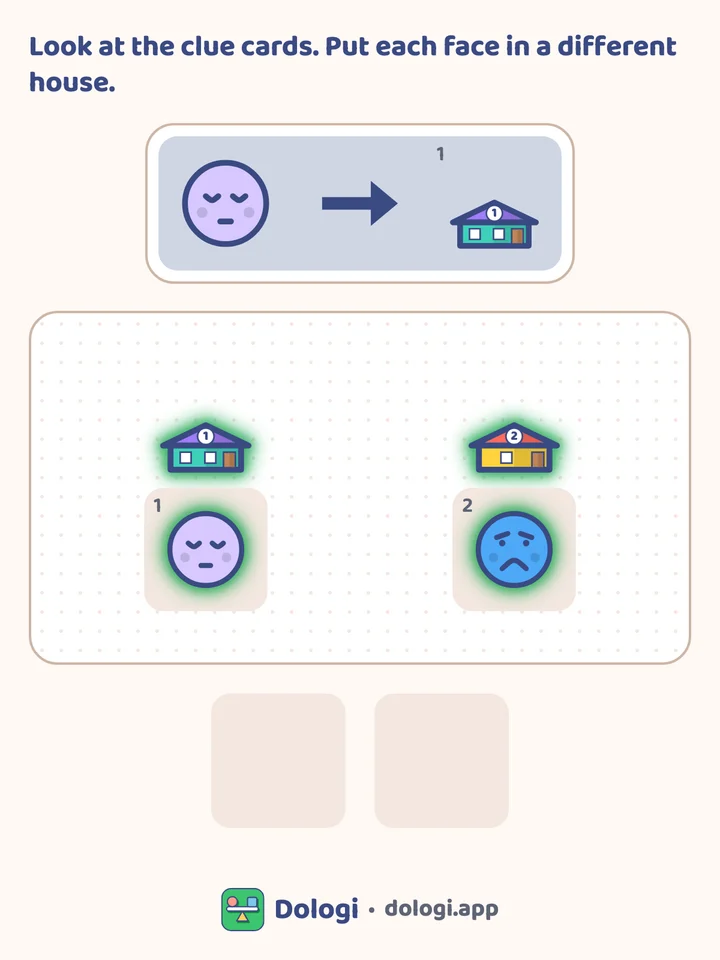
Ages 4–5
What it builds: This time your child places every face in a house, so they read the clue card first and only then fill in the rest. Starting from what is certain and working on from there is a habit that helps them solve problems in order instead of guessing. Keep playing: set out two chairs, say "teddy sits on the red chair" and let your child seat the doll on the other one.
Hint: An arrow to a house means it lives in that house.
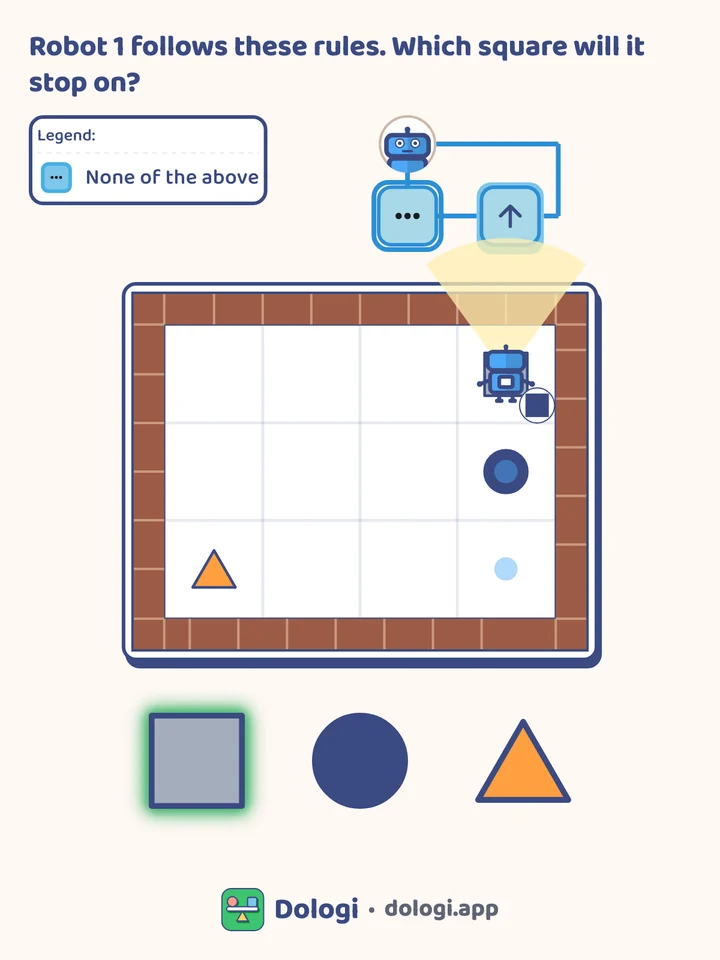
Puzzle 4: Where will the robot stop?
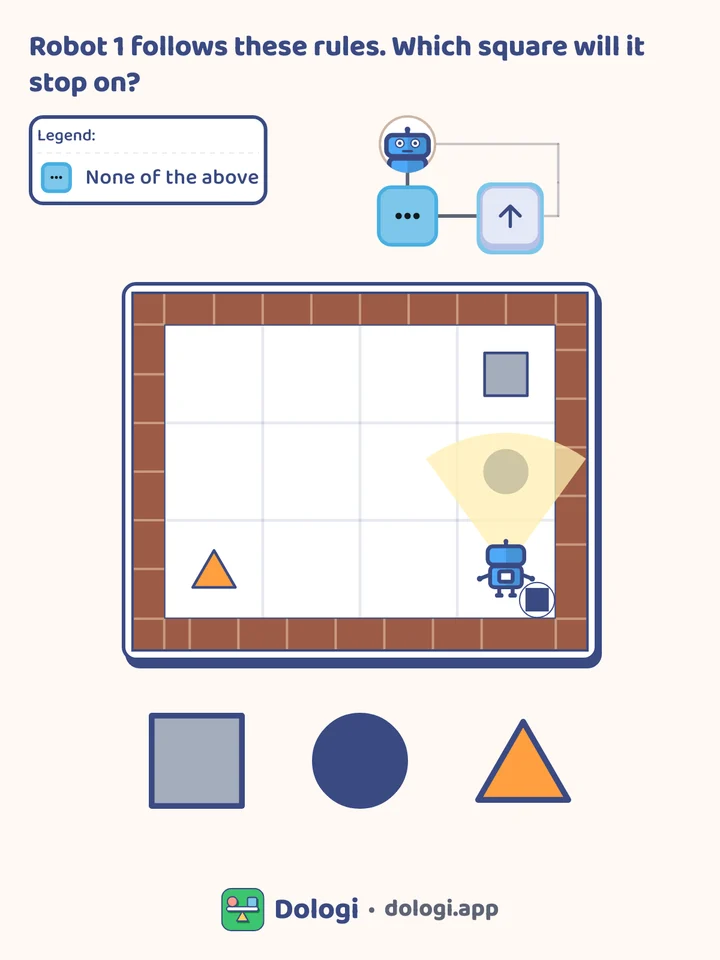
Ages 4–5
What it builds: Your child reads the robot's rule, checks which way it is facing and traces each step with a finger until the robot cannot move any further. Following step-by-step instructions is a first taste of coding, and also how they follow the teacher's directions in class. Keep playing: let your child be the robot; you only say "go straight" and they walk until they touch a wall and stop.
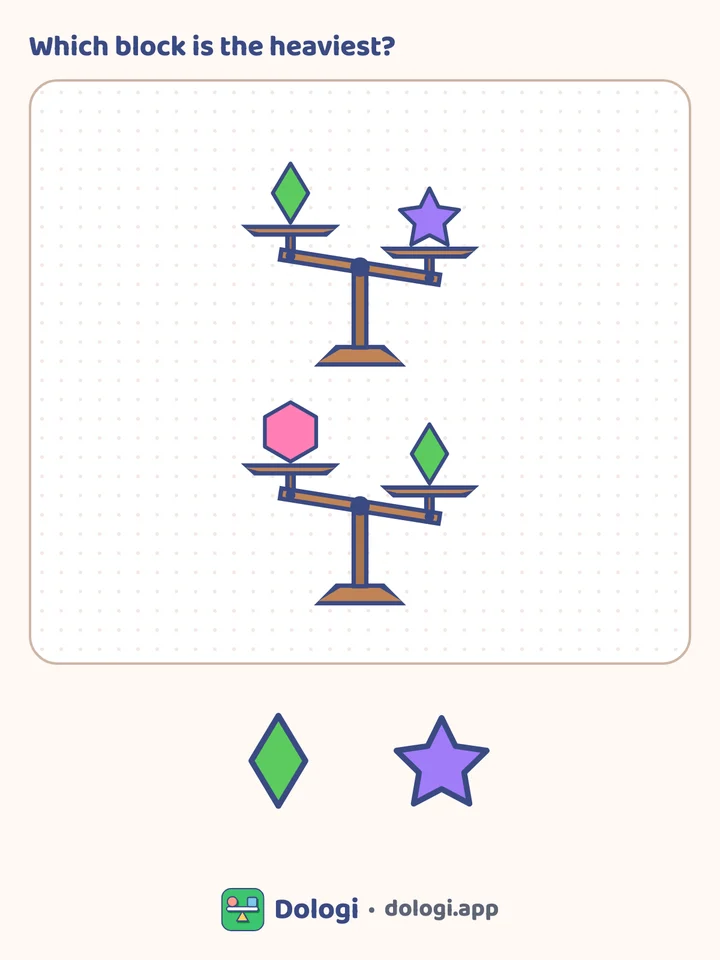
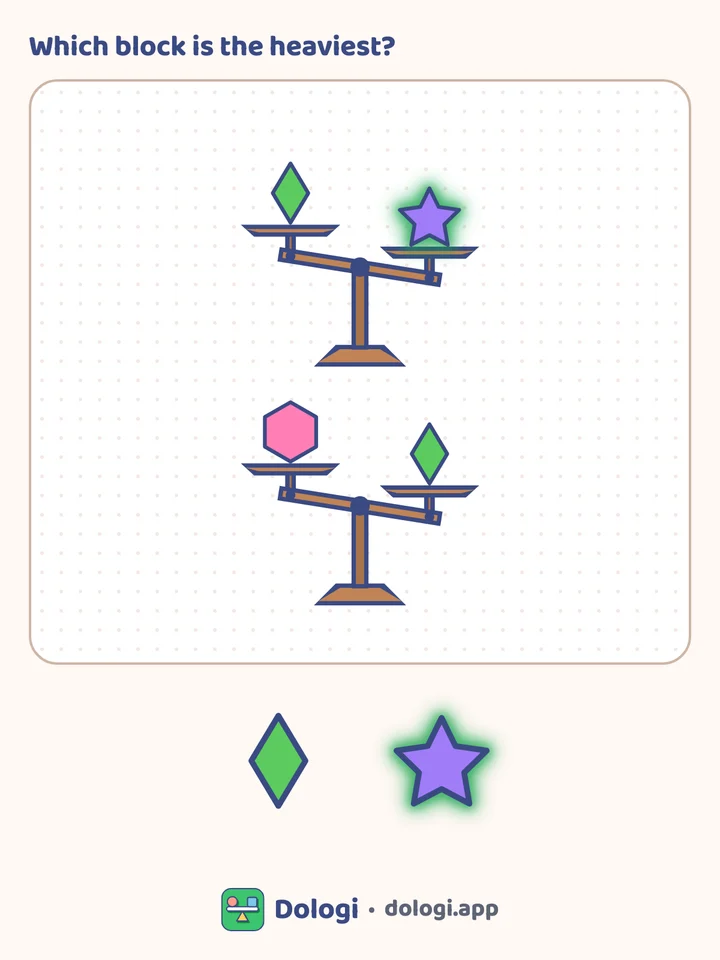
Puzzle 5: Balance scales
Ages 4–5
What it builds: Each scale compares only two blocks; your child puts the two weighings together to find which block is heavier than all the others. Linking two known facts into a new conclusion is transitive reasoning, the groundwork for comparing and ordering in math. Keep playing: hold two objects in your hands for your child to guess which is heavier, then add a third and ask them to line all three up from light to heavy.
Did your child enjoy these logic puzzles? The Dologi app has many more of the same kinds, with more houses, more clues and robots with more rules, getting harder with age and with how your child plays, so a little thinking practice each day stays fun.