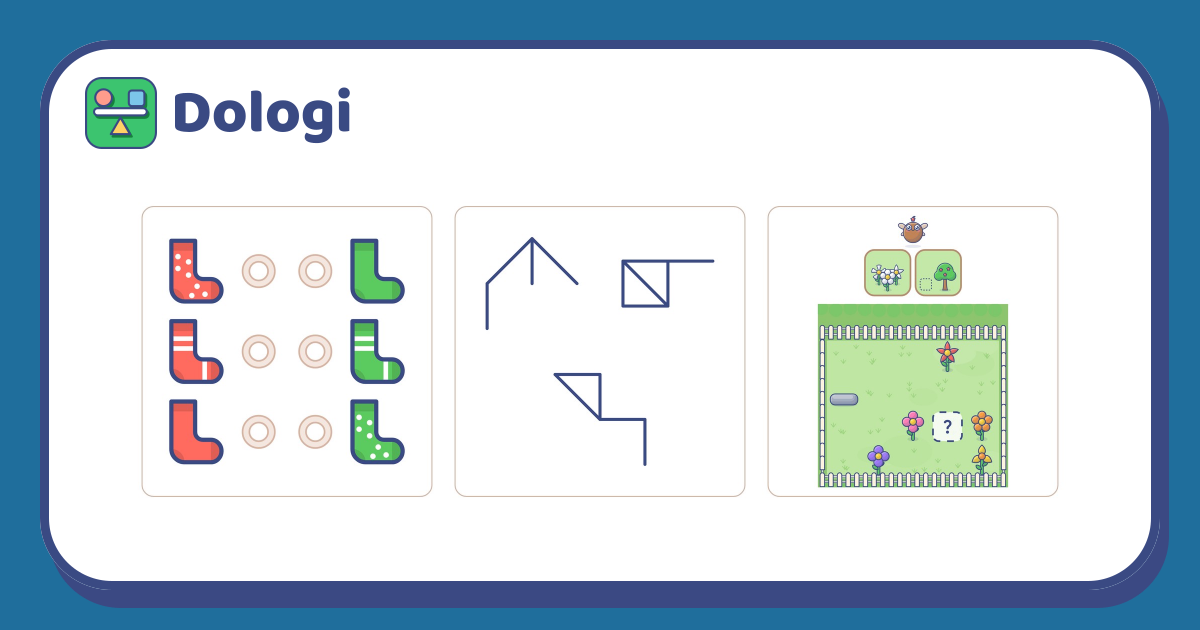
At ages 5–6, before starting first grade, children can hold a rule in mind and apply it again and again: each number appears only once, each line is drawn only once, a visitor only comes when everything it needs is there. The five puzzles below come straight from the Dologi app, suit kids ages 5–6, and go from easy to harder.
How to use this post: show your child one picture at a time, let them think it through and point to where they plan to fill in or choose. The answer is behind the "Show answer" button under each picture. If your child gets it wrong, hold off on the answer: ask "what's the rule in this one?" and let them check each spot again.
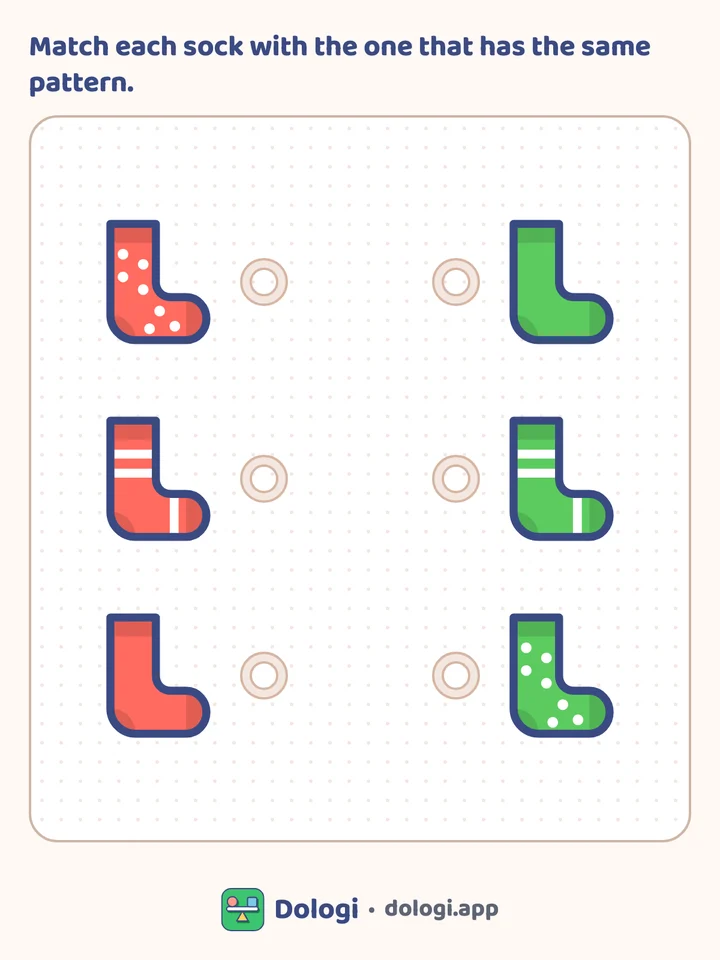
Puzzle 1: Match the pairs
Ages 5–6
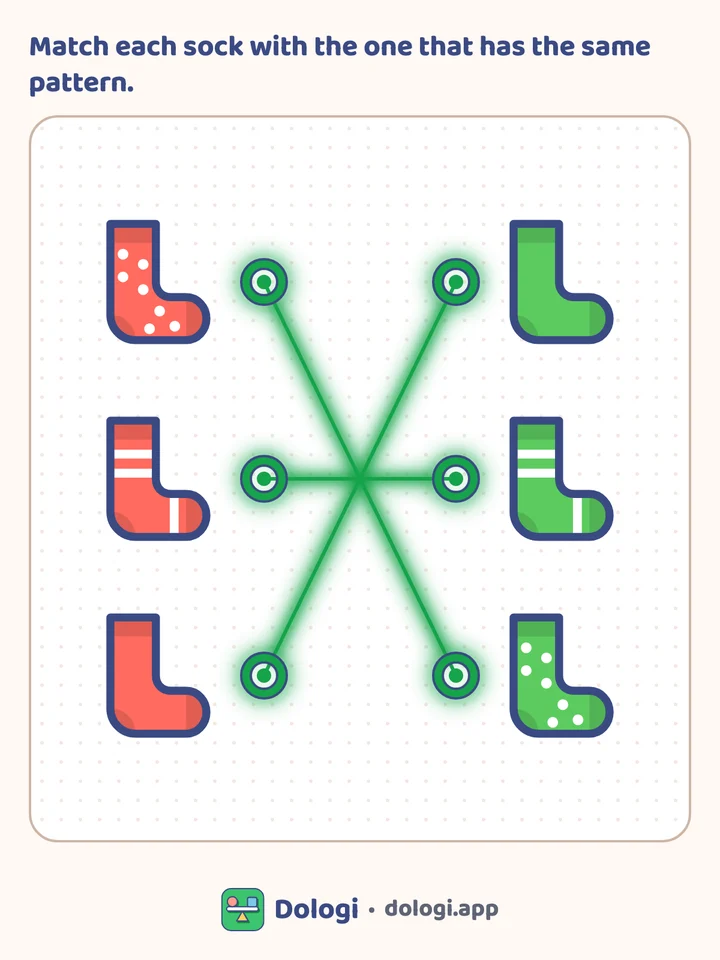
What it builds: The two sides are different colors, so your child has to ignore color and compare only the pattern: dots, stripes or plain. Knowing which feature to compare and setting distracting ones aside helps them focus on what matters in schoolwork. Keep playing: empty the laundry basket of socks and pair them up together, now and then hiding one so your child can find the odd sock out.
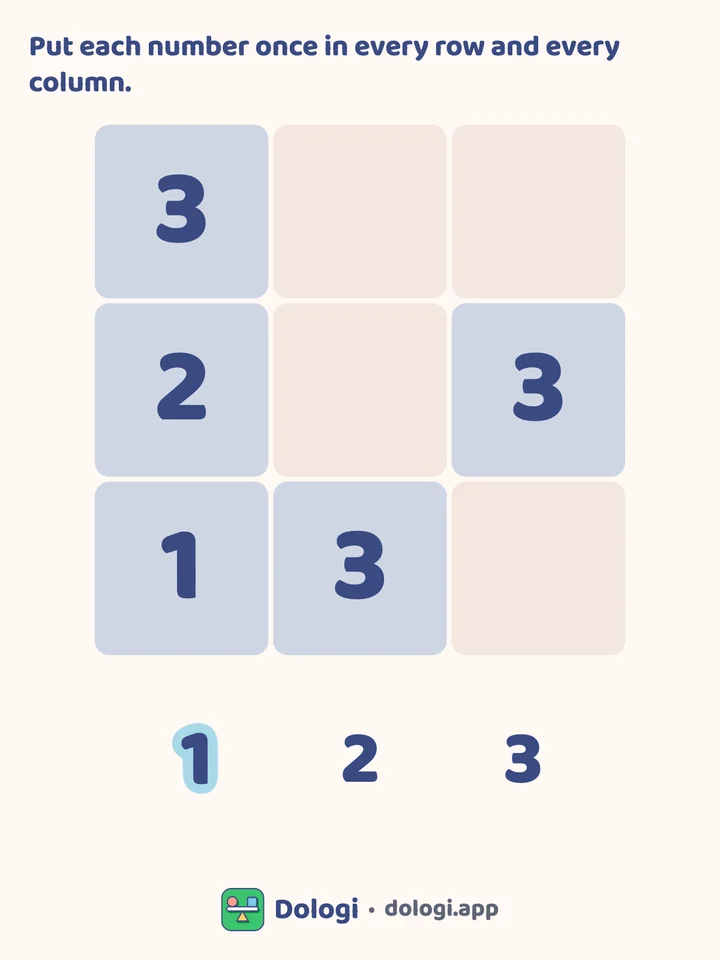
Puzzle 2: Number square
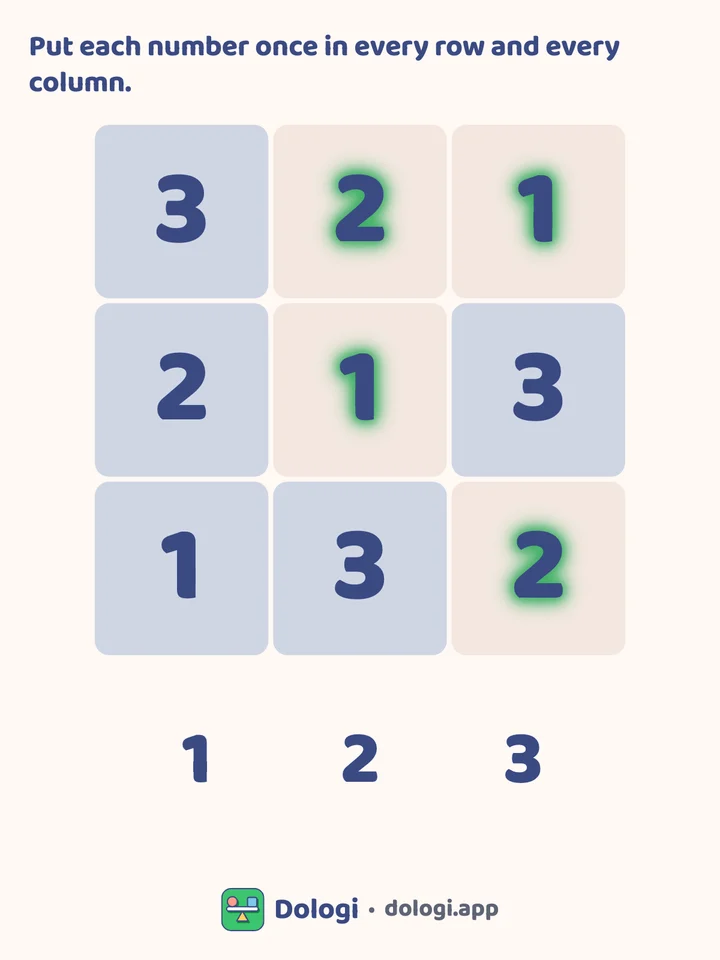
Ages 5–6
What it builds: Every row and every column needs each number exactly once; your child looks for a row or column with just one gap and fills that first. This is a first step toward bigger number-grid puzzles, training them to check two directions at once and to start from the surest spot. Keep playing: lay out three kinds of fruit in a three-by-three grid so that every row and column has all three kinds.
Puzzle 3: One stroke
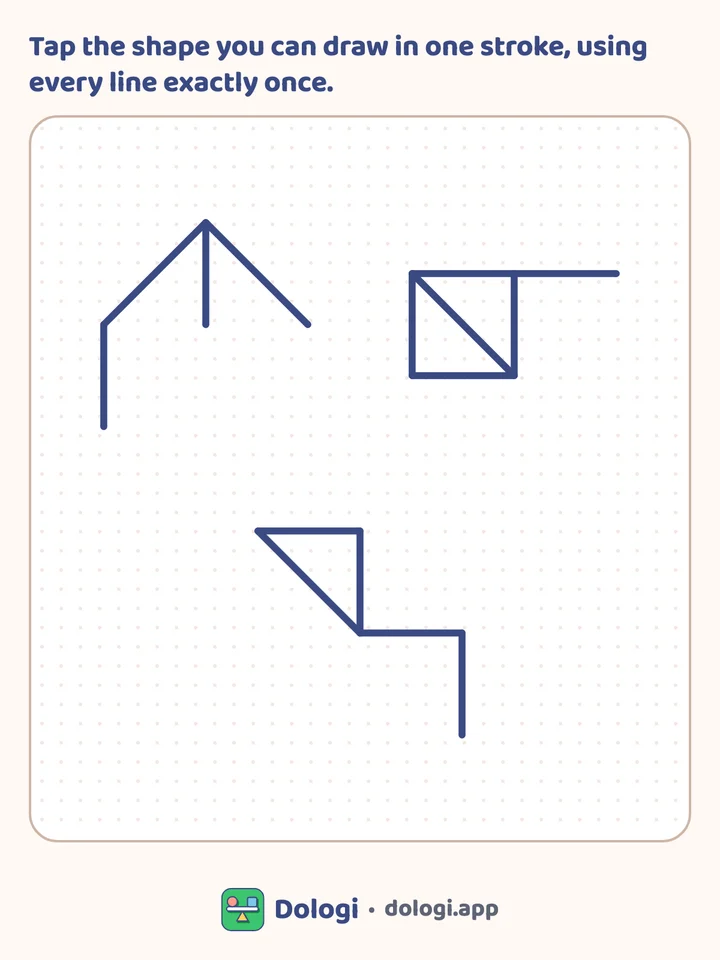
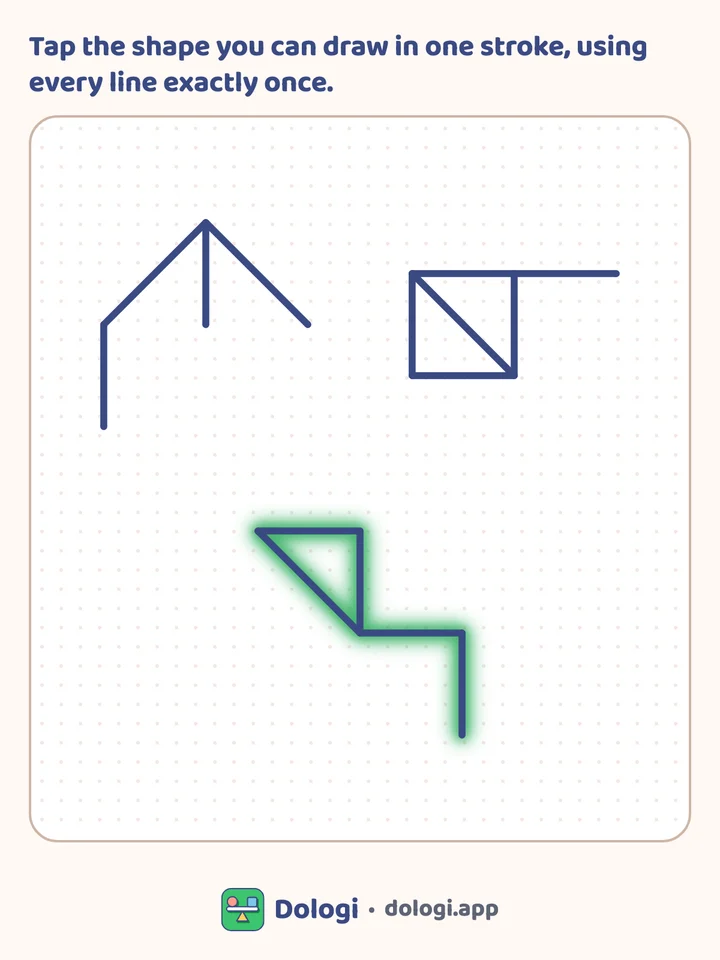
Ages 5–6
What it builds: Your child tries each shape in their head: where to put the pencil down and which way to go without lifting it or going over a line twice. For some shapes they'll find that trying alone shows it can't be done, which is when they start looking for the reason why. Keep playing: draw a few simple shapes together, such as a square, an X and a five-pointed star, and test which ones can be drawn in one stroke.
Puzzle 4: Math number square
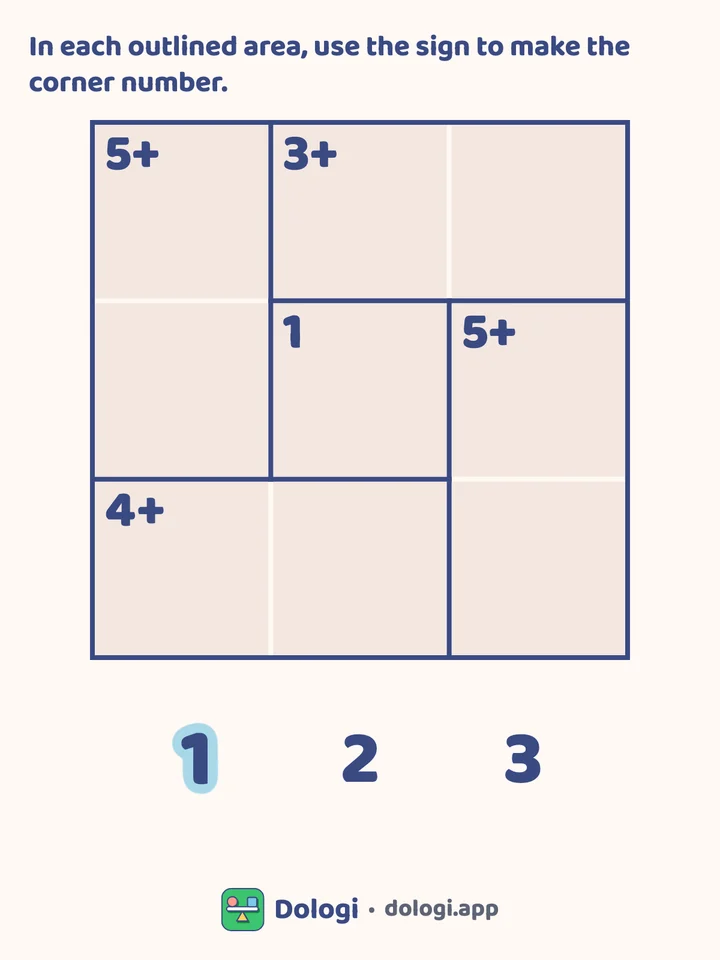
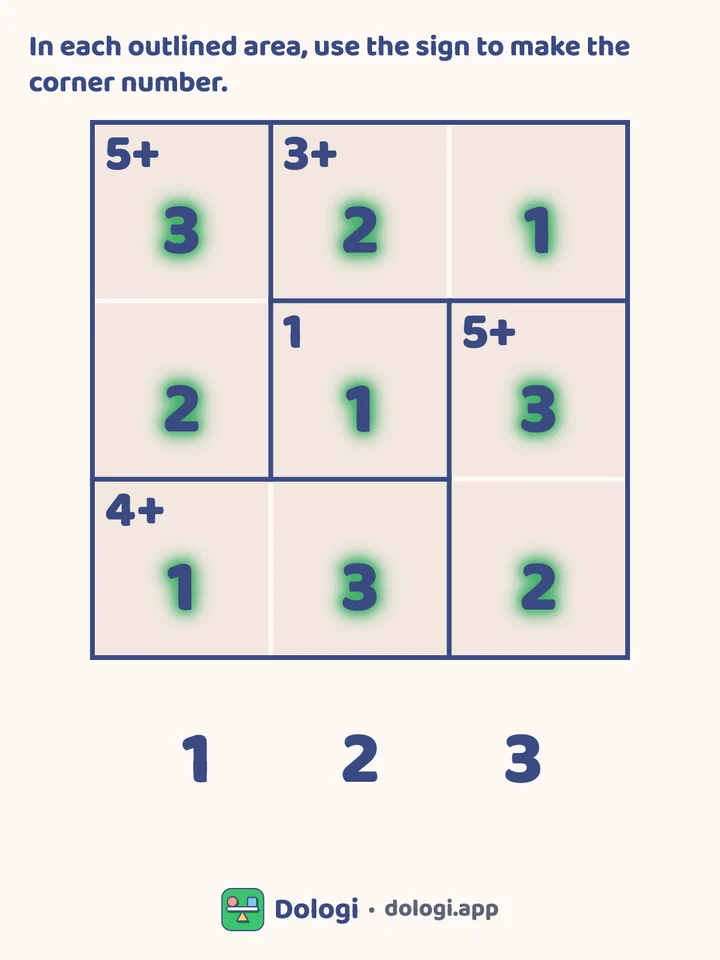
Ages 5–6
What it builds: It's the same rule of each number once per row and column, plus bold-outlined areas with a total in the corner; your child uses small additions to work out which numbers belong in each area. Combining a logic rule with arithmetic shows them that math is for reasoning, not just calculating. Keep playing: ask "which two numbers add up to 4?" and then add "you can't use 2" so your child has to think again.
Puzzle 5: What should we add?
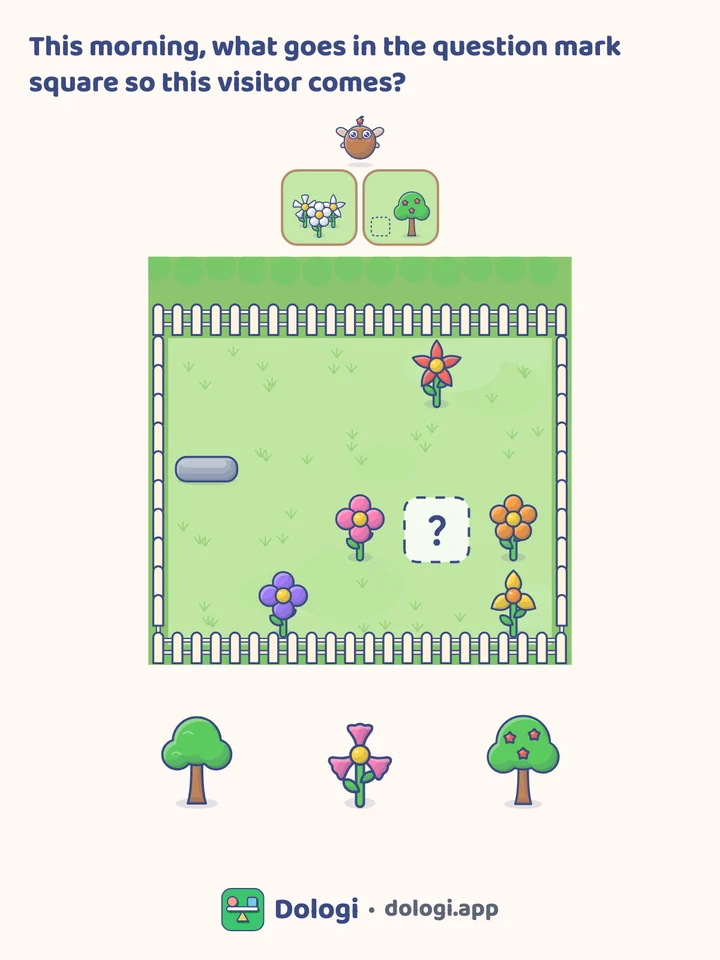
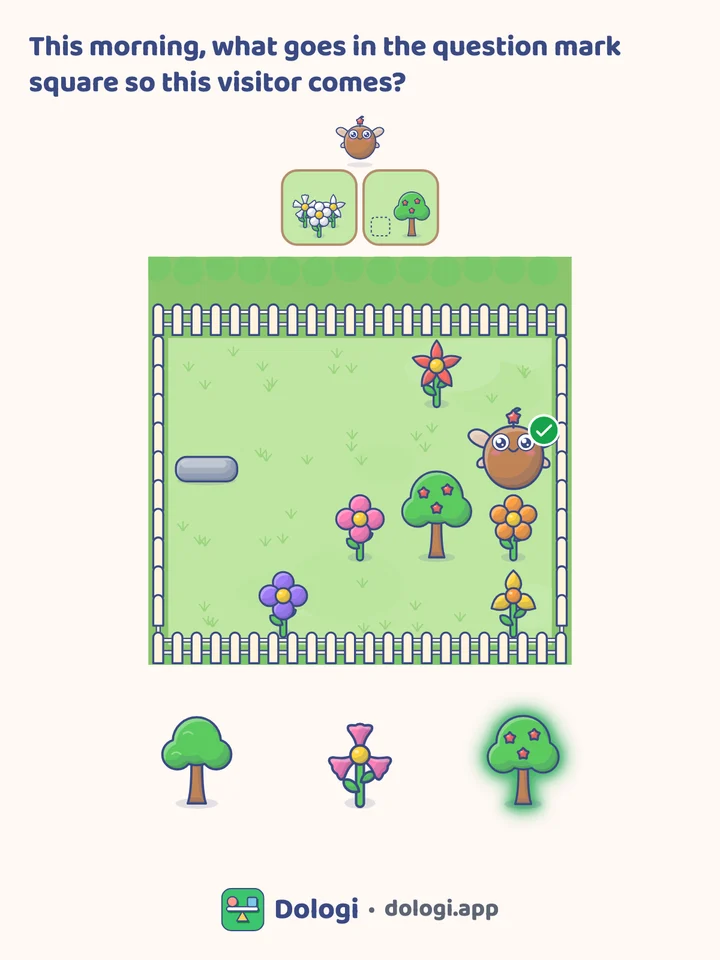
Ages 5–6
What it builds: The two cards at the top show what the visitor needs; your child checks each card against the garden, sees which conditions are met and which are missing, then picks the thing that fills the question-mark square. Checking conditions one at a time is how they follow a checklist, like packing a school bag from the timetable. Keep playing: make a list together of what you need for a picnic, then let your child check what's still missing.
Did your child enjoy these logic puzzles? The Dologi app has many more of the same kinds, with bigger number grids, one-stroke drawings with more lines and gardens with pickier visitors, getting harder with age and with how your child plays, so a little thinking practice each day stays fun.