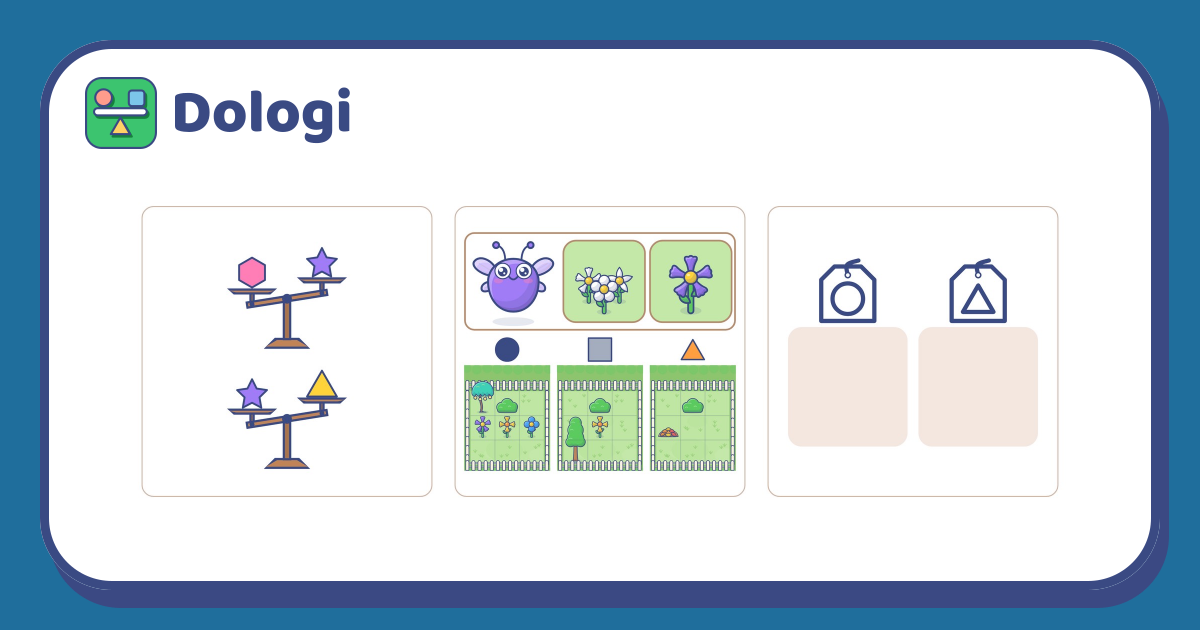
This is part 2 of our logic puzzles for kids ages 5–6. This time your child will compare using two scales, choose a piece for a robot, find the garden that has everything needed and sort things by shape. The five puzzles below come straight from the Dologi app and go from easy to harder.
How to use this post: show your child one picture at a time and let them think it through and point to their choice. The answer is behind the "Show answer" button under each picture. If they get it wrong, hold off on the answer: ask "what do you see in this picture?" and let them try again.
Puzzle 1: Balance scales
Ages 5–6
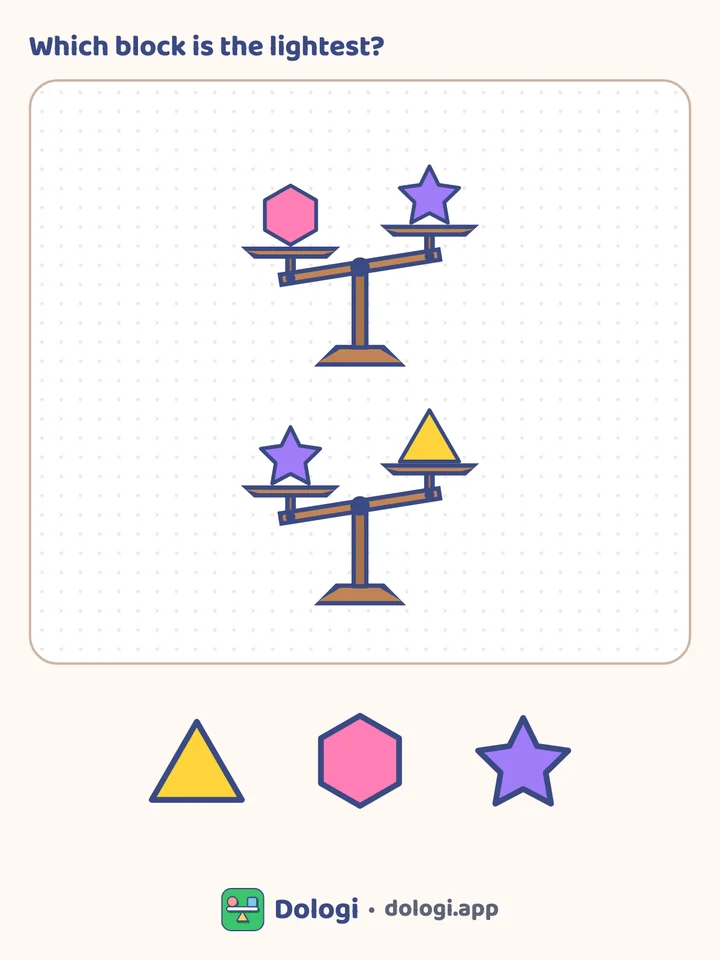
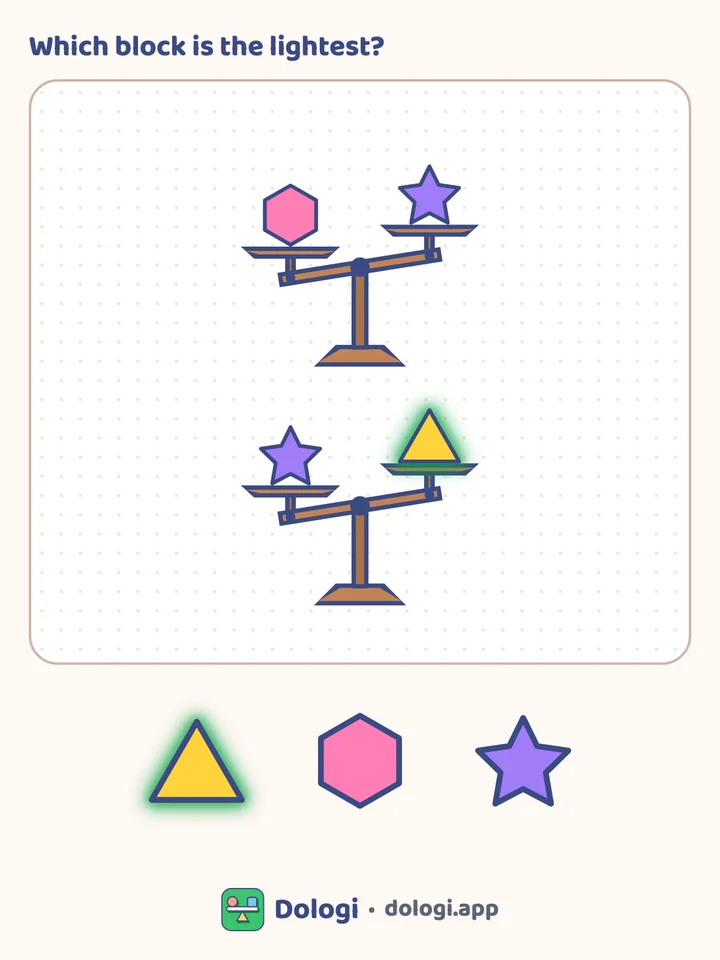
What it builds: The lower side of a scale is the heavier one; your child reads each scale and then links the two comparisons to find the lightest block. Putting two comparisons together into one conclusion helps them order things by size or height, which they'll meet right away in first grade. Keep playing: let your child hold an object in each hand and guess which is heavier, then swap one object and compare again.
Puzzle 2: Which piece is missing?
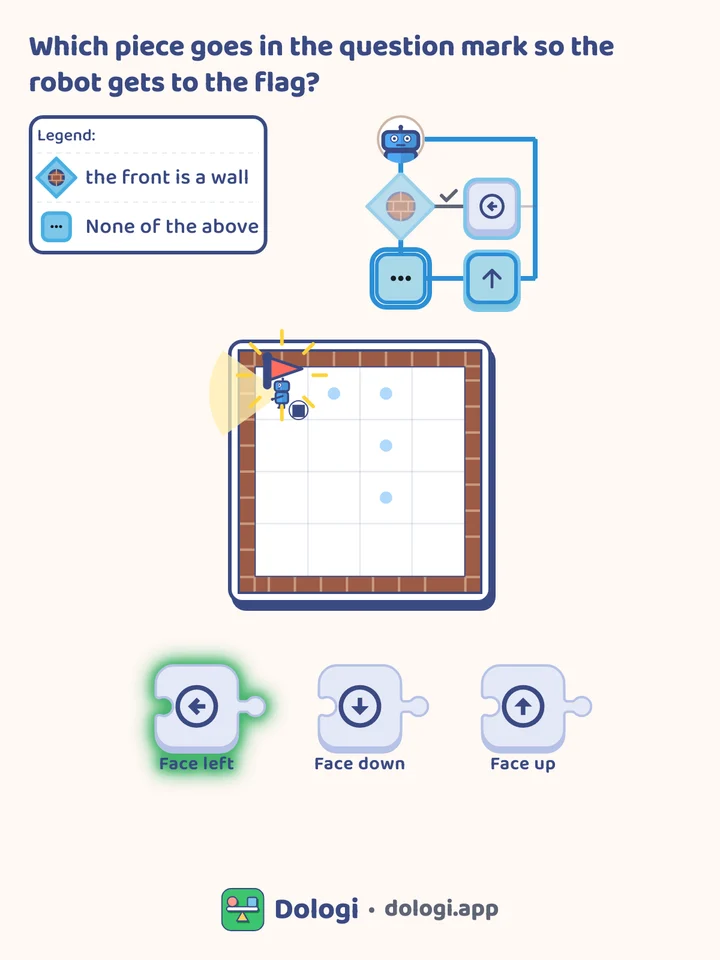
Ages 5–6
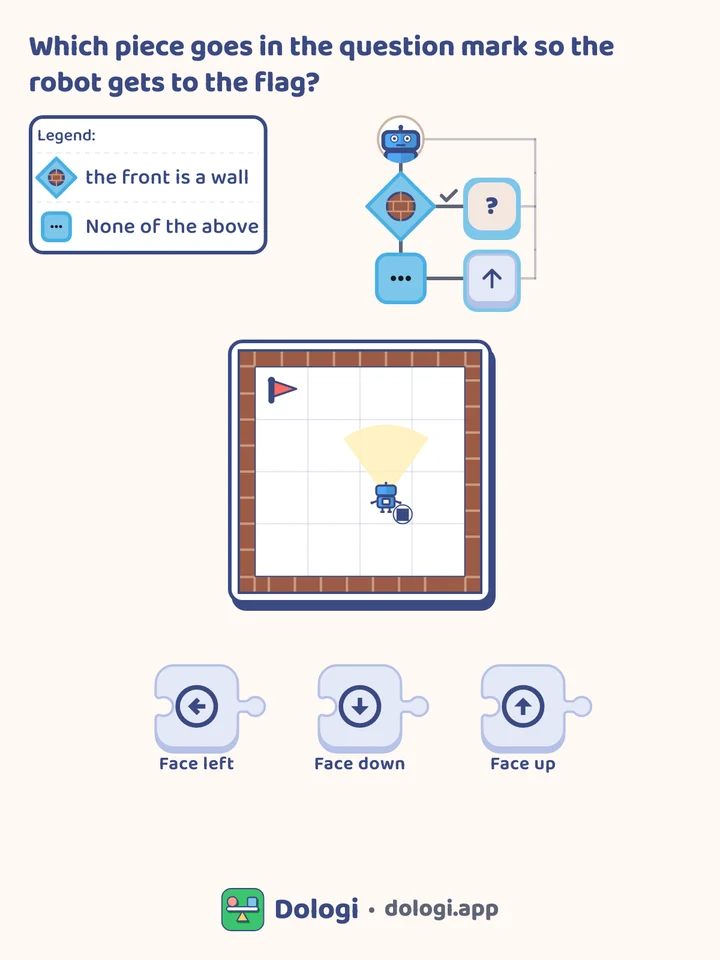
What it builds: The robot keeps walking straight until it meets a wall; your child imagines it reaching the wall and then picks the turn that leads the rest of the way to the flag. Thinking ahead about "what happens if I choose this" is the first step of planning and coding. Keep playing: let your child be a robot walking straight across the room; at the wall, you call out a turn and see whether they reach the teddy bear.
Puzzle 3: Which garden?
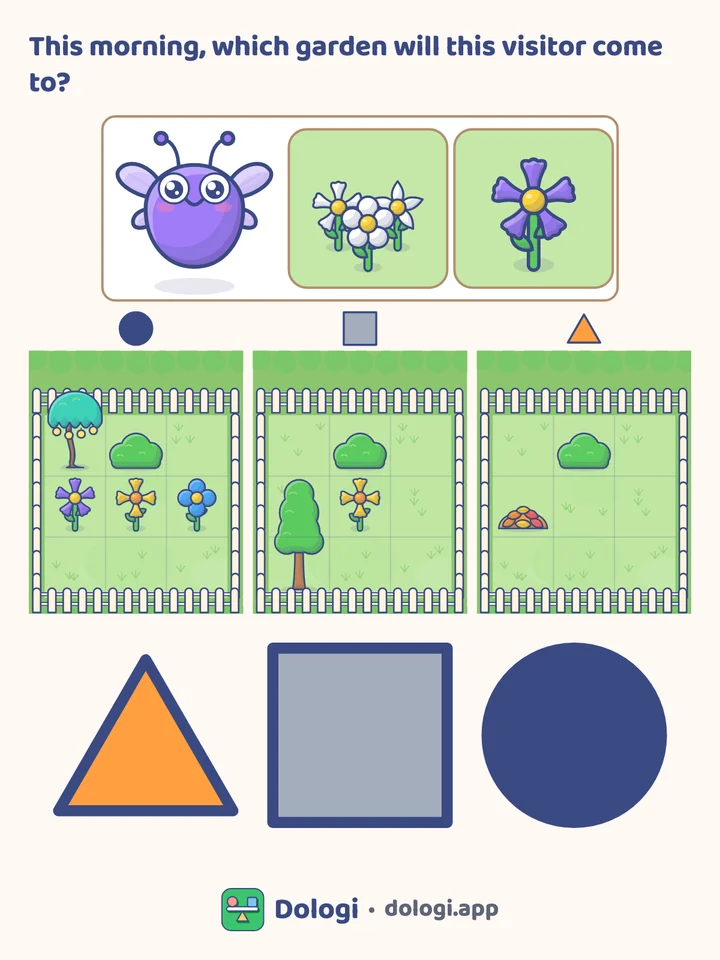
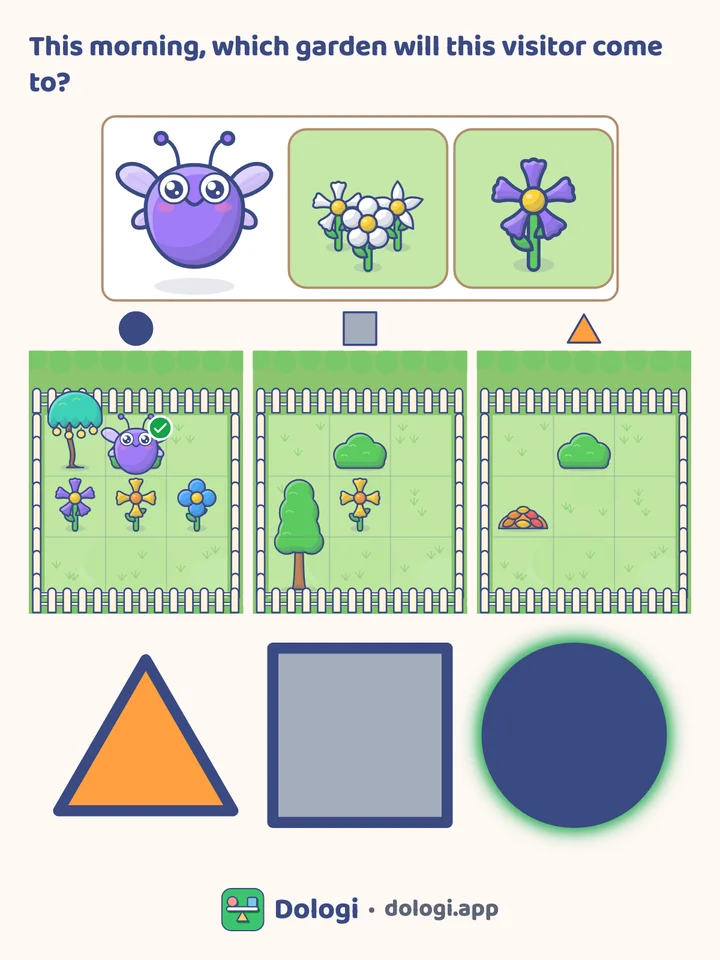
Ages 5–6
What it builds: The two cards show which flowers the visitor likes; your child looks for the garden that has both, not just one. Checking every condition before choosing helps them be more careful with schoolwork and with following instructions. Keep playing: say "I need a cup that is blue and has a handle" and let your child find exactly that cup in the kitchen.
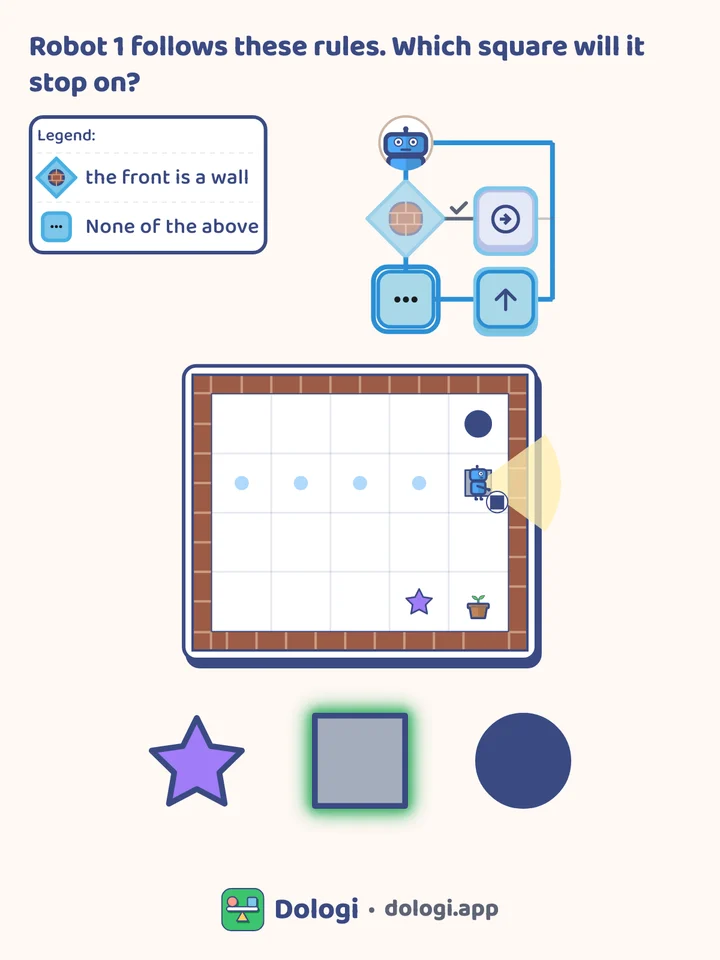
Puzzle 4: Where will the robot stop?
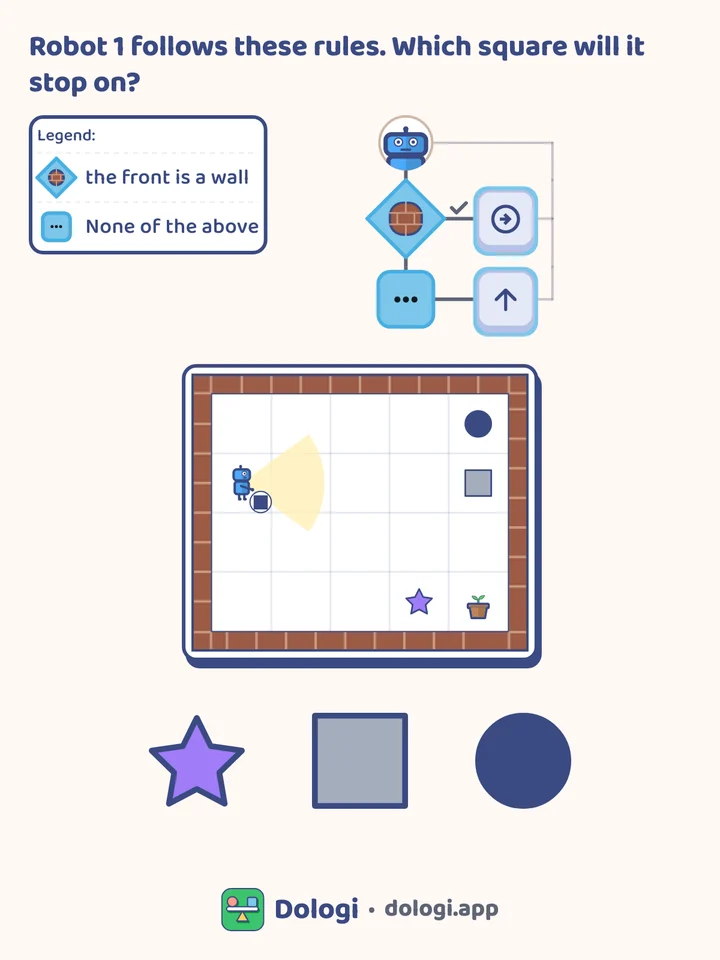
Ages 5–6
What it builds: The robot's rule has two lines: at a wall, turn; otherwise, move one square; your child follows the robot square by square with a finger until it stops for good. Following a rule that repeats helps them understand routines done in loops, like brushing each side of the teeth or tidying drawer by drawer. Keep playing: line up some cushions on the floor, set the rule "take one step, turn at a cushion" and let your child try it.
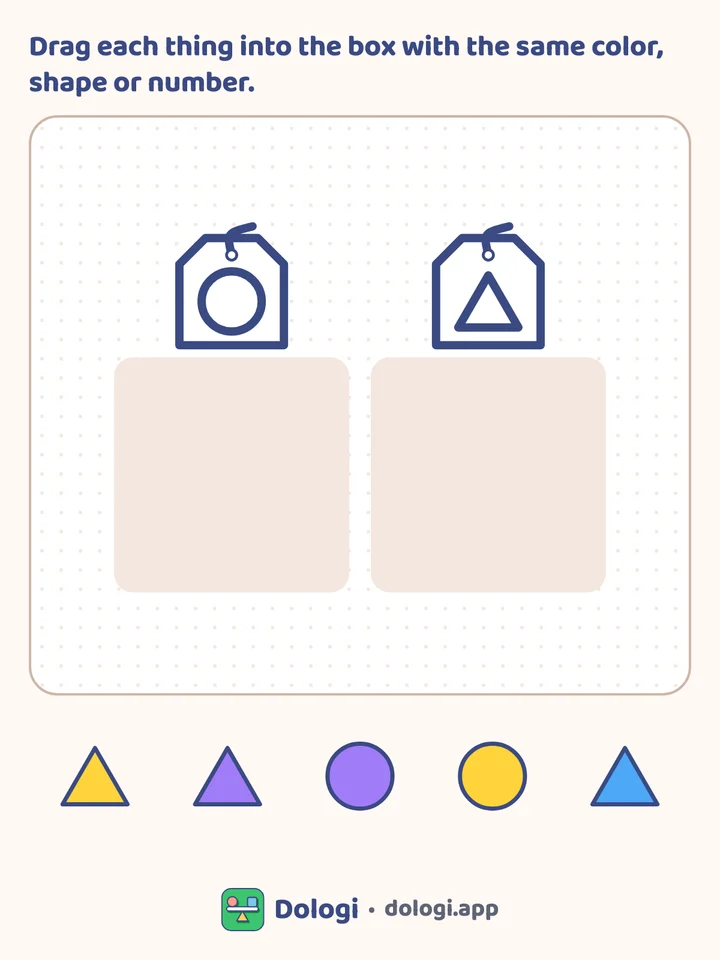
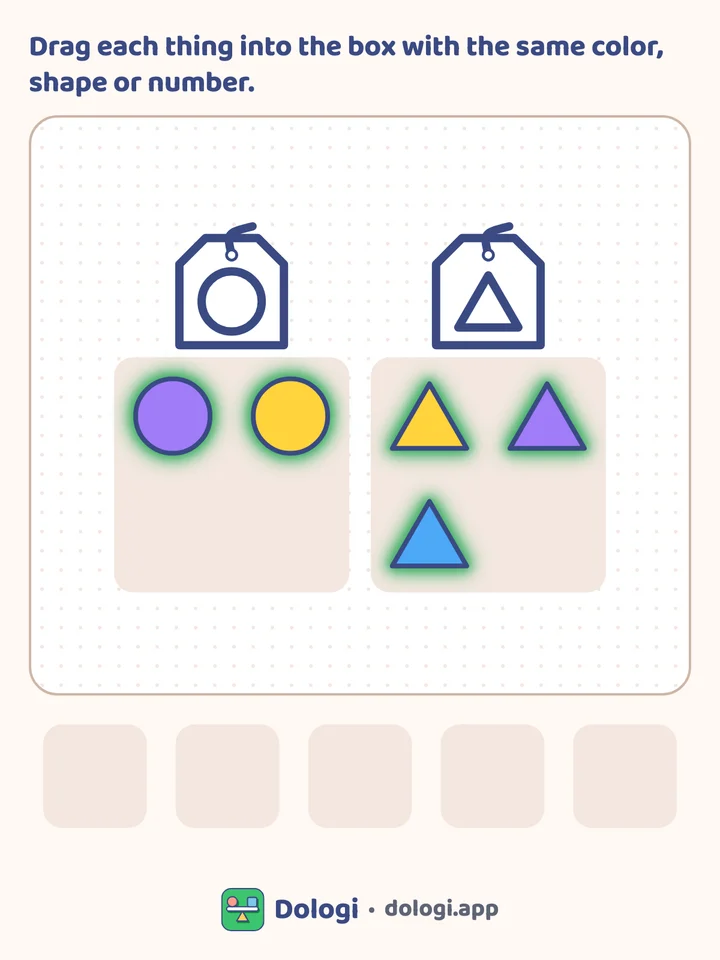
Puzzle 5: Sort into groups
Ages 5–6
What it builds: The labels on the boxes are only outlines with no color; your child must ignore color and look only at the shape of each item. Knowing which feature matters and which doesn't is the basis of sorting in math and science. Keep playing: gather bottle caps and colorful blocks, sort them by shape together, then sort them again by color to see that one pile can be sorted in many ways.
Hint: Each label is a shape drawn with just an outline.
Did your child enjoy these logic puzzles? The Dologi app has many more of the same kinds, with more scales, more robot rules and gardens with more conditions, getting harder with age and with how your child plays, so a little thinking practice each day stays fun.