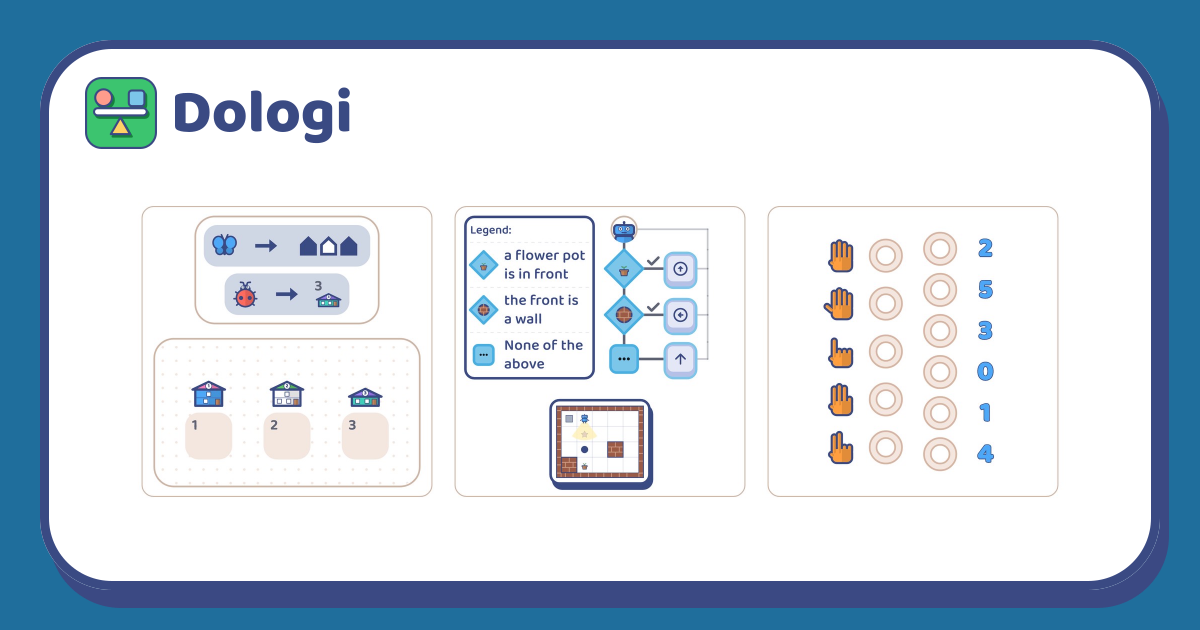
Around the start of first grade, children begin to need thinking in several steps: putting two clues together, following a set of rules with conditions, and trying things out in their head before doing them. The five puzzles below come straight from the Dologi app, suit kids ages 6–7, and go from easy to harder.
How to use this post: show your child one picture at a time and let them think it through, tracing with a finger if they like. The answer is behind the "Show answer" button under each picture. If your child gets stuck, hold off on the answer: ask "which clue is the most certain?" or "let's try the first step" and let them carry on.
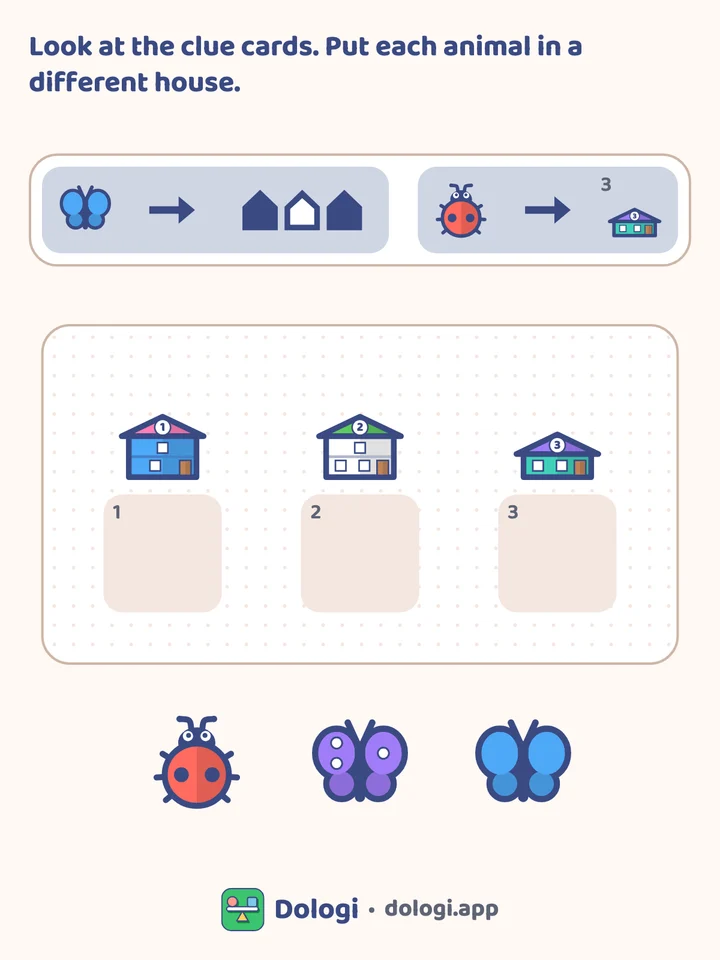
Puzzle 1: Who lives where?
Ages 6–7
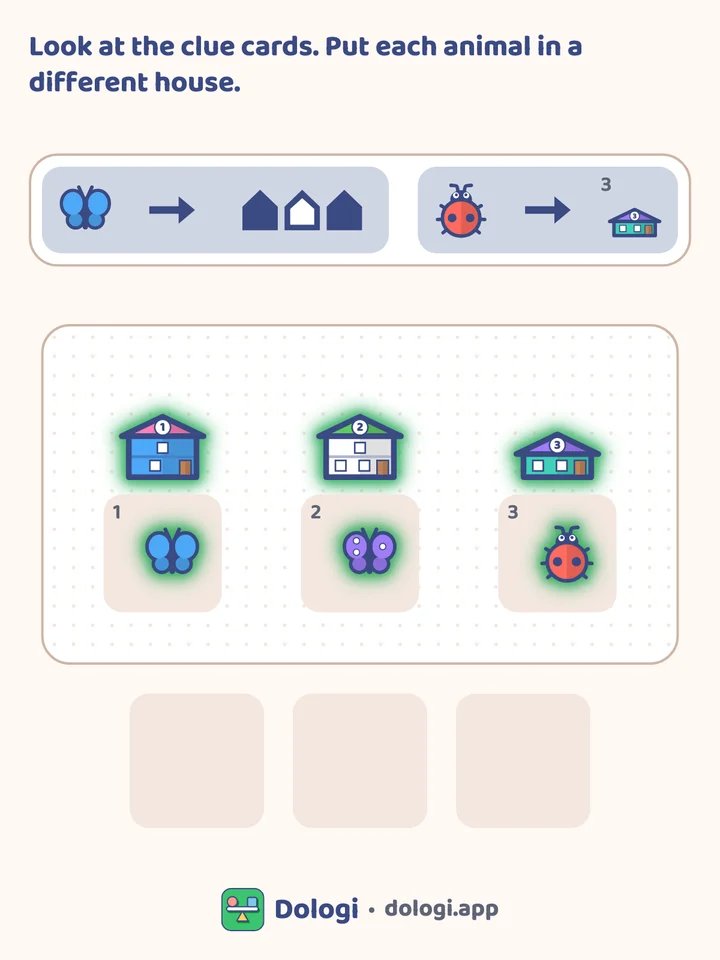
What it builds: One card points to an exact house, while the other only says the animal lives at one end of the row; your child uses the certain clue first, then the other. Combining two incomplete clues into one sure answer is reasoning they will meet again in brain teasers, word problems and even kids' mystery stories. Keep playing: line up three cups, say "the marble is not in the middle" and "the marble is not in the left cup" and let your child find it.
Hint: An arrow to the little row means it lives in a house at one end.
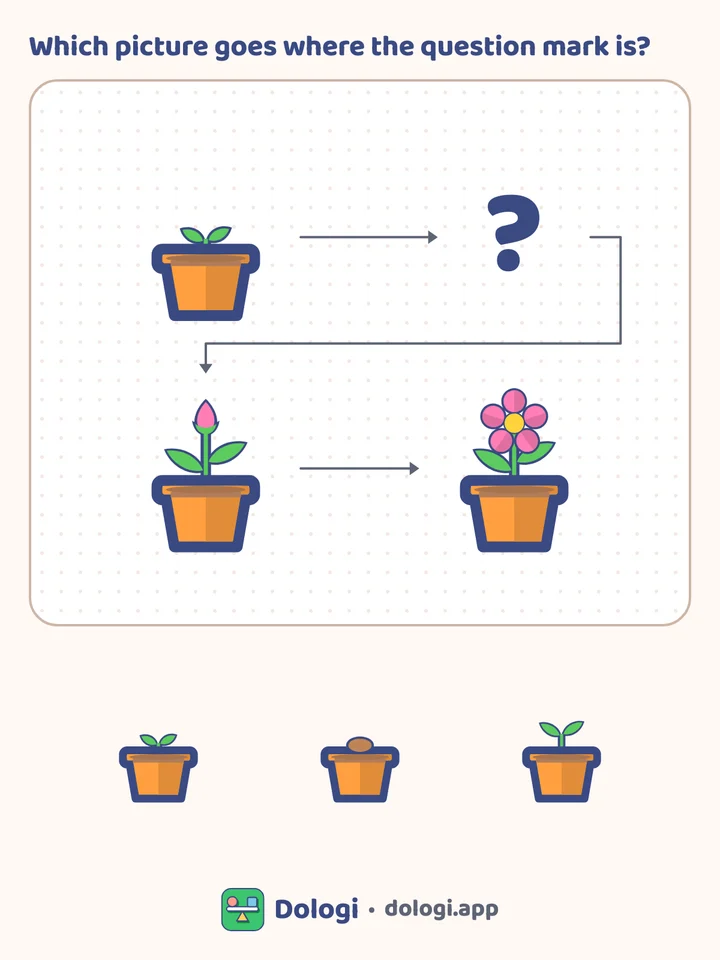
Puzzle 2: A growing plant
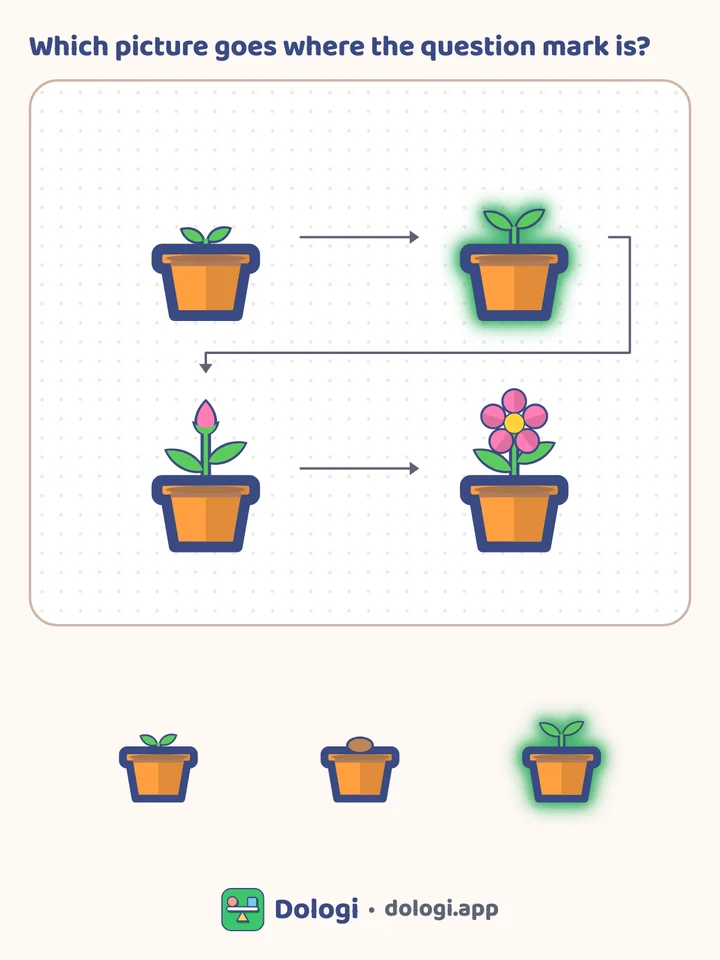
Ages 6–7
What it builds: Your child looks at the steps before and after the question mark to find the picture that belongs in between, in the order a plant grows. Putting events in sequence helps them retell stories with a clear beginning and end, and understand science lessons about how plants and animals grow. Keep playing: plant a few beans in a cup of soil, take a photo every day, then shuffle a week of photos for your child to put back in order.
Puzzle 3: Where will the robot stop?
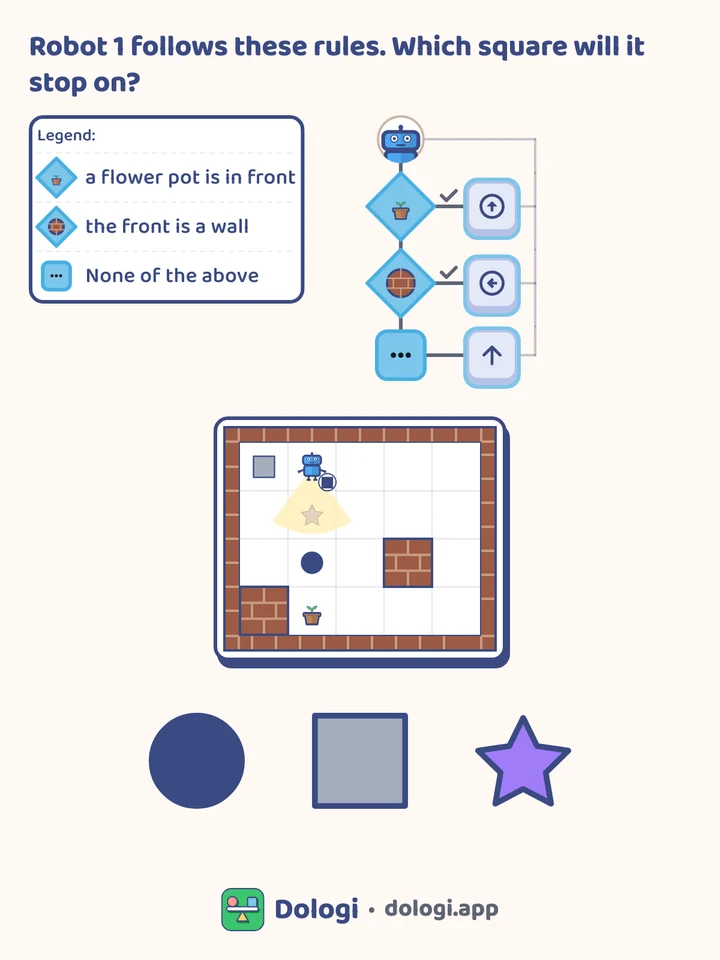
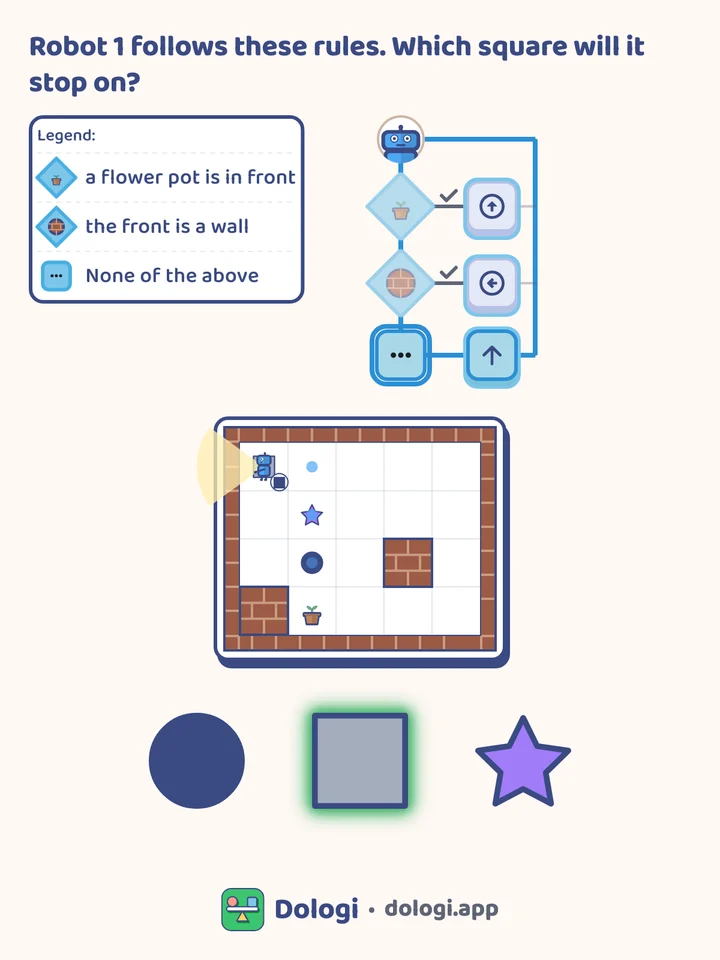
Ages 6–7
What it builds: The robot checks its rules from top to bottom and does whatever the first true rule says; an arrow in a circle means turn to face that way, a plain arrow means move one square. Your child traces each step with a finger until the robot can no longer change anything. This is the "if… then…" thinking of coding, and how they follow school rules with conditions. Keep playing: write three walking rules for your home, such as "at a chair, turn right", and let your child test them.
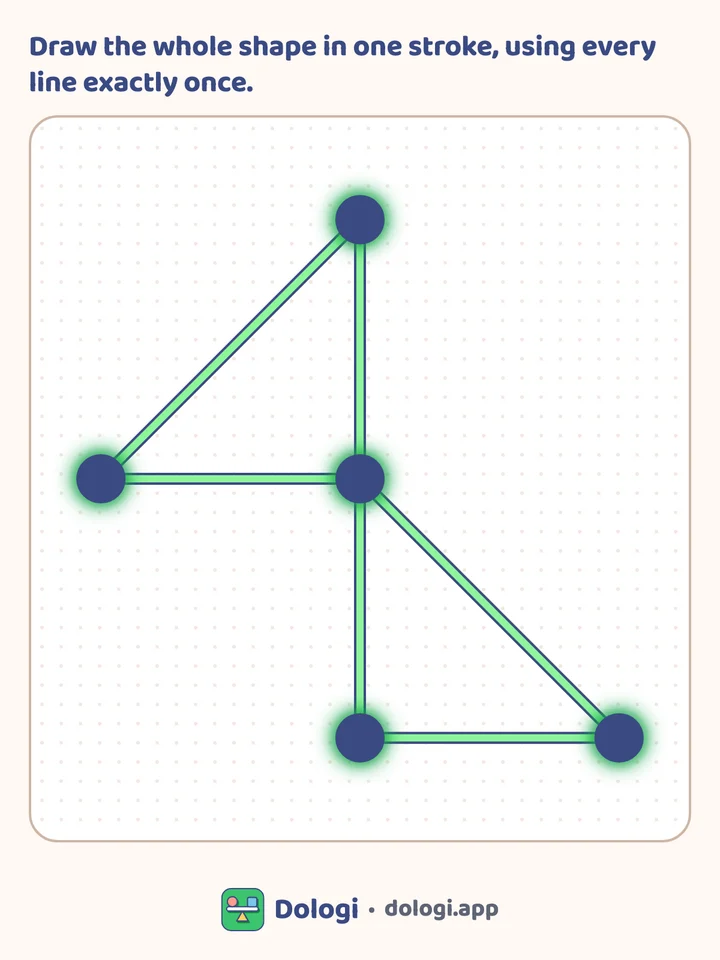
Puzzle 4: Trace in one go
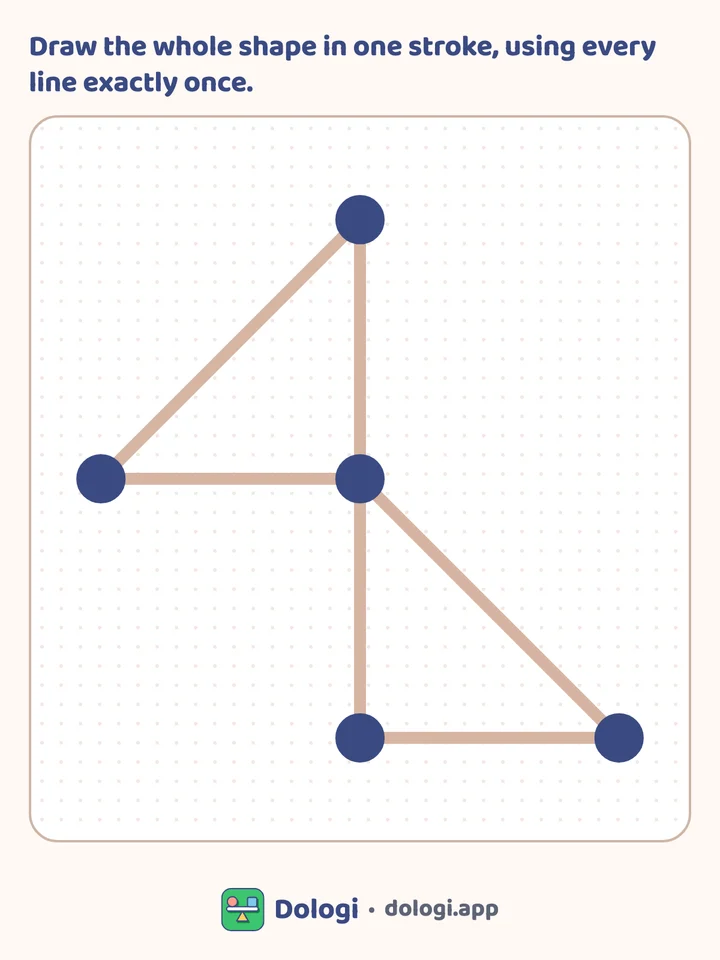
Ages 6–7
What it builds: Your child has to plan the route before drawing: which dot to start from and which line to take first so they never go over a line twice. Planning before doing helps with handwriting and with working through math in order, with less erasing. Keep playing: draw the classic envelope-shaped house on paper and try drawing it in one stroke together; whoever finds more starting points wins.
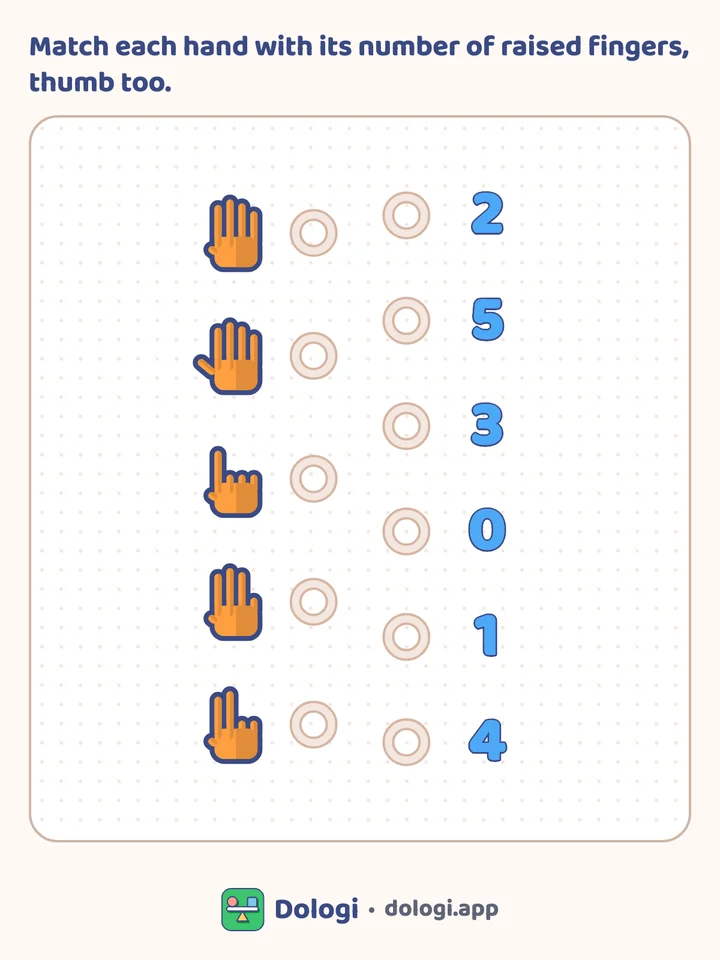
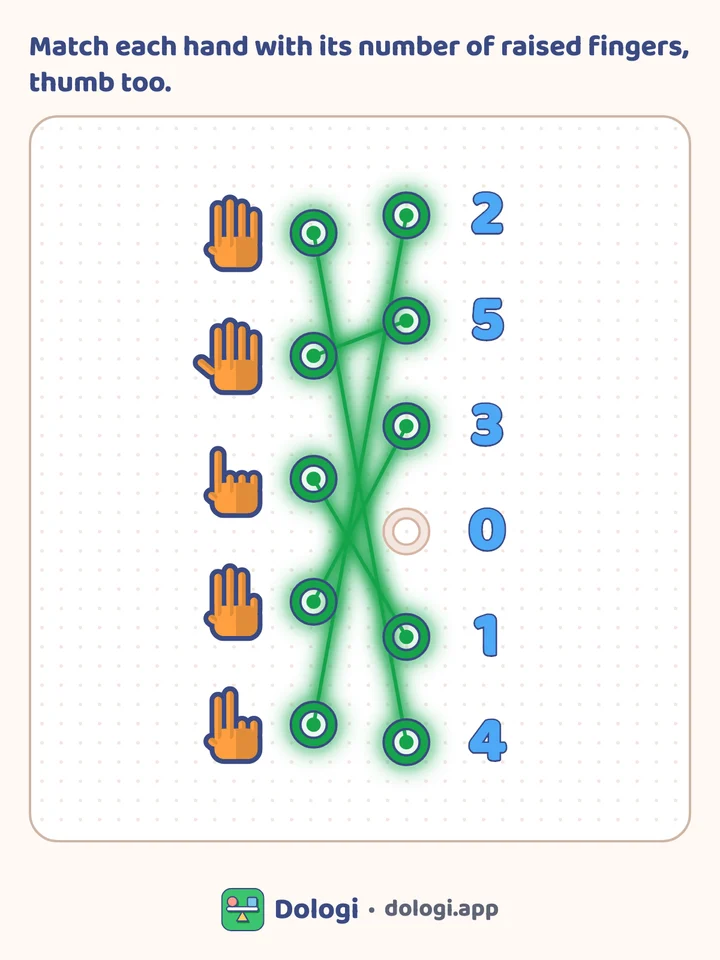
Puzzle 5: Match the pairs
Ages 6–7
What it builds: Your child counts the raised fingers on each hand, thumb included, and matches it to a number; there is one extra number, so careful counting matters more than elimination. Counting accurately and linking a quantity to a written number is the base of addition and subtraction in first grade. Keep playing: flash some fingers quickly and hide them, let your child say how many they saw, then swap roles.
Did your child enjoy these logic puzzles? The Dologi app has many more of the same kinds, with more houses and clues, robots with longer rule lists and trickier one-stroke drawings, getting harder with age and with how your child plays, so a little thinking practice each day stays fun.