This is part 2 of our logic puzzles for kids ages 6–7, and this time there are more of them: 10 puzzles taken straight from the Dologi app, going from easy to harder. Each one practices a different way of thinking: checking conditions one by one, finding the rule a group shares, tracking an object through several steps, planning before coloring, and following gears and beams of light.
How to use this post: show your child one picture at a time, let them think it through and say out loud how they are thinking. The answer is behind the "Show answer" button under each picture. If your child gets stuck, ask "which condition haven't we checked yet?" or "what's the first step?" before opening the answer.
Puzzle 1: What should we add?
Ages 6–7
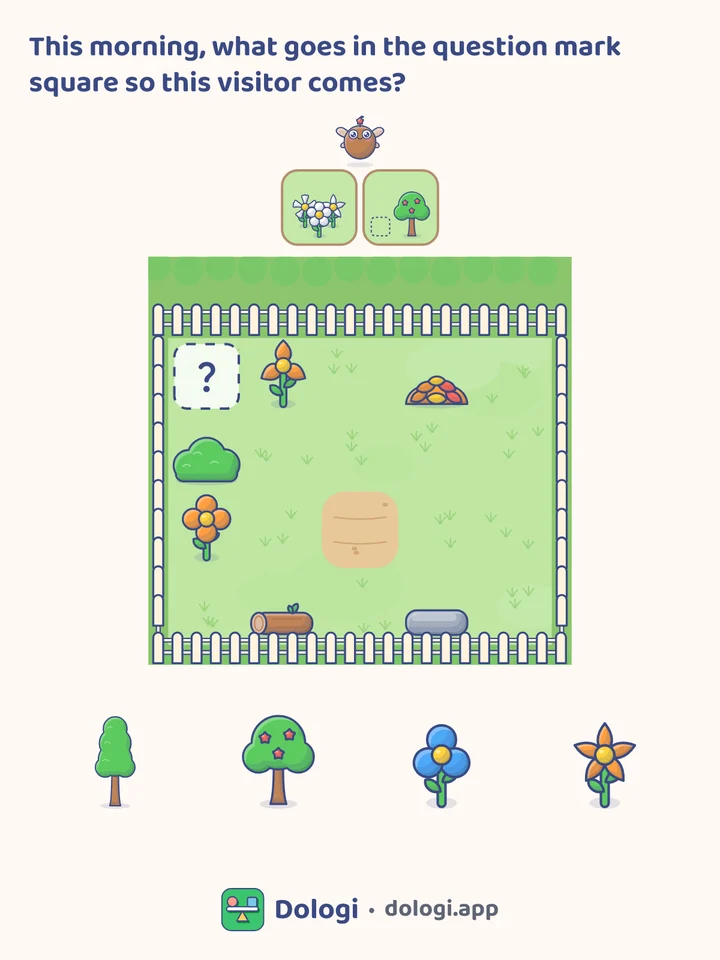
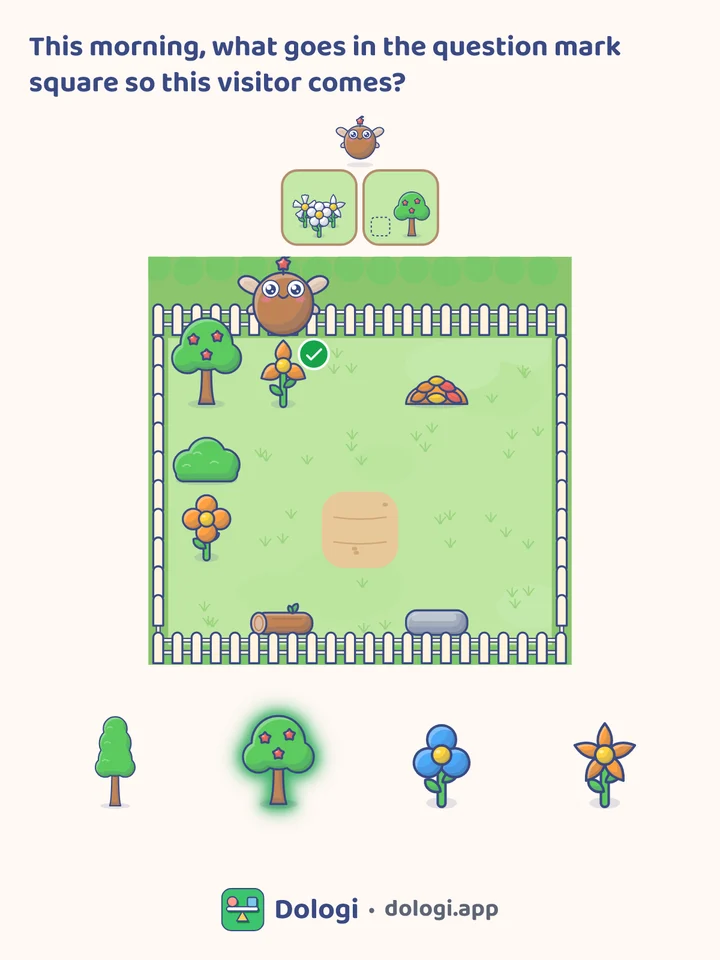
What it builds: Each card next to the bird is something the visitor needs, so your child checks every card against the garden, sees what is already there and what is missing, then picks the thing for the question-mark square that fills the gap, including where it has to sit. Comparing a list with what you already have is exactly what kids do when packing a school bag from the timetable. Keep playing: write down three things you need for a picnic and let your child check the basket and fetch what's missing.
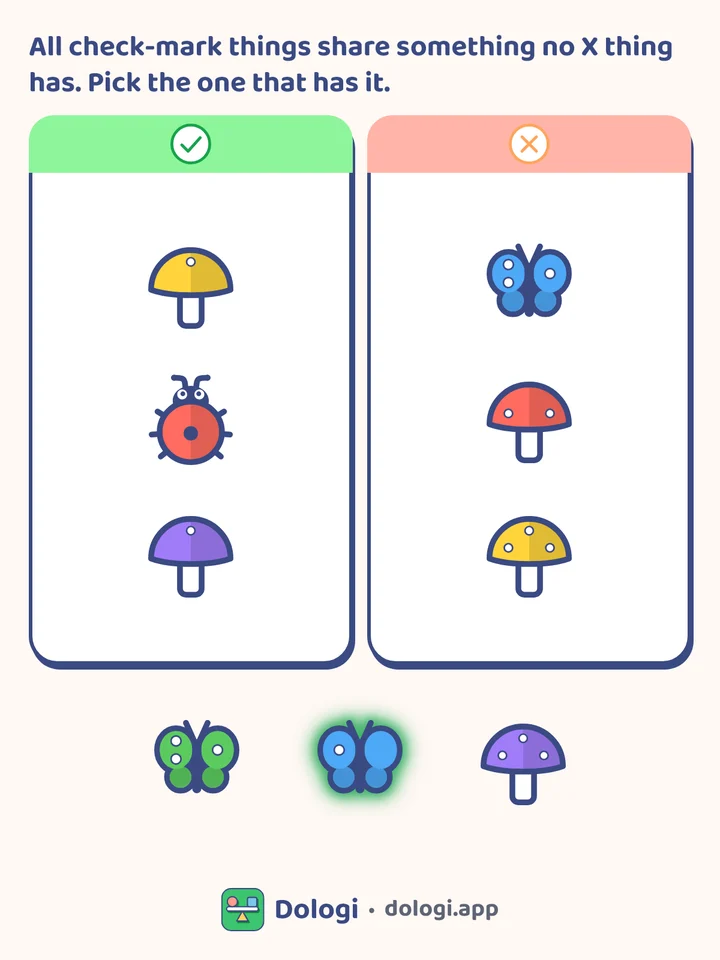
Puzzle 2: Guess the rule
Ages 6–7
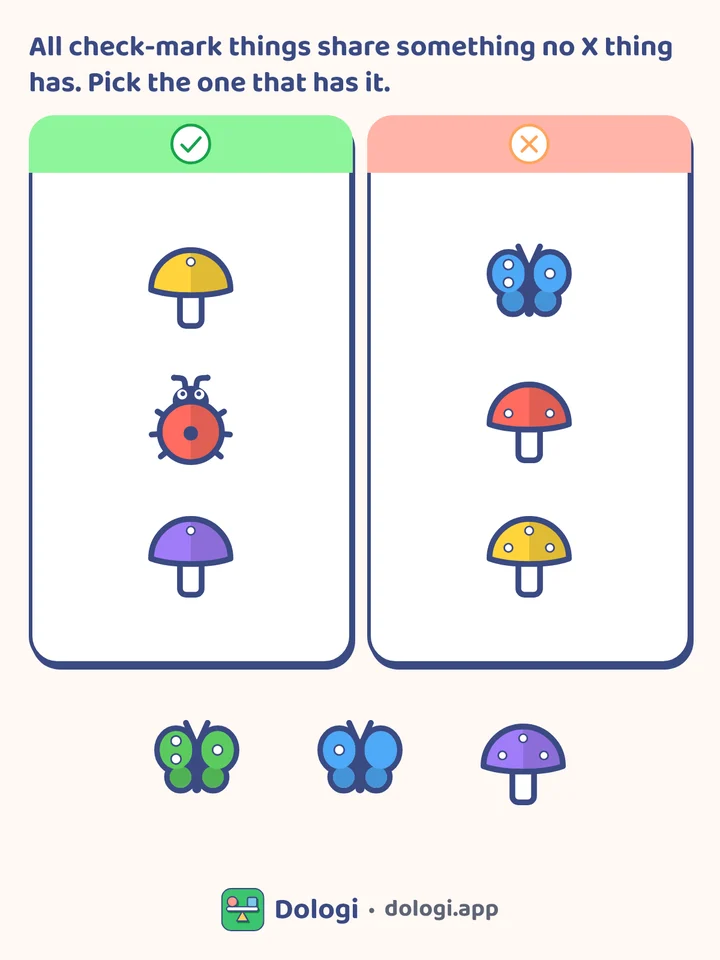
What it builds: Your child looks at everything on the check-mark side, tries each feature they can see one at a time, and crosses out any feature that also shows up on the X side. Finding the common thread behind several examples is how children work out spelling and math rules at school. Keep playing: think of a secret rule such as "things with wheels", sort toys into fits-the-rule and doesn't-fit, and let your child guess the rule.
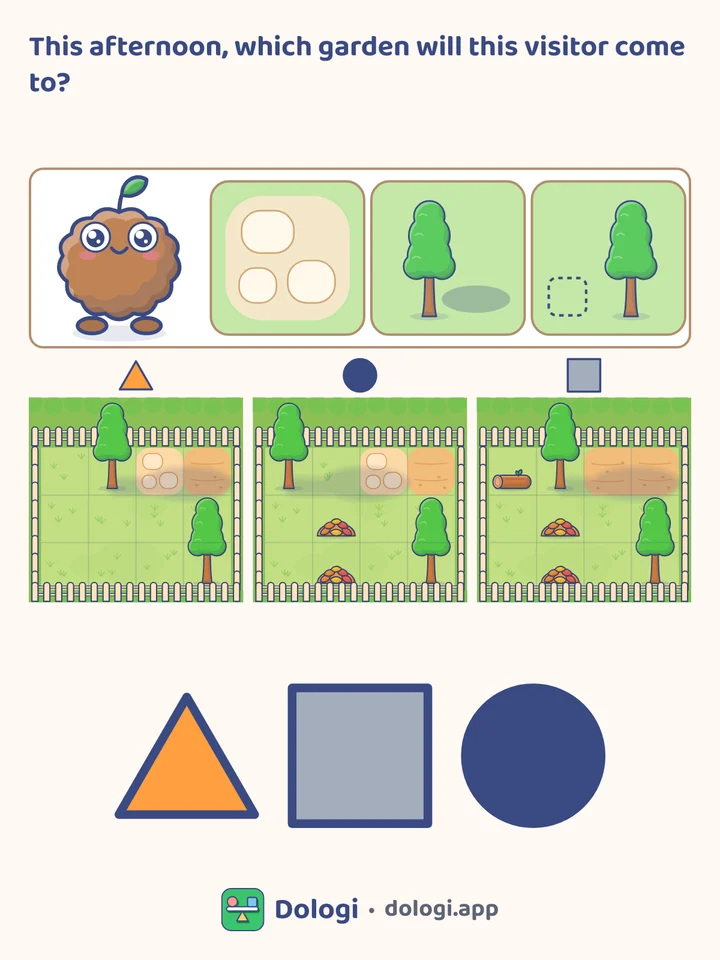
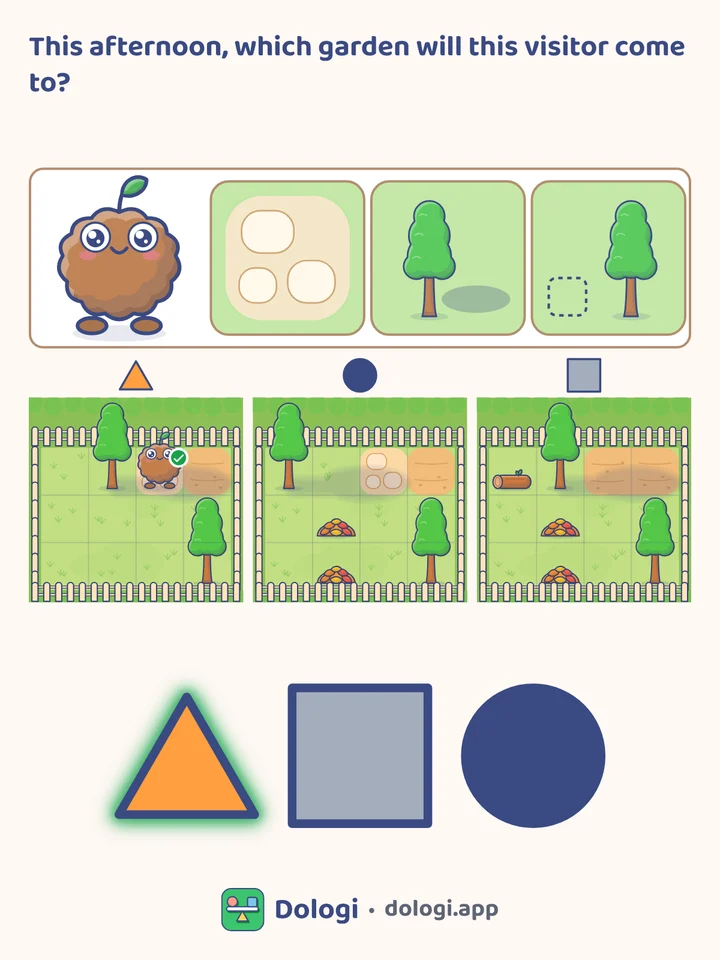
Puzzle 3: Which garden?
Ages 6–7
What it builds: The visitor has three needs, and your child checks all three in every garden, ruling one out as soon as a need is missing; the time of day matters too, because a tree's shadow doesn't stay put all day. Checking every condition for every option helps later with multiple-choice questions, instead of grabbing the first answer that looks right. Keep playing: step outside in the morning and again in the afternoon and see which side a tree's or the house's shadow falls on.
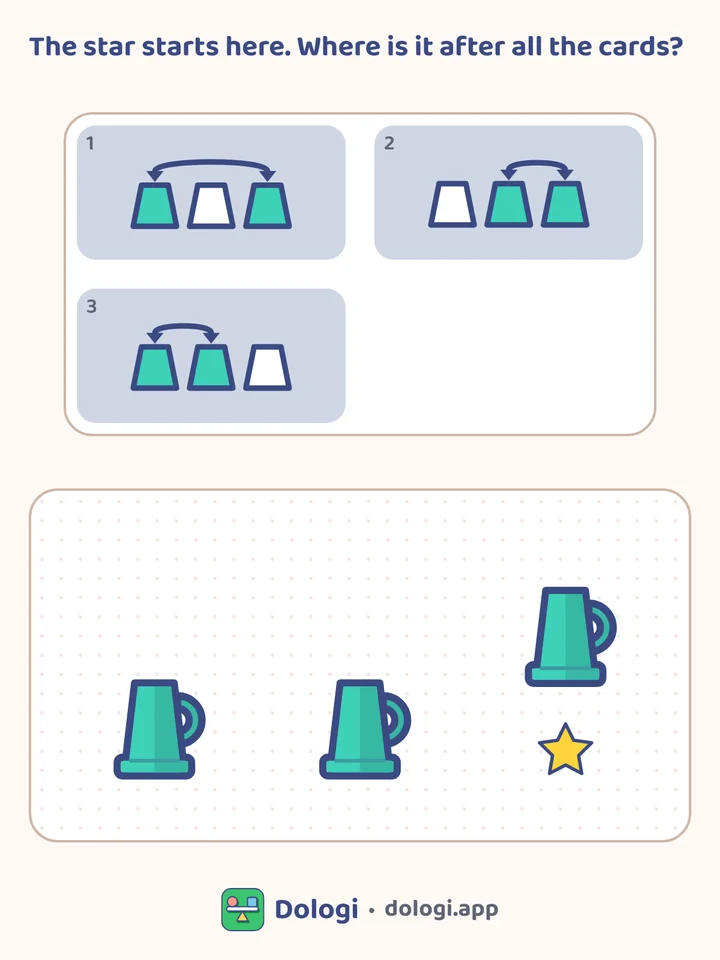
Puzzle 4: Cups and cards
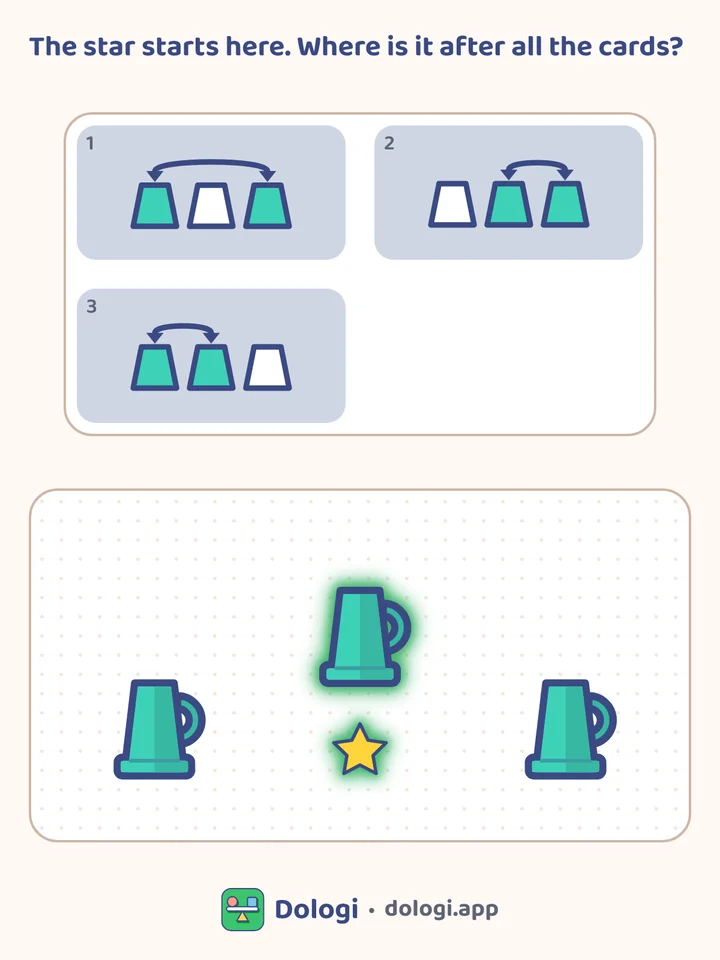
Ages 6–7
What it builds: Your child keeps the star's position in mind and goes through the cards in order: each card swaps two cups, and if the star is under one of them, it moves too. Tracking one thing through several steps is working memory, the same skill needed to follow long instructions or do multi-step mental math. Keep playing: hide a coin under one of three real cups, call out the swaps one by one, and have your child predict before lifting a cup.
Puzzle 5: Color the map
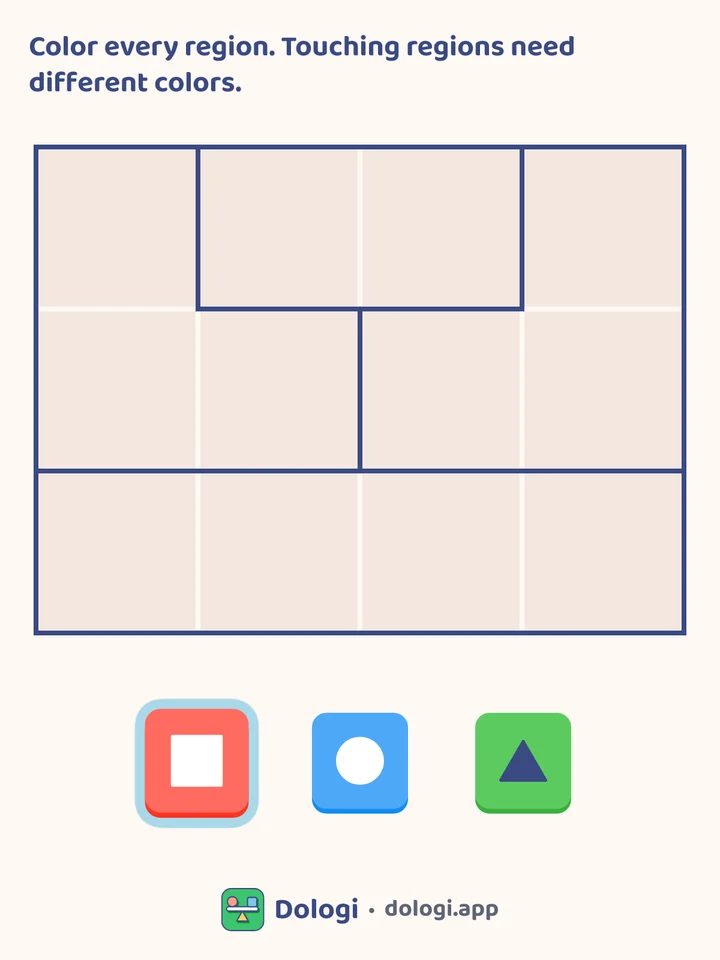
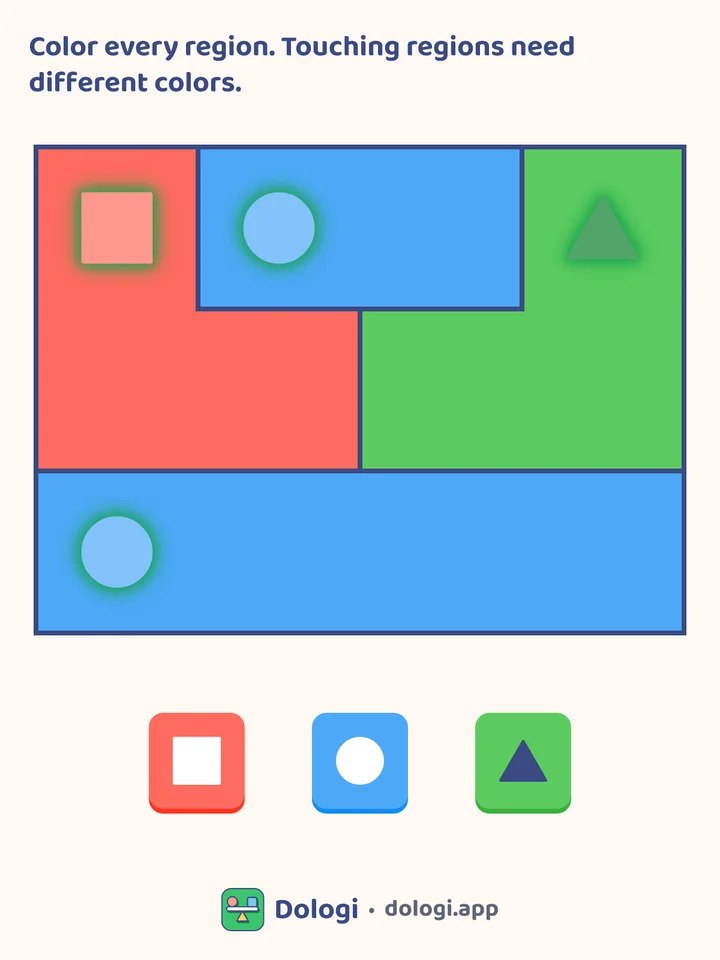
Ages 6–7
What it builds: Three colors for four regions sounds easy, but coloring in a hurry can leave the last region stuck, so your child learns to start with the region that touches the most others. Planning under a constraint like this is like arranging seats for friends who shouldn't sit next to each other. Keep playing: draw an imaginary map on paper and see who can color it with the fewest colors.
Puzzle 6: Which robot follows the rules?
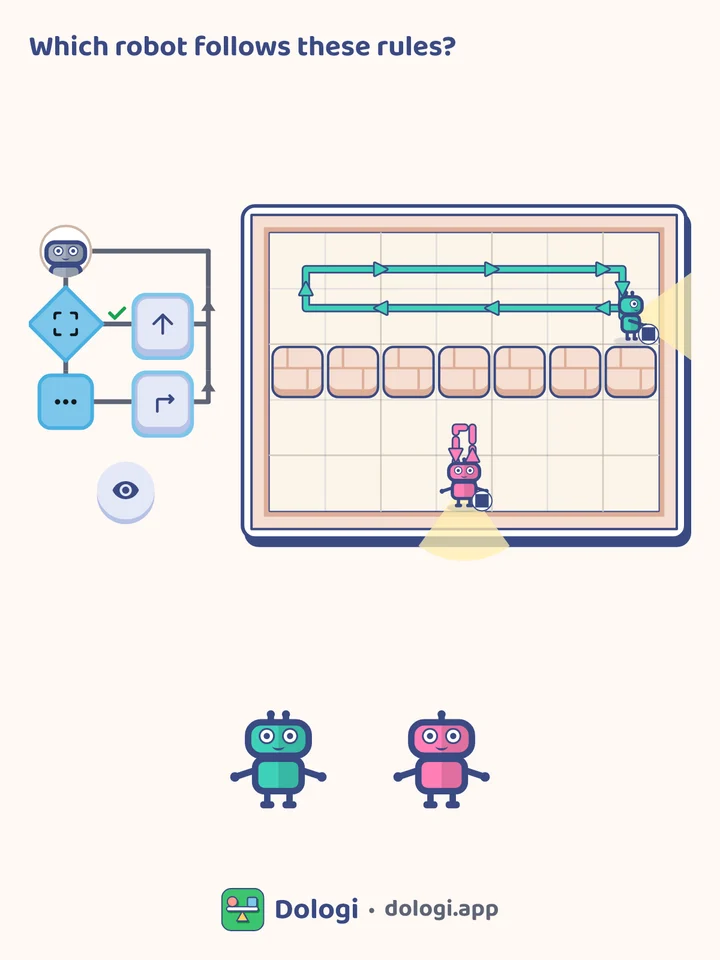
Ages 6–7
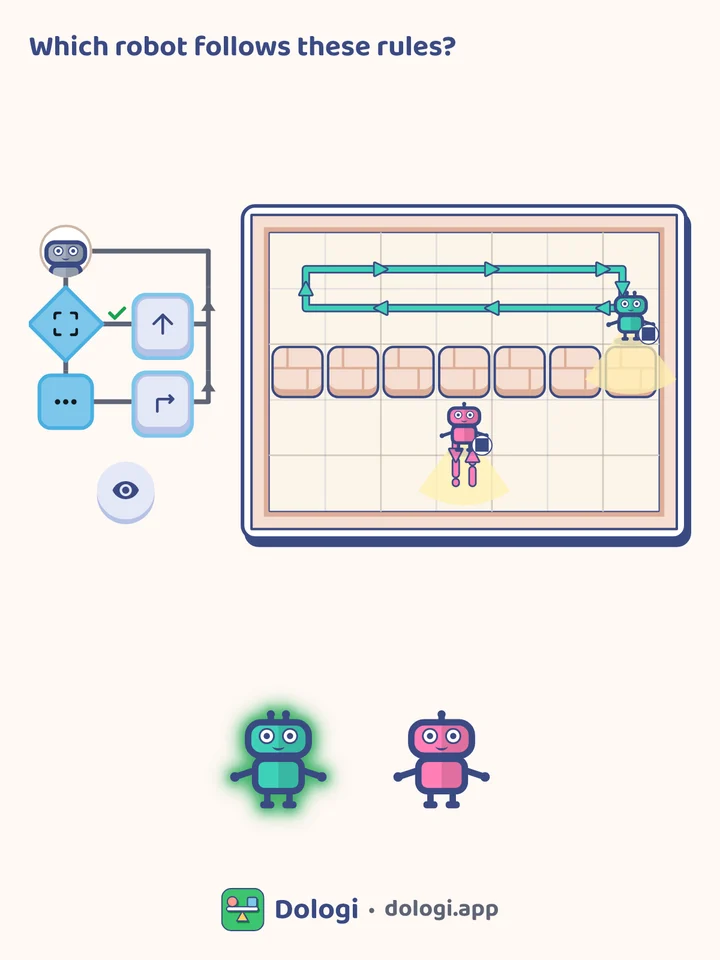
What it builds: The rule board on the left says what the robot does when the square ahead is free and when it is blocked; your child traces each robot's path and checks every step against the rules. One wrong step is enough to rule a robot out, which is how programmers hunt for bugs. Keep playing: your child reads the rules aloud while you play the robot around the room, sneaking in one wrong move for them to catch.
Puzzle 7: Unjam the gears
Ages 6–7
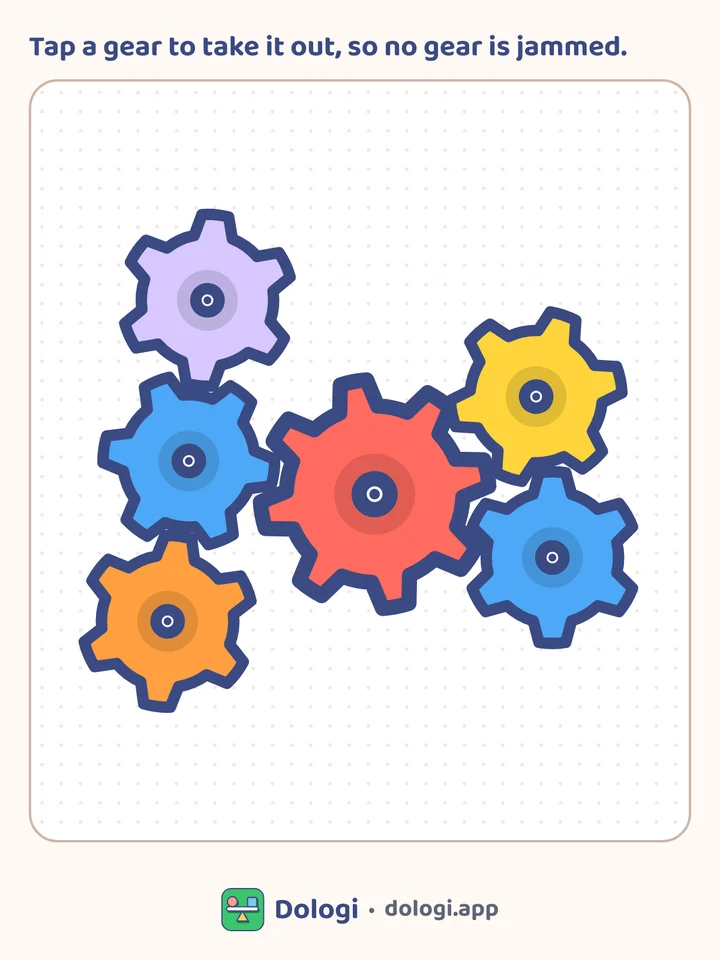
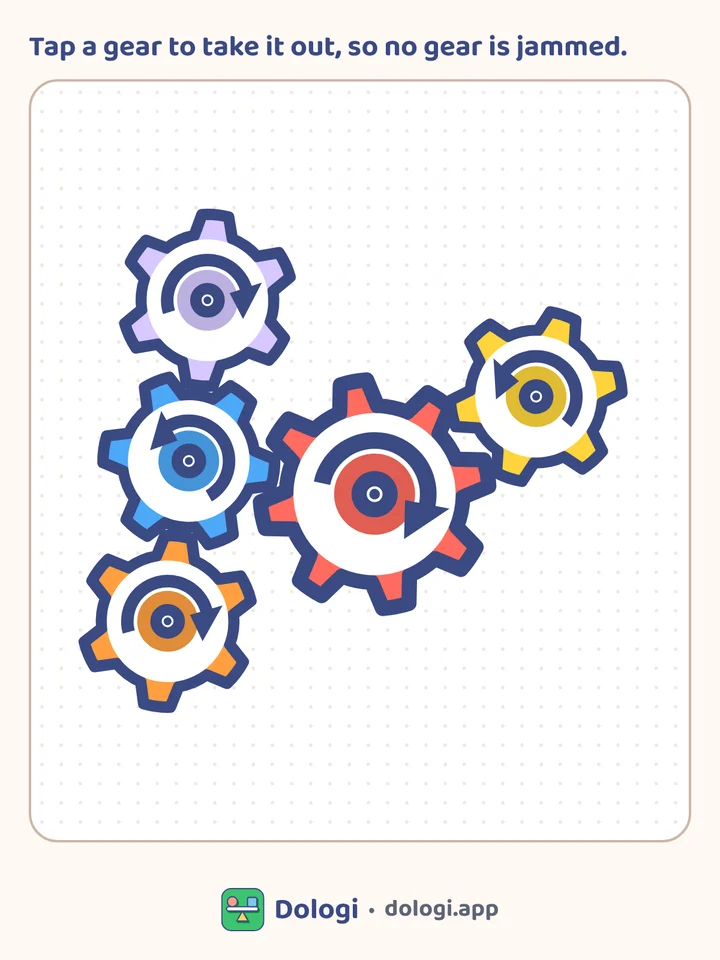
What it builds: Two meshed gears always turn in opposite directions; your child follows the turning direction from gear to gear to find where gears are forced to turn both ways at once, then picks the one gear to take out. Looking for the cause instead of guessing is the same thinking used to fix a broken toy or find the mistake in a math problem. Keep playing: cut a few gears out of cardboard, pin them to a box lid so they mesh, and turn them together.
Puzzle 8: Balance scales
Ages 6–7
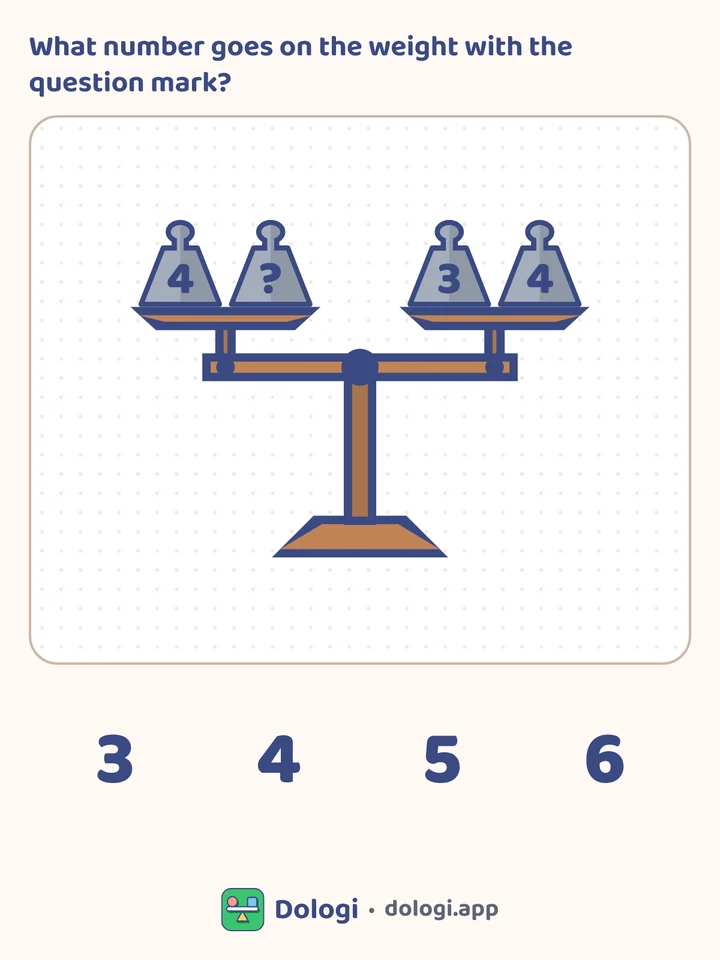
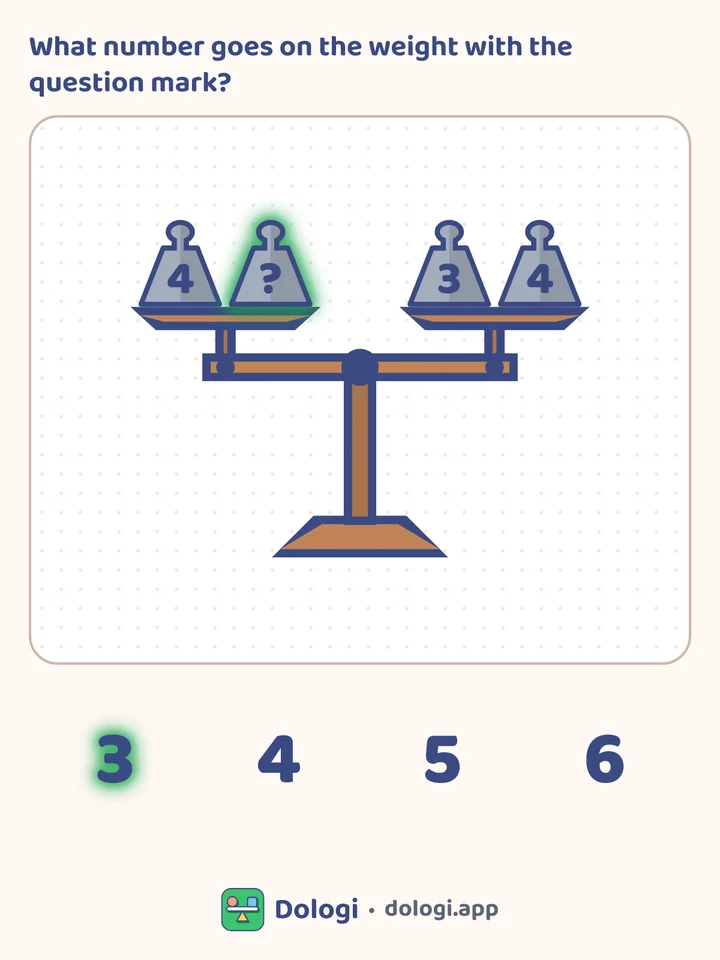
What it builds: A level scale means both sides weigh the same, so your child first combines the weights on the busier side and then works out the number on the question-mark weight. This is the first step toward equations: understanding that the equals sign means both sides are the same, not just "here comes the answer". Keep playing: hang a small bag from each end of a clothes hanger, put something in one, and let your child add things to the other until the hanger hangs level.
Puzzle 9: Which lamp?
Ages 6–7
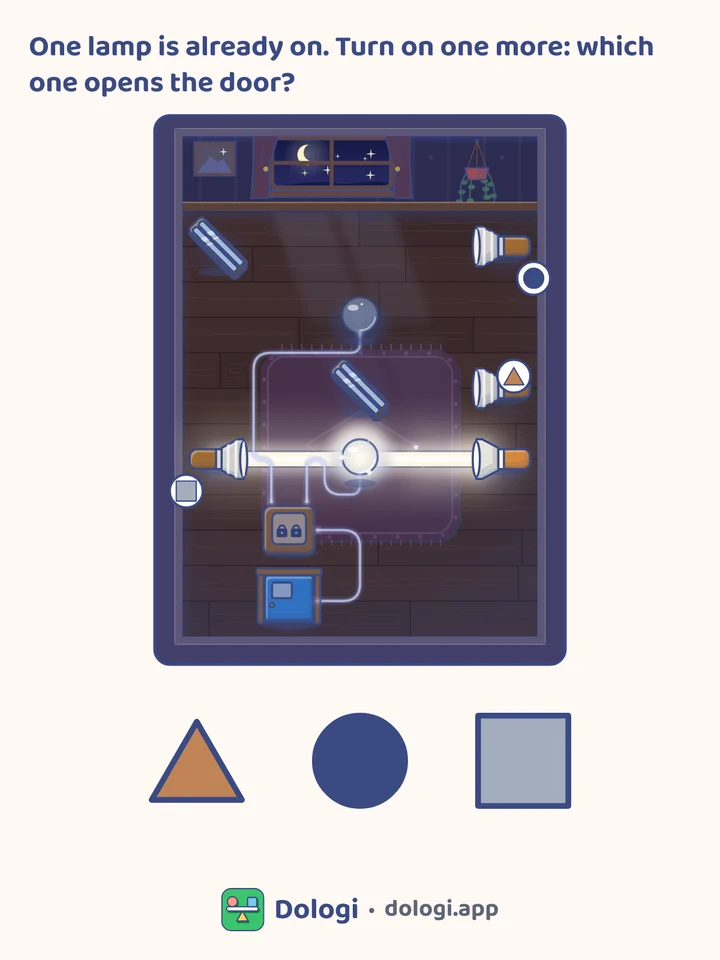
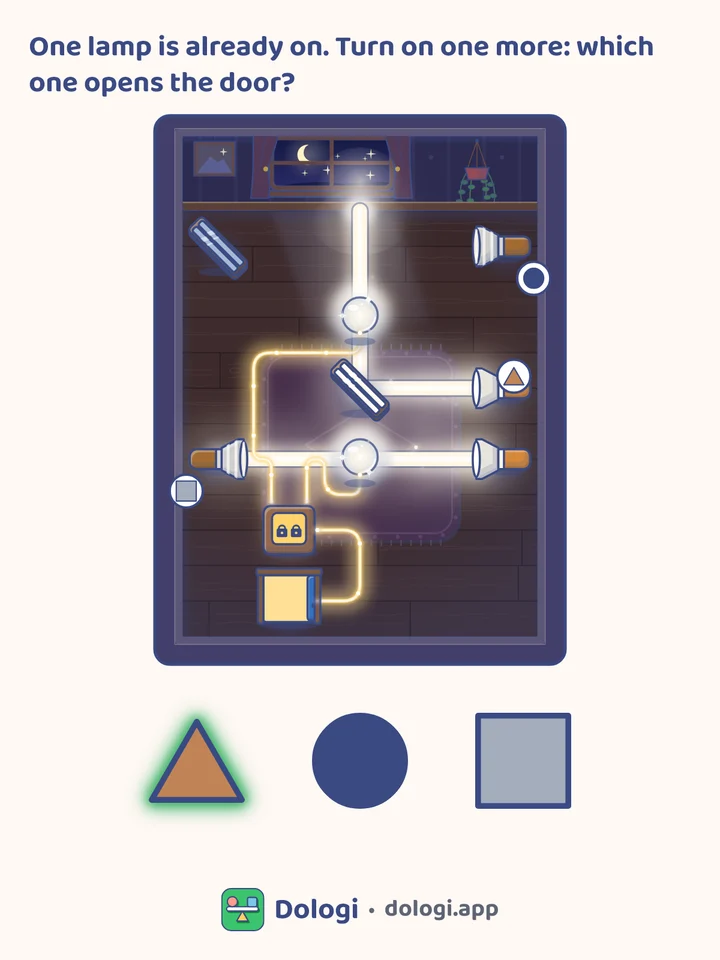
What it builds: Each flashlight shines straight and turns at a mirror; your child traces every beam to see which round bulb it reaches, then follows the wires to see which bulbs need to be lit together to open the lock. Combining a "both are needed" rule with path tracing is multi-step reasoning, the groundwork for science and coding later on. Keep playing: in a dark room tonight, use a flashlight and a small mirror together to light up a toy hiding behind a chair.
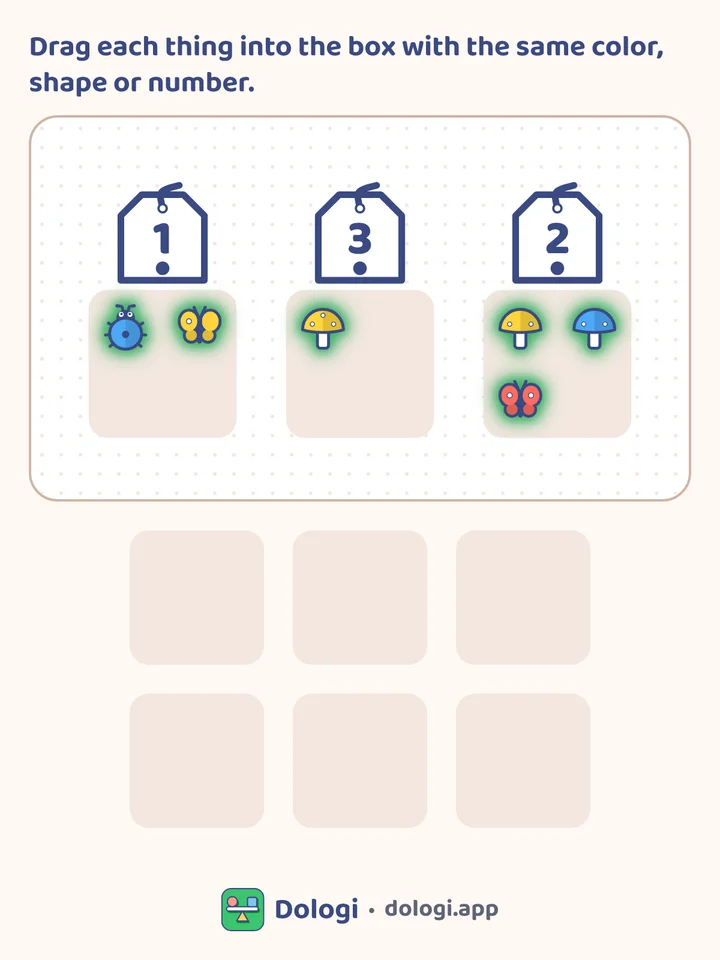
Puzzle 10: Sort into groups
Ages 6–7
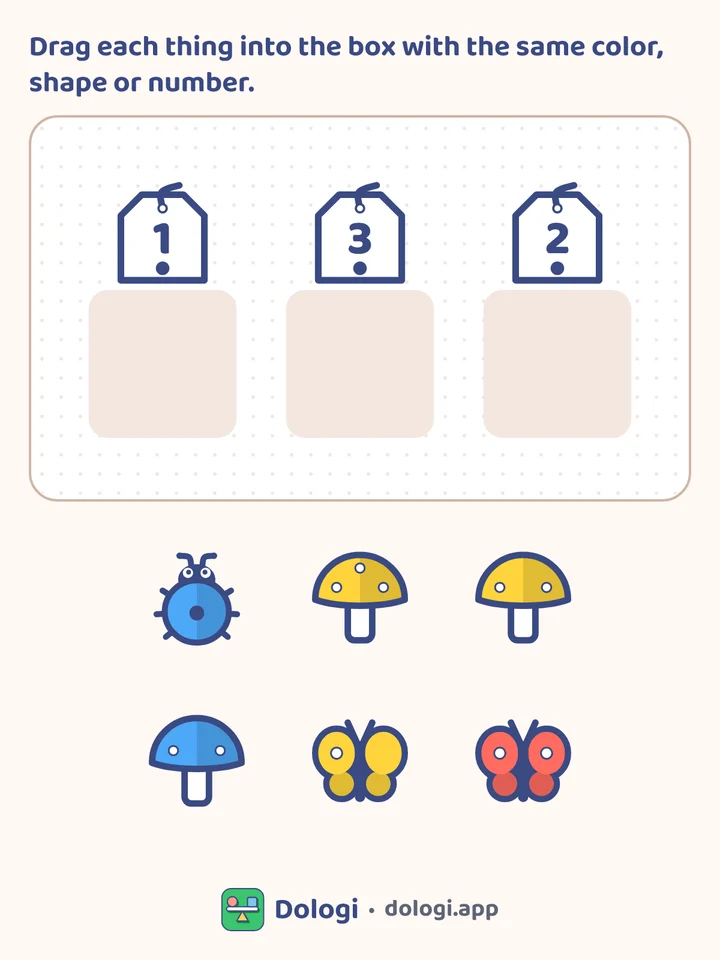
What it builds: Each box has a number label, and your child has to work out what that number counts on an object, then count each object carefully without letting color or kind get in the way. Sorting by one given feature is a skill used in science lessons and in a child's first tally charts. Keep playing: tip a handful of buttons onto the table and sort them together by the number of holes.
Hint: A number on a box tells how many sides or dots a thing has.
If your child enjoyed these puzzles, the Dologi app has many more of the same kinds: gardens with pickier visitors, robots with longer rule lists, light rooms with extra mirrors and colors, all getting harder with age and with how your child plays. A short session each day is enough to build the habit of thinking carefully before answering.