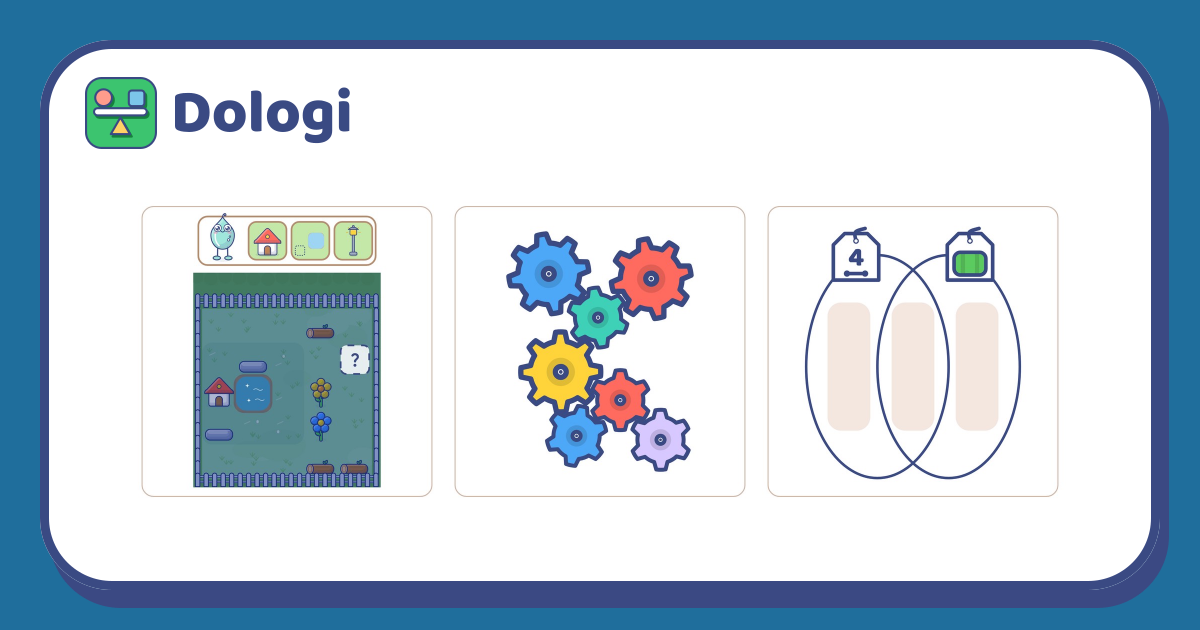
Around ages 7–8, children start to understand combined conditions ("both… and…"), weigh several options at once and find what is causing a problem in a system. The five puzzles below come straight from the Dologi app, suit kids ages 7–8, and go from easy to harder.
How to use this post: show your child one picture at a time and let them think it through and give a reason before choosing. The answer is behind the "Show answer" button under each picture. If they get it wrong, hold off on the answer: ask "have we checked every condition?" and let them look again.
Puzzle 1: What should we add?
Ages 7–8
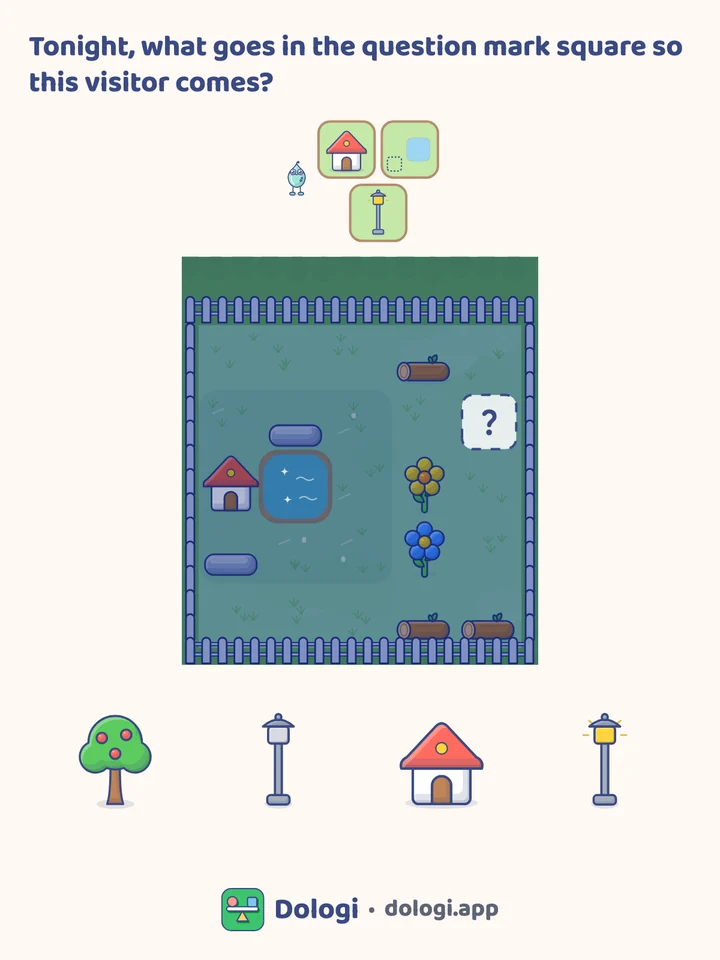
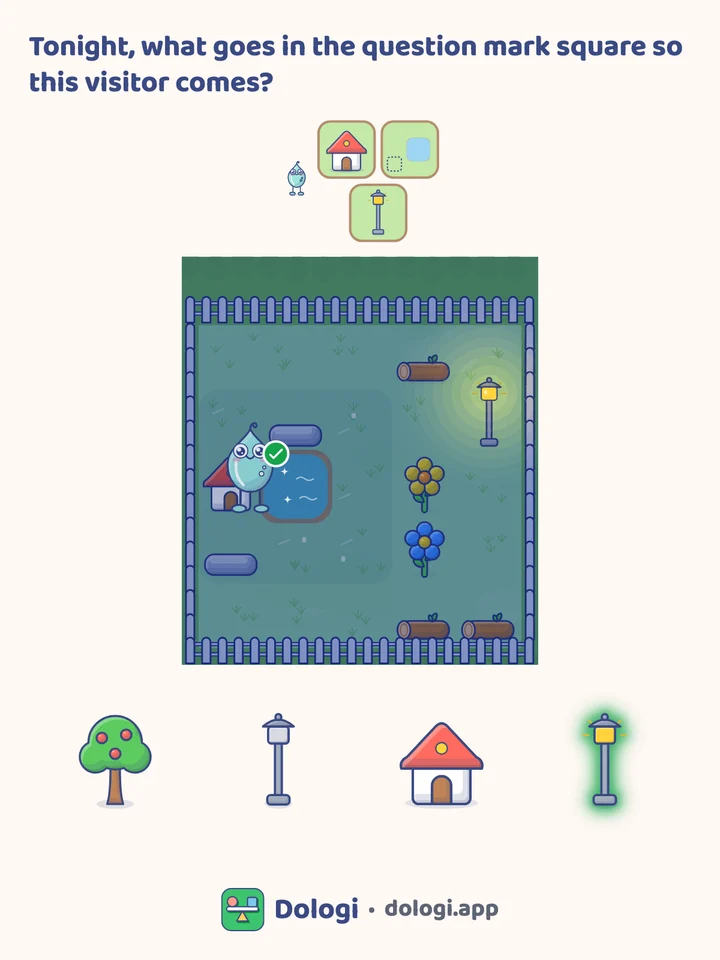
What it builds: Each card is a condition the visitor needs; your child checks every card against the garden, noticing that it is evening, to find the missing condition and pick the right thing to add. Reading details such as morning or evening carefully helps them not miss facts in word problems. Keep playing: ask "if it's raining, what do we need for school?", then change the condition to sunny or cold and let them think again.
Puzzle 2: Unjam the gears
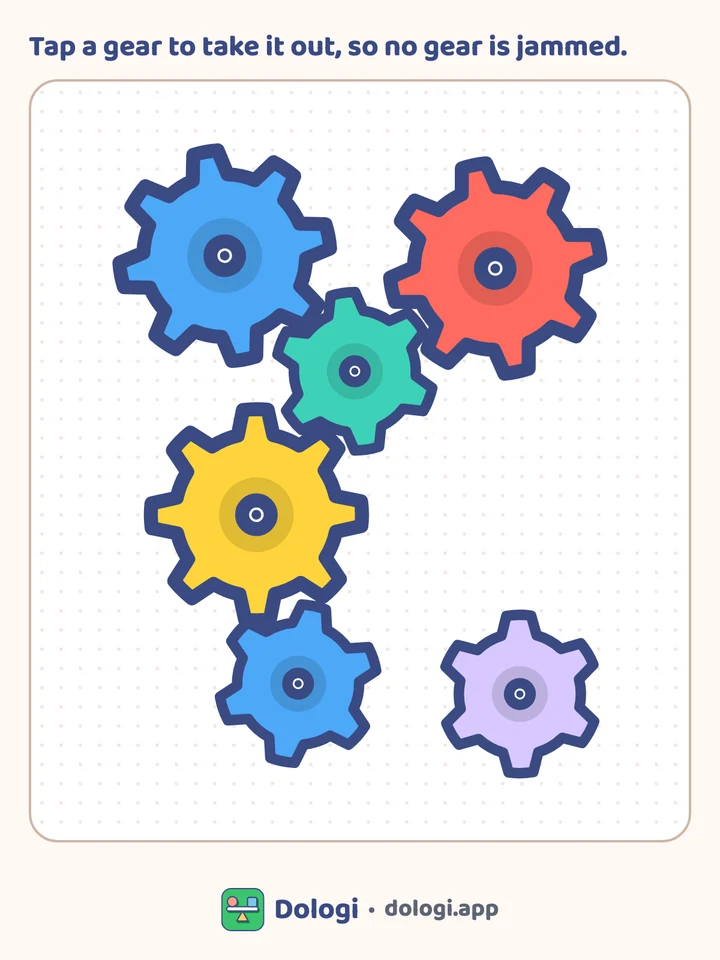
Ages 7–8
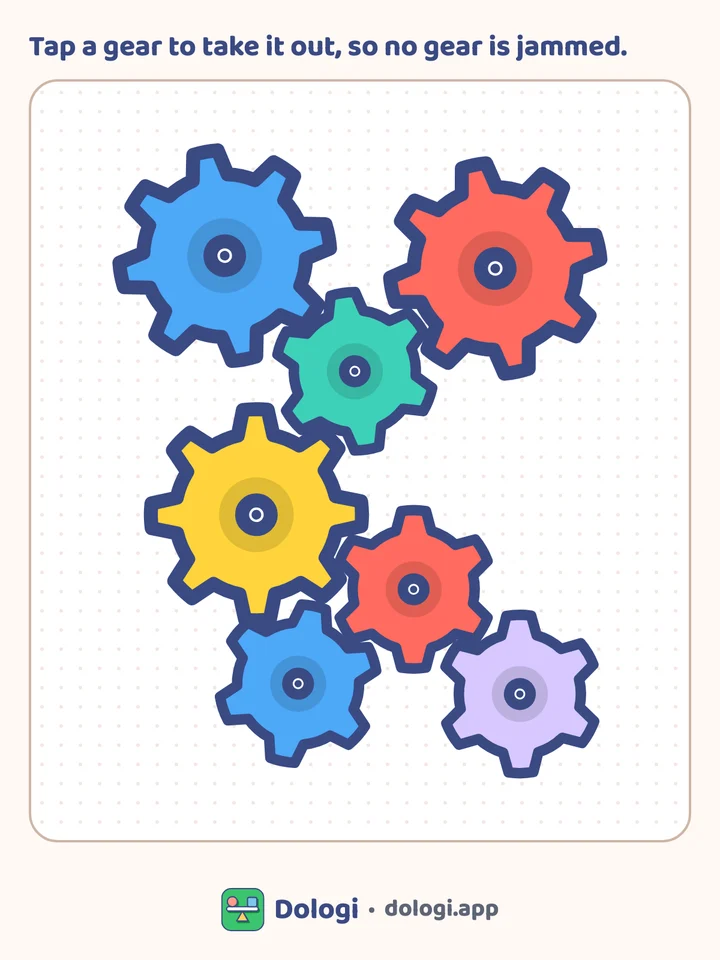
What it builds: Gears that touch turn in opposite directions; when three gears all touch each other in a loop, they jam. Your child checks each pair of gears to find the loop causing the jam, then picks the gear to remove. Finding exactly what breaks a system is the skill of fixing and troubleshooting, which they also use when checking a math answer that went wrong. Keep playing: stand in a circle of three holding hands and try to "turn" your wrist the opposite way from your neighbor to feel why a ring of three gets stuck.
Puzzle 3: Which garden?
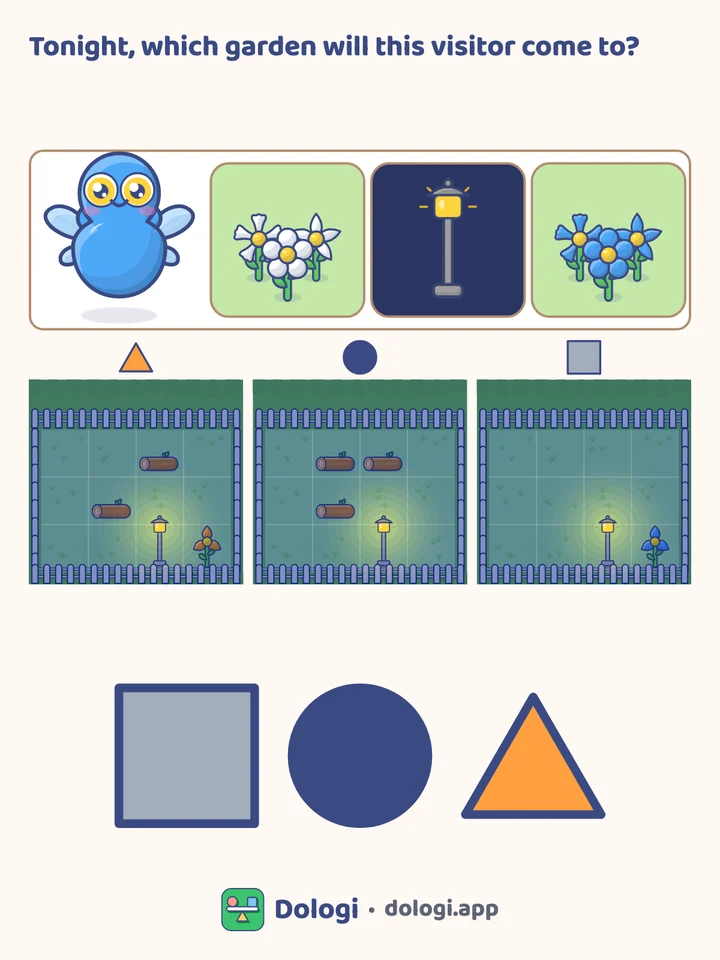
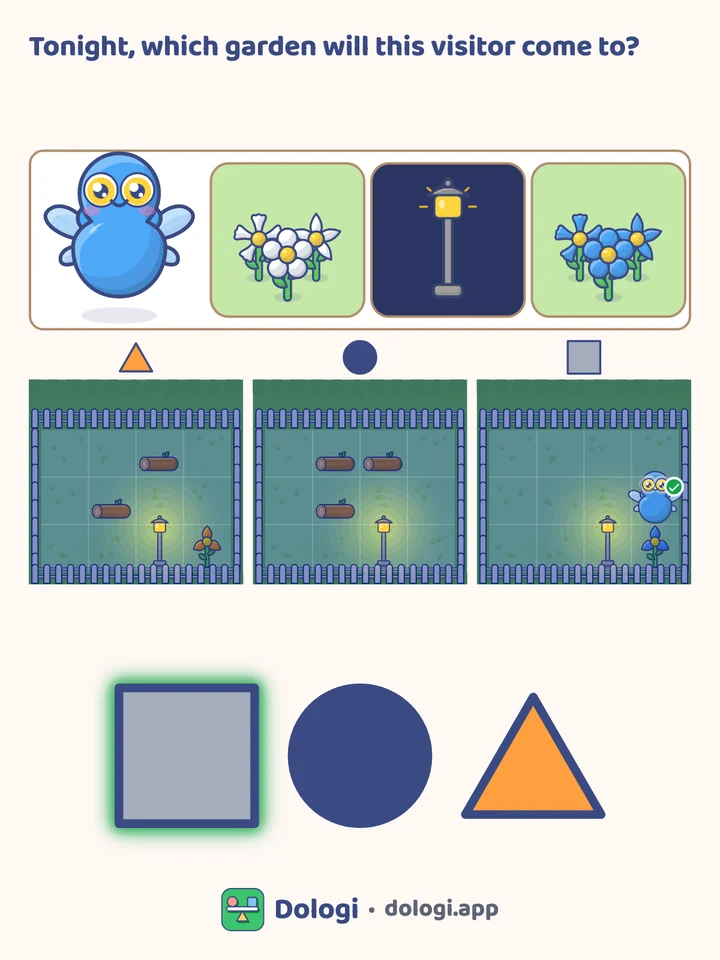
Ages 7–8
What it builds: This time the conditions stay the same and the gardens change; your child checks each garden against all of the visitor's cards and rules out any garden that is missing even one. Judging every option by the same set of criteria is how adults choose what to buy or which way to go, and how kids answer multiple-choice questions carefully. Keep playing: give your child three toys and two conditions, such as "red and has wheels", and let them pick the one that fits both.
Puzzle 4: Two rings
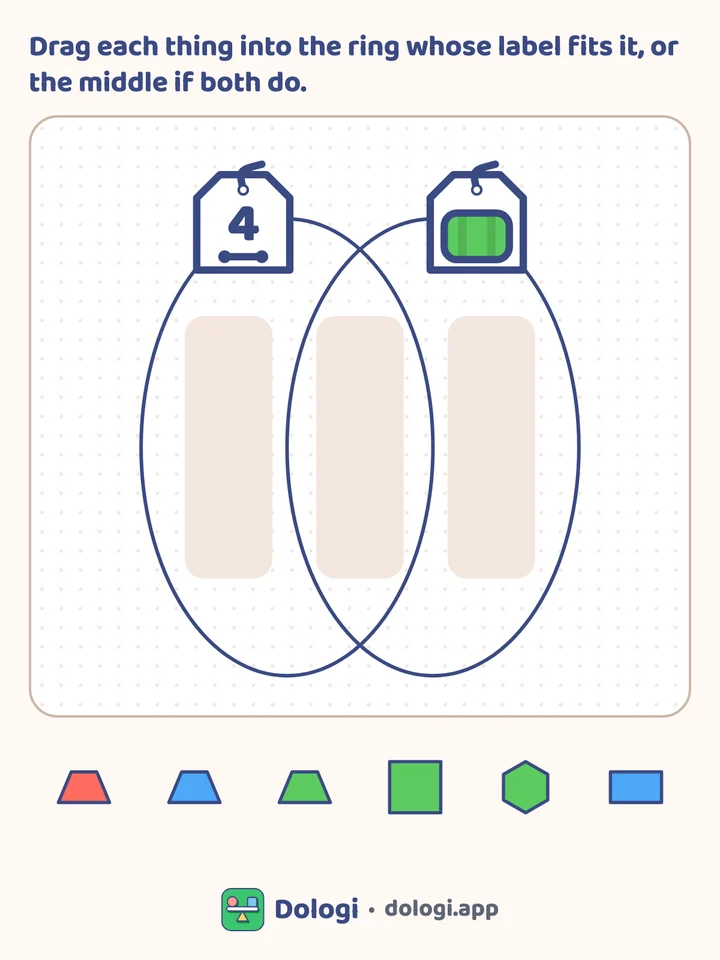
Ages 7–8
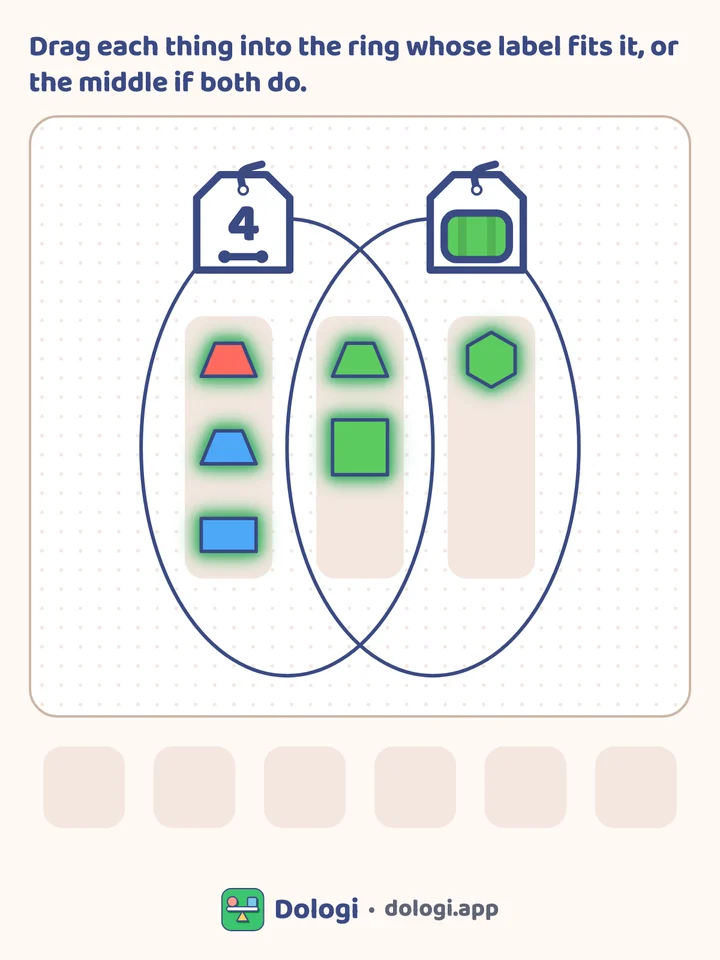
What it builds: Each ring has a label, one about the number of sides and one about color; your child counts the sides and checks the color of every shape to decide which ring it goes in, or the shared middle when it fits both. Two overlapping rings are a sorting tool they will meet again in elementary math and science. Keep playing: lay two pieces of string on the floor as overlapping rings, name them "red toys" and "toys with wheels" and sort toys into them together.
Hint: A number means exactly that many sides. Fits both labels? Use the middle.
Puzzle 5: Crack the code
Ages 7–8
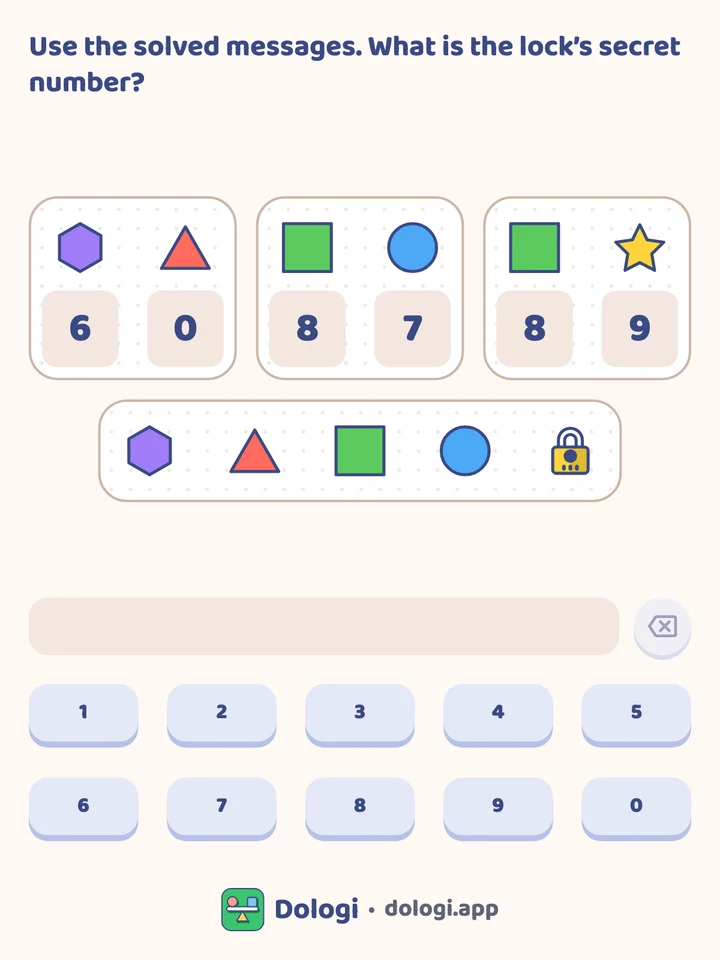
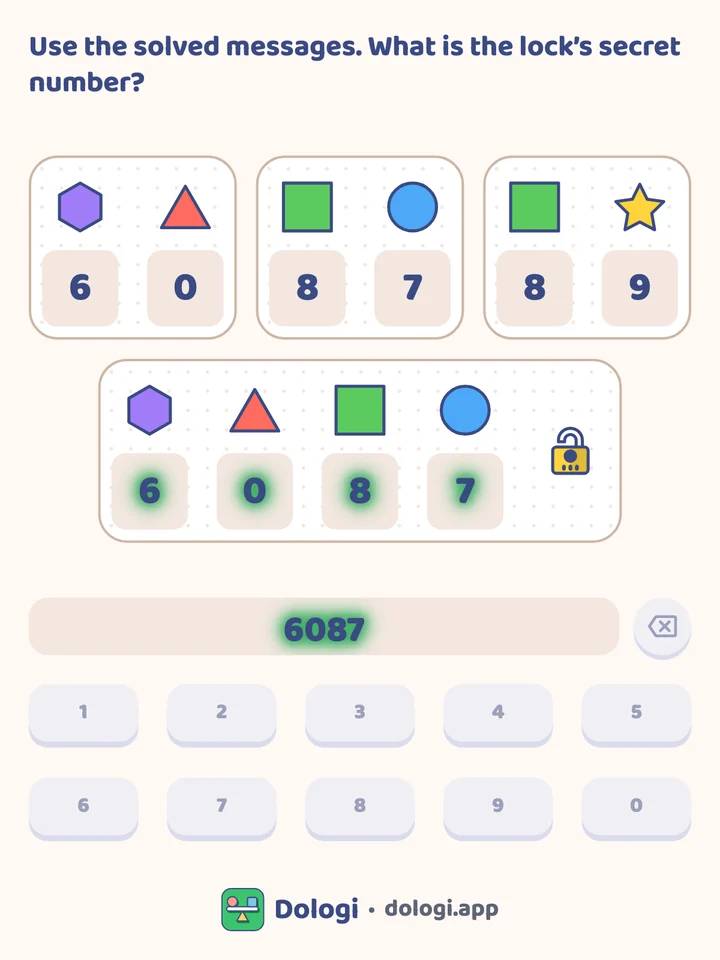
What it builds: Each sample note shows which picture matches which number; some pictures appear in two notes, which lets your child cross-check before putting the code together. Reading facts from several sources and combining them is the look-up skill they use with tables, timetables and maps. Keep playing: make up your own code with your child (one number for each animal) and send each other "secret messages" in numbers.
Did your child enjoy these logic puzzles? The Dologi app has many more of the same kinds, with more gears, more visitors and conditions and rings with trickier labels, getting harder with age and with how your child plays, so a little thinking practice each day stays fun.