By ages 8–10, children know all four operations and start meeting problems that take several steps: finding an unknown from a few facts, tracking an object through several moves, comparing cases to find a cause. The five puzzles below come straight from the Dologi app, suit kids ages 8–10, and go from easy to harder.
How to use this post: let your child work through each puzzle alone and encourage them to jot down what they know for sure. The answer is behind the "Show answer" button under each picture. If they get stuck, hold off on the answer: ask "which step are you surest about?" and let them carry on from there.
Puzzle 1: Math number square
Ages 8–10
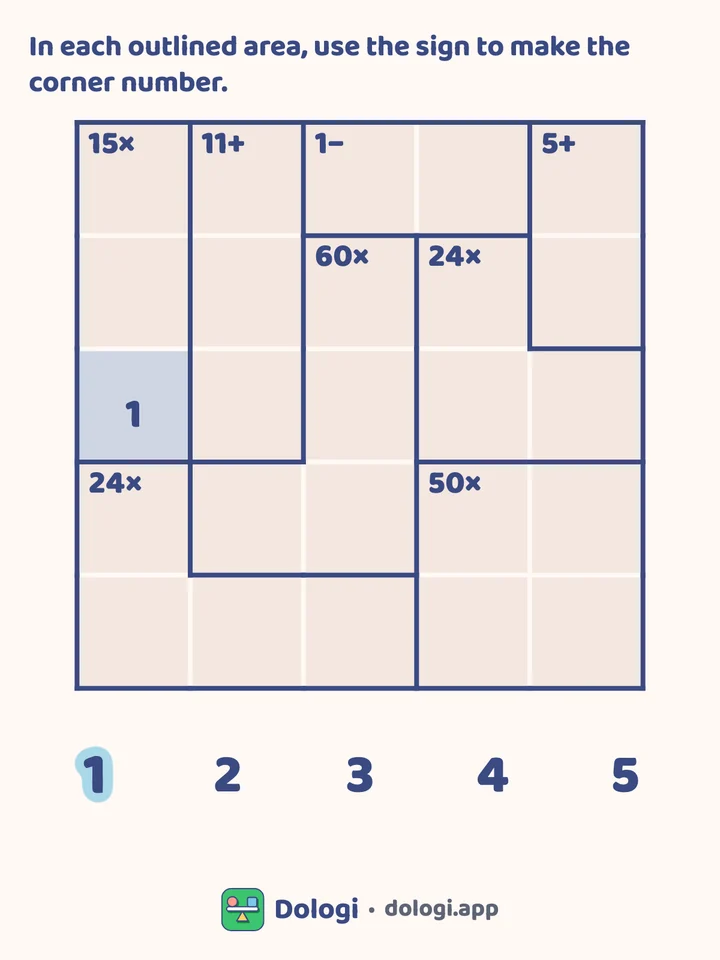
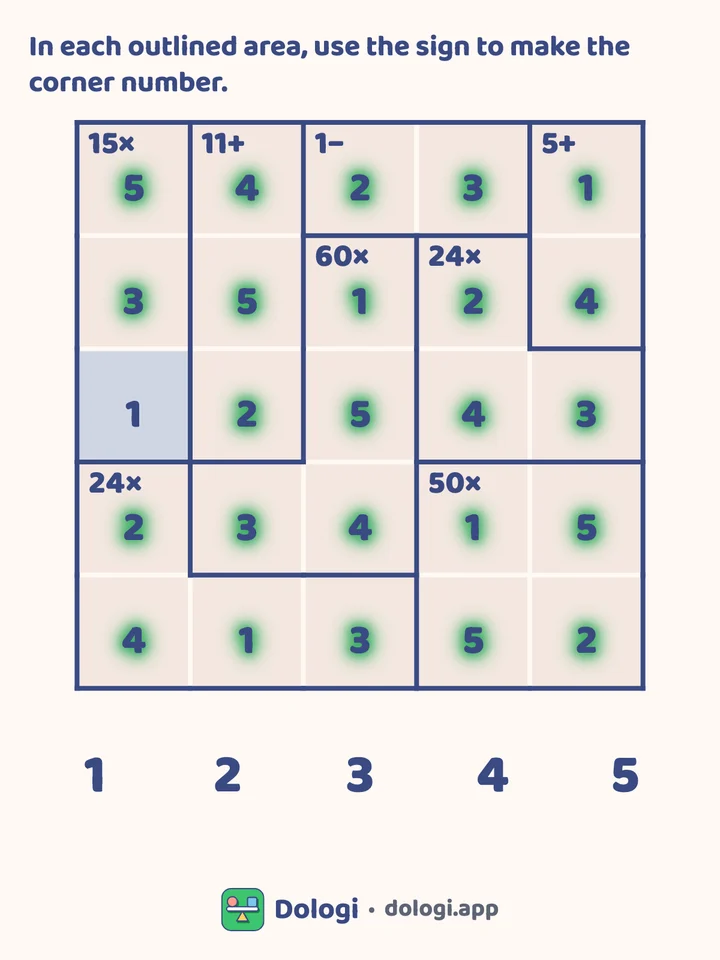
What it builds: A five-by-five grid with areas for adding, subtracting and multiplying; your child starts with the areas that can only be split one way, then lets the row and column rule handle the rest. It practices times tables in reverse (which numbers multiply to 24?) and builds the habit of cross-checking. Keep playing: say a product such as 12 and ask how many pairs of numbers from 1 to 9 multiply to make it.
Puzzle 2: Balance scales
Ages 8–10
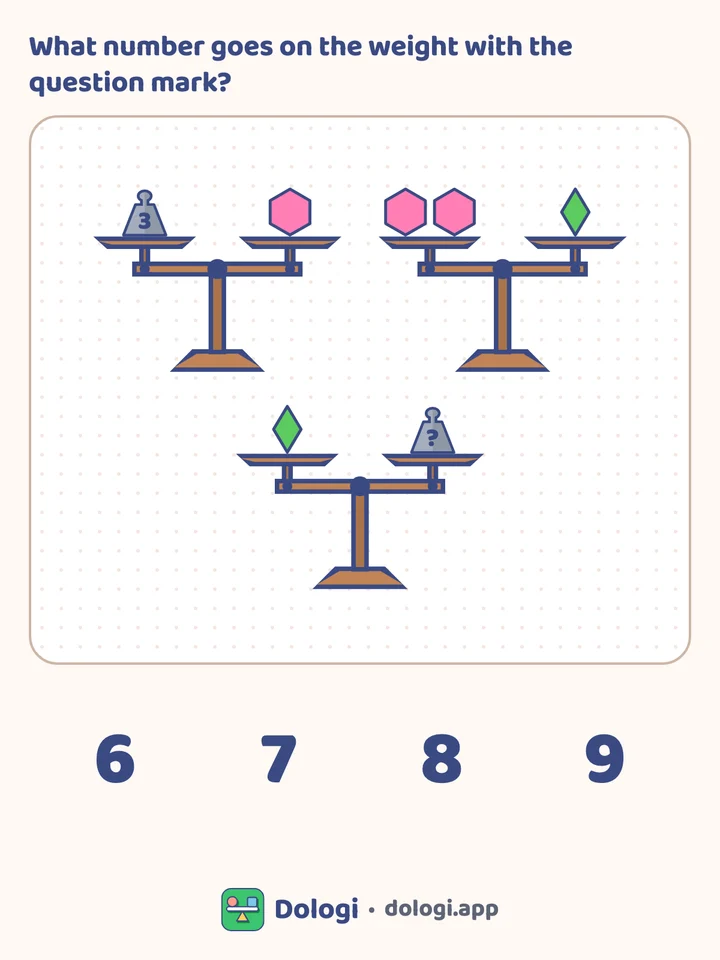
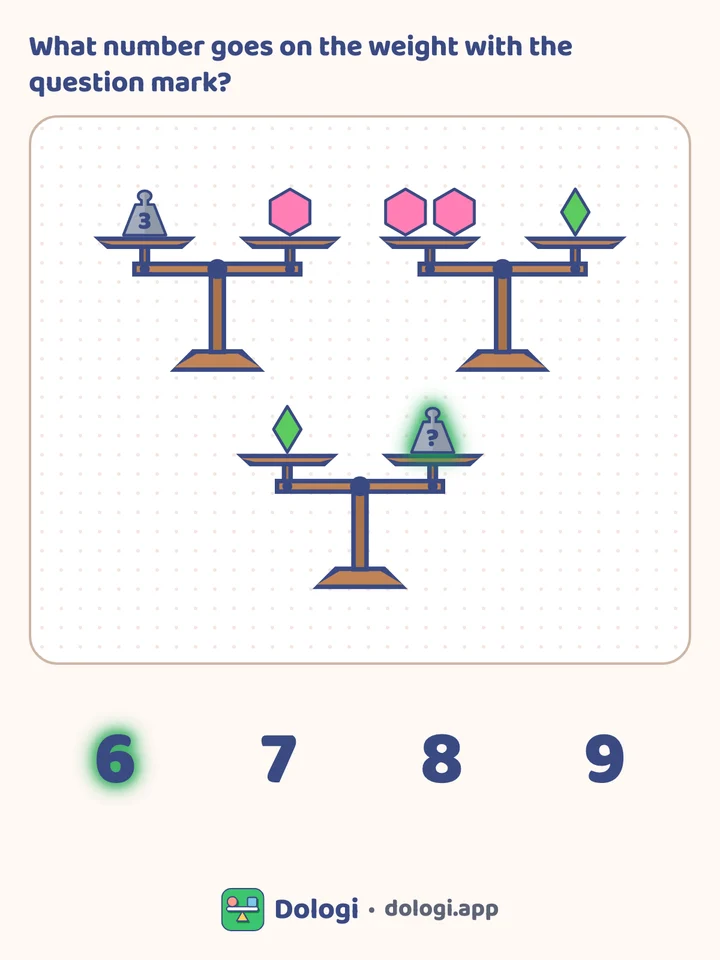
What it builds: Each balanced scale is an equation; your child starts from the scale with just one unknown, finds its value, then substitutes it into the next scale. Plugging a known value into an unknown is the first step of solving equations, which they will meet in middle school. Keep playing: use a coat hanger as a scale, hang two bags of toys and ask how many marbles it takes to make both sides level.
Puzzle 3: Cups and cards
Ages 8–10
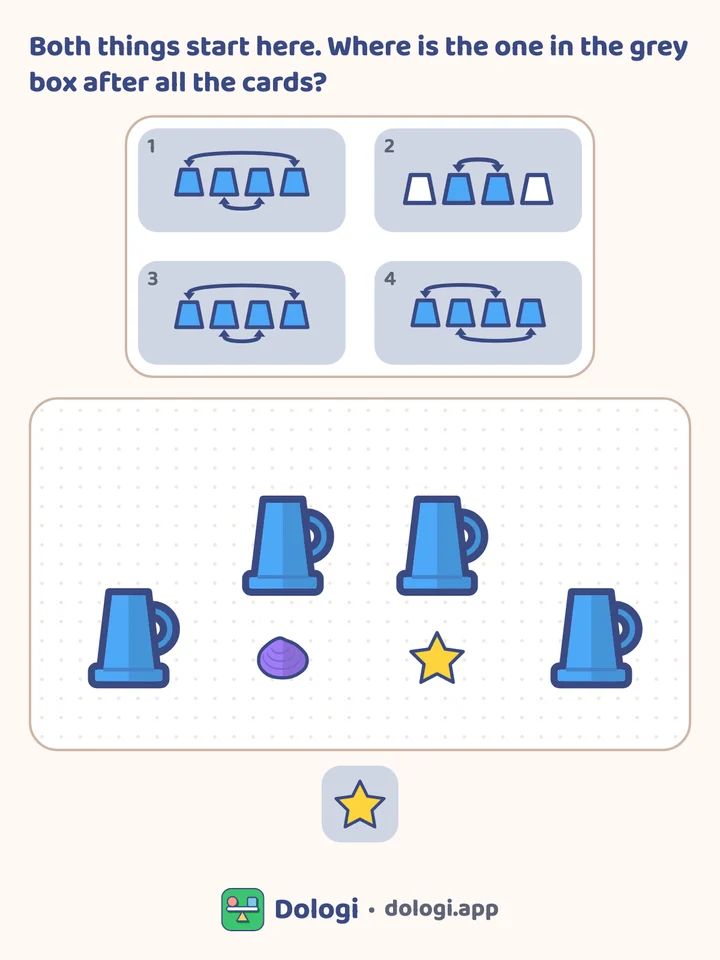
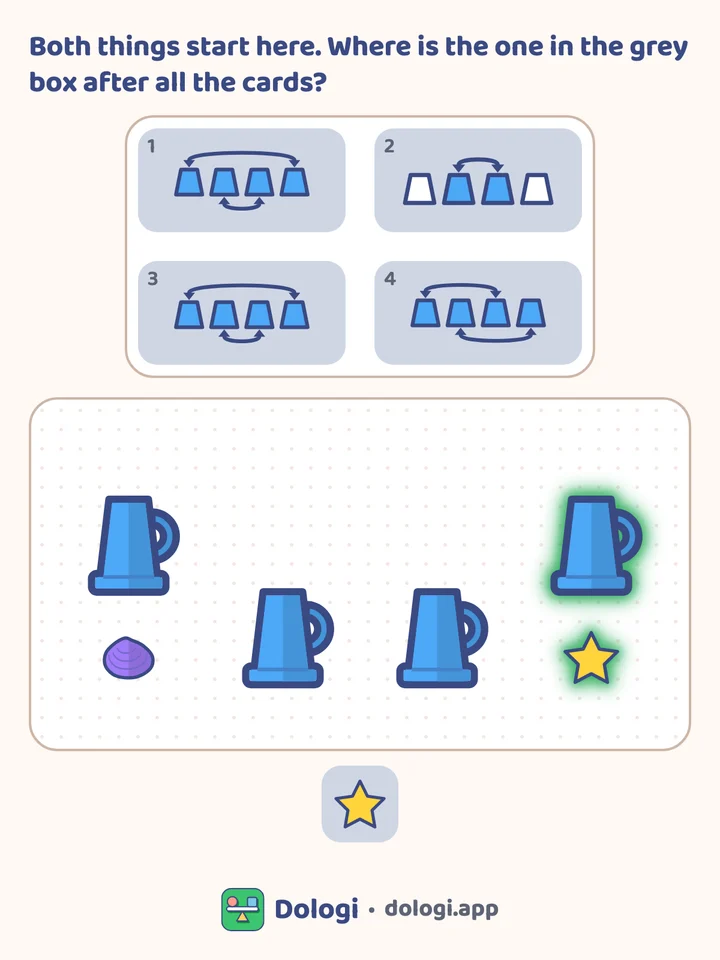
What it builds: Your child follows one object through four swaps, each card being one kind of switch; they only need to note its position after each card, not remember the whole row. Holding one piece of information and updating it step by step is working memory, the skill behind multi-step mental math and reading long passages. Keep playing: turn four cups over, hide a coin, read out each swap like "switch cup 1 and cup 4" and let your child guess where the coin is before lifting.
Puzzle 4: What does it need?
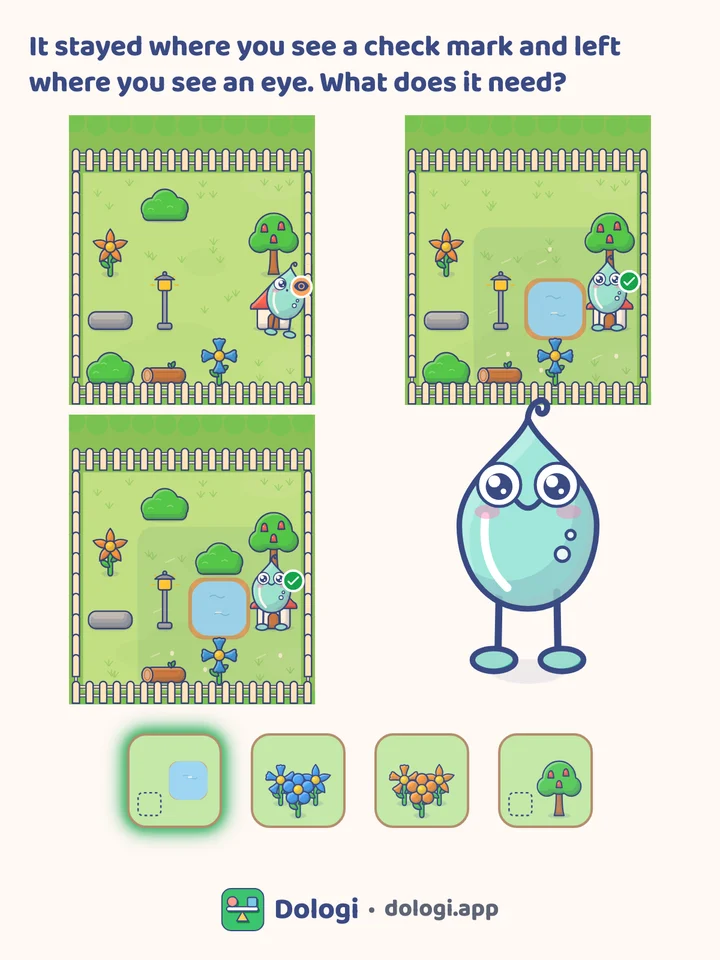
Ages 9–10
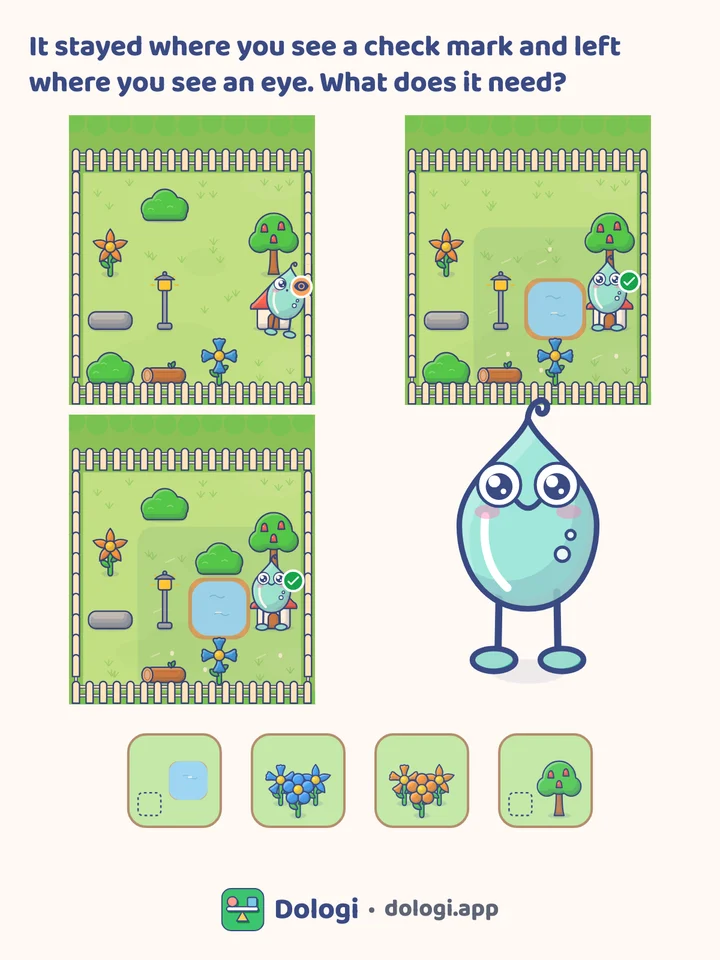
What it builds: Your child compares the garden the visitor left with the gardens where it stayed: anything every garden has can't be the reason, and only what the stay gardens share is what the visitor needs. Comparing cases to find a cause is how scientific experiments work, and how kids figure out why plants on one windowsill grow better than on another. Keep playing: plant seeds in two pots, change just one thing (light or water) and record together which pot grows faster.
Puzzle 5: Crack the code
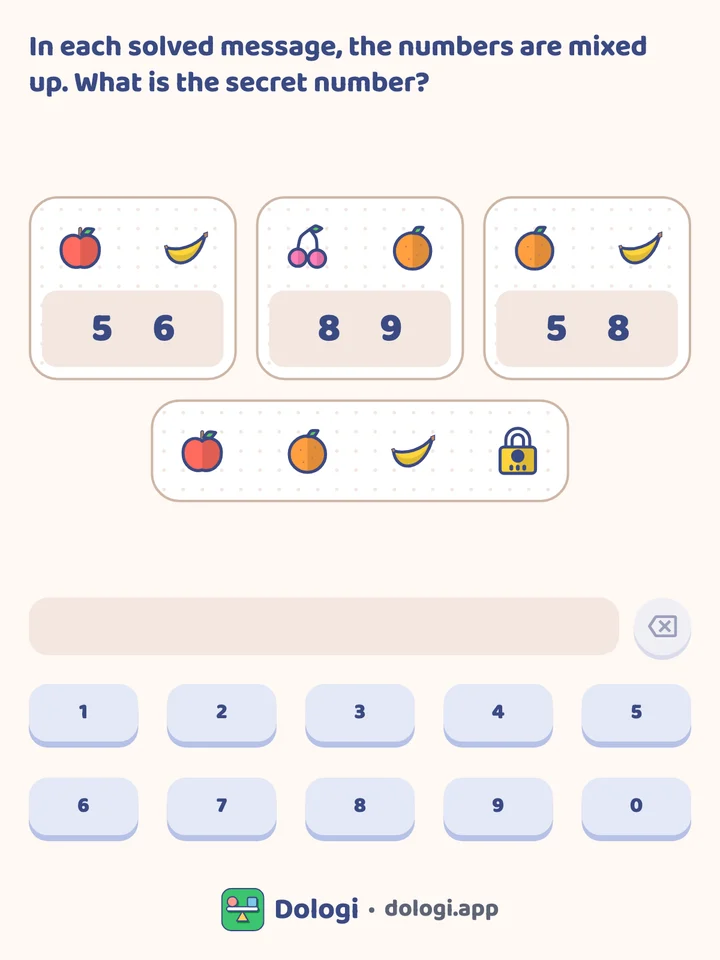
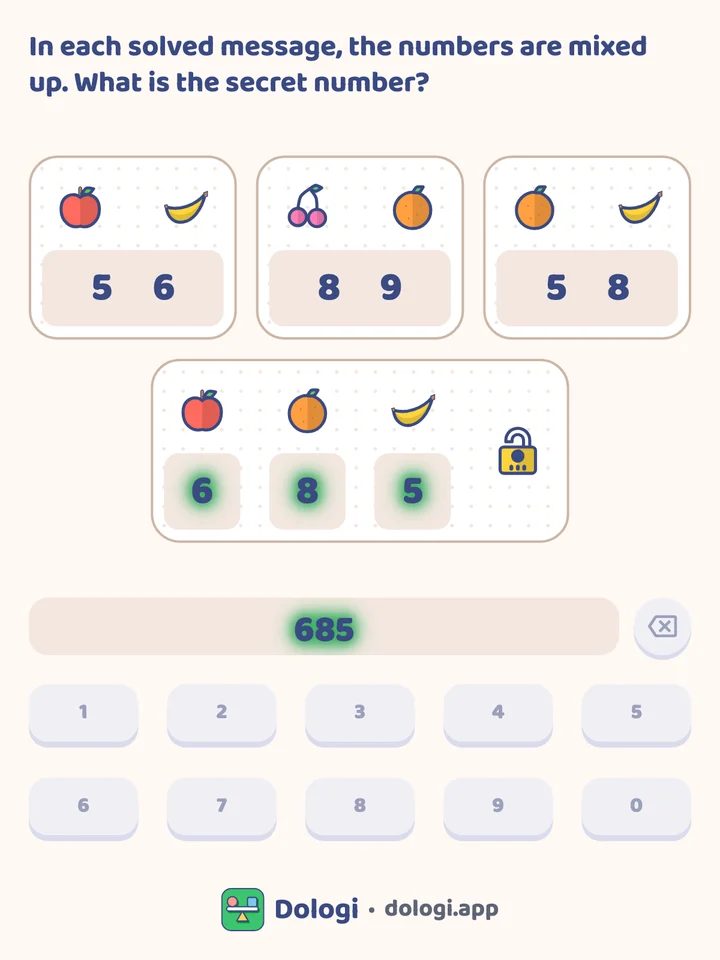
Ages 9–10
What it builds: Each sample note gives a group of pictures and a group of numbers, but the order is scrambled; your child finds a picture that appears in two notes to get their shared digit, then traces the remaining pictures. This is reasoning with the overlap of sets, the way code breakers work. Keep playing: write three scrambled pairs of "two objects – two numbers" and let your child find each object's number.
Did your child enjoy these logic puzzles? The Dologi app has many more of the same kinds, with bigger number grids, more layers of scales and gardens with pickier visitors, getting harder with age and with how your child plays, so a little reasoning practice each day stays fun.