This is part 2 of our logic puzzles for kids ages 8–10. These ones ask your child to hold several conditions at once: a rule made of two features, a garden that must have everything the visitor needs, a robot that must follow the rules at every step, gears linked by both teeth and belts. The five puzzles below come straight from the Dologi app and go from easy to harder.
How to use this post: let your child work through each puzzle alone and encourage them to jot down what they know for sure. The answer is behind the "Show answer" button under each picture. If they get stuck, hold off on the answer: ask "which condition haven't we checked yet?" and let them carry on.
Puzzle 1: Guess the rule
Ages 8–10
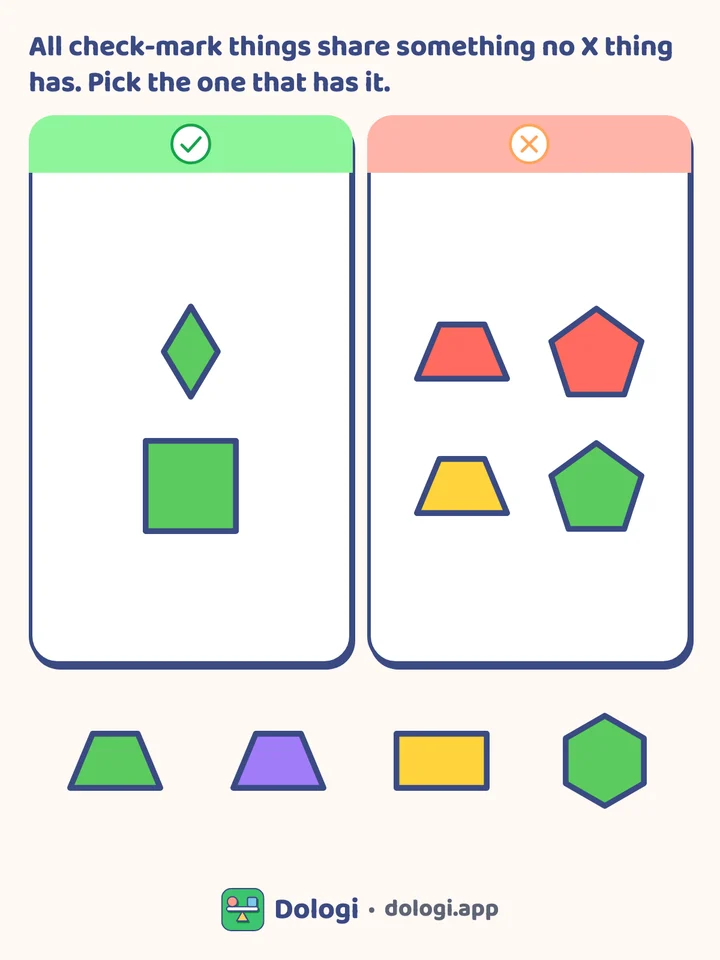
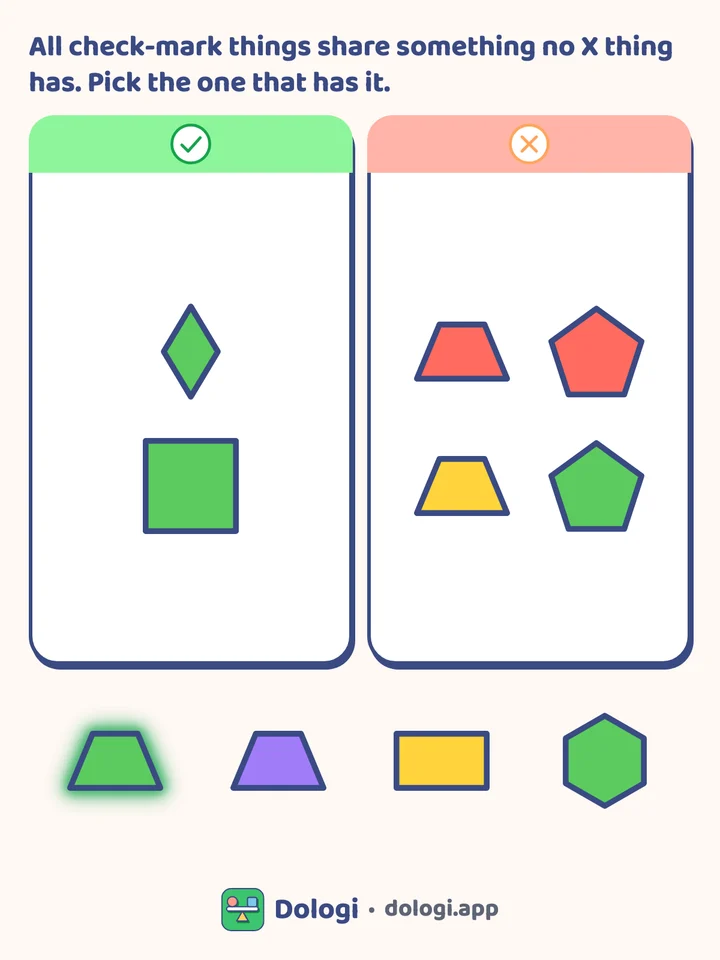
What it builds: The X side has shapes with the same color and shapes with the same number of sides as the check side, so one feature is not enough; your child has to combine two features into one rule and test it on every shape. Understanding that an "and" condition is stricter than either part on its own is the base of logic in math and coding. Keep playing: pick a two-part rule such as "red and has wheels", lay out toys and let your child split them into fits and doesn't fit.
Puzzle 2: Which garden?
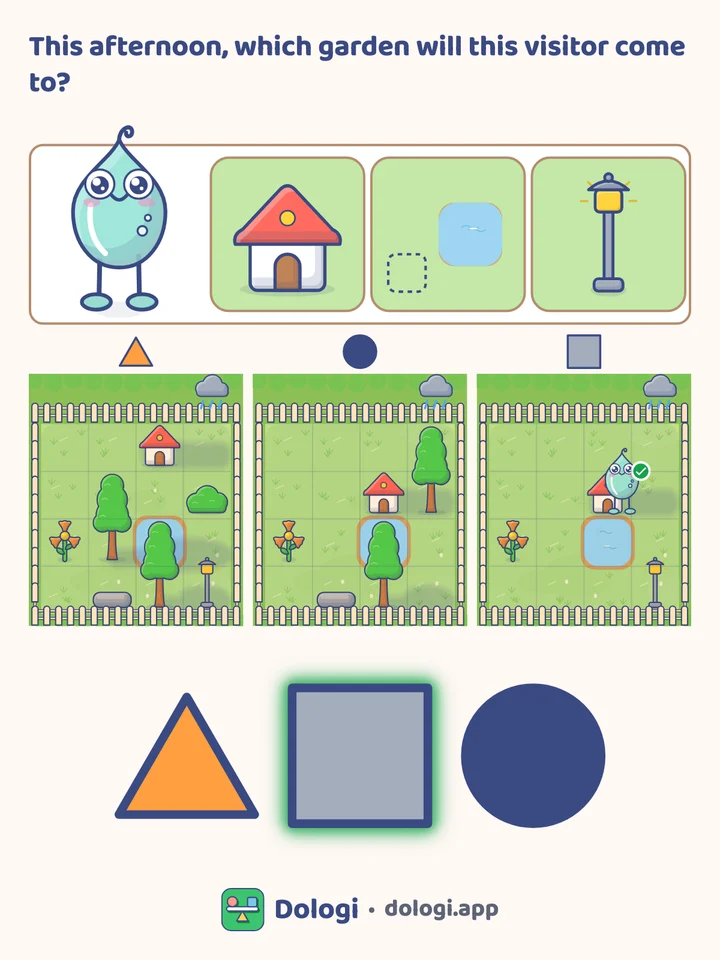
Ages 8–10
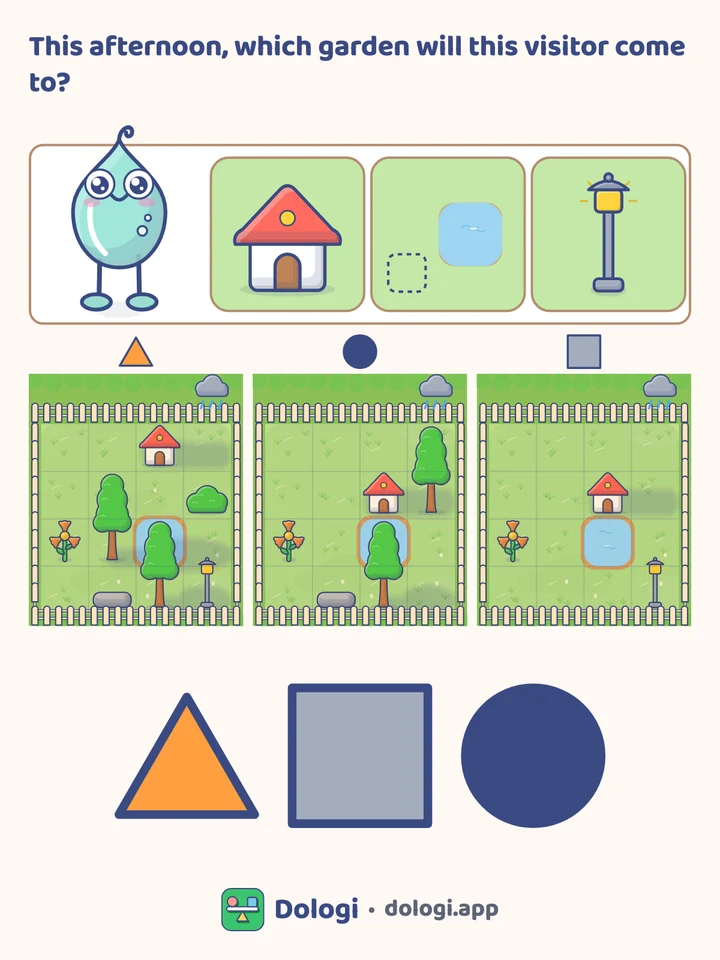
What it builds: Each card is something the visitor needs, and one says that thing must be right next to another; your child checks every garden against all three cards, noticing it is afternoon and raining, and rules out any garden missing even one. Reading position conditions carefully helps them not miss details in geometry problems or reading comprehension. Keep playing: describe a room that "has a table, a lamp right next to the table and a window" and let your child draw it or find a room at home that matches.
Puzzle 3: Which robot follows the rules?
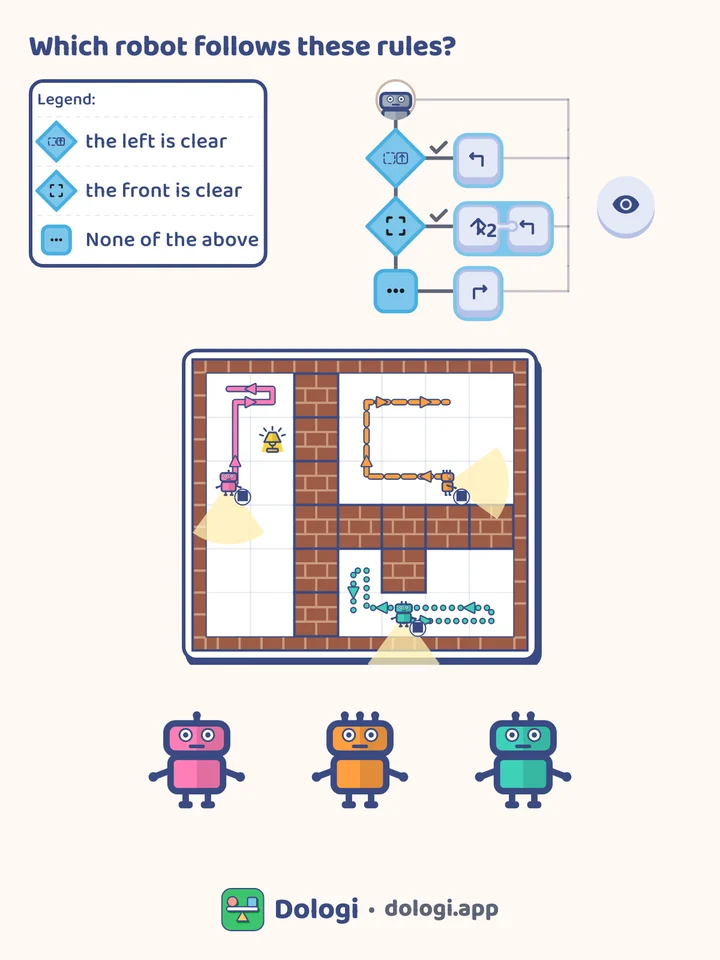
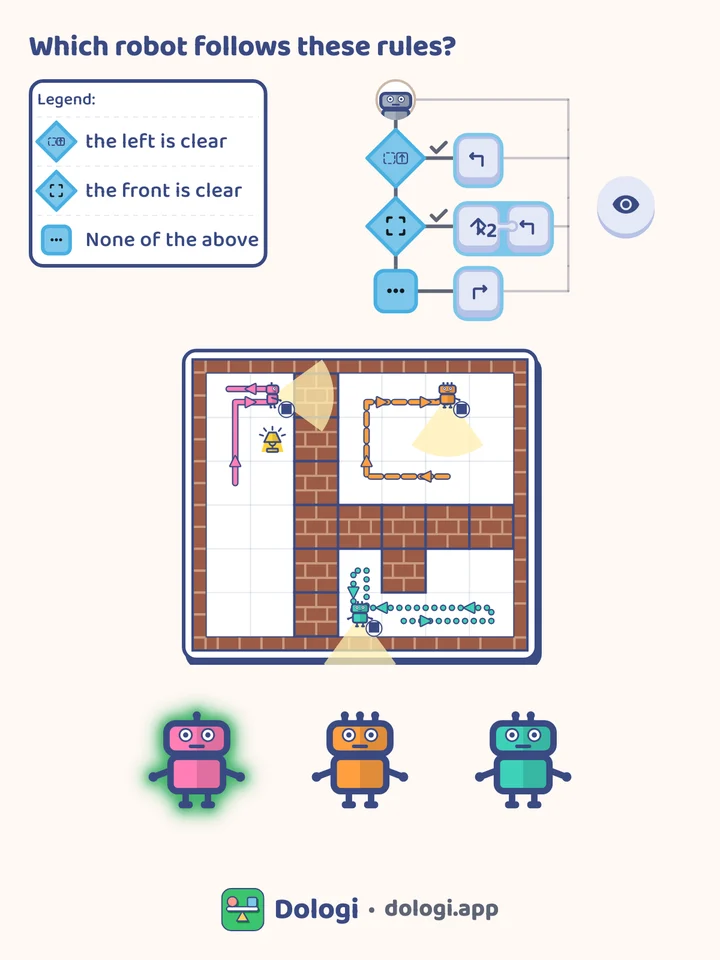
Ages 8–10
What it builds: All three robots leave a trail; your child traces every step of each trail, checks the rules from top to bottom at each square and finds the robot that never broke one. Checking each step of a process instead of only the end result is how they review a multi-step math problem and find exactly where it went wrong. Keep playing: write three instructions for folding a paper plane, follow one step wrongly and let your child spot it.
Puzzle 4: Two rings
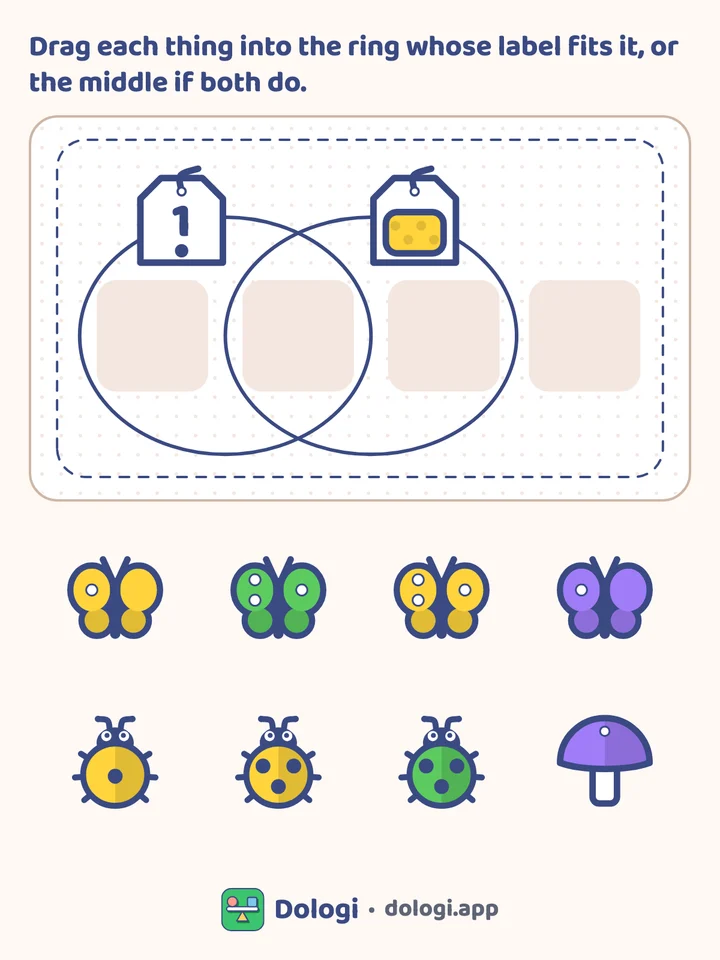
Ages 9–10
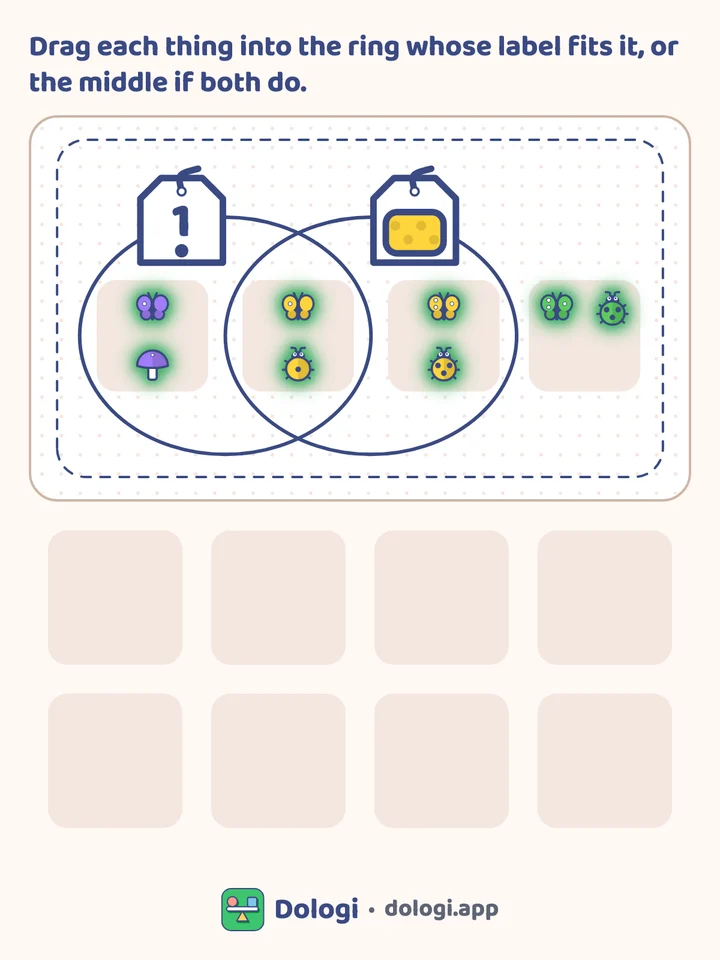
What it builds: One ring is for things with exactly that many dots, the other for yellow things; your child counts dots and checks the color of each item to place it in one ring, the shared middle or outside both. Sorting everything into four areas makes "both", "only one" and "neither" visible, ideas they will meet again in sets and probability. Keep playing: lay two loops of string on the floor overlapping, name them "has one dot" and "yellow", and sort toys together, leaving room for items that fit neither.
Hint: A number means exactly that many dots. Fits neither label? Use the box outside the rings.
Puzzle 5: Unjam the gears
Ages 9–10
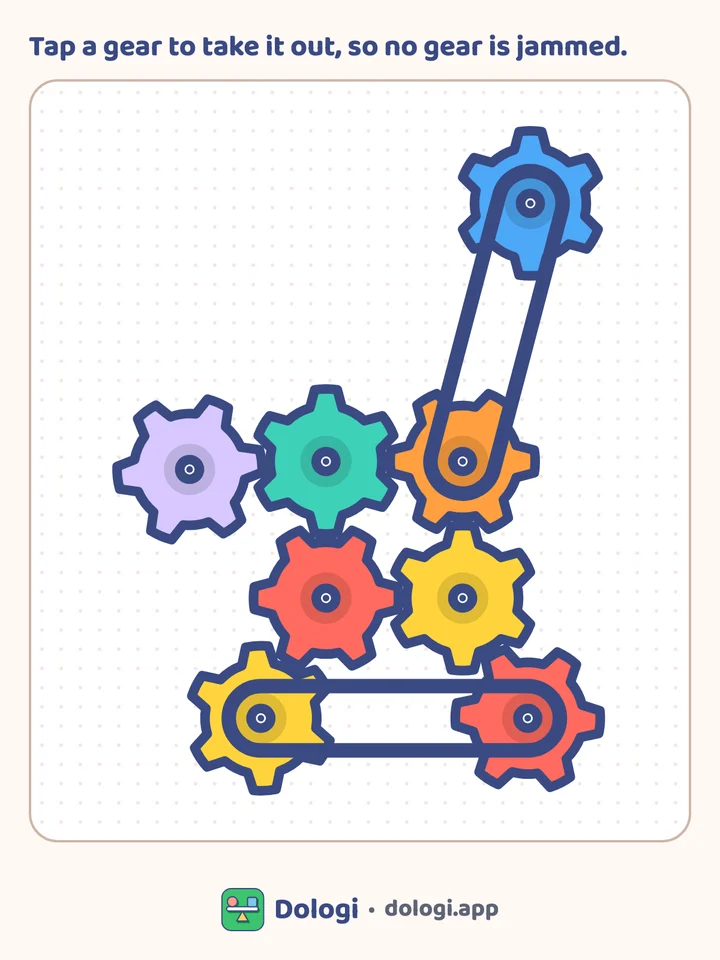
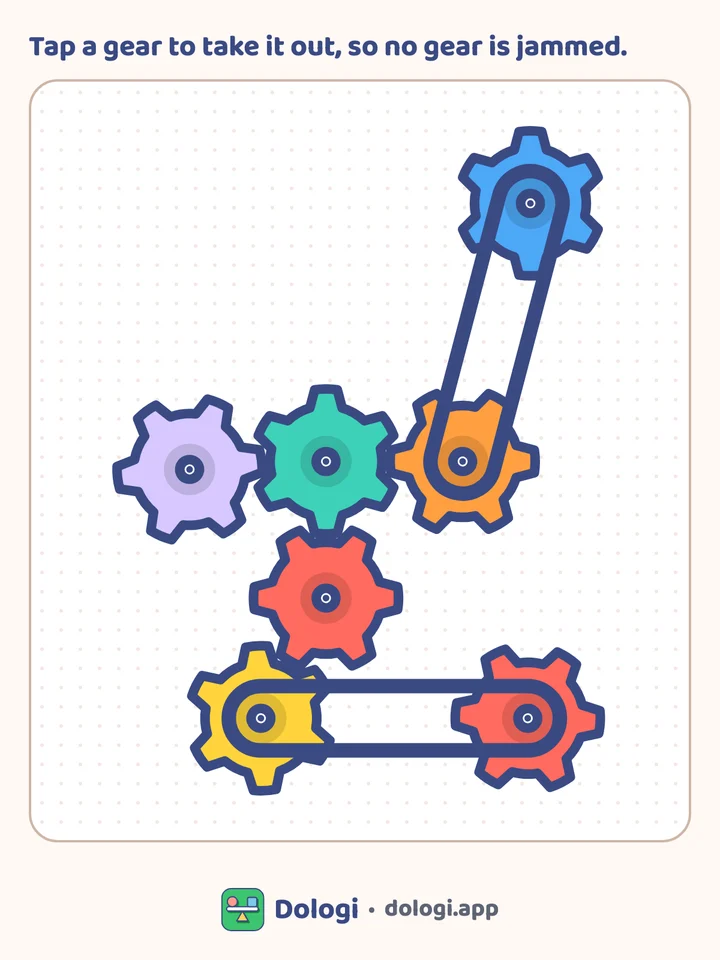
What it builds: Gears that touch turn in opposite directions, while two gears joined by a belt turn the same way; your child follows both teeth and belts to find the loop that jams, then picks the gear to remove. Understanding two different kinds of links in one system is a first step in engineering thinking, like figuring out a bicycle or a wind-up toy. Keep playing: turn a bicycle upside down, spin the pedals together and watch which way the wheel, chainring and rear cog turn.
Did your child enjoy these logic puzzles? The Dologi app has many more of the same kinds, with hidden rules of more parts, gardens with more conditions and more tangled gears and belts, getting harder with age and with how your child plays, so a little reasoning practice each day stays fun.