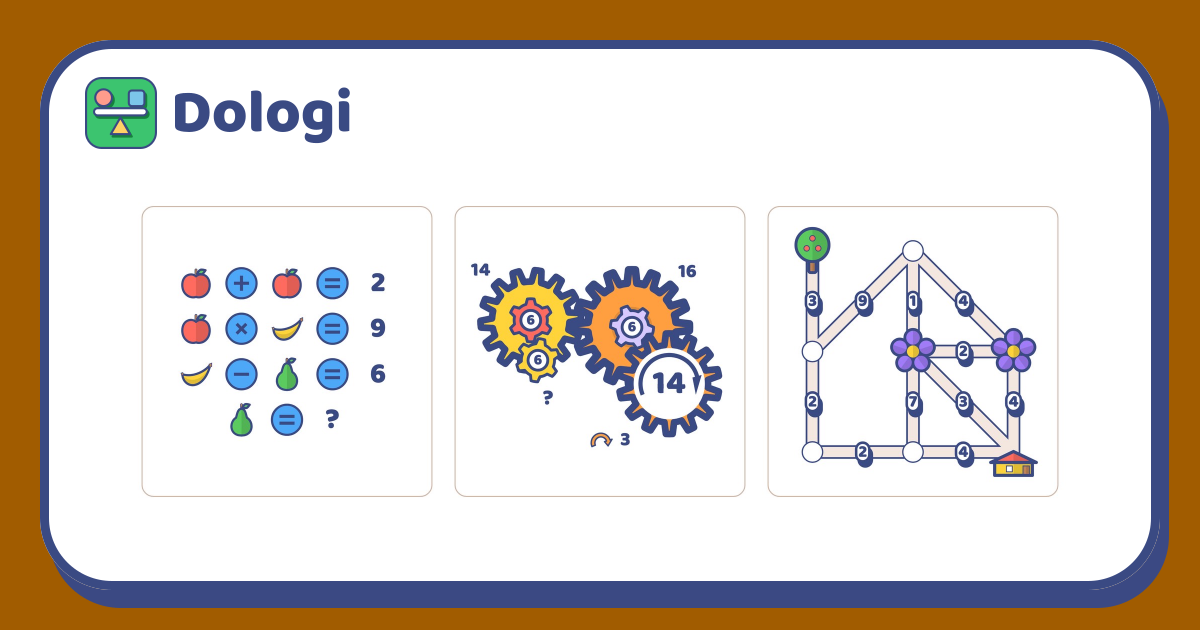
By ages 10–12, math is no longer just about getting a sum right. Kids start reading a situation, picking out the numbers that matter, planning several steps and checking their work. The five puzzles below come straight from the Dologi app, go from easy to harder, and each one trains one of those habits: converting, solving for an unknown, ratios, optimizing and measuring.
How to use this post: show your child one picture at a time and let them think it through, ideally with paper and pencil for scratch work. The answer is behind the "Show answer" button under each picture. Once your child has a result, ask them to explain how they got it before you open the answer: being able to say each step out loud is a sign they really understand.
Puzzle 1: Missing number on the card
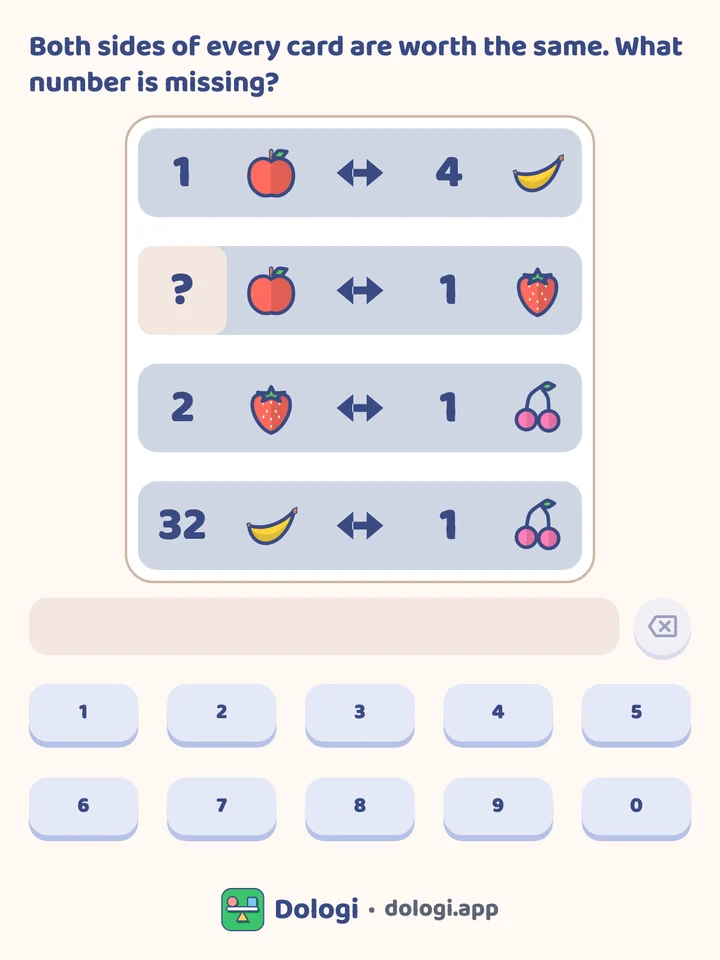
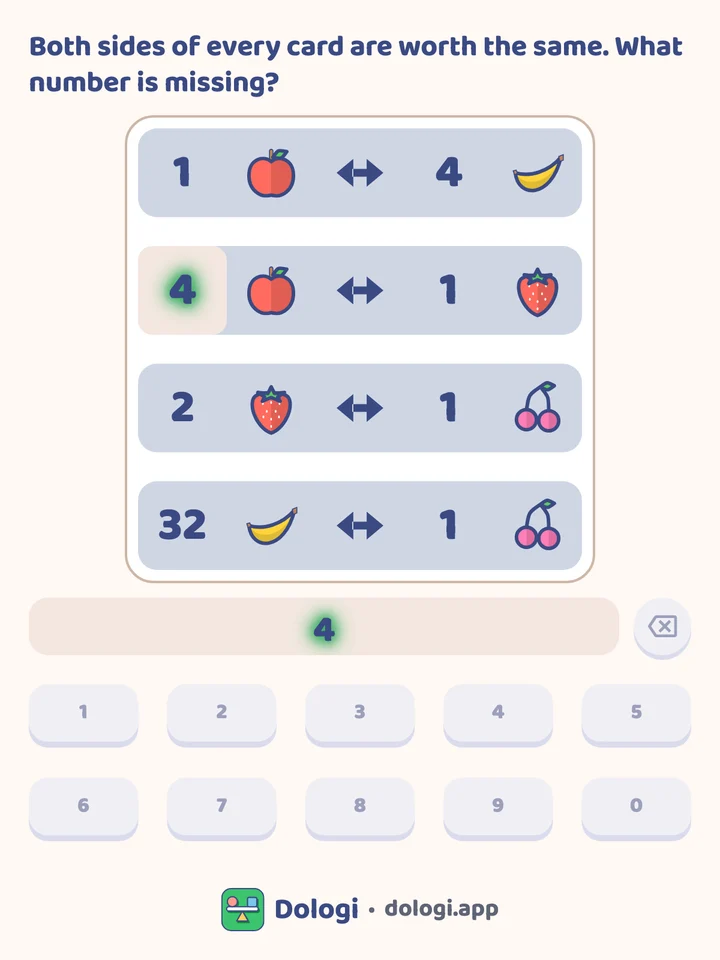
Ages 10–11
What it builds: Each card is an exchange rate, and the cards link up through shared fruits; your child has to go around several cards, convert everything to one kind of fruit, and only then compare. It is exactly how unit conversions, currency exchange or comparing the price of two packs at the store work. Keep playing: make up a trading chart for toys at home (three marbles for a sticker, two stickers for a crayon) and quiz each other on roundabout trades.
Puzzle 2: Fruit numbers
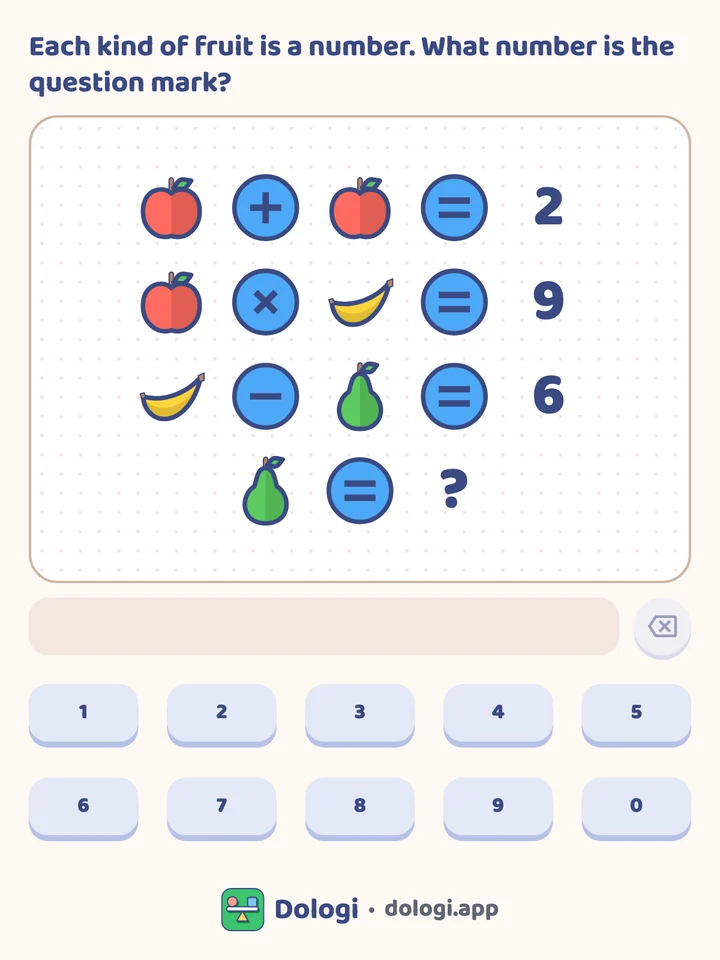
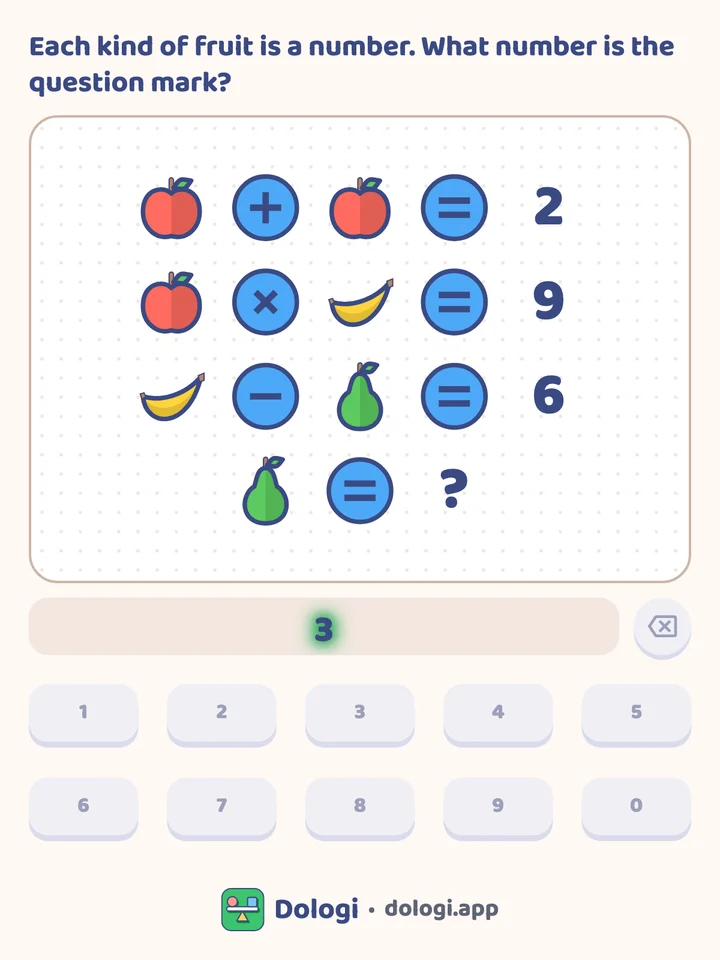
Ages 10–11
What it builds: Your child looks for a line with only one unknown fruit, works it out, then carries that value down to the next line. That is how systems of equations are solved in later grades, except here the unknowns are apples and bananas. Keep playing: draw a few equations using pictures instead of numbers for your child to solve, then switch roles and let them stump you.
Puzzle 3: Count the turns
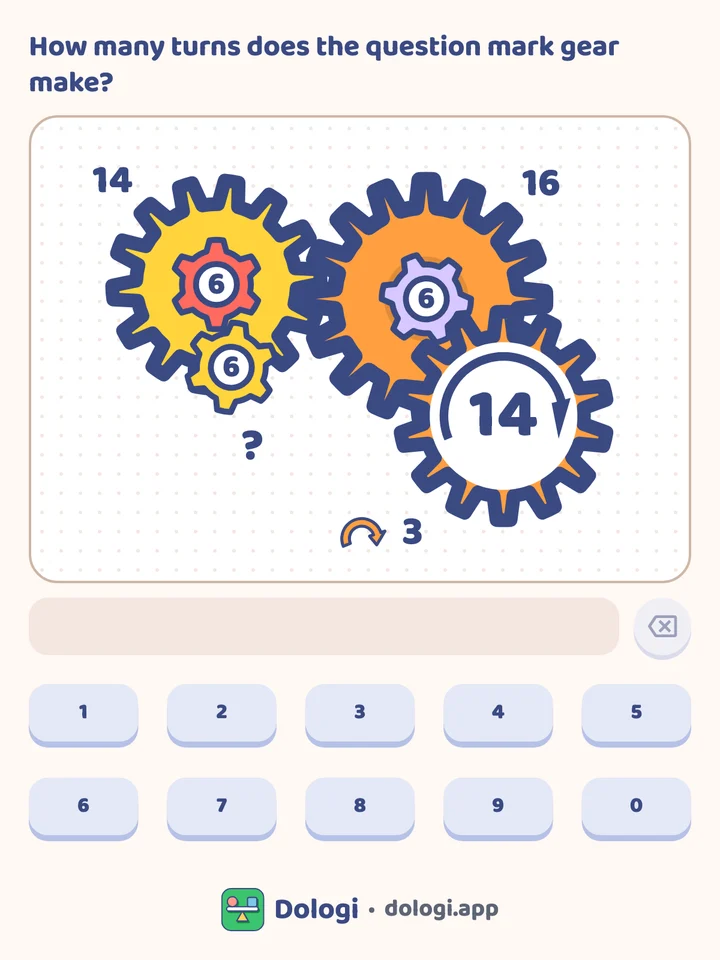
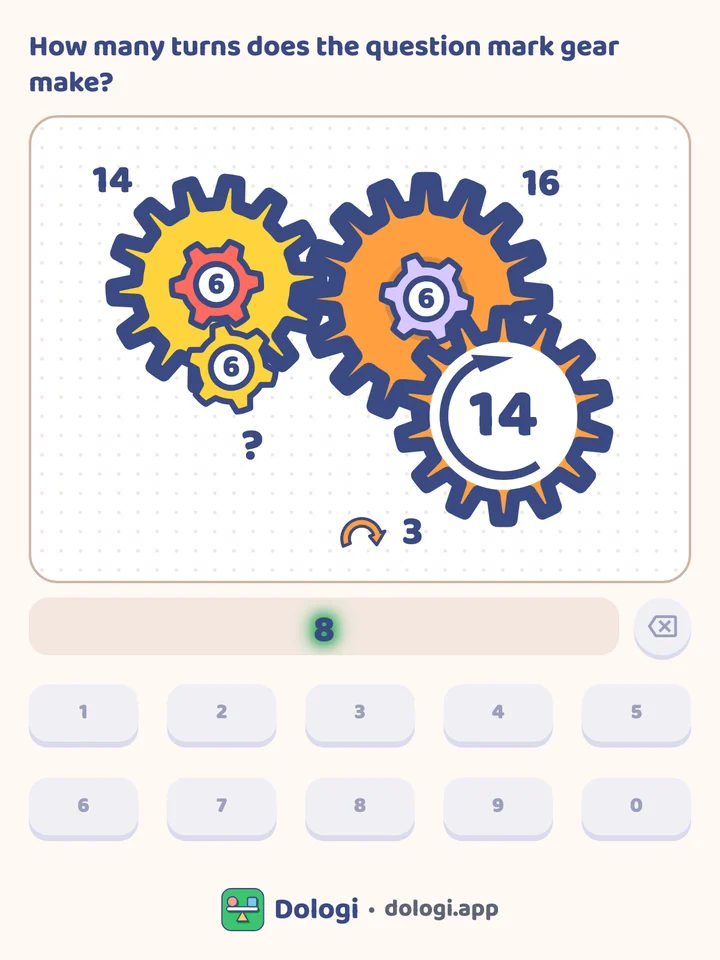
Ages 10–11
What it builds: When two gears mesh, the same number of teeth pass the contact point on both sides, and gears fixed on one axle turn the same number of times; your child follows each pair, multiplying and dividing to get from the known gear to the one with the question mark. This is ratio in real life, like how a bike's gears make pedaling easier or faster. Keep playing: count the teeth on a bike's front and back gears together, guess how many times the back wheel turns for one pedal turn, then try it.
Puzzle 4: Fewest steps past two flowers
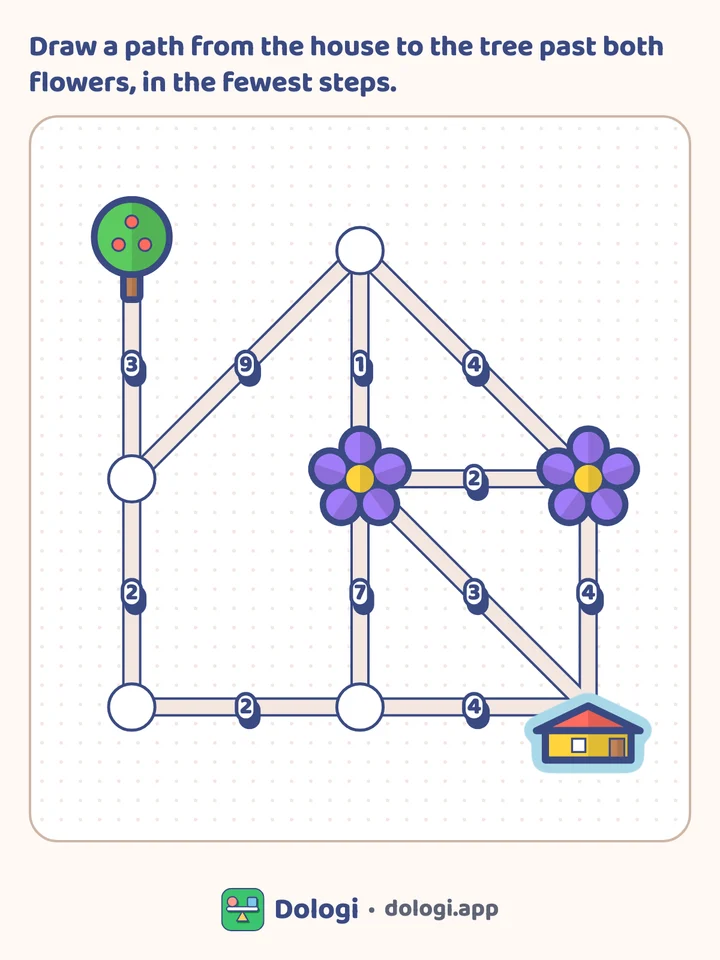
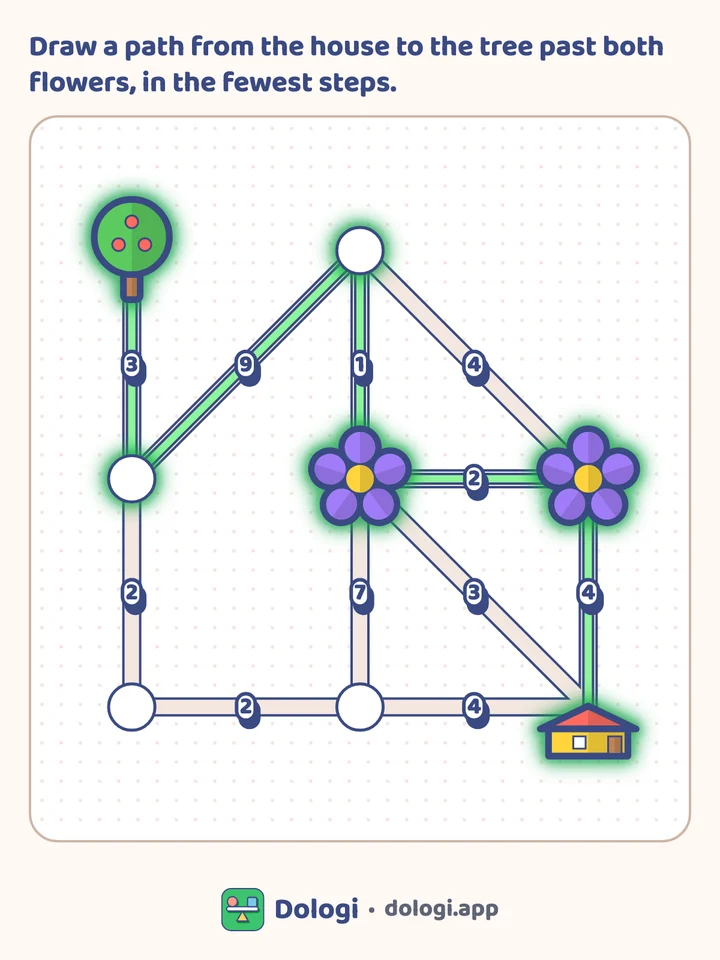
Ages 11–12
What it builds: Your child adds up the steps on each segment, tries visiting the two flowers in different orders and rules out routes that are clearly longer. Testing options systematically instead of guessing is a lifelong skill: choosing a route to school, ordering an afternoon's errands, and later, real optimization problems. Keep playing: open a map of your neighborhood and find the shortest way home that stops at both the bookshop and the bakery.
Puzzle 5: Pour and measure
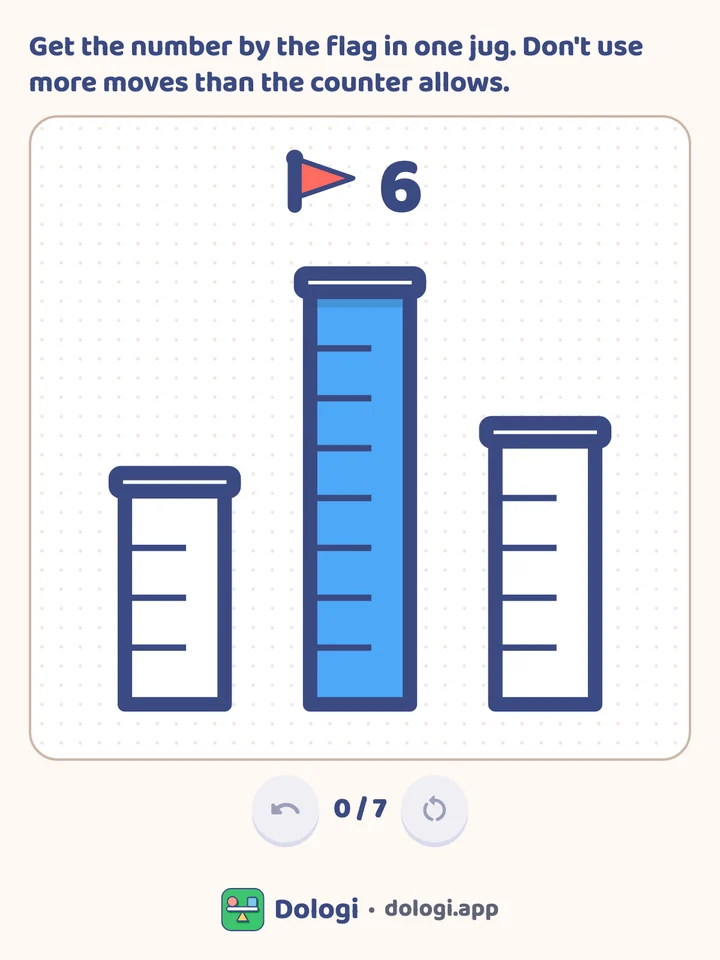
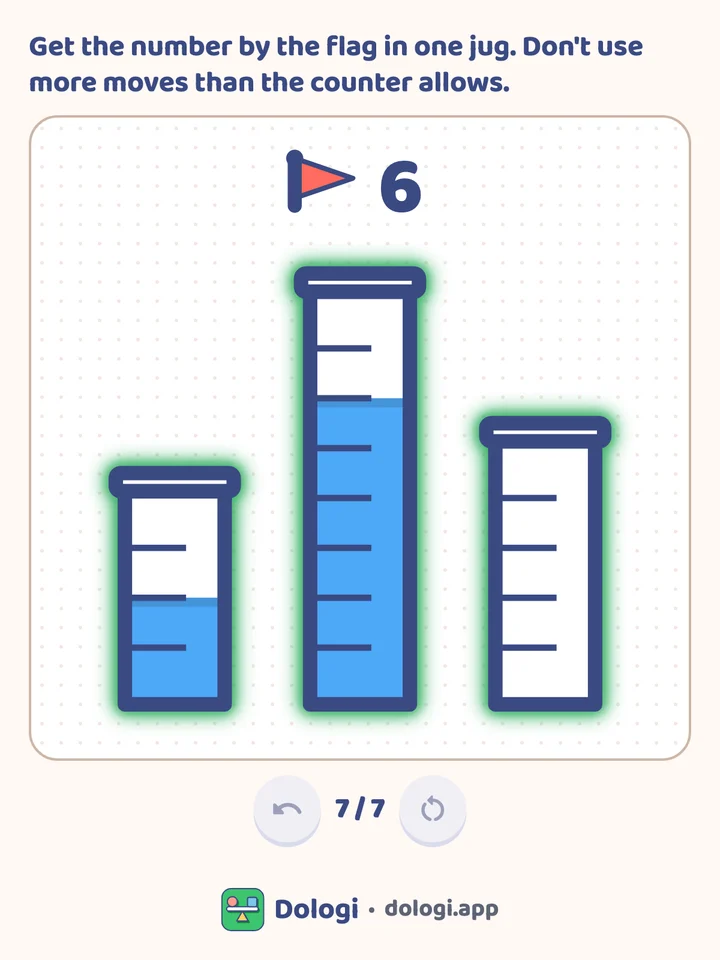
Ages 11–12
What it builds: The jugs have no numbers on them, so your child counts the marks to learn how much each one holds, then plans the pours within a limited number of moves. It practices measuring, mental addition and subtraction and thinking a few steps ahead, all things needed for cooking or mixing a drink by a recipe. Keep playing: give your child two cups of different sizes and a bottle of water, and challenge them to measure out an exact amount with no other markings.
Did your child enjoy these puzzles? The Dologi app has many more math puzzles of the same kinds, getting harder with age and with how your child plays, so a little practice each day in trading, calculating, measuring and planning feels more like a game than homework.