This is a follow-up for kids ages 10–12, with five new math puzzles straight from the Dologi app. This time your child meets types close to the end of primary school and the start of middle school: unknowns that can only be found by combining several lines, adding fractions with different denominators, multi-step conversions, the turning effect of a lever, and a number arrangement with more than one solution.
How to use this post: show your child one picture at a time and let them think it through, ideally with scratch paper. The answer is behind the "Show answer" button under each picture. For the harder ones, hold back on hints: ask what they have tried, then work out together where to start.
Puzzle 1: Fruit numbers
Ages 11–12
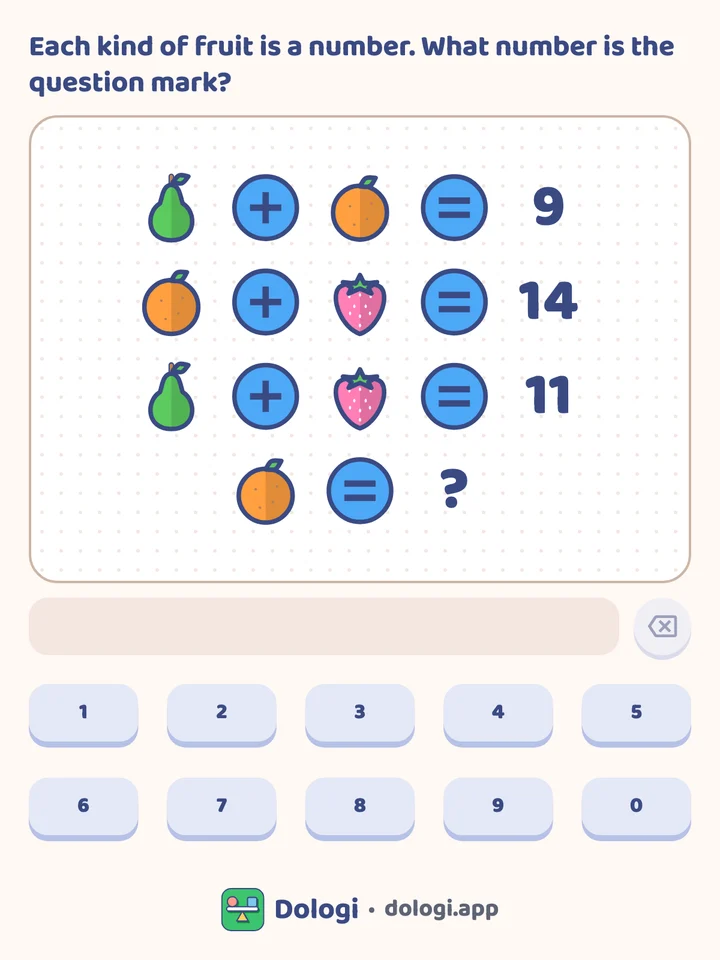
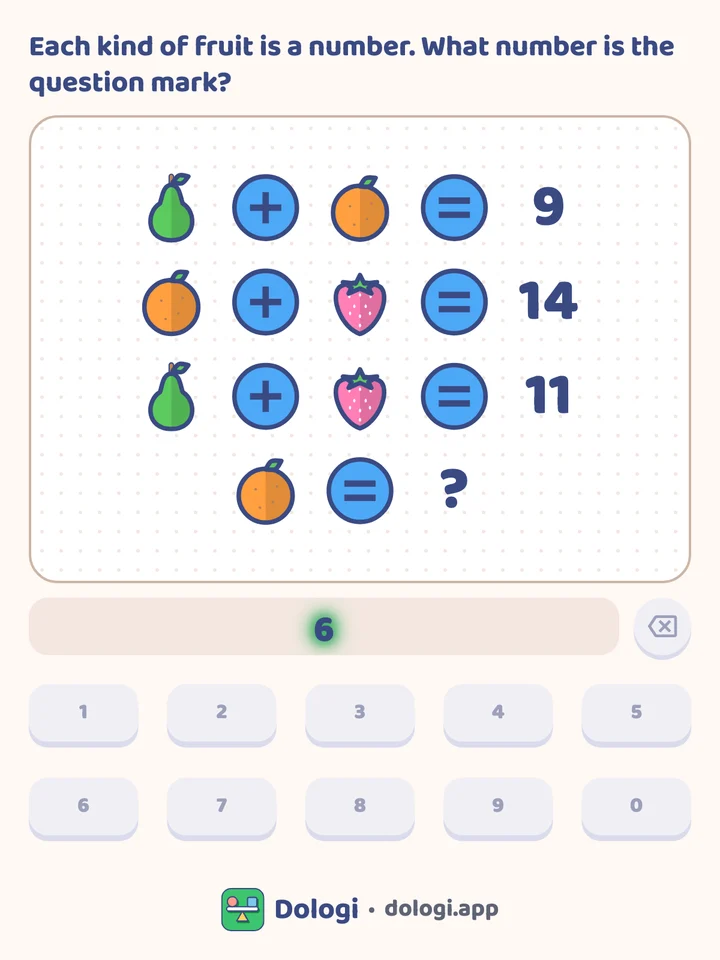
What it builds: No line has just one unknown fruit, so your child has to look at all three equations at once and add or subtract them to get rid of unknowns. This is exactly how systems of equations are solved by elimination in later grades. Keep playing: ask your child to invent three equations like these for you to solve, then check together whether their puzzle has exactly one answer.
Puzzle 2: Equal parts
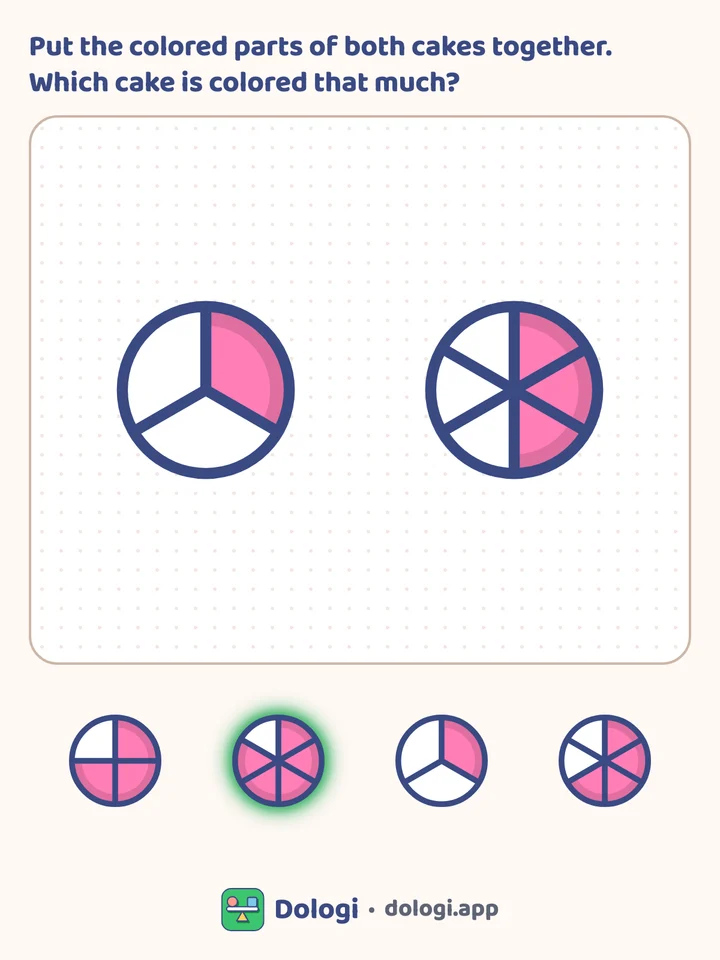
Ages 10–11
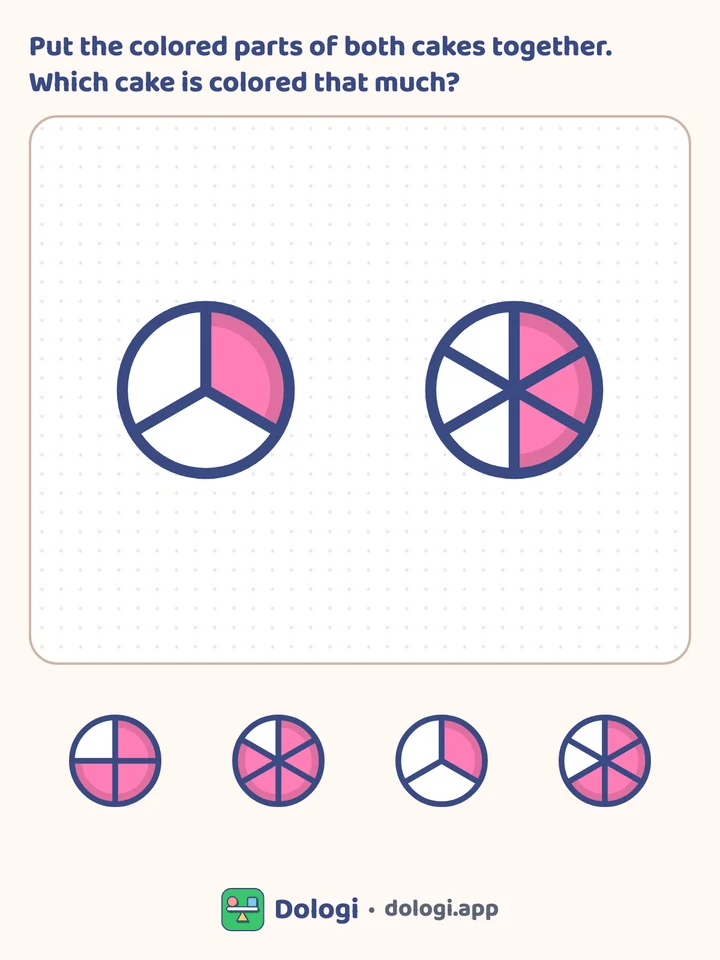
What it builds: The two pies are cut into different numbers of parts, so your child has to switch to the same kind of cut before adding the colored parts, then find the pie colored by that total. This is adding fractions with different denominators, but seen in pictures rather than only as a rule. Keep playing: when cutting a cake or pizza, ask how much of the whole they have eaten after one slice of three and one slice of six.
Puzzle 3: Compare the baskets
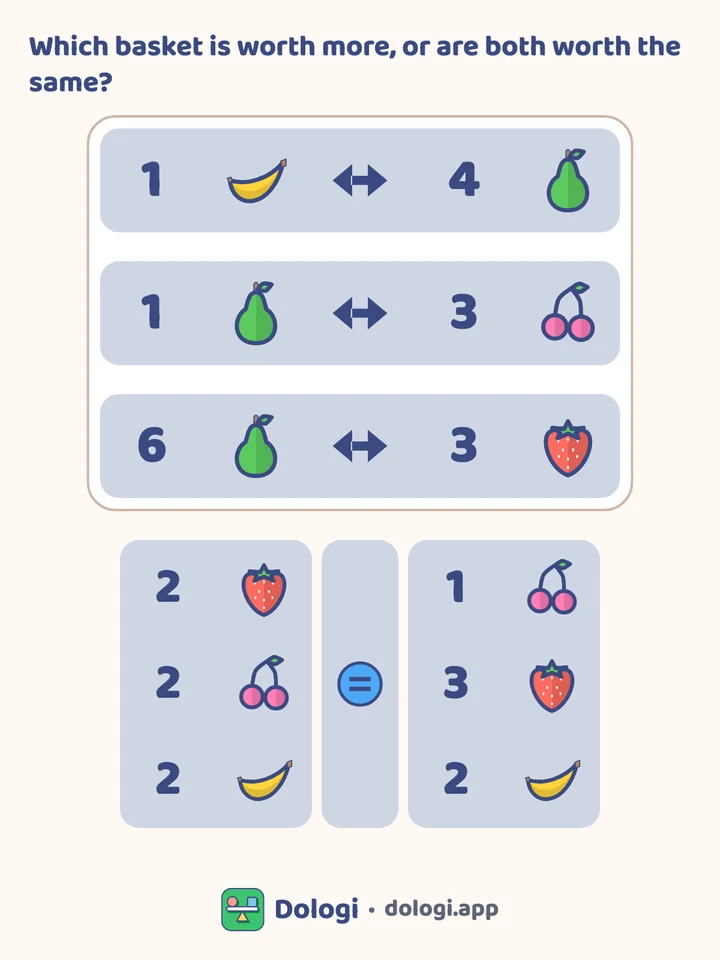
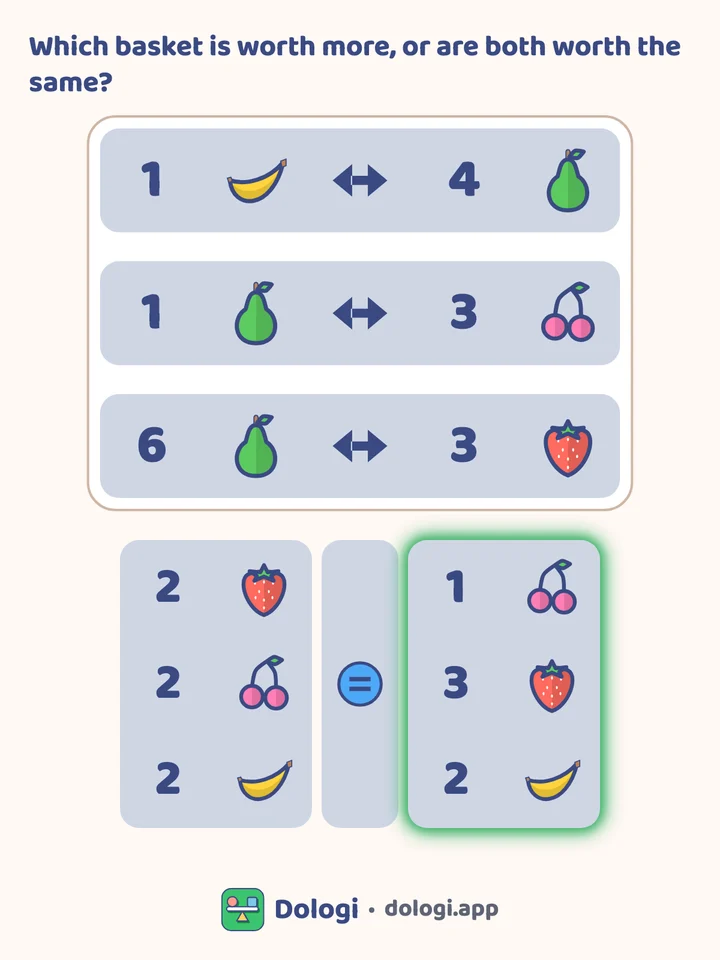
Ages 10–11
What it builds: Each basket holds three kinds of fruit, and the trading cards form a chain; your child picks one fruit as the common unit, converts every item in both baskets, then adds up to compare. It practices multi-step conversions and tidy calculation, like comparing prices given in different units. Keep playing: at the supermarket, compare a product sold in a small and a large pack by working out the price for the same weight.
Puzzle 4: Balance the beam
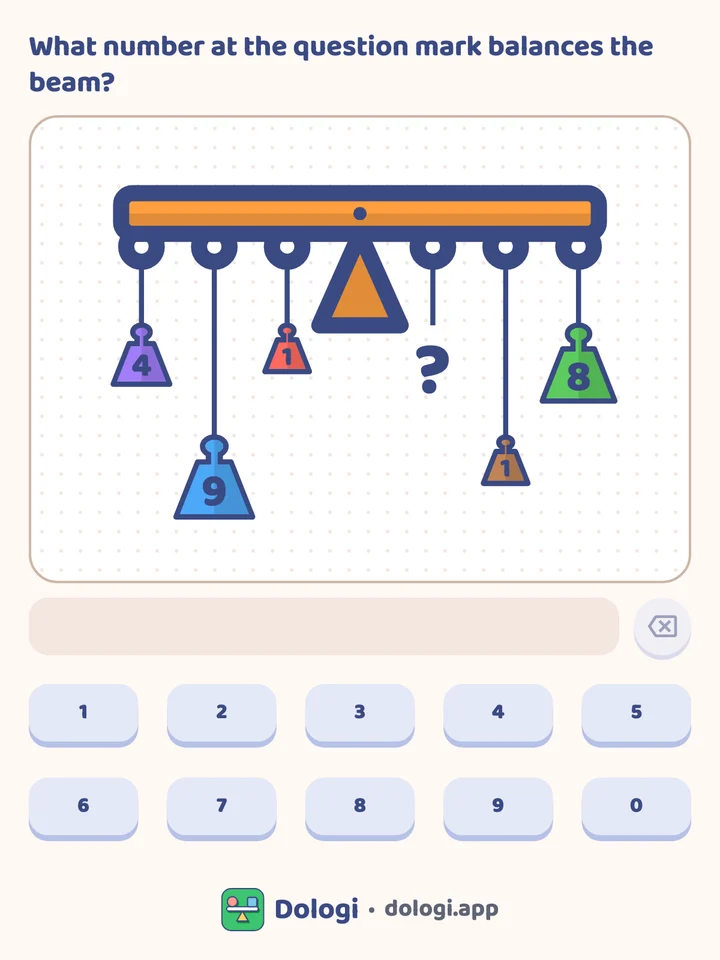
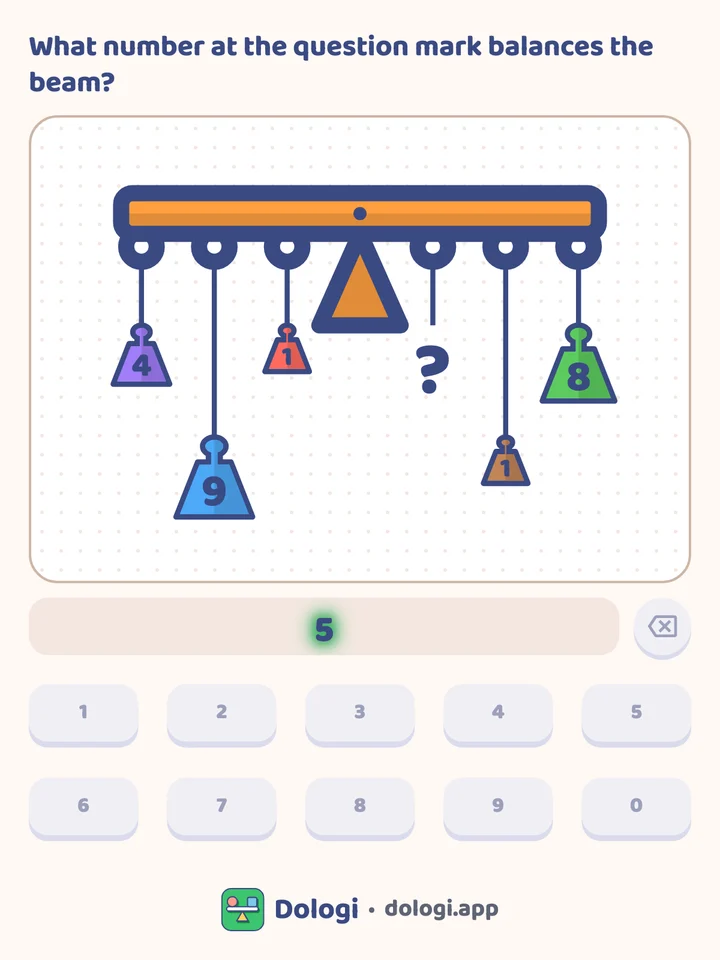
Ages 11–12
What it builds: Each weight tips the lever by its number times its distance from the middle; your child totals both sides and finds the missing number that balances them. This is the principle of moments they will meet in science class, and also a simple linear equation. Keep playing: hang a few bunches of keys on a clothes hanger at different spots and try to make it hang level.
Puzzle 5: Add along the lines
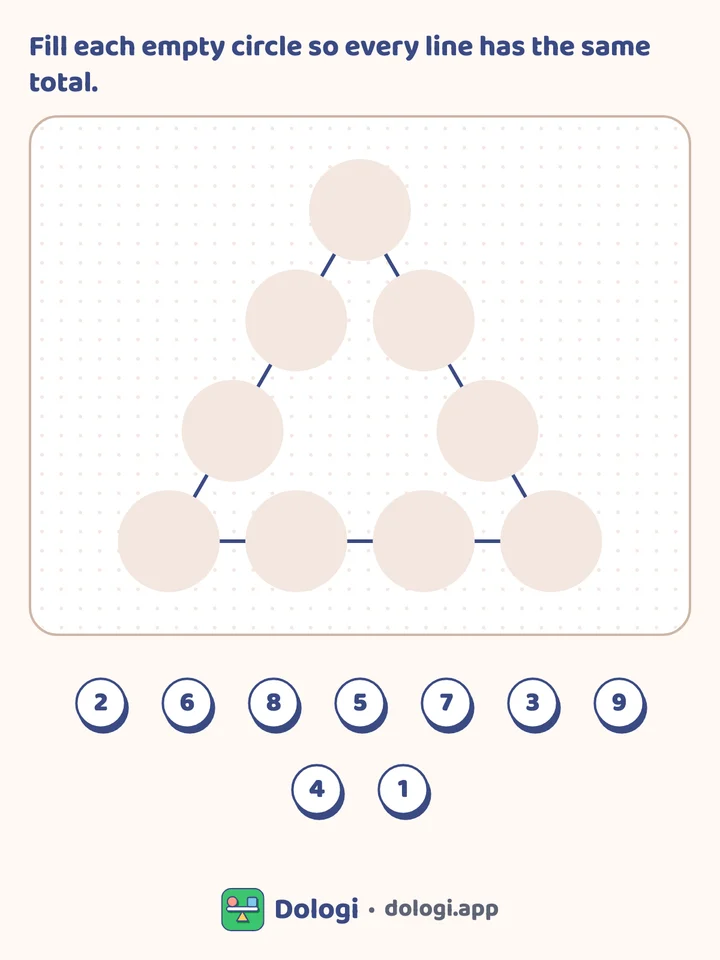
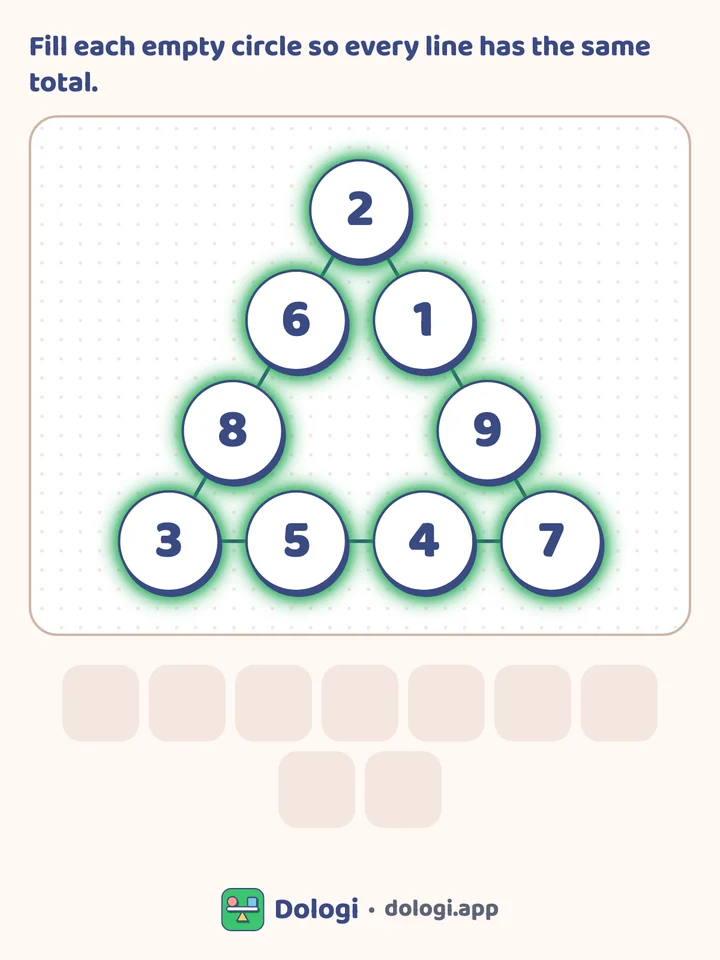
Ages 11–12
What it builds: This puzzle does not give the total, so your child has to work out what each side should add up to, noticing that corner numbers count twice. It trains strategic reasoning instead of random guessing, and shows that a problem can have more than one solution. Keep playing: once it is solved, challenge your child to find another arrangement, or the largest possible total for each side.
Did your child enjoy these puzzles? The Dologi app has many more math puzzles of the same kinds, getting harder with age and with how your child plays, so each day they practice reasoning with numbers in a way that feels more like a game than homework.