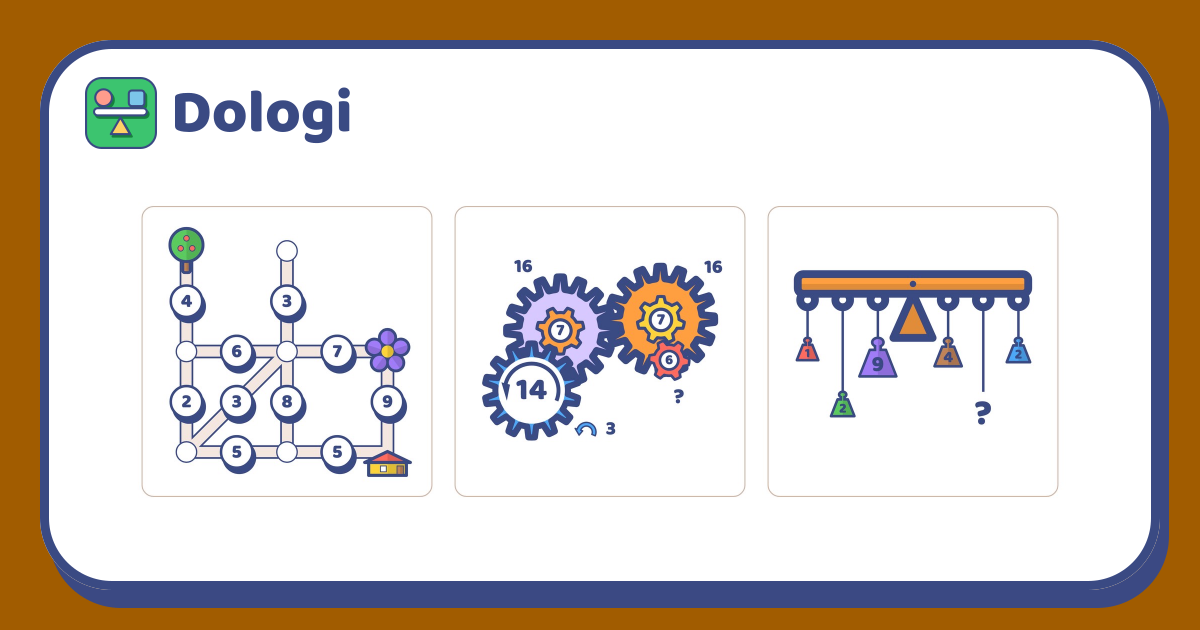
This is the third post for kids ages 10–12, with five math puzzles at the hardest levels of the Dologi app. Each one asks your child to keep several things in mind at once and work through many steps: comparing many routes, balancing three totals, following a chain of gears, planning pours and balancing the turning effect on both sides.
How to use this post: show your child one picture at a time, let them use scratch paper and take as long as they need. The answer is behind the "Show answer" button under each picture. If your child gets stuck, ask what they know for sure, then move on step by step from there.
Puzzle 1: Fewest steps
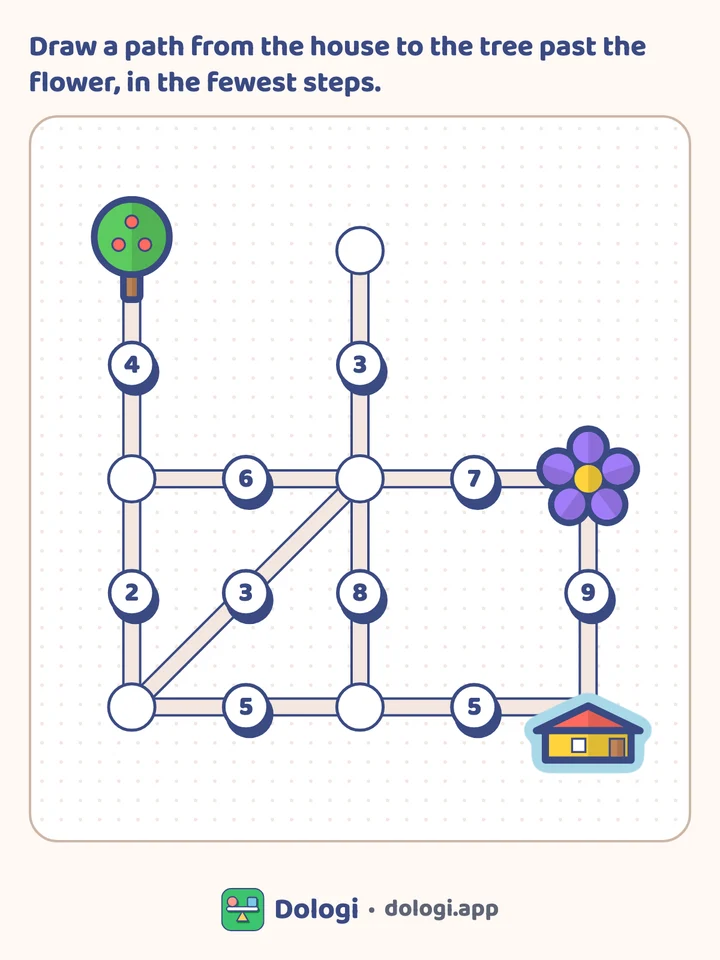
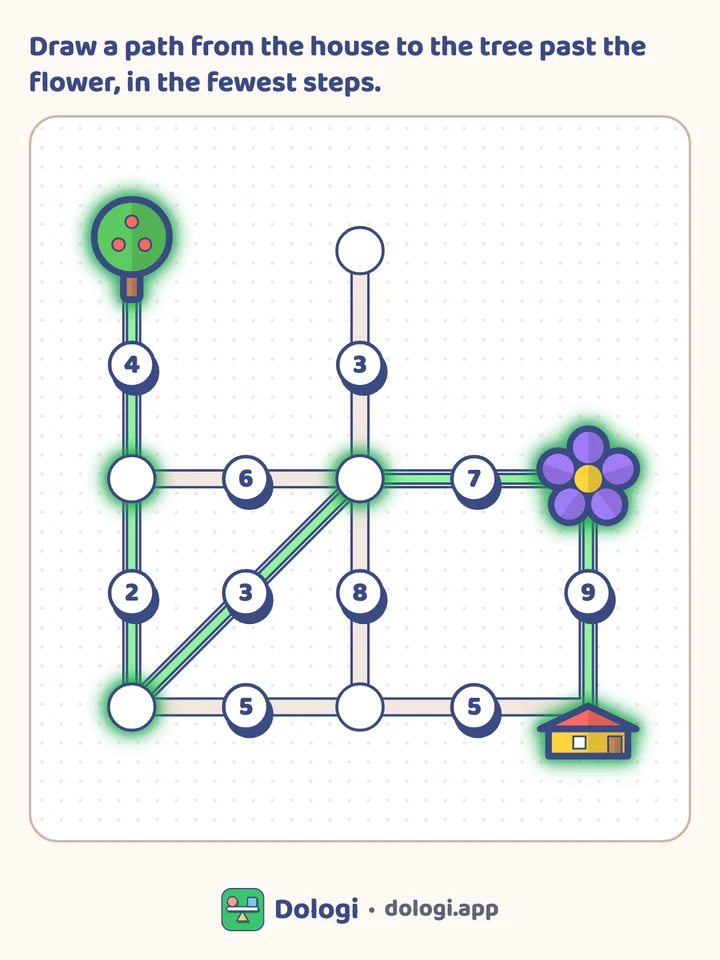
Ages 10–11
What it builds: The route must stop at the flower, so your child needs to split the task into two legs, find the shortest way for each and join them, while weighing the diagonal shortcuts. Breaking a big problem into smaller ones is a problem-solving strategy they will use for years. Keep playing: before running a few errands, ask your child to plan the route that visits every stop with the least walking.
Puzzle 2: Add along the lines
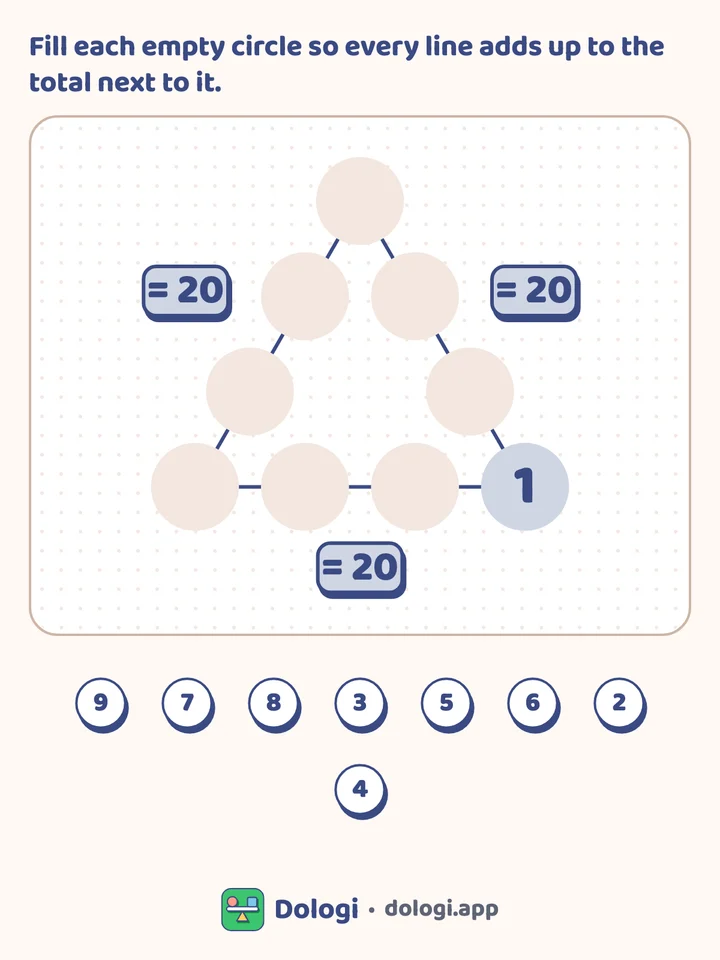
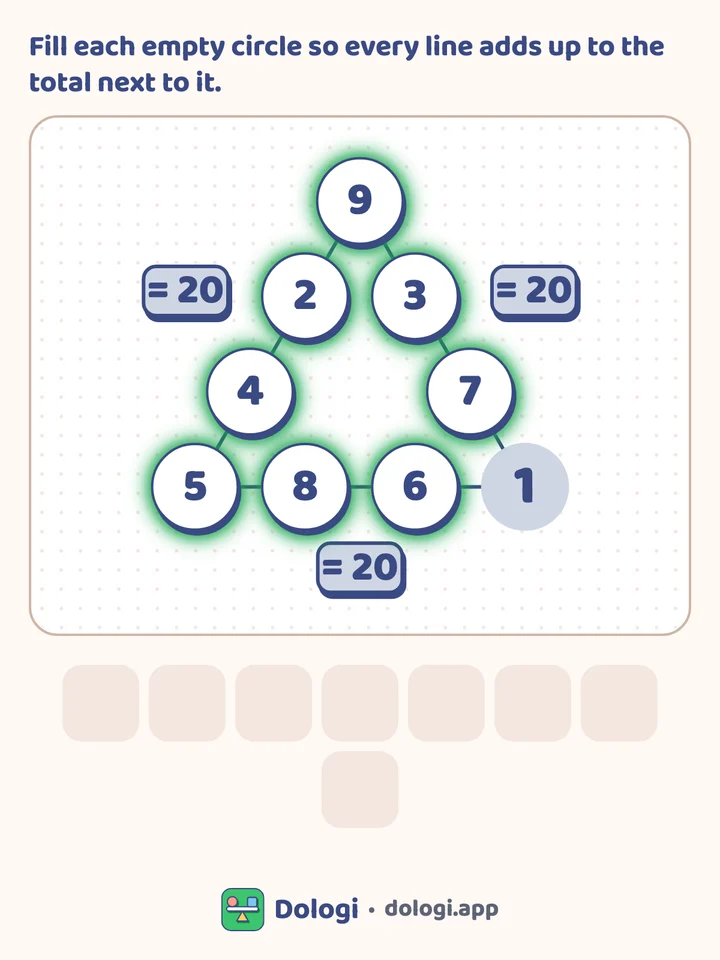
Ages 10–11
What it builds: Nine empty circles and three totals are tied together at the corners; your child can start from the corners, since those numbers affect two sides, then narrow down the possibilities. This way of thinking is like solving logic number grids and builds patience and system. Keep playing: challenge your child to find the smallest and largest possible side total using the numbers 1 to 9.
Puzzle 3: Count the turns
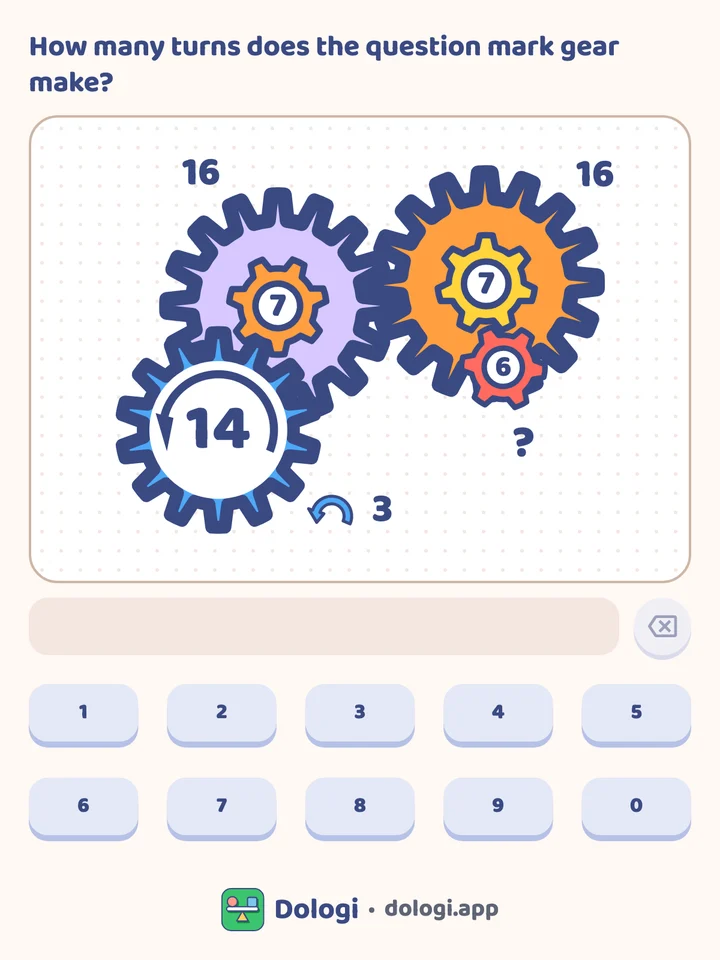
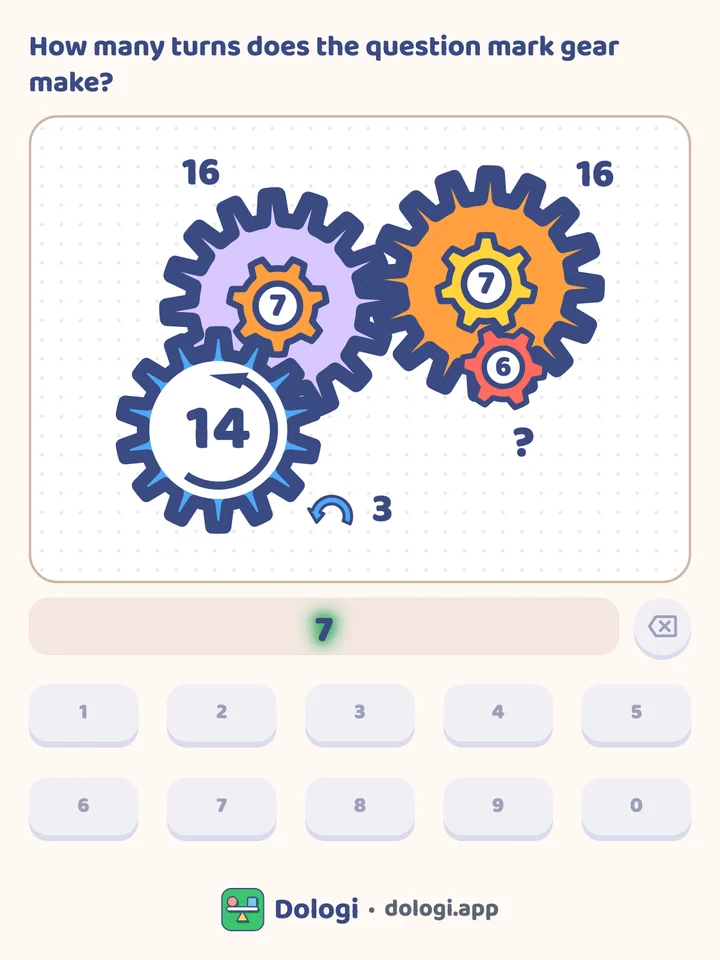
Ages 10–11
What it builds: Gears on one axle turn the same number of times, while meshing gears pass the same number of teeth; your child follows each pair, multiplying and dividing again and again along the whole chain. Tracking a quantity through many steps is a skill needed in science and for ratio problems in middle school. Keep playing: on a bike with several gears, count the teeth together and work out how many times the back wheel turns per pedal turn in each gear.
Puzzle 4: Pour and measure
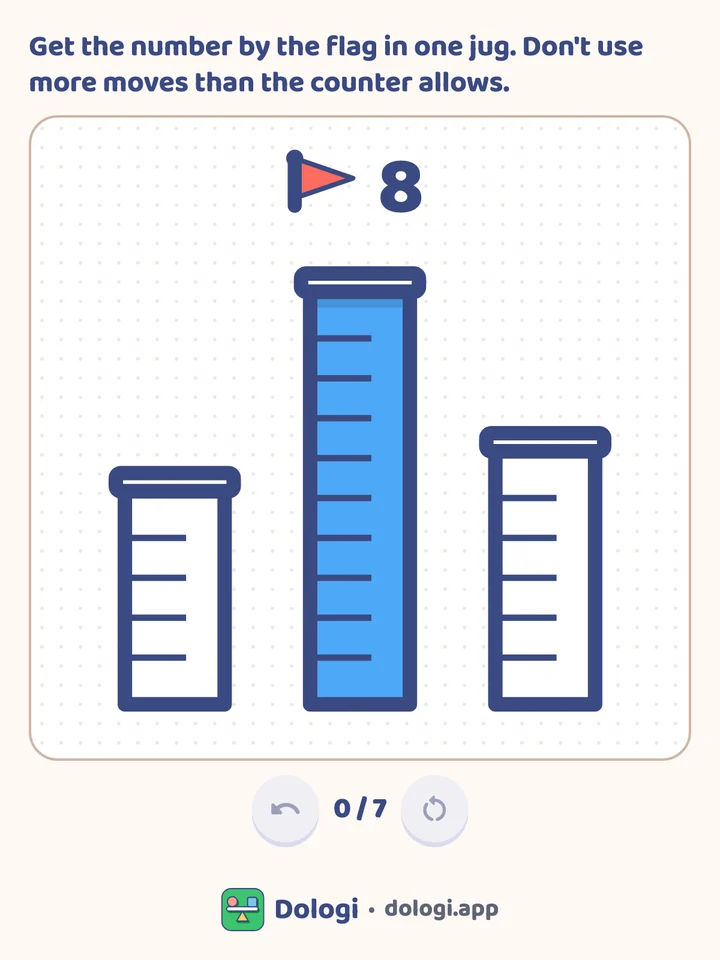
Ages 11–12
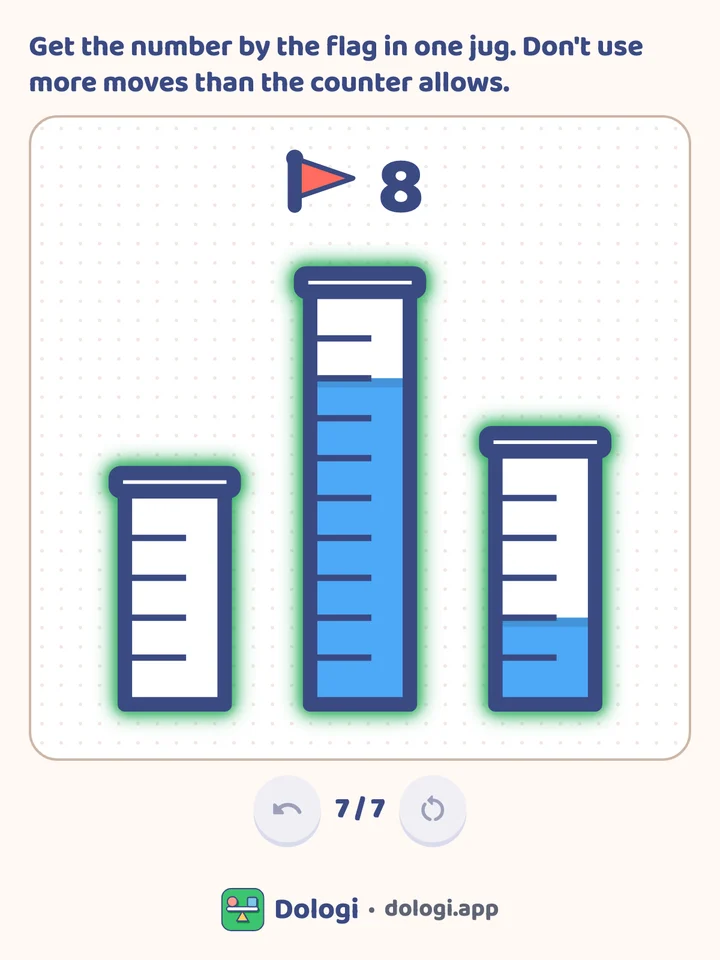
What it builds: Your child counts the marks to learn each jug's capacity, then finds a sequence of pours within the allowed moves, often by thinking backward from the result needed. Planning several steps and working backward from the goal is a problem-solving skill used in every subject. Keep playing: with two bottles of different sizes, try together to measure out an amount that neither bottle holds on its own.
Puzzle 5: Balance the beam
Ages 11–12
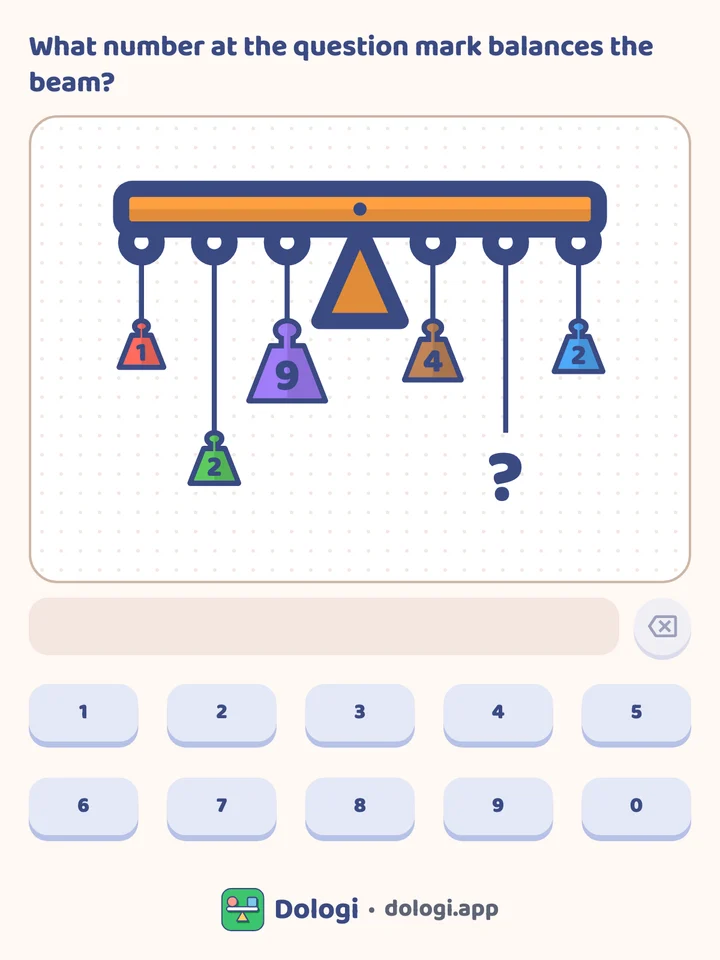
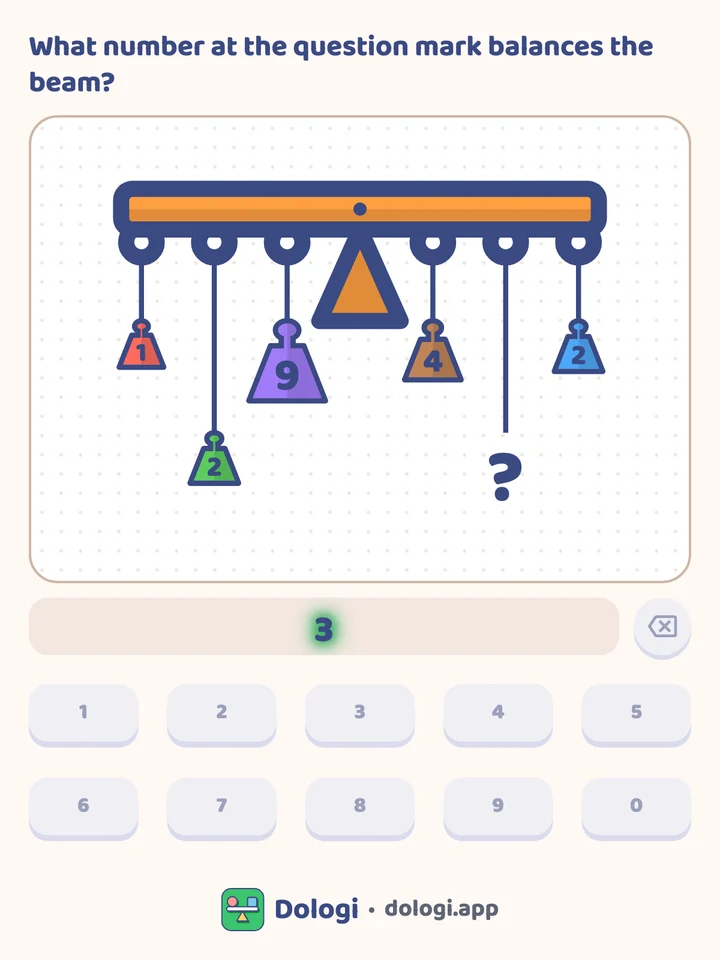
What it builds: Both sides of the lever carry several weights at different distances; your child multiplies each weight by its distance, adds up each side and finds the missing number. It is a linear equation in disguise and the principle behind balance scales, cranes and many everyday tools. Keep playing: with a ruler, a pencil and some coins, try stacking coins together at different distances until the ruler balances.
Did your child enjoy these challenging puzzles? The Dologi app has many more math puzzles of the same kinds, getting harder with age and with how your child plays, so each day they train multi-step reasoning in a way that feels more like a game than homework.