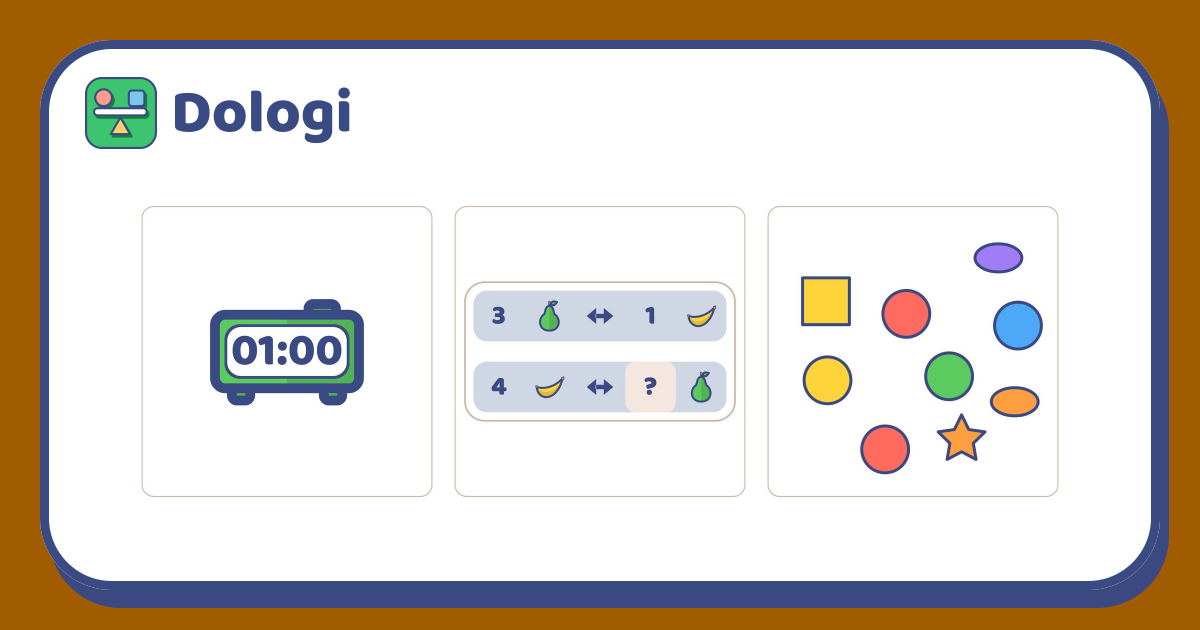
Before first grade, the most important thing in math is not memorizing sums but understanding numbers: seeing a group of dots and knowing how many, comparing bigger and smaller, measuring and counting things around the house. The five puzzles below come straight from the Dologi app, suit kids ages 5–6, and go from easy to harder, each one a different kind: counting, measuring, telling time, trading and counting with care.
How to use this post: show your child one picture at a time and let them think, pointing and counting out loud. The answer is behind the "Show answer" button under each picture. If your child gets stuck, ask what they see first rather than showing them how to do it.
Puzzle 1: Sort into boxes
Ages 5–6
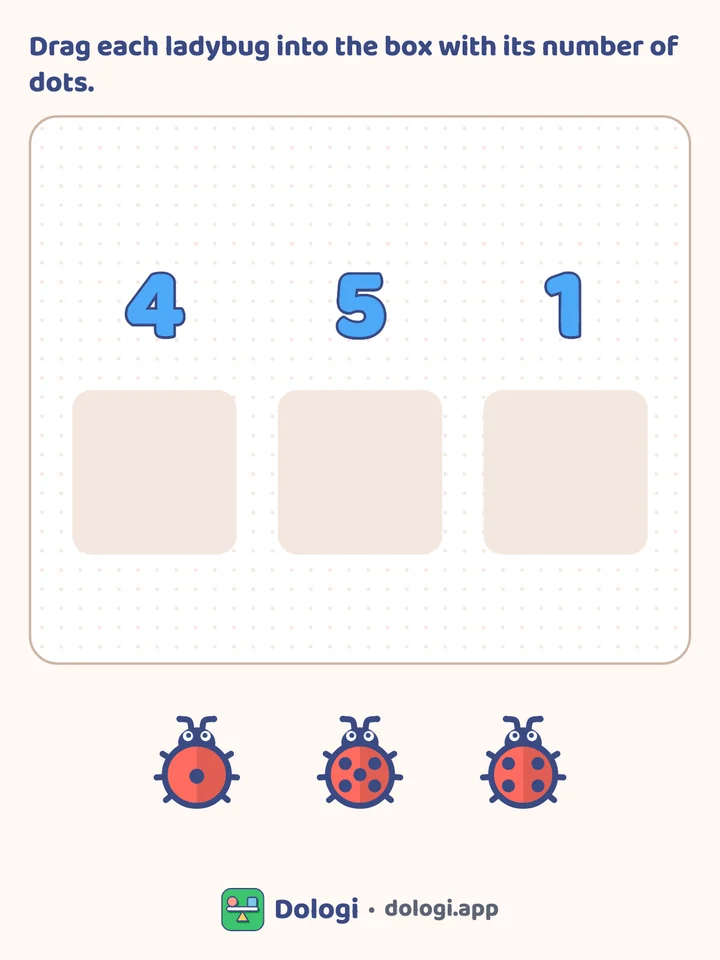
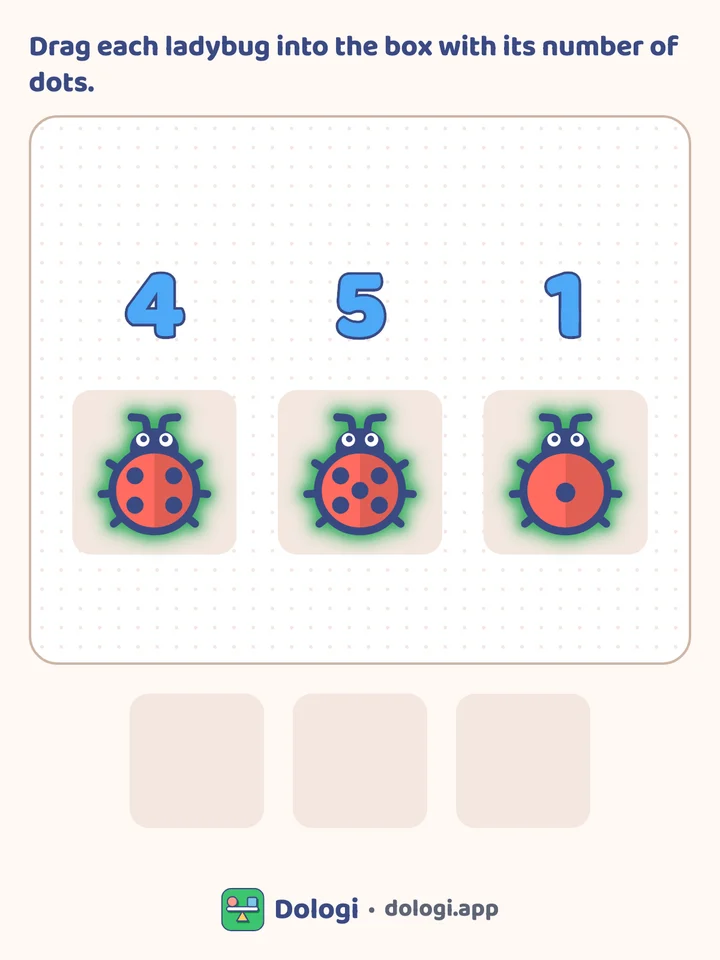
What it builds: Each frame has ten boxes with dots filled in rows of five, so your child can see how many dots there are without counting them one by one. Recognizing an amount at a glance is the base of mental math and keeps bigger numbers from feeling overwhelming later. Keep playing: put a few buttons in an ice cube tray with ten cups, cover it after two seconds and ask how many there were.
Puzzle 2: Fill the jug
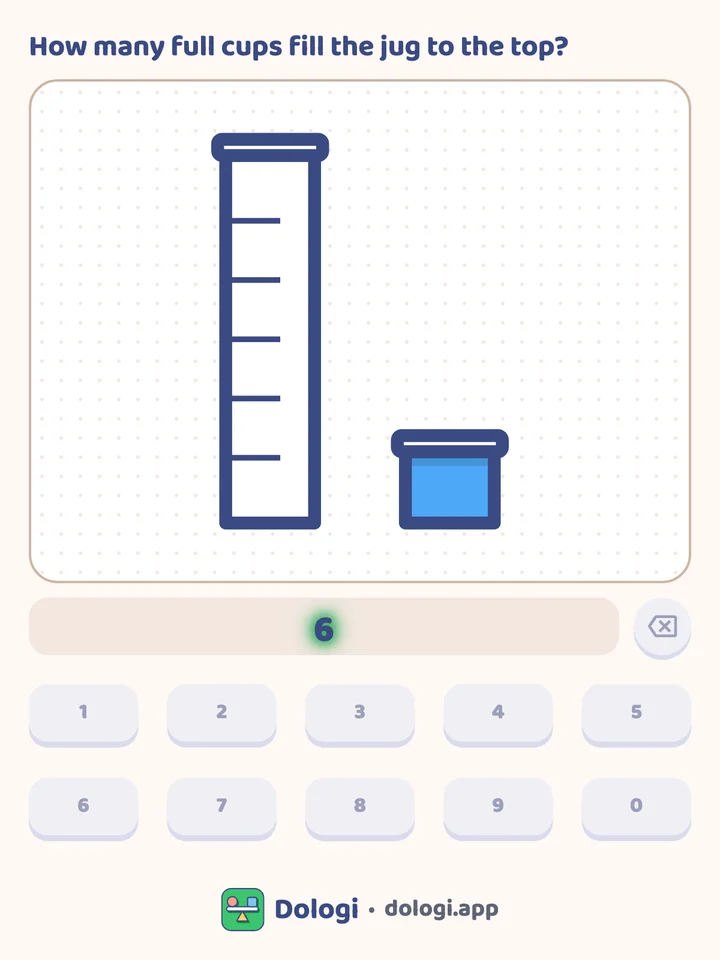
Ages 5–6
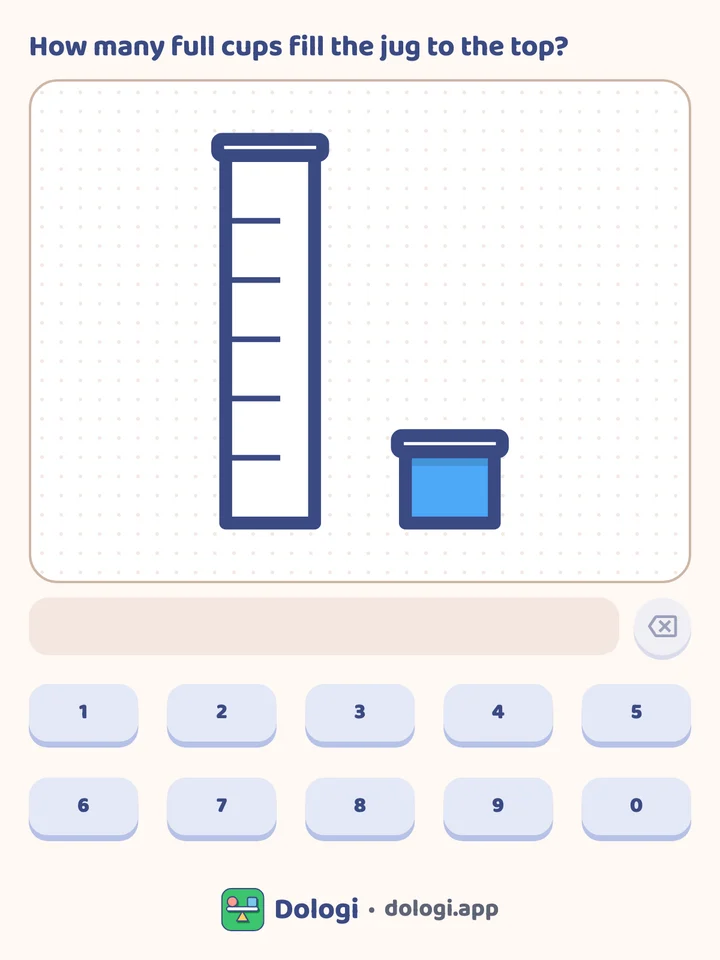
What it builds: Your child compares the height of the cup with the marks on the jug and imagines pouring one cup at a time until the jug is full. This is the start of measuring: using a small thing as the unit for a big one, like measuring a table in hand spans or rice in scoops. Keep playing: give your child a small cup and an empty bottle, guess how many cups of water it takes, then pour and check.
Puzzle 3: What time is it?
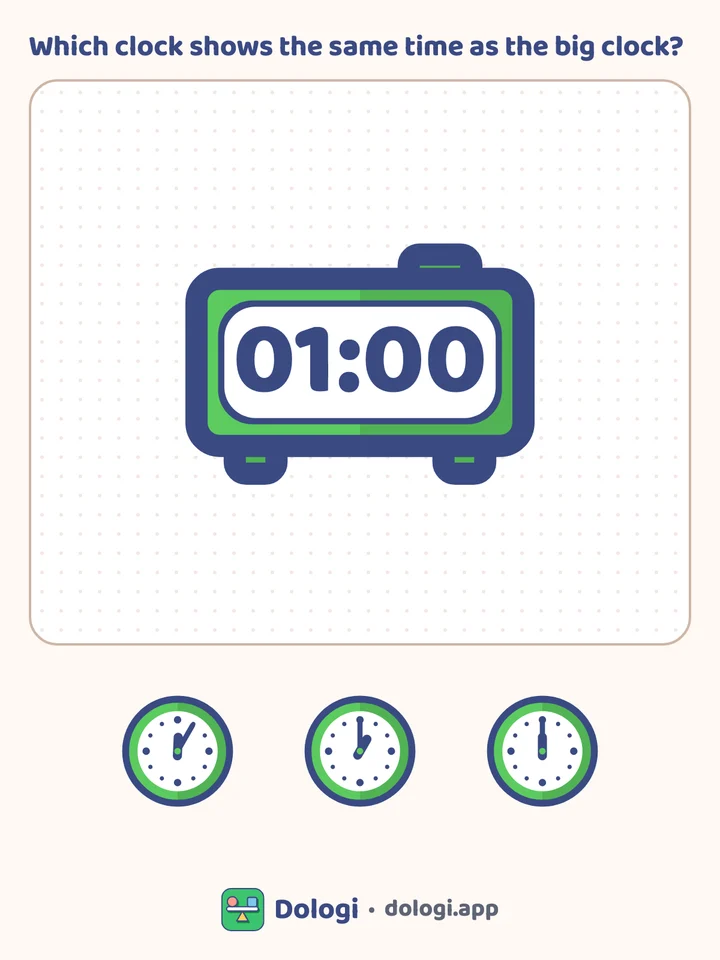
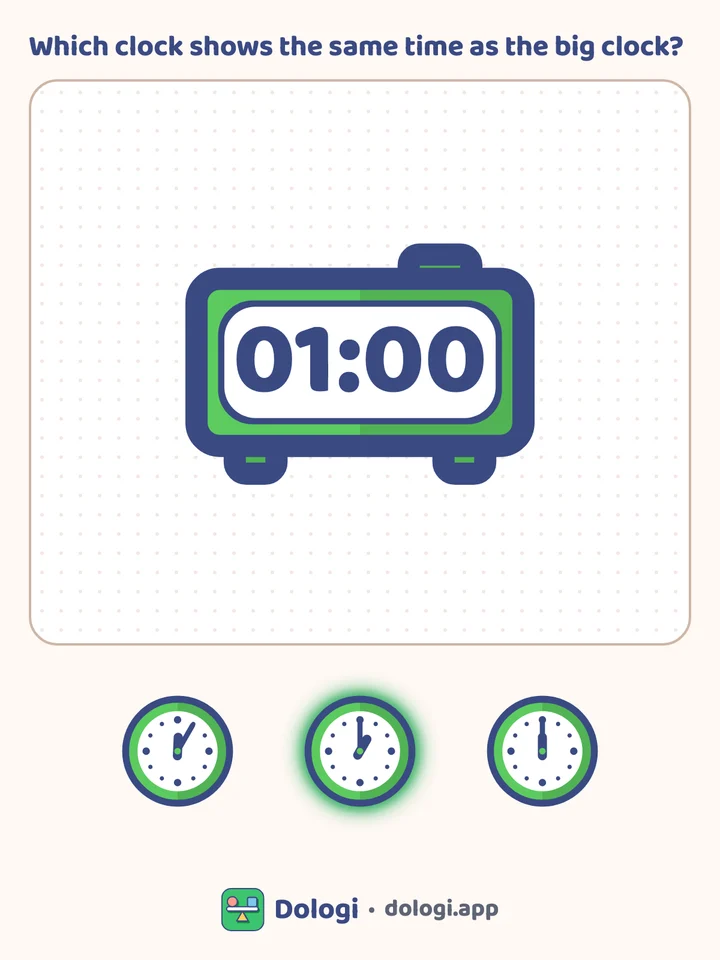
Ages 5–6
What it builds: Your child reads the time on the digital clock, then finds the clock with hands showing the same time, noticing that the short hand shows the hour and the long hand the minutes. Linking the two kinds of clocks builds a sense of time, from mealtime to bedtime, and gets them ready for clock lessons in first grade. Keep playing: whenever it is exactly on the hour, call your child to the wall clock and ask which number the short hand points to.
Puzzle 4: Fruit swap
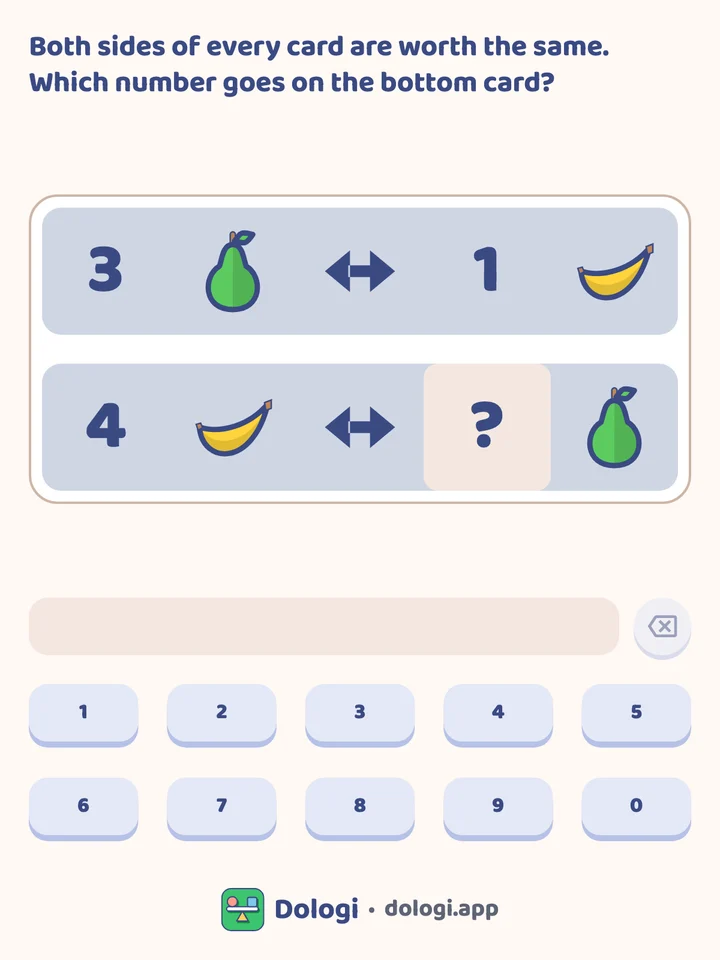
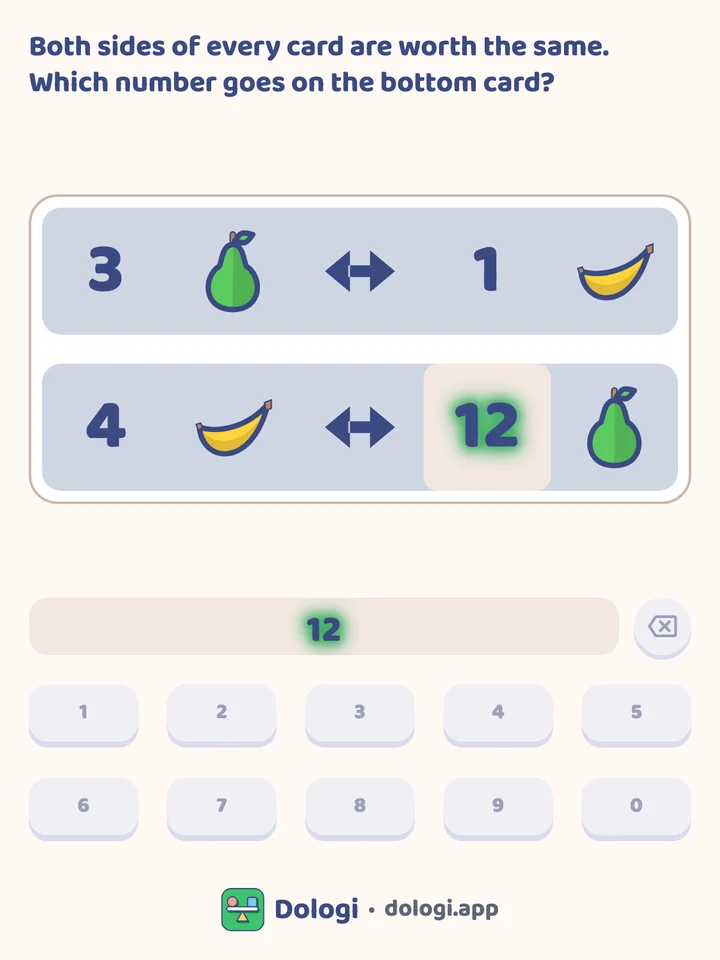
Ages 5–6
What it builds: The top card tells how many pears trade for one banana; your child uses that to work out the trade for several bananas, perhaps counting on in groups. It is a first feel for multiplication as adding equal groups, and for trading and paying in everyday life. Keep playing: play shop with toy coins, give each item a price of a few coins, and ask how much two or three of them cost.
Puzzle 5: Count and answer
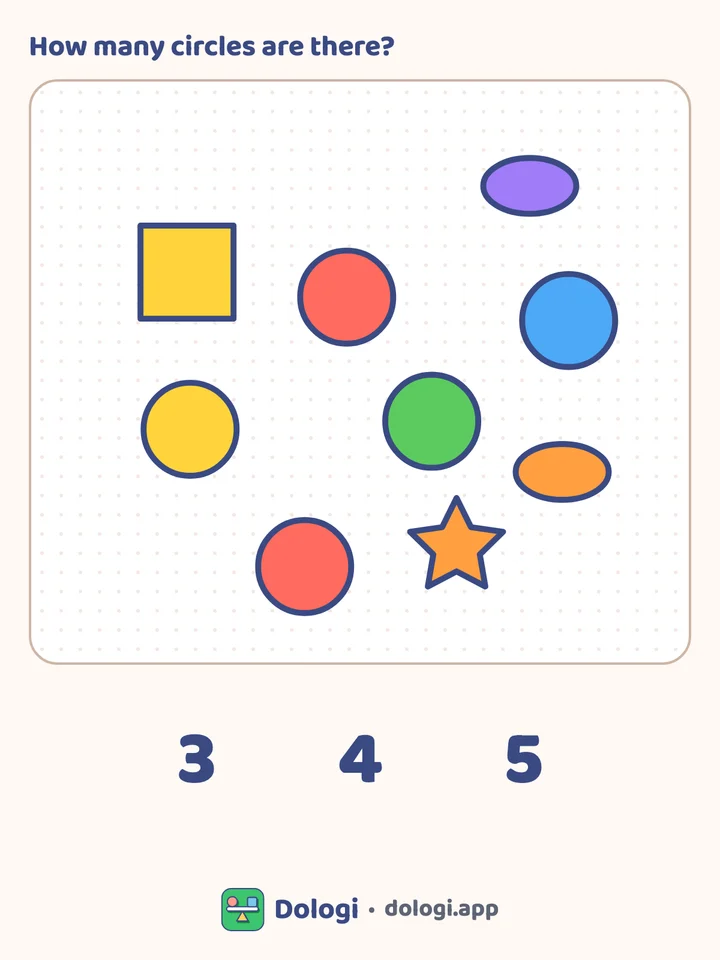
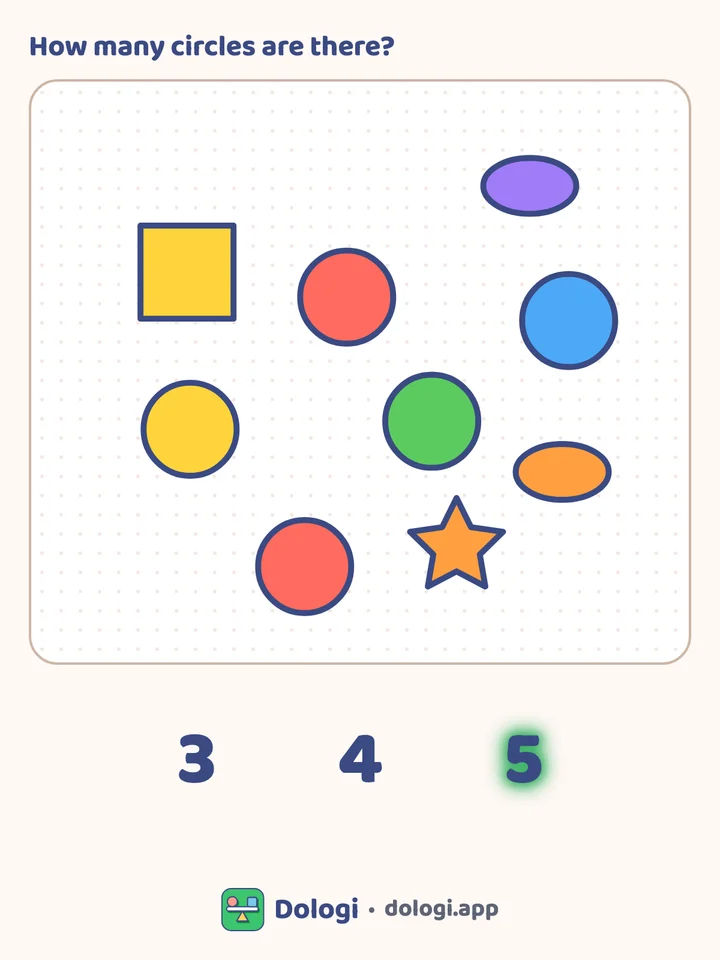
Ages 5–6
What it builds: The picture has many shapes that look alike; your child must pick out the right kind first, then count without missing any or counting one twice. Counting selectively like this trains sharp eyes and carefulness, both needed for schoolwork. Keep playing: pour a handful of toys on the table and ask your child to count only the red ones, or only the ones with wheels.
Did your child enjoy these puzzles? The Dologi app has many more math puzzles of the same kinds, getting harder with age and with how your child plays, so a little play with numbers, clocks and measuring each day never feels like homework.