This is a follow-up for kids ages 5–6, with five new math puzzles straight from the Dologi app. They help your child get used to what comes up in first grade: number order, small sums, comparing amounts and adding up steps along a path, all in pictures so they do not need to read yet.
How to use this post: show your child one picture at a time, read the question aloud, then let them think, counting on their fingers if they like. The answer is behind the "Show answer" button under each picture. Praise your child for the effort of thinking, not only for getting it right.
Puzzle 1: Connect the dots
Ages 5–6
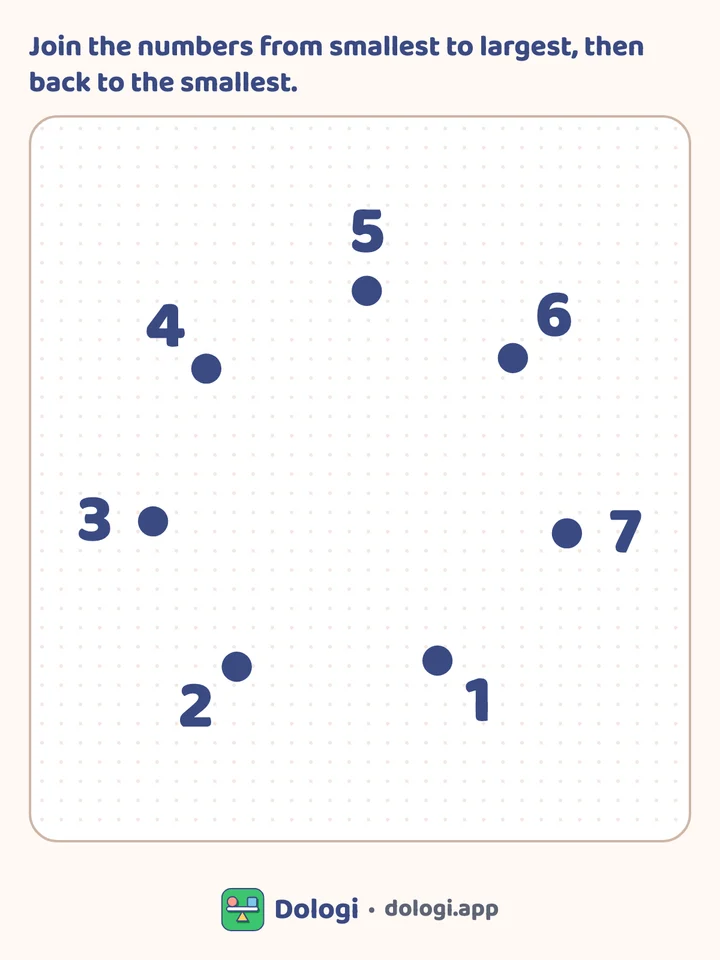
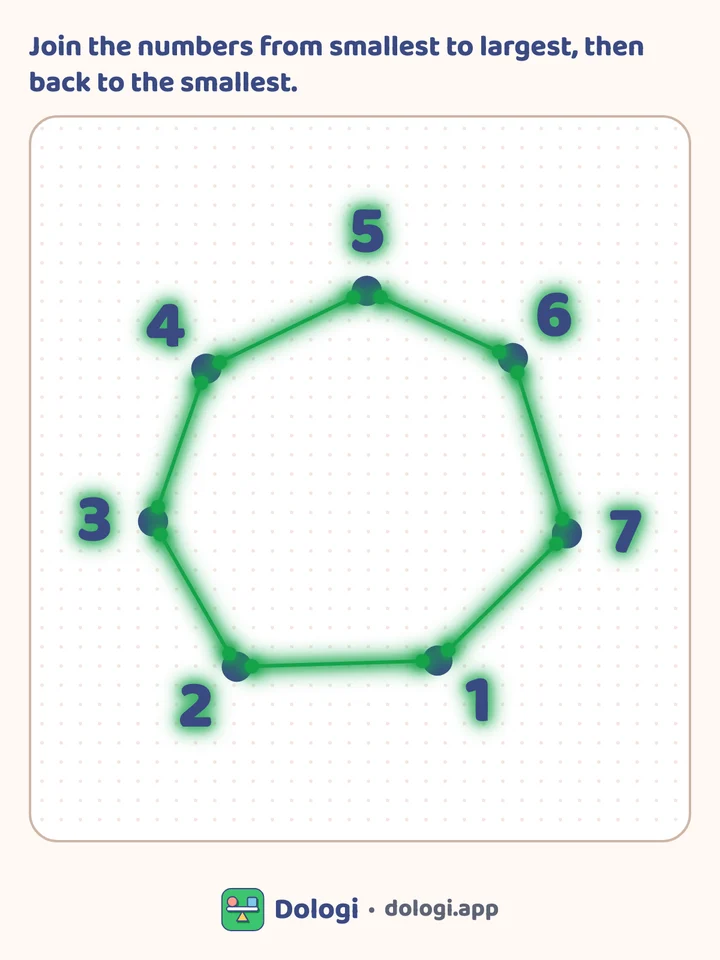
What it builds: Your child finds number 1, joins each number to the next one, and finally goes back to the start, so the lines make a closed shape. Reading numbers in order across a scattered picture helps them learn the number sequence and practice pencil control. Keep playing: mark a few numbered dots on paper in the shape of a star or a house, let your child connect them and guess what the picture is.
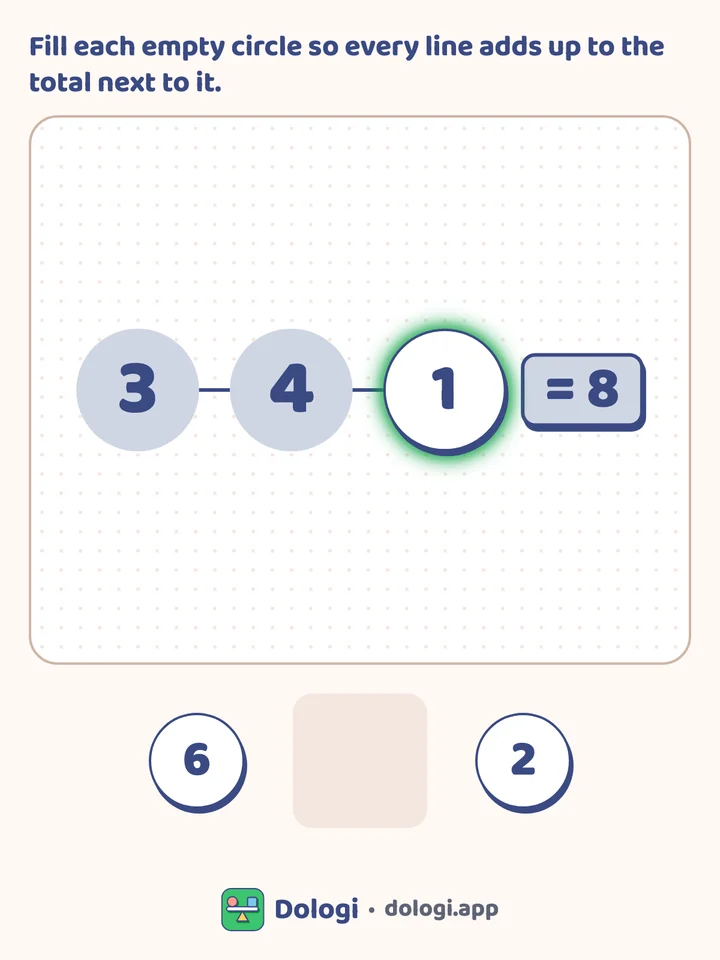
Puzzle 2: Add along the lines
Ages 5–6
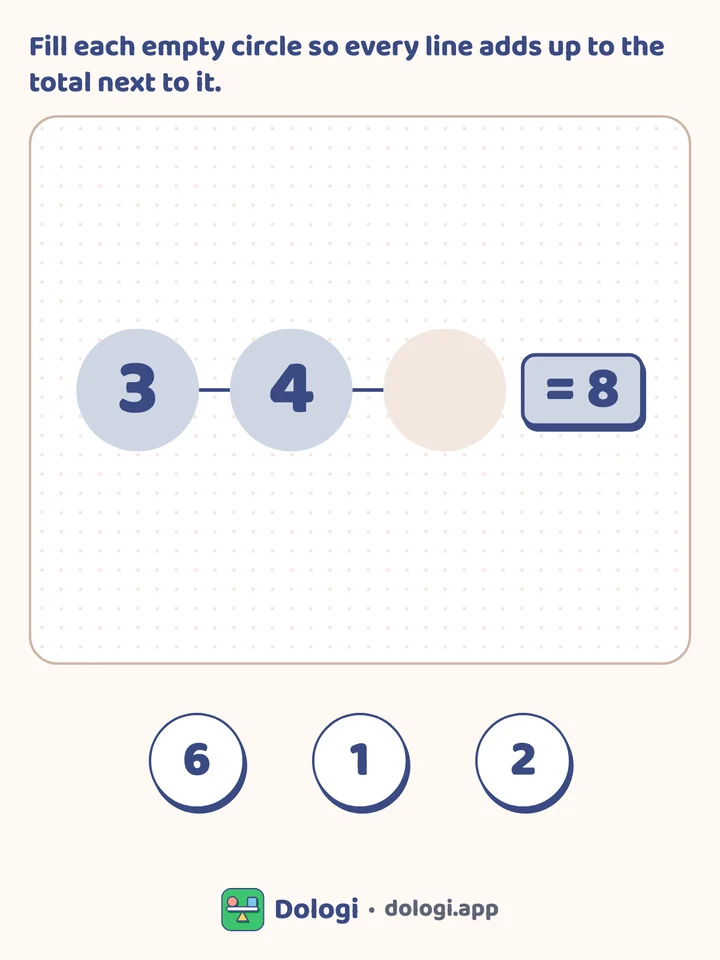
What it builds: Your child adds the numbers already there, then works out how many are still missing to reach the number at the end of the row. This is subtraction seen another way, "how many more to make it", a way of thinking that speeds up mental math later. Keep playing: put a few candies on the table, say how many your child will get in total, and ask how many more you need to hand over.
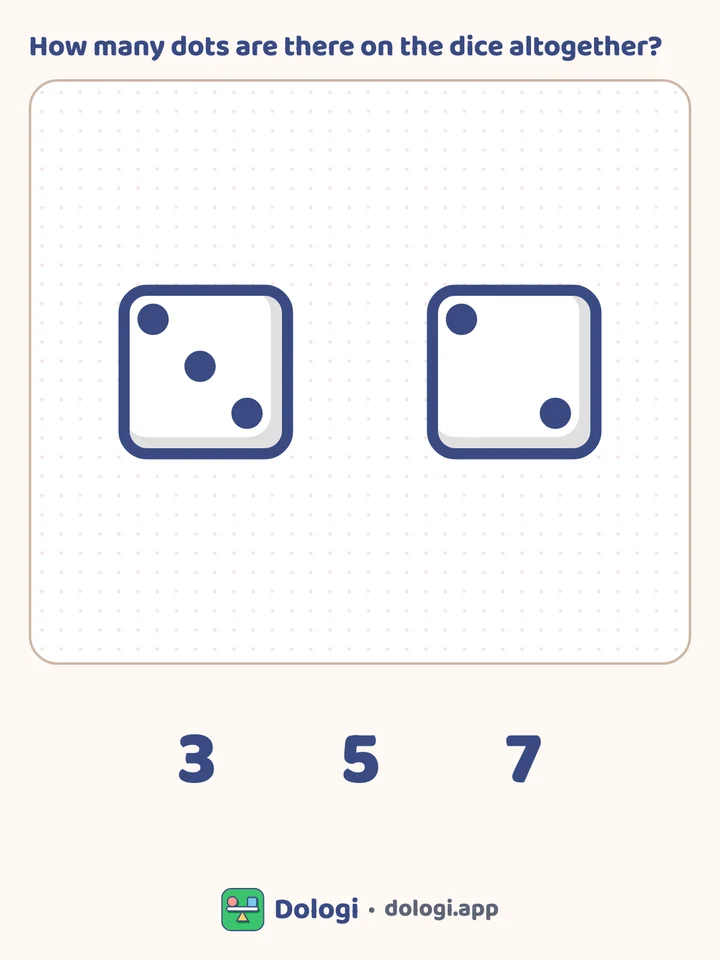
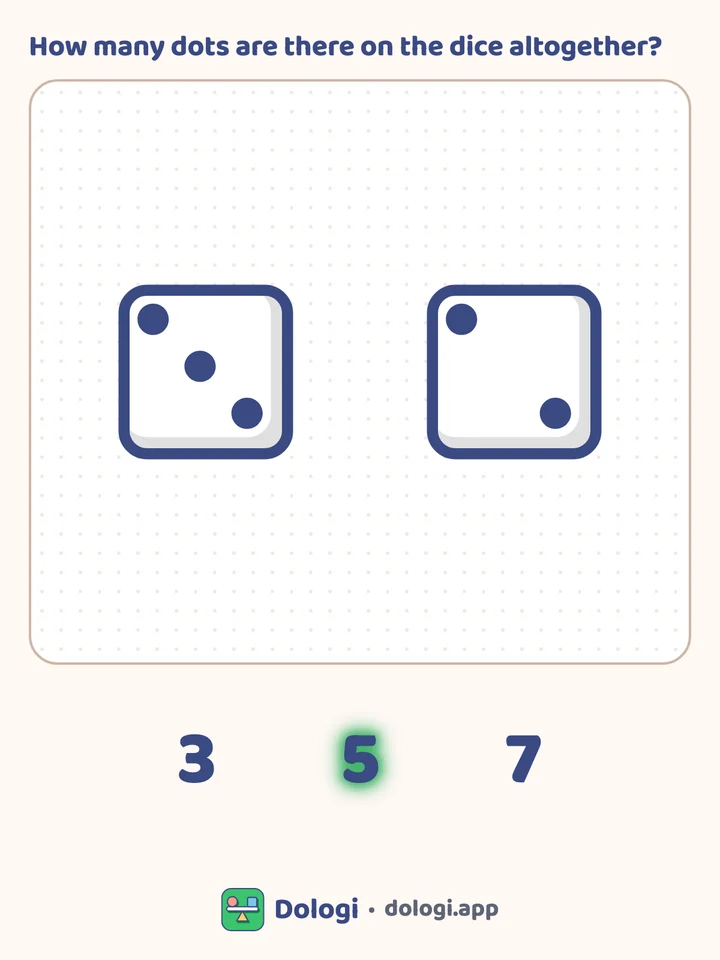
Puzzle 3: Add and answer
Ages 5–6
What it builds: Your child counts the spots on each die and puts them together, and gradually starts to recognize a die face without counting every spot. Recognizing amounts from familiar patterns is a stepping stone to mental addition. Keep playing: roll two dice each turn; whoever says the total first moves one step on a homemade board.
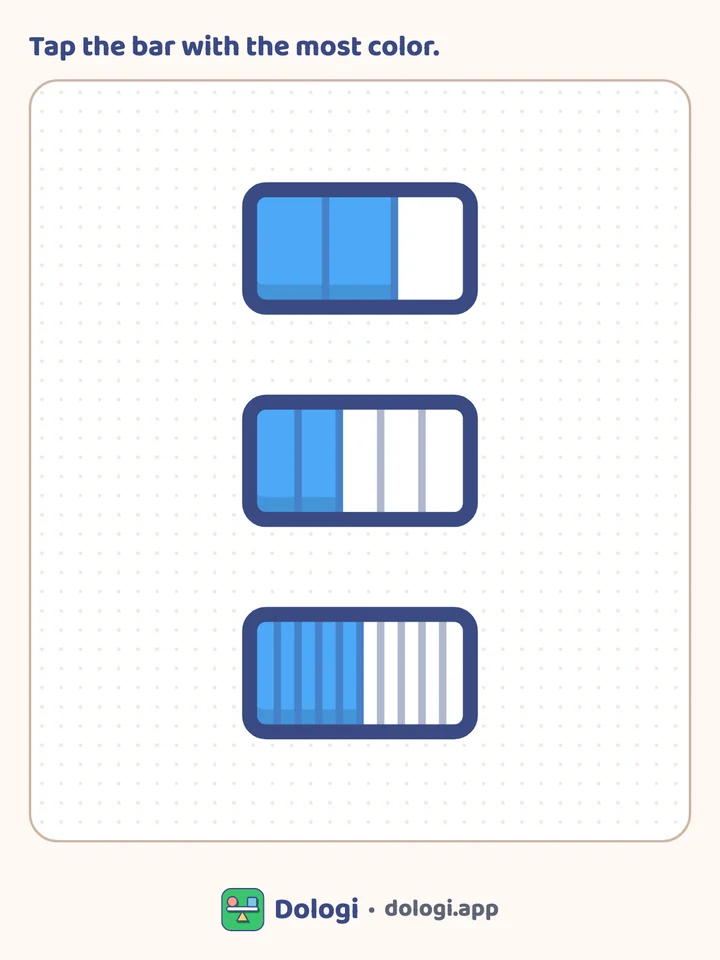
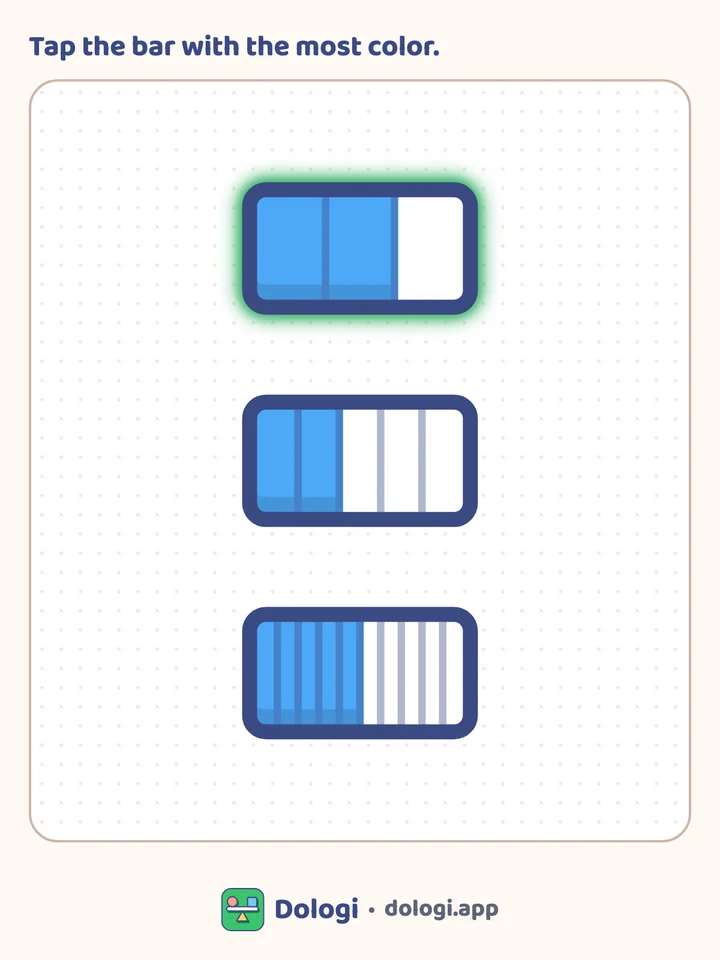
Puzzle 4: Equal parts
Ages 5–6
What it builds: The bars are the same length but split into different numbers of parts, so the bar with the most colored boxes is not always the most colored; your child has to compare the colored part with the whole bar. It is an early, visual meeting with fractions, before learning their names. Keep playing: pour different amounts of water into a few identical glasses and ask which one holds the most.
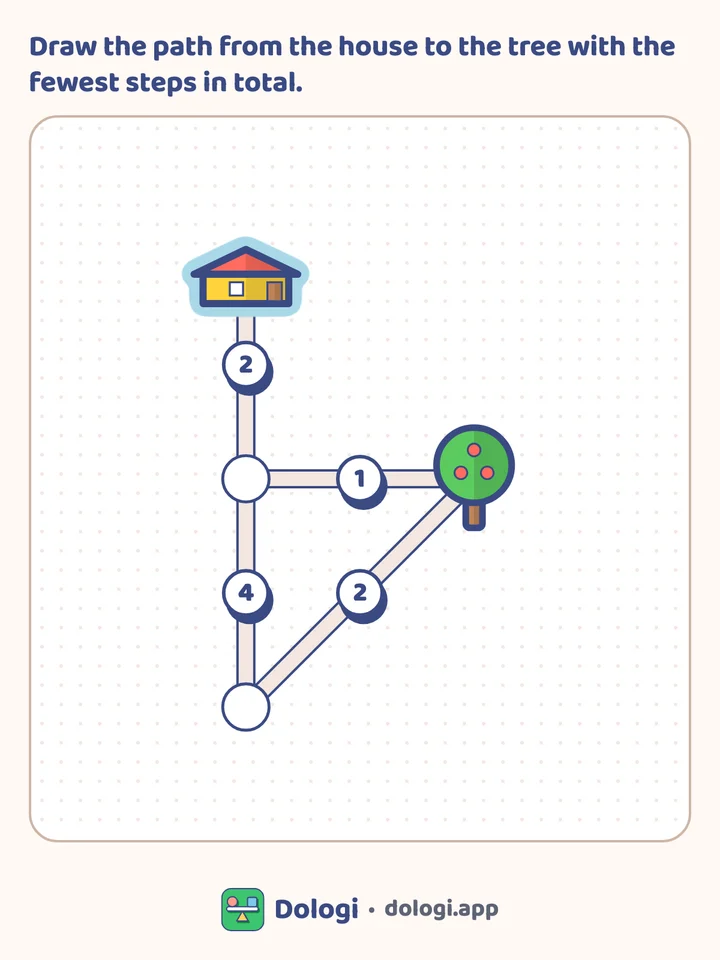
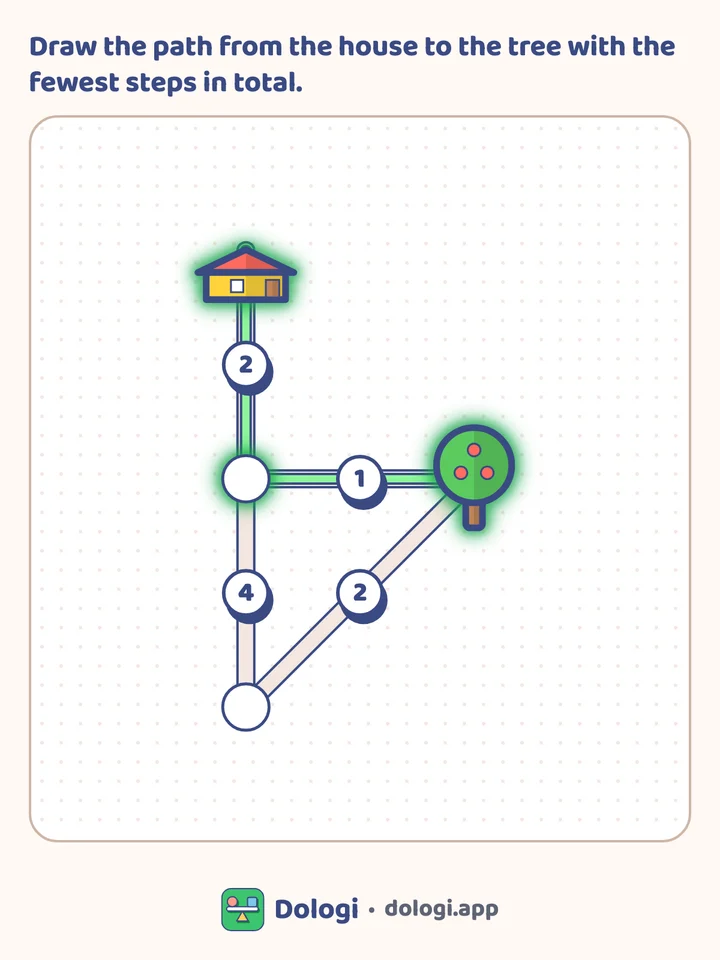
Puzzle 5: Fewest steps
Ages 5–6
What it builds: Your child adds the steps on each segment and compares two ways to reach the tree to see which one takes fewer steps. It practices adding small numbers and the habit of comparing before choosing. Keep playing: at home, count steps together from the living room to the kitchen by two different routes and see which one is shorter.
Did your child enjoy these puzzles? The Dologi app has many more math puzzles of the same kinds, getting harder with age and with how your child plays, so a little daily play with numbers, adding and comparing feels as light as a game.