This third post for kids ages 5–6 brings together ten math puzzles from the Dologi app, ordered from easy to harder. Your child will count without skipping anything, compare more and fewer, read a clock face, measure water with a cup, notice how many sides a shape has and add small numbers in their head: things they will meet again in first grade, but here everything is in pictures, so they do not need to read yet.
How to use this post: show your child one picture at a time, read the question aloud, then let them think, pointing or counting out loud if they like. Once they have an answer, tap "Show answer" under the picture and check it together. If a puzzle feels hard, come back to it another day; there is no need to do them all at once.
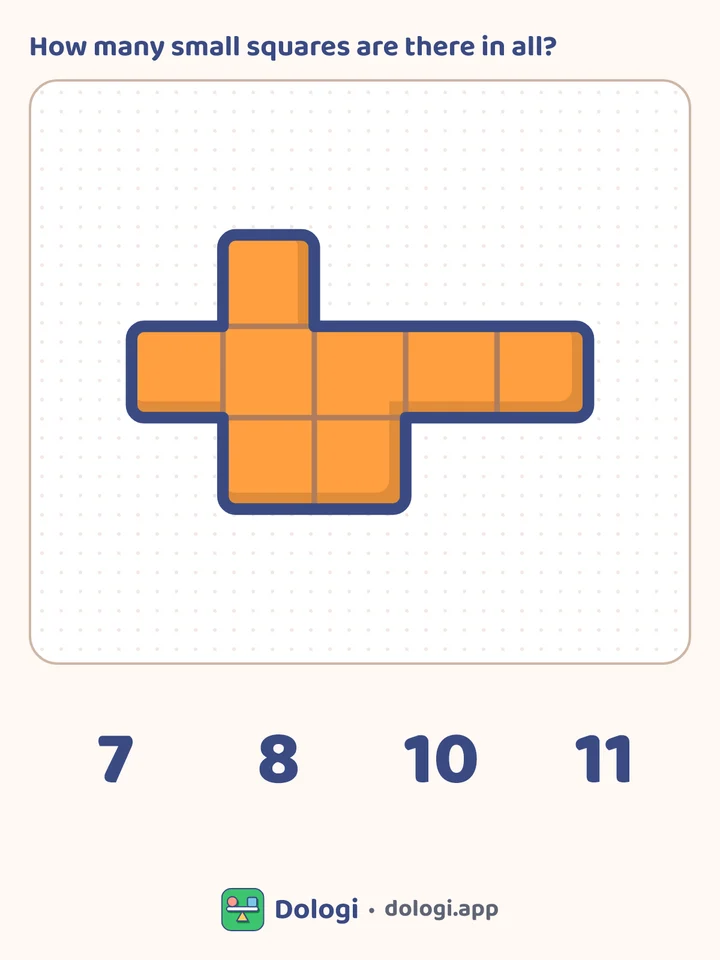
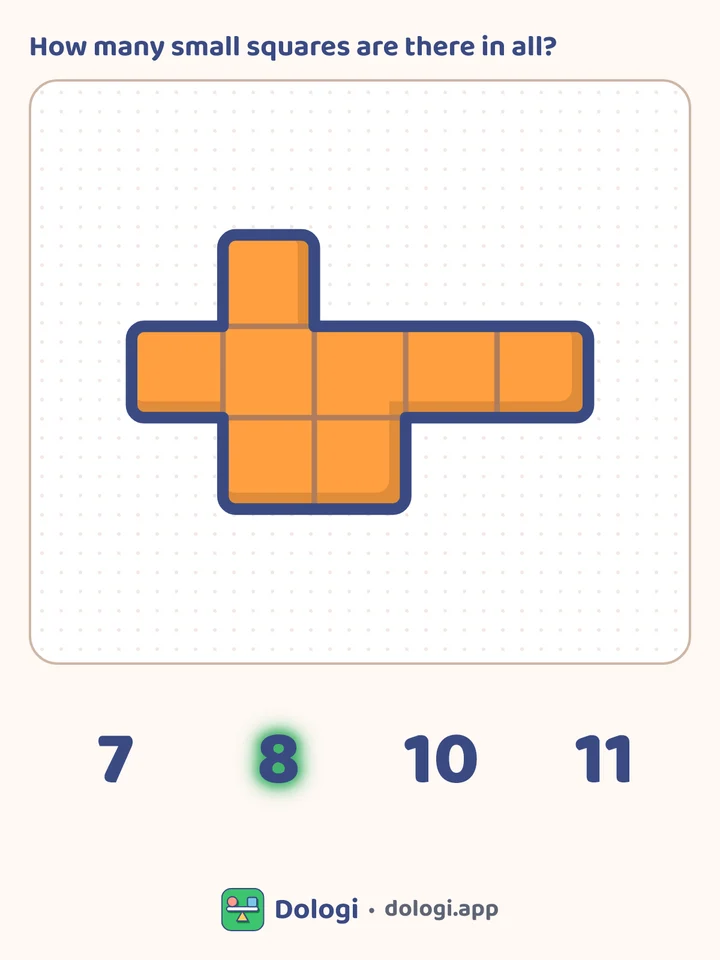
Puzzle 1: Count the squares
Ages 5–6
What it builds: The squares are joined into one shape, so your child has to count row by row, or keep track of which squares are done, to avoid missing one or counting one twice. This habit of counting in order helps with messy piles of things and, later, with measuring area. Keep playing: arrange a few paper squares into any shape and ask how many pieces there are in all.
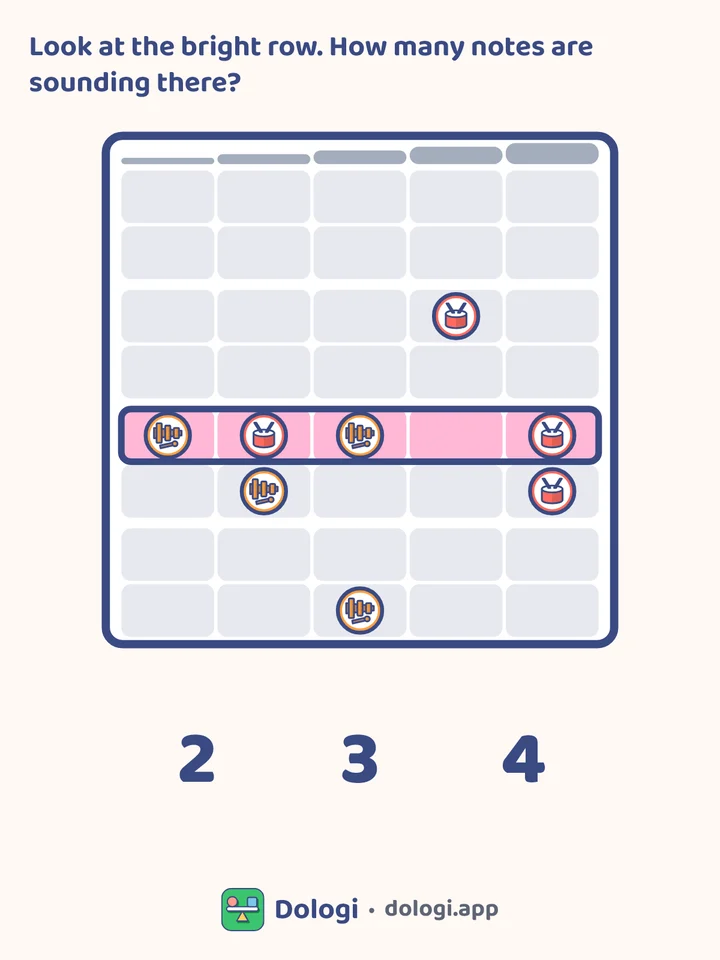
Puzzle 2: How many sounds?
Ages 5–6
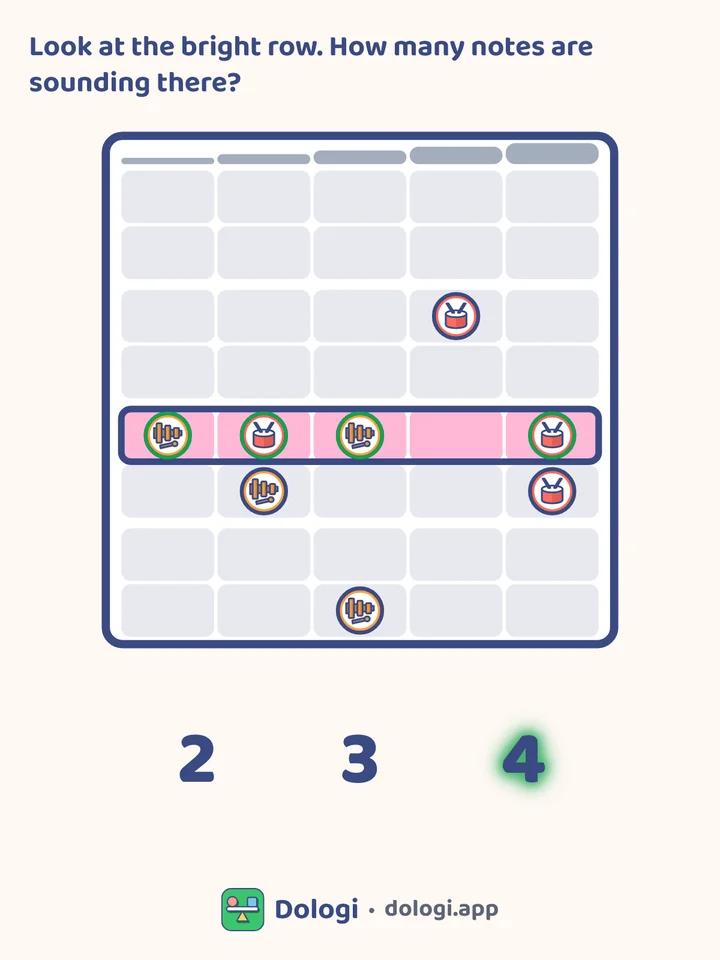
What it builds: The music grid has many rows, but the question is only about the highlighted one, so your child has to focus on that single row and ignore the rest. Counting exactly where you are asked to is a skill they will use whenever they read a table or a chart at school. Keep playing: the whole family taps a beat on the table, you call out "stop" and ask how many people were tapping at that moment.
Hint: Count the notes, not the instruments: one instrument can play two notes at once.
Puzzle 3: Put in order
Ages 5–6
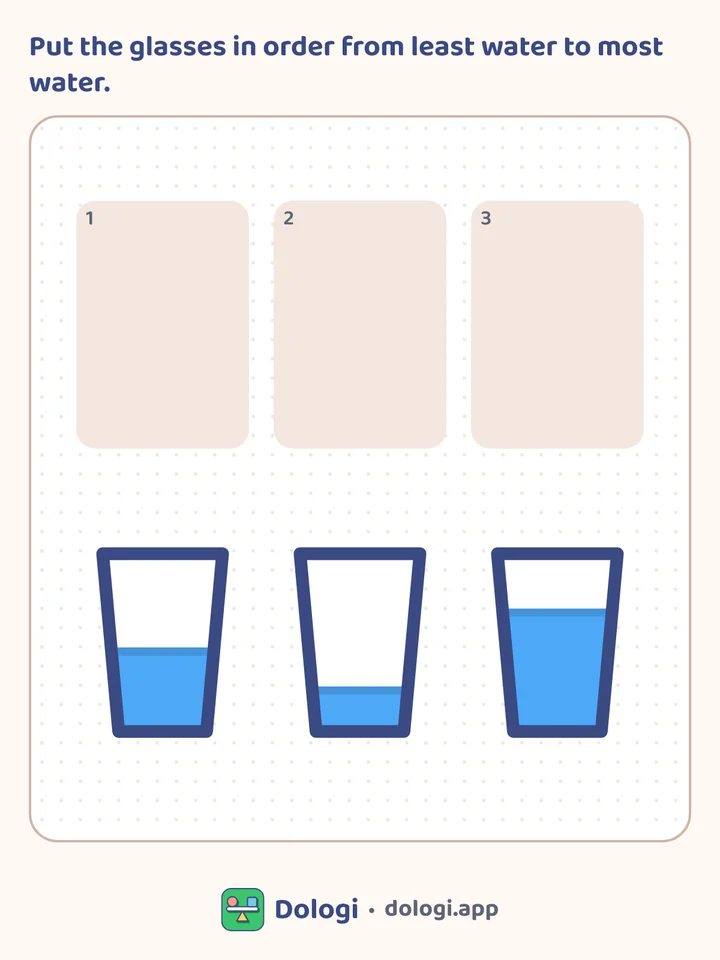
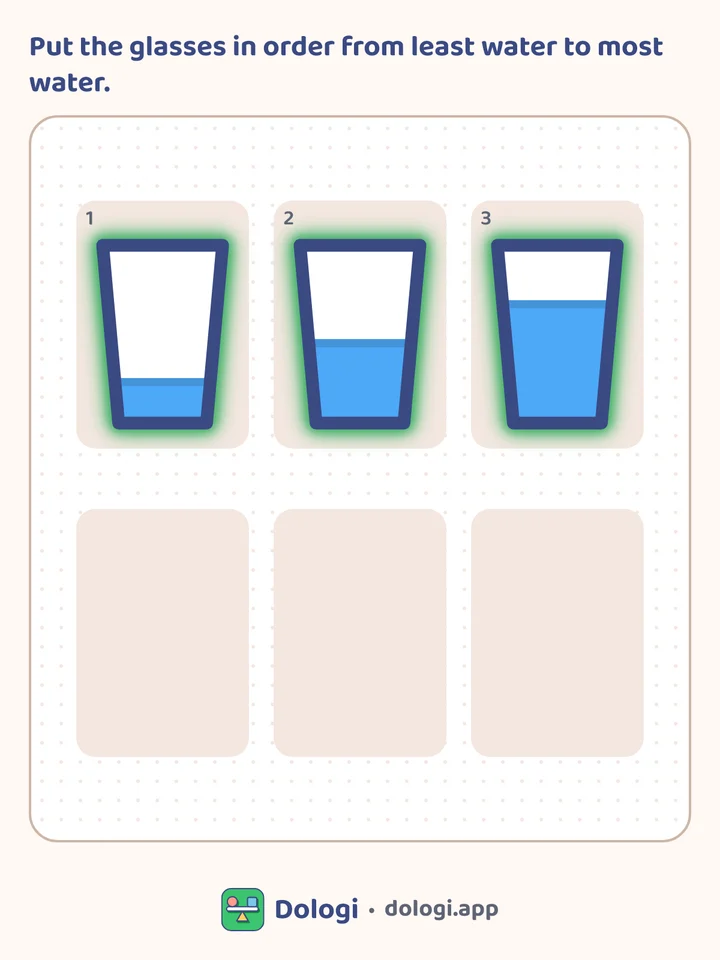
What it builds: Your child looks at the water level in each cup, compares which holds less and which holds more, and places them in the three boxes in order. Comparing amounts and lining them up is the groundwork for "more" and "less", and later for measuring at school. Keep playing: pour different amounts of water into three identical glasses and ask them to line the glasses up from least to most.
Puzzle 4: Tell the time
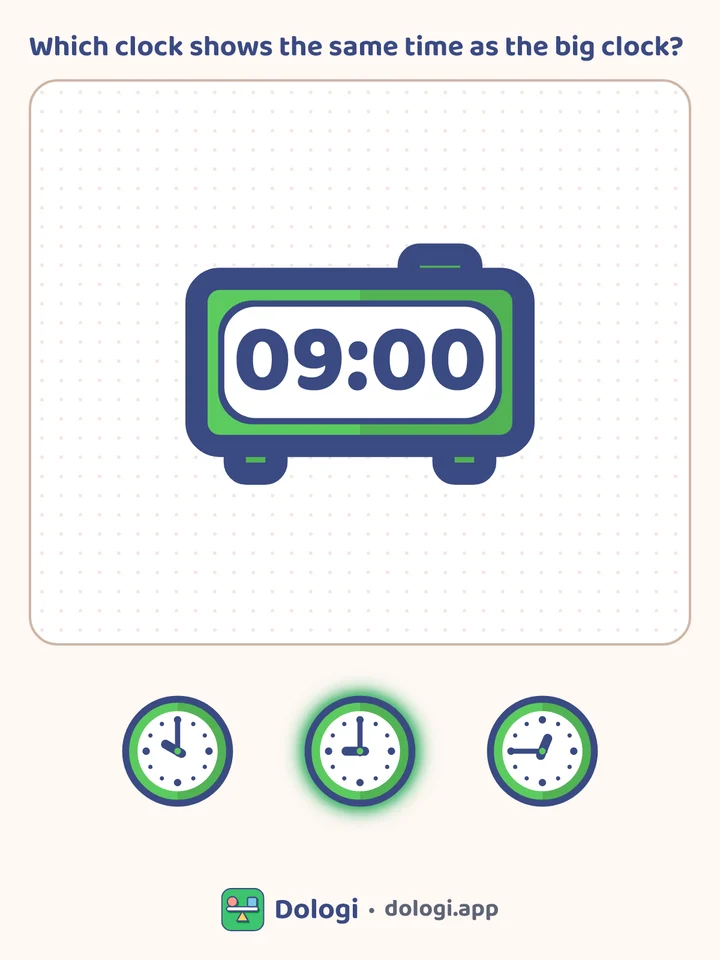
Ages 5–6
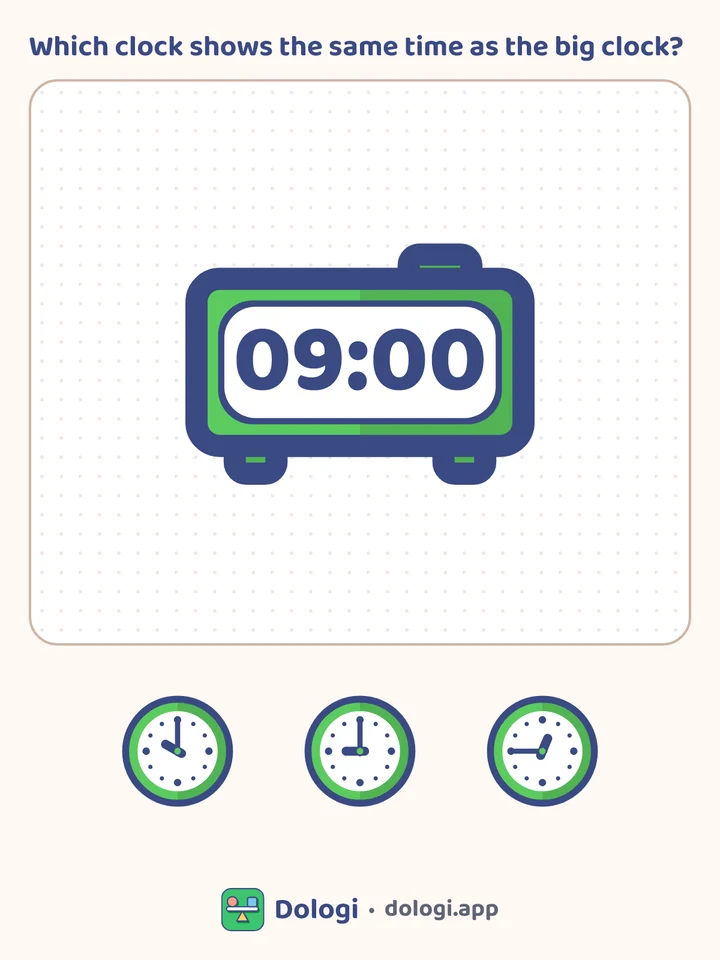
What it builds: Your child reads the time on the digital clock, then looks for the clock with hands that shows the same time, checking which number the short hand points to and where the long hand is. Knowing that one time can be shown in two ways helps them keep track of school time and mealtimes, and it is a first-grade topic too. Keep playing: at each meal, point to the wall clock and ask which number the short hand is pointing to.
Puzzle 5: Count the fingers
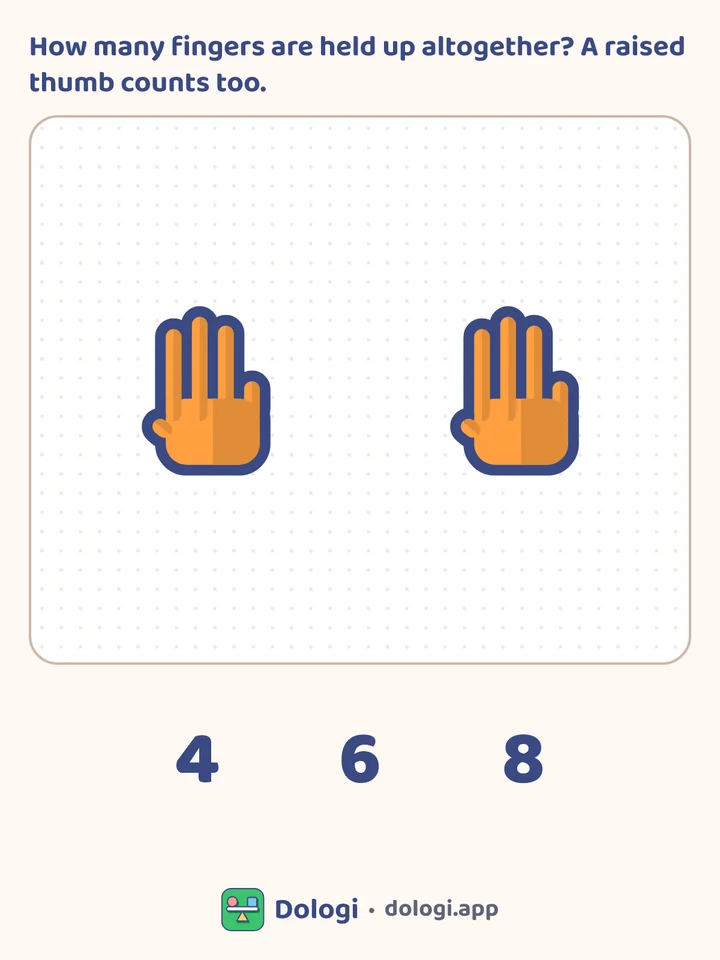
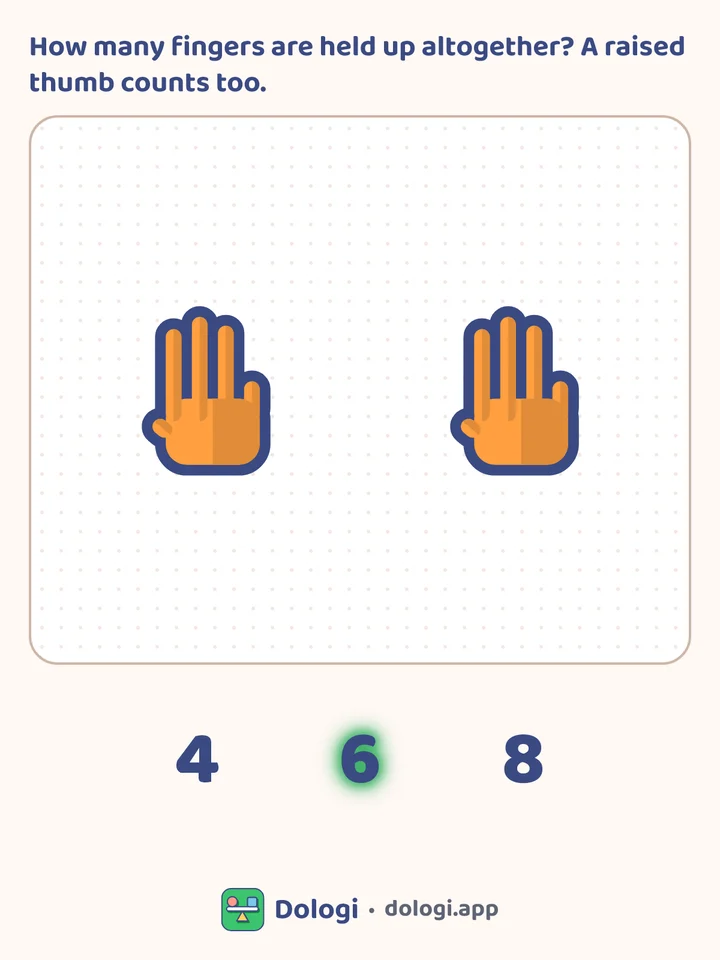
Ages 5–6
What it builds: Your child counts the raised fingers on both hands, looking closely so a folded finger does not get counted by mistake. Fingers are a set of counters they carry everywhere, and putting two hands together is the first step toward adding. Keep playing: hold up a few fingers on each hand, let your child say the total quickly, then swap roles so they set the puzzle for you.
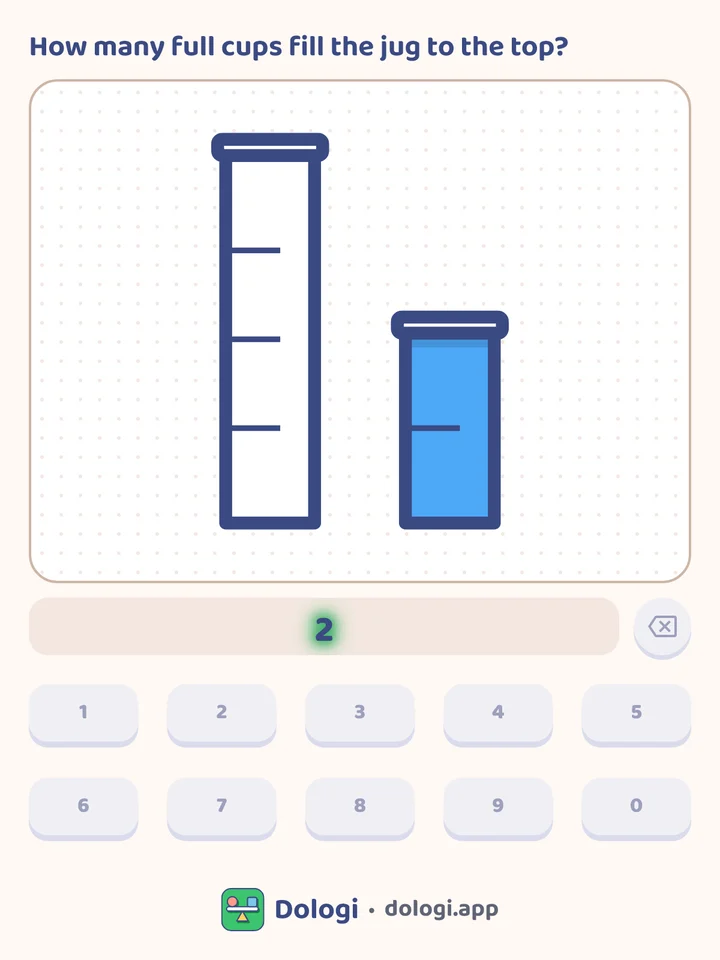
Puzzle 6: Fill the jug
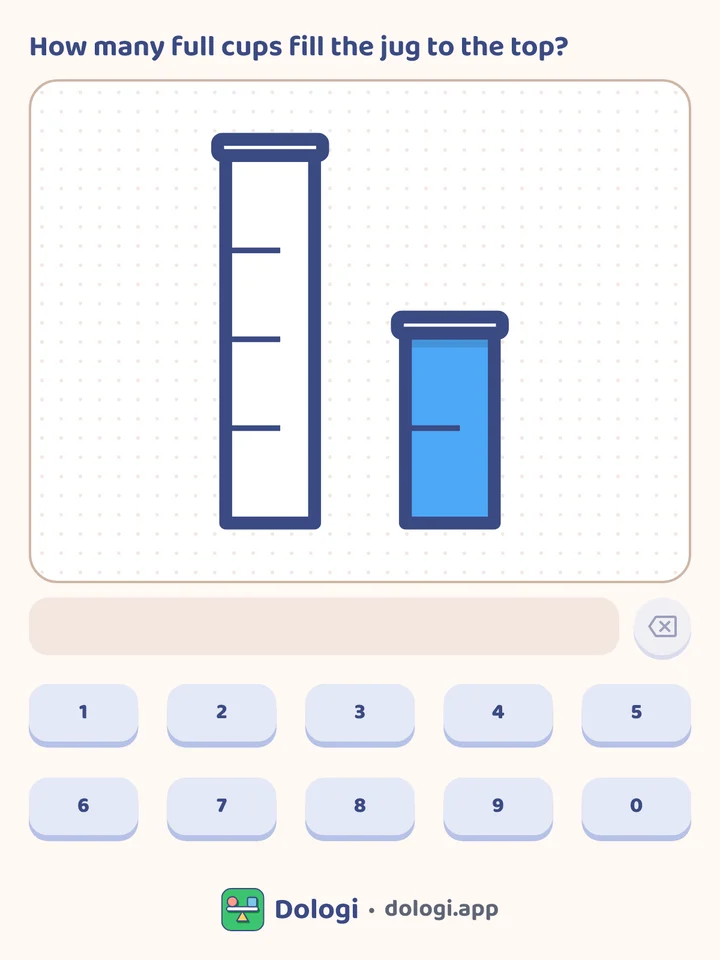
Ages 5–6
What it builds: The jug and the cup both have marks on them, so your child can compare one cup of water with the spaces on the jug instead of guessing by eye. This is measuring with a small unit, just like measuring length with hand spans or a ruler later on. Keep playing: at bath time, pour water into an empty bottle with a small cup and count together how many cups fill it.
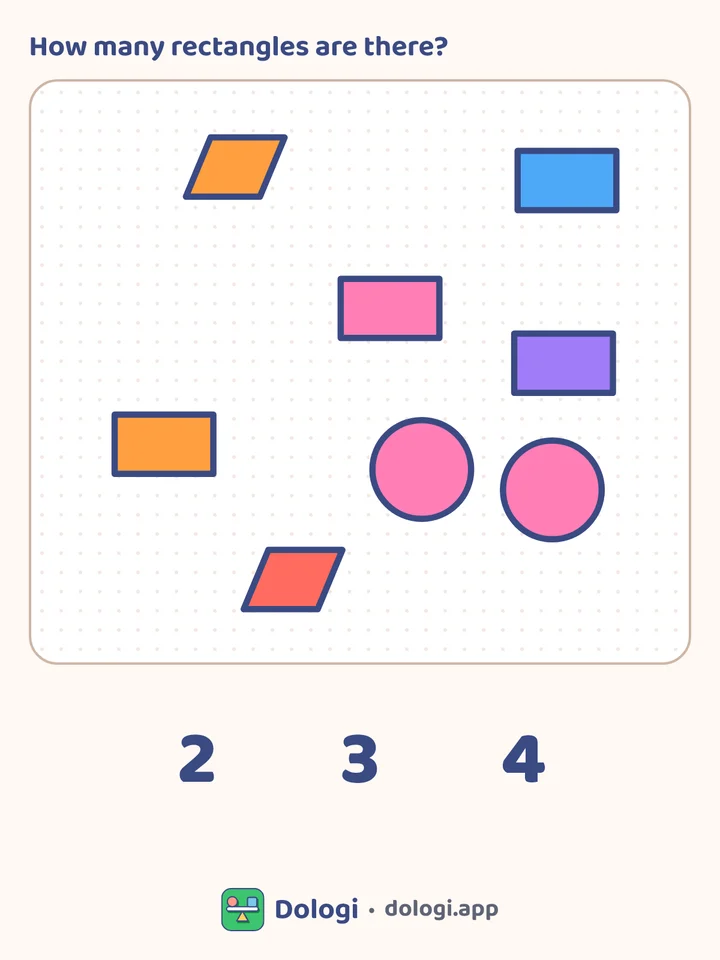
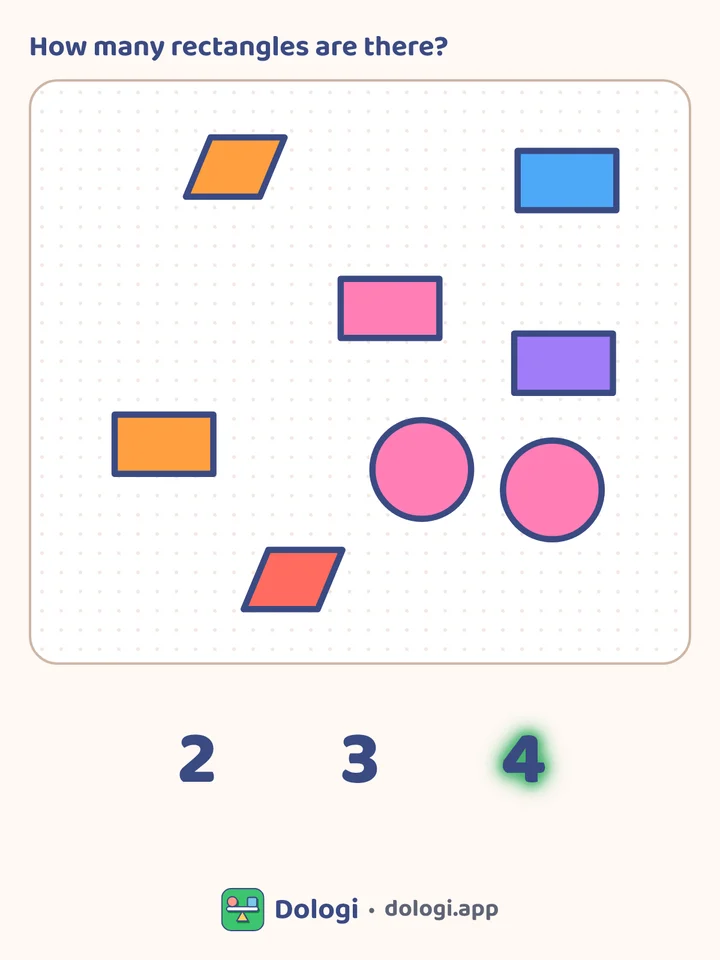
Puzzle 7: Count the rectangles
Ages 5–6
What it builds: Some shapes in the frame look almost alike, so your child has to look carefully at the corners to decide which ones really are rectangles before counting. Recognizing shapes by their features, not by color or size, makes first-grade geometry easier. Keep playing: walk around the house and see who can find more objects with a rectangle-shaped face.
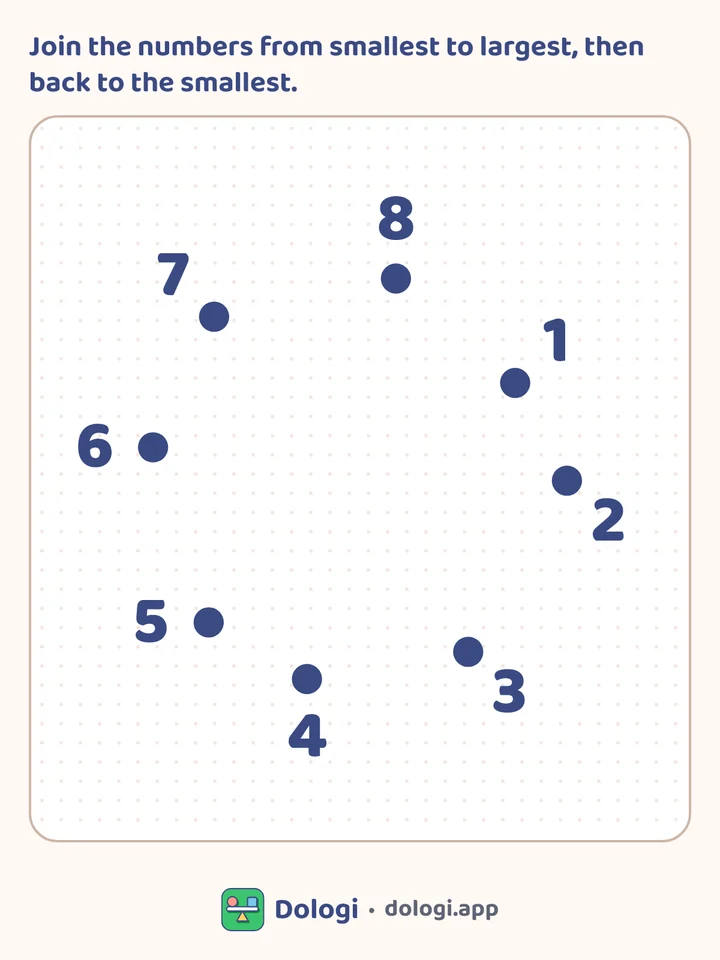
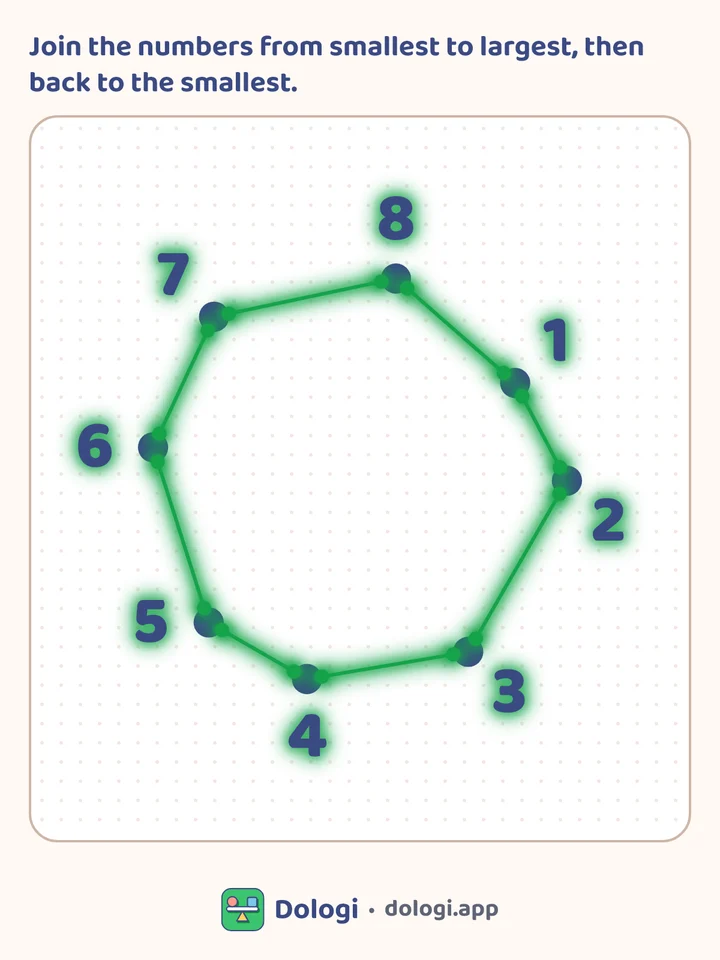
Puzzle 8: Connect the dots
Ages 5–6
What it builds: Your child finds the smallest number and joins it to the next one, then the next, so they need to know the number order and spot the right dot among numbers scattered across the frame. It practices counting order as well as a steady hand when drawing one continuous line. Keep playing: write the numbers 1 to 8 on scraps of paper, scatter them on the floor and let your child hop to them in order.
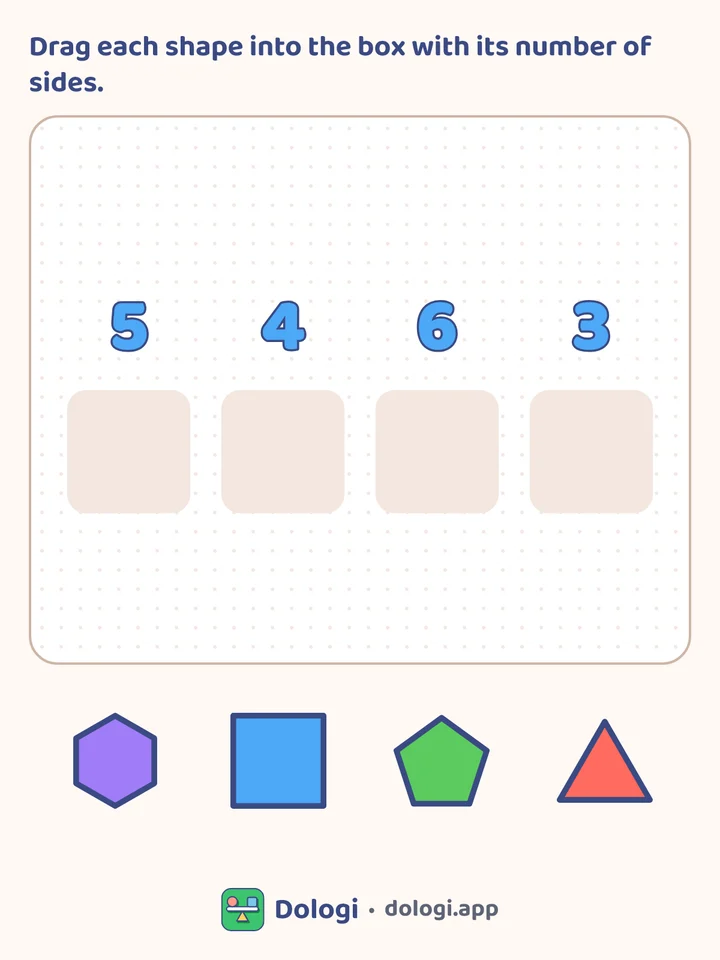
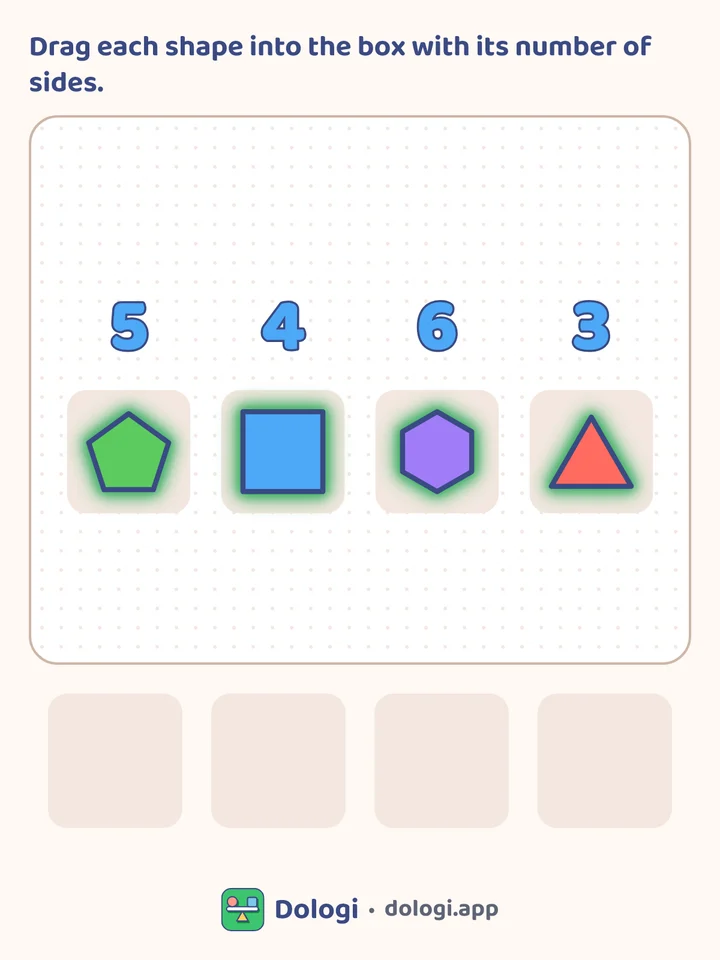
Puzzle 9: Match the sides
Ages 5–6
What it builds: Your child counts the sides of each shape, touching each side so none gets missed, and then places the shape in the box with the matching number. Counting sides is how children start telling shapes apart and naming them at school. Keep playing: build shapes with different numbers of sides from toothpicks or straws and ask which one has the most sides.
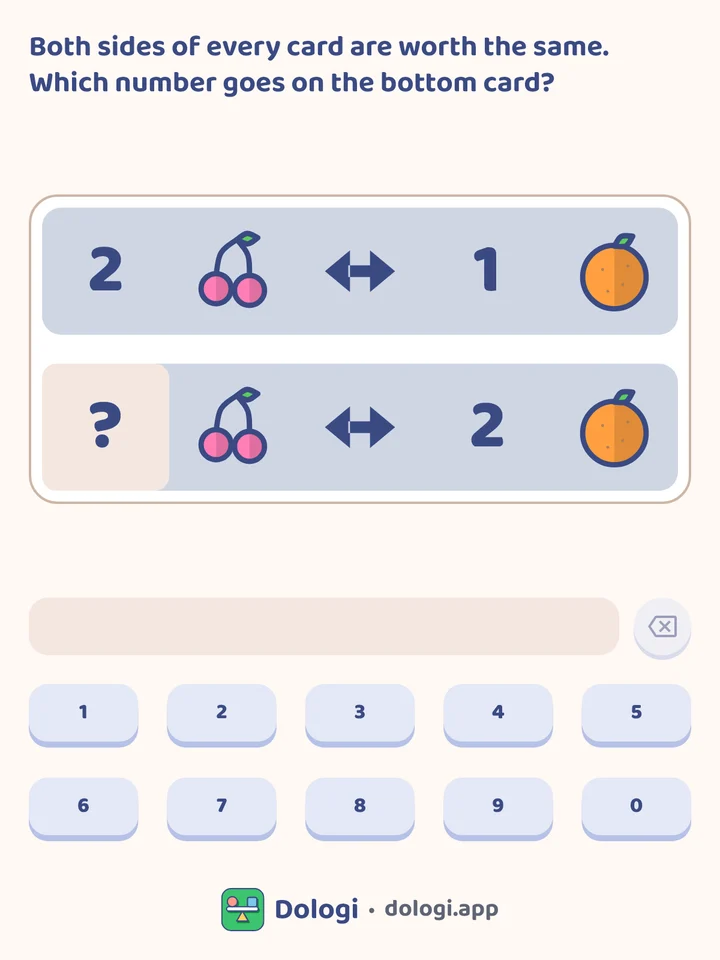
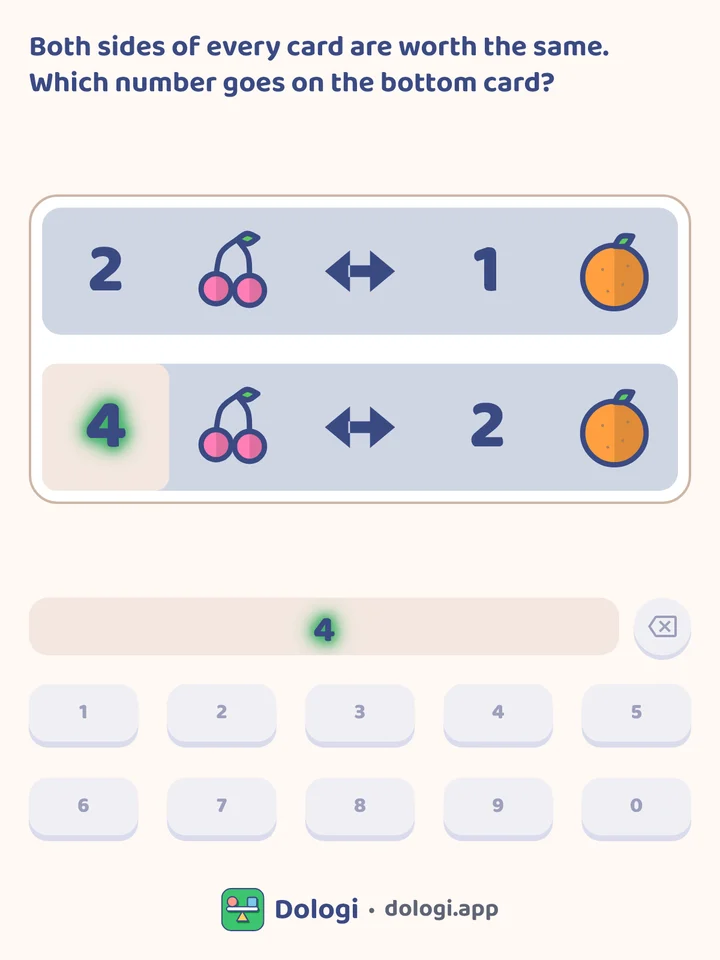
Puzzle 10: Fruit swap
Ages 5–6
What it builds: The top card shows one swap between two kinds of fruit, and the bottom card asks for more oranges, so your child has to think about how the number of cherries must grow when the oranges do. This is simple thinking about ratios, which comes back when sharing sweets or trading toys with friends. Keep playing: play shop where three candies buy one cookie, then ask how many candies they need for two cookies.
Did your child enjoy these ten puzzles? The Dologi app has many more math puzzles of the same kinds, getting harder with age and with how your child plays. A short session each day is enough for counting, comparing, measuring and mental adding to become familiar without feeling like hard work.