The first year of school is when kids get to know addition, subtraction and numbers beyond 10. What helps most is understanding numbers through real things: heavy and light weights, fruit to trade, long and short routes. The five puzzles below come straight from the Dologi app, suit kids ages 6–7, and go from easy to harder.
How to use this post: show your child one picture at a time, read the question together, then let them think on their own. The answer is behind the "Show answer" button under each picture. When your child finishes, ask them to tell you how they did it; putting it into words helps the method stick.
Puzzle 1: Put in order
Ages 6–7
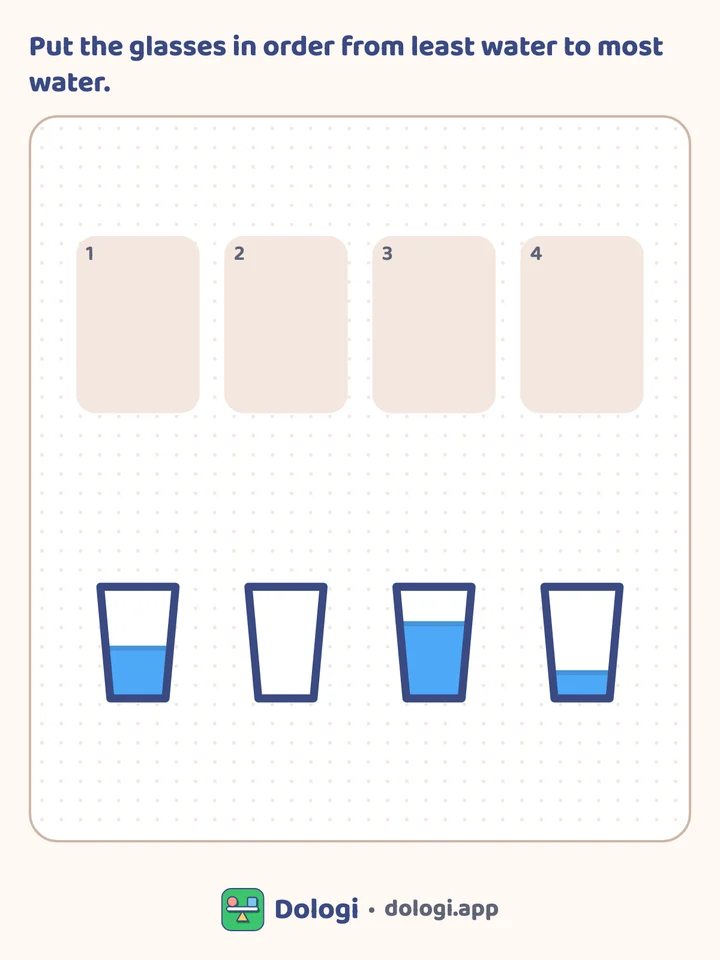
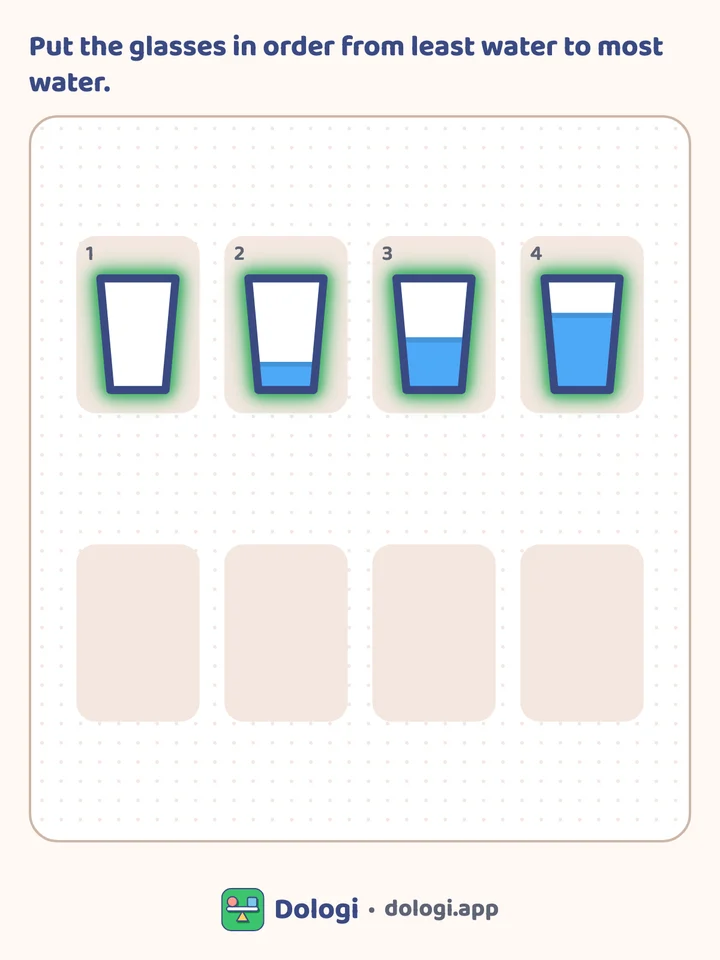
What it builds: Your child reads the number on each weight and puts them in order from largest to smallest, without being fooled by the size of the pictures. Comparing and ordering numbers is something they do every day in first grade, from comparing scores to lining up by height. Keep playing: draw a few numbered playing cards, ask your child to order them from largest to smallest, then the other way around.
Puzzle 2: Fruit swap
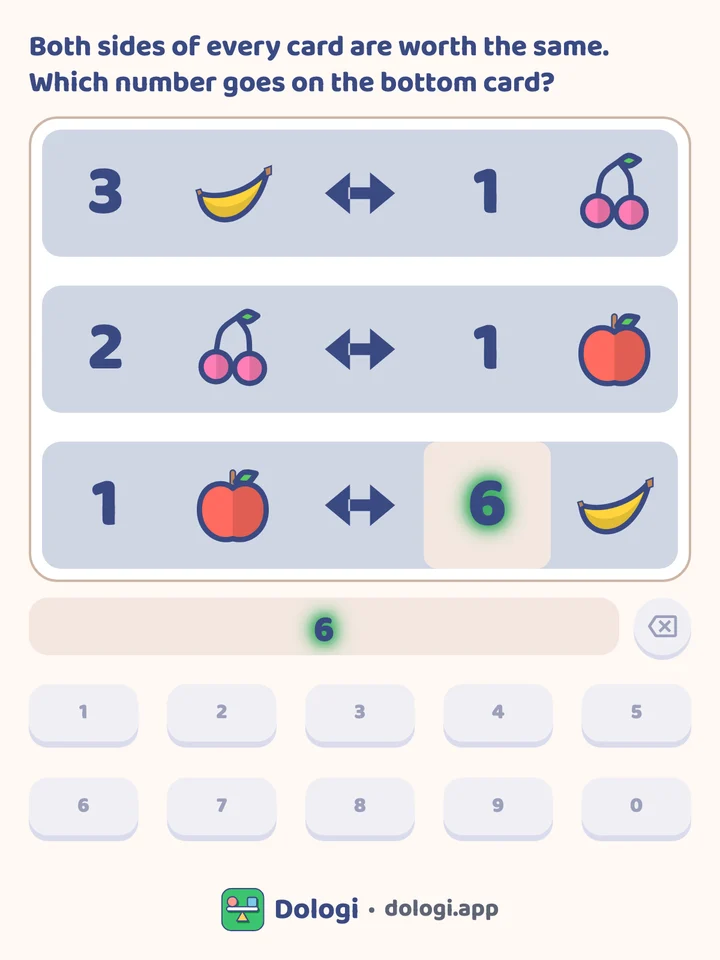
Ages 6–7
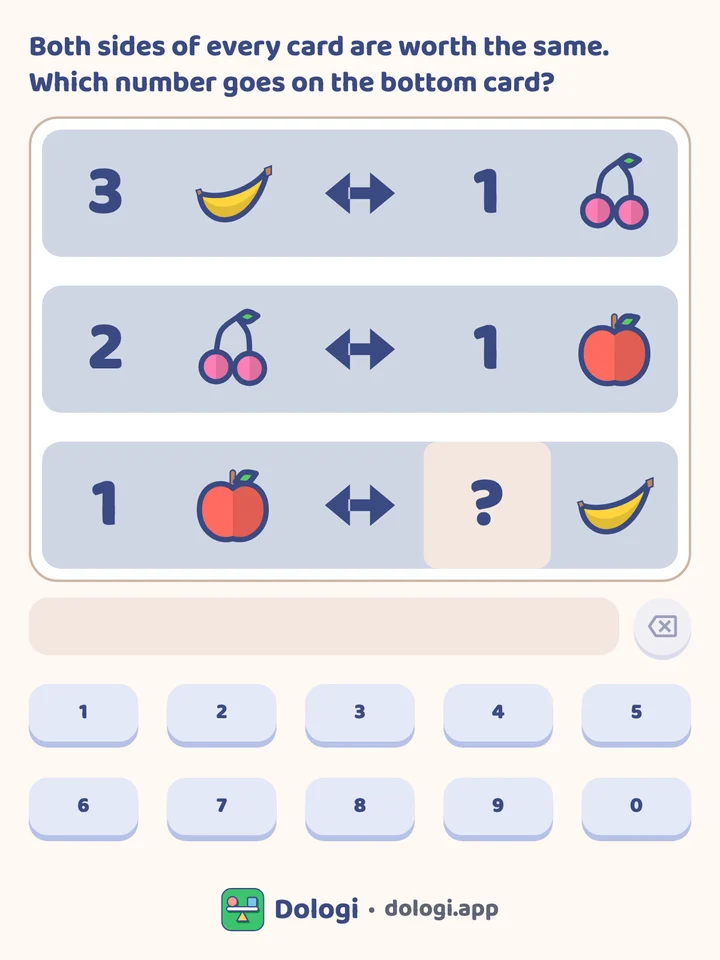
What it builds: The top two cards say how many of one fruit trade for another; your child links the two cards to find the missing number on the bottom card. It is a calculation in several steps, and shows that one thing can be worth many smaller things, like a bill that changes into many coins. Keep playing: make a trading chart for toys at home together, then ask how many small toys one big toy is worth.
Puzzle 3: How many sounds?
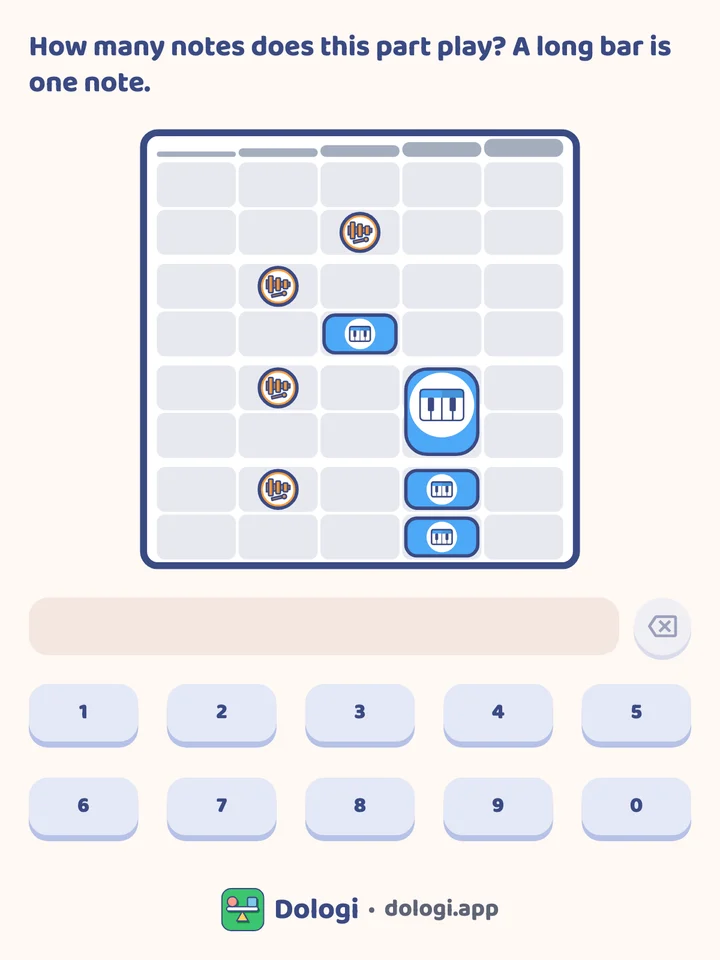
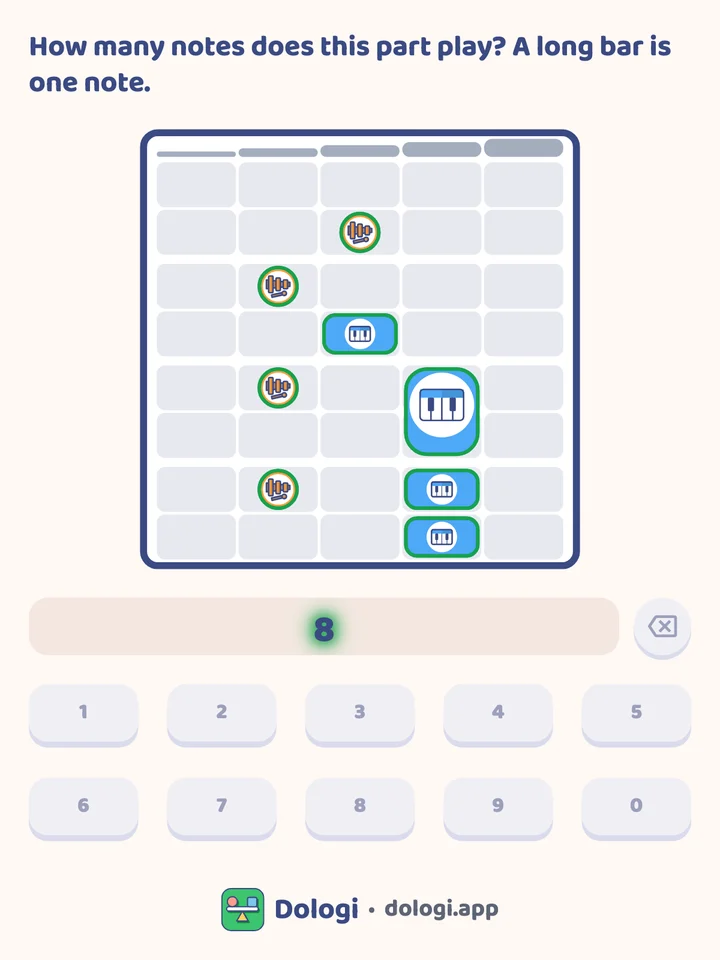
Ages 6–7
What it builds: Each icon on the board is one note, and a long bar counts as just one note; your child counts carefully column by column so nothing is missed or counted twice. Counting by rows and columns teaches a systematic way to count, very handy for counting messy piles of things. Keep playing: clap a simple rhythm together, draw it as boxes on paper and count how many claps there were.
Puzzle 4: Add and answer
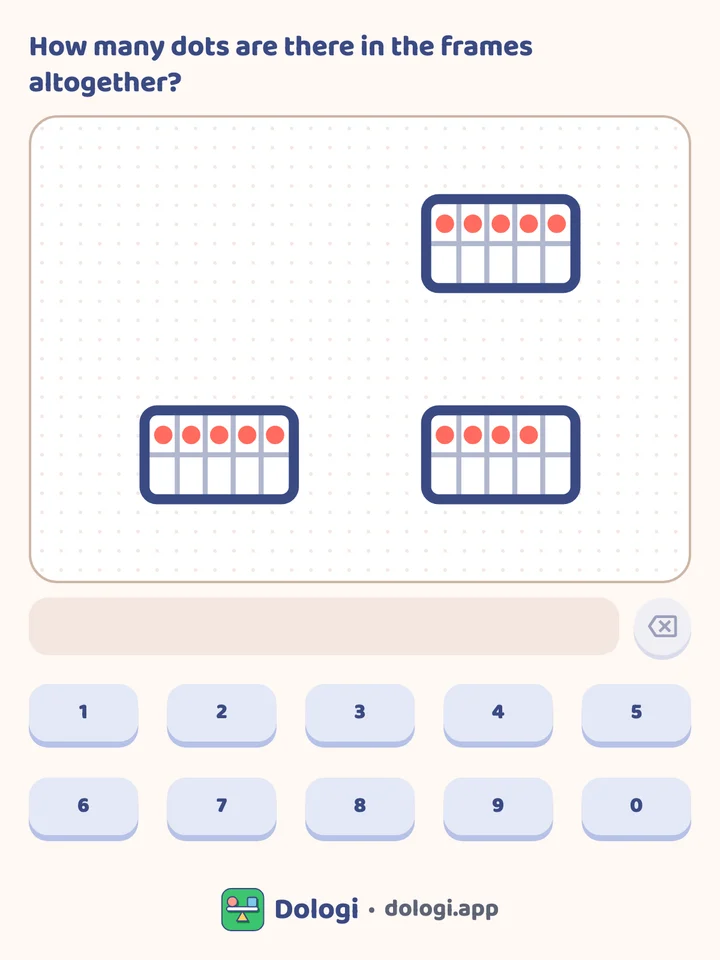
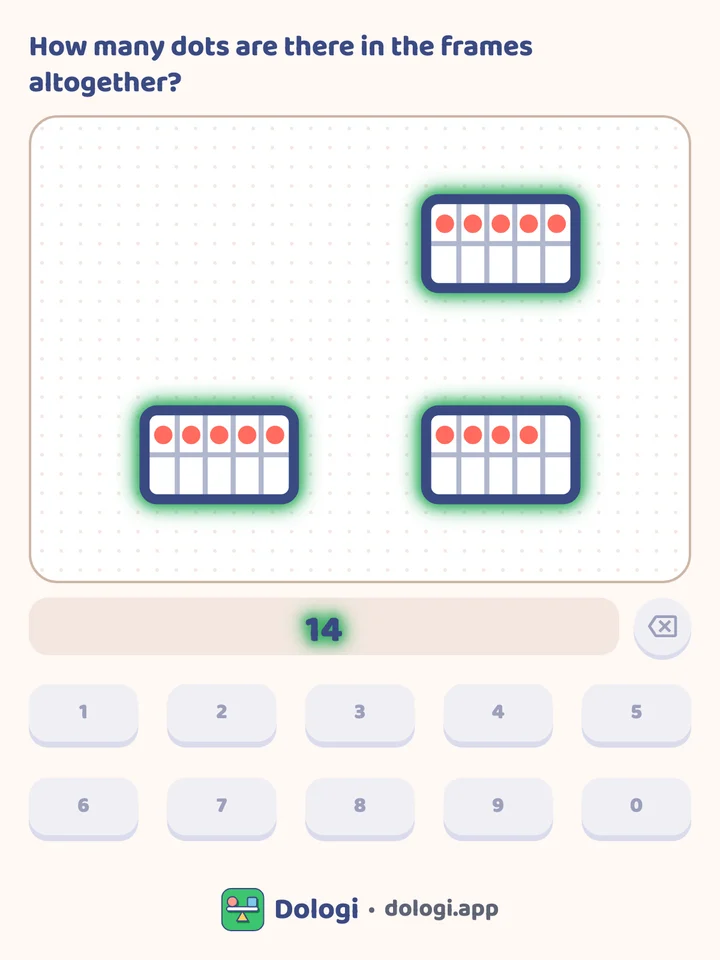
Ages 6–7
What it builds: The dots in each frame sit in rows of five, so your child can spot a full row of five at once and add up the frames instead of counting every dot. Adding in fives and tens is a mental math trick they will use throughout primary school. Keep playing: use two ice cube trays with ten cups each, put marbles in both and ask how many marbles there are in all.
Puzzle 5: Fewest steps
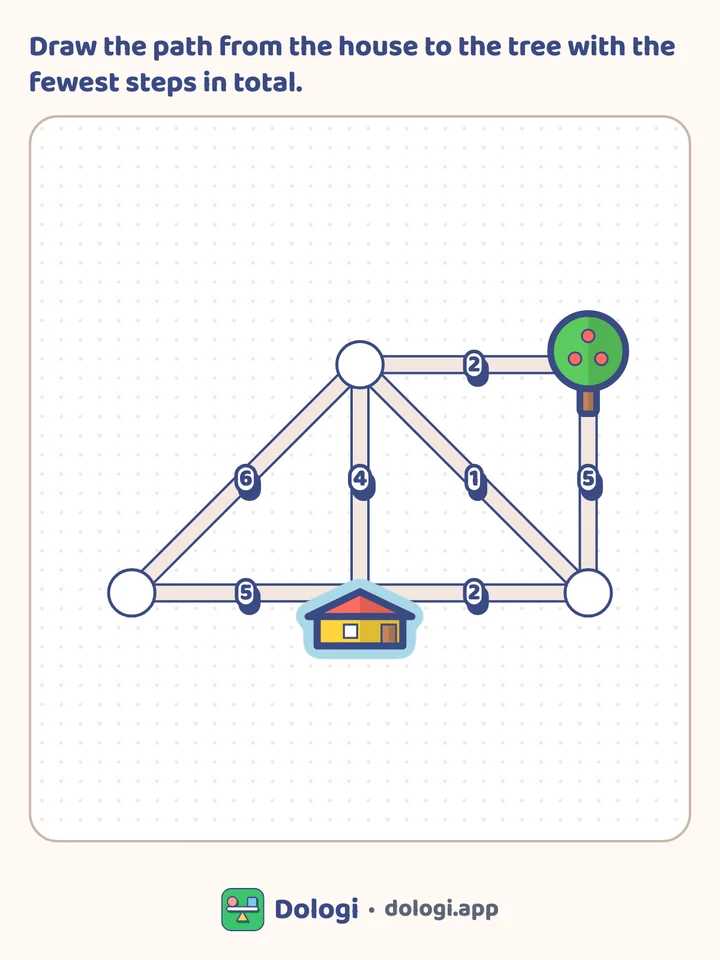
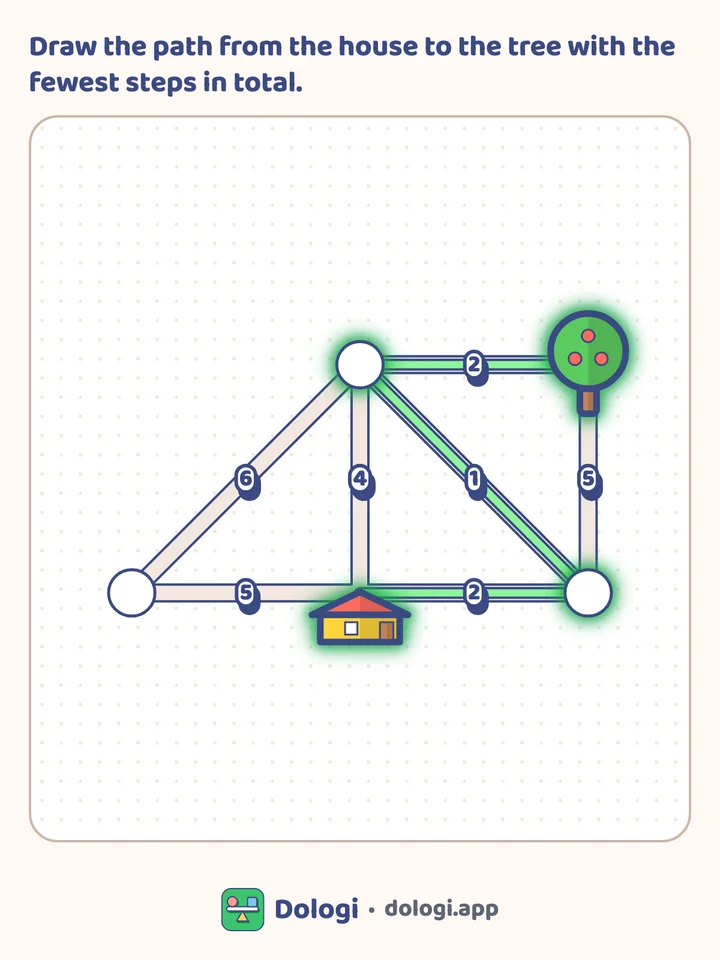
Ages 6–7
What it builds: Your child adds up the steps on the segments to compare a few routes, and discovers that the route with fewer turns is not always the shorter one. It practices mental addition with small numbers and the habit of trying several ways before choosing. Keep playing: on a walk around the neighborhood, count steps along two different routes to the same place and see which one takes fewer.
Did your child enjoy these puzzles? The Dologi app has many more math puzzles of the same kinds, getting harder with age and with how your child plays, so a little daily play with numbers, adding and measuring feels more like a game than homework.