This is a follow-up for kids ages 6–7, with five new math puzzles straight from the Dologi app. They cover things kids meet in their first year of school: comparing, telling time, counting, and a first taste of multiplication through trading, all in pictures so strong reading skills are not needed.
How to use this post: show your child one picture at a time, read the question together, then let them think on their own. The answer is behind the "Show answer" button under each picture. If your child gets it right, ask "what if this number changed?" so they think one step further.
Puzzle 1: Compare the baskets
Ages 6–7
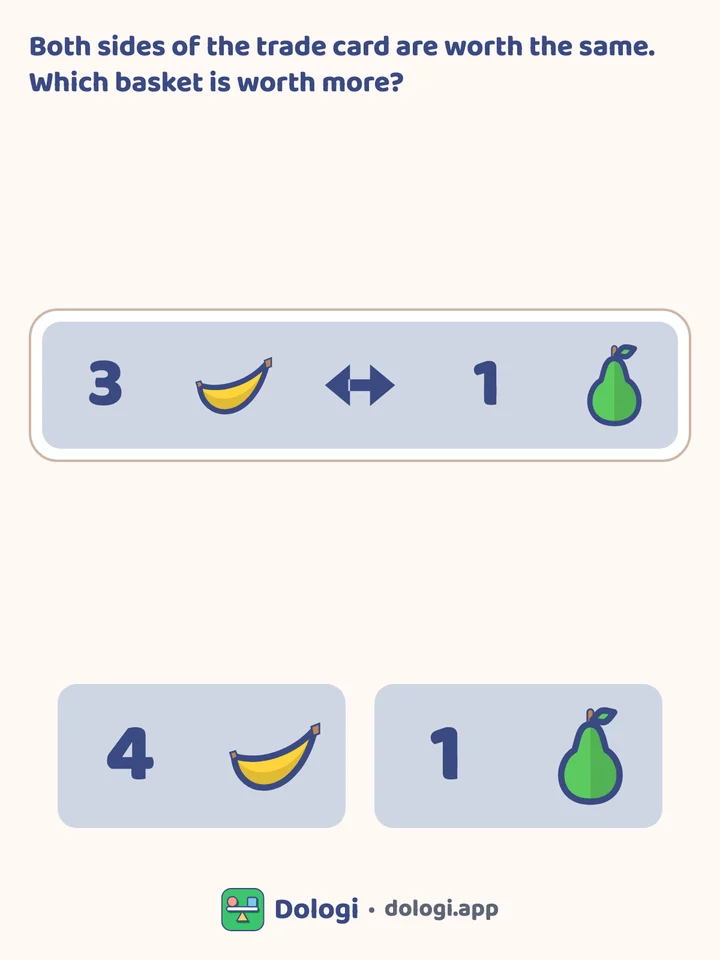
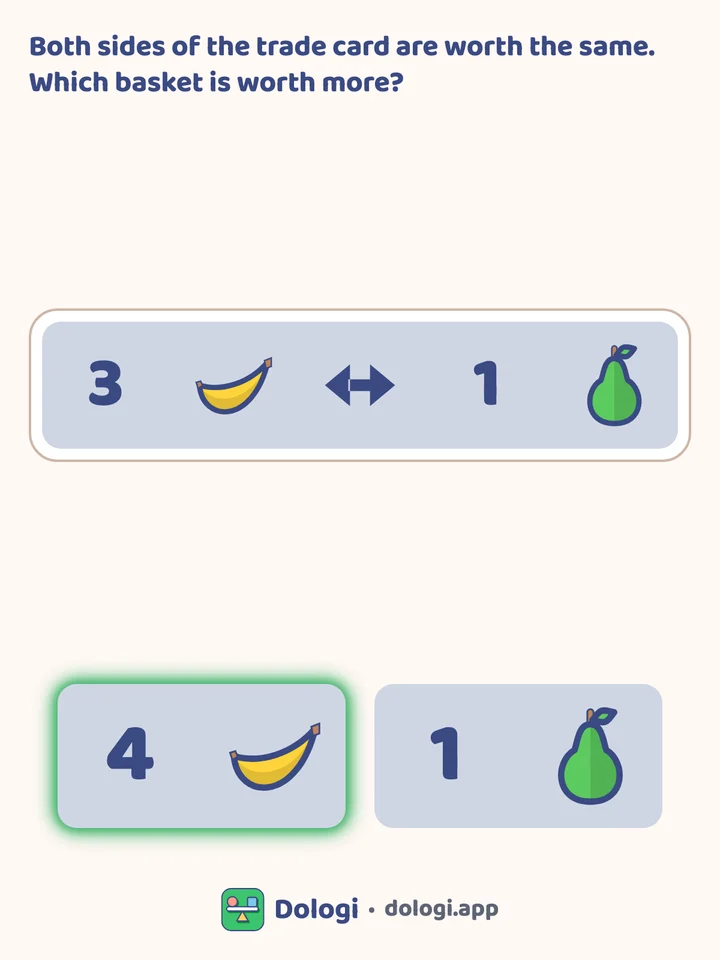
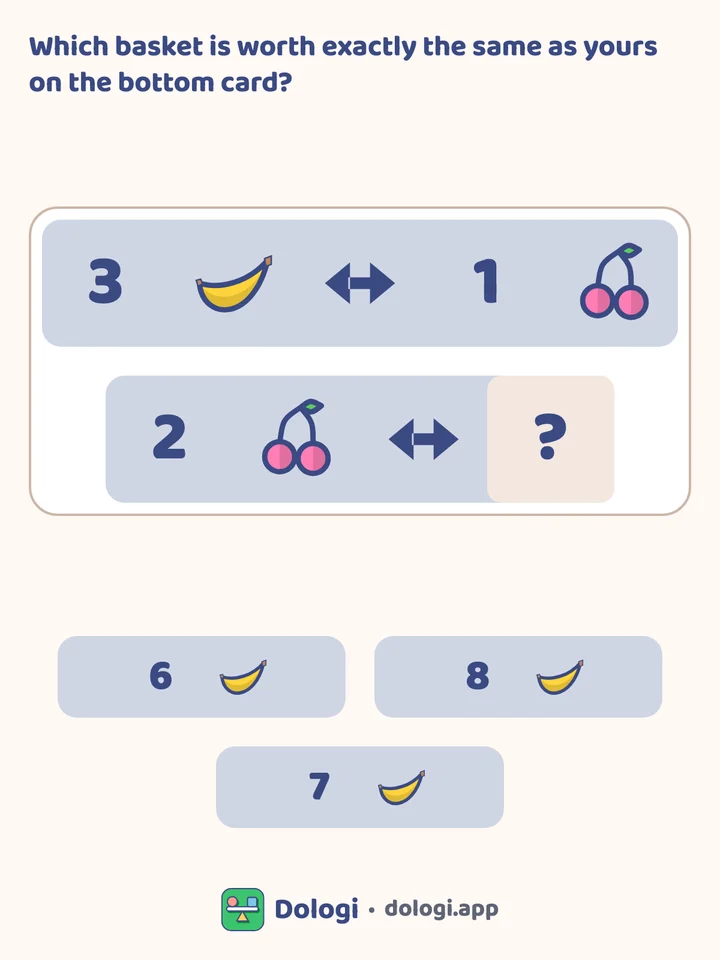
What it builds: The trading card tells how many of one fruit equal one of another; your child uses it to compare two baskets even though they hold different fruits. They learn that comparing means bringing things to the same kind first, like comparing coins and bills. Keep playing: play shop where one paper flower trades for three candies, then ask whether they would rather have two flowers or five candies.
Puzzle 2: What time is it?
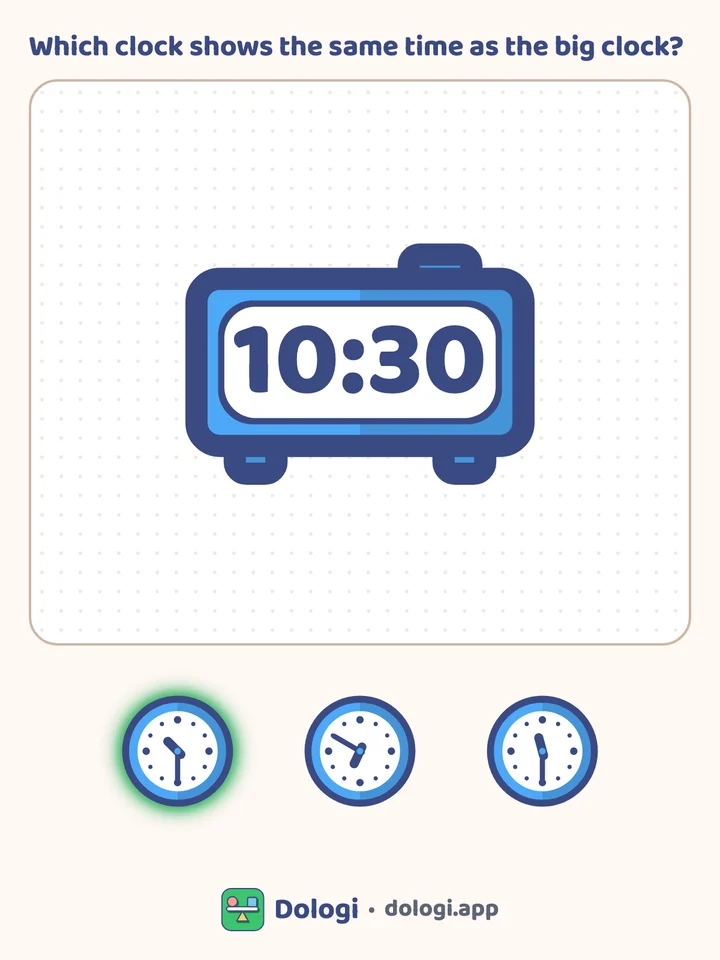
Ages 6–7
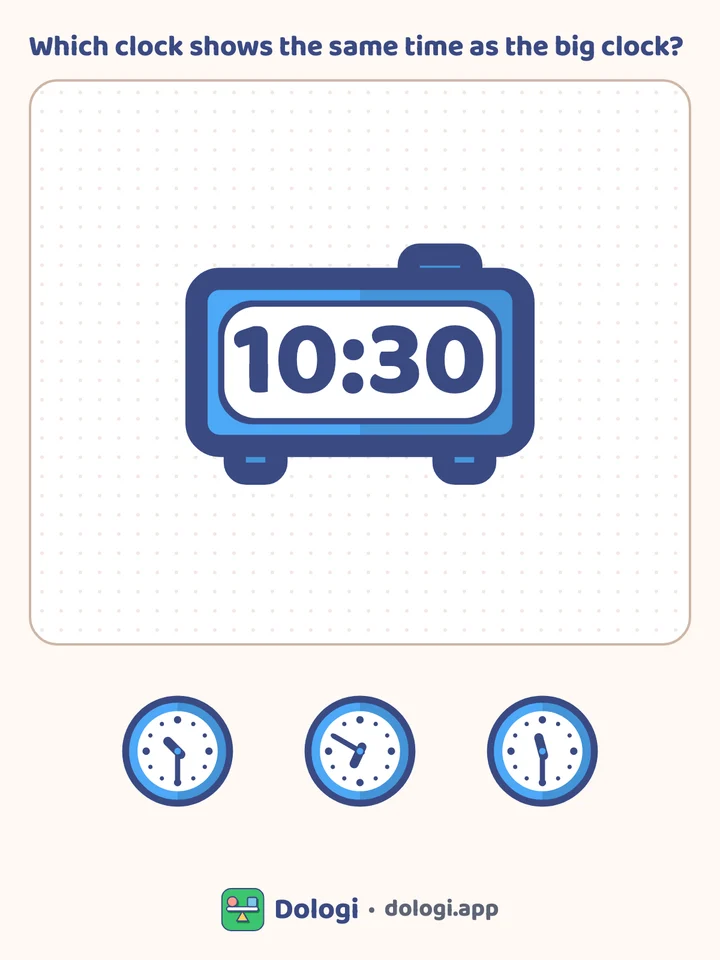
What it builds: Your child reads the digital clock and finds the matching clock with hands, noticing that at half past the hour the short hand sits between two numbers instead of right on one. Understanding where both hands point helps them read the time exactly and feel how time passes. Keep playing: ask your child to tell you the time whenever a familiar activity starts, like dinner or bath time, both on the hour and at half past.
Puzzle 3: Count the turns
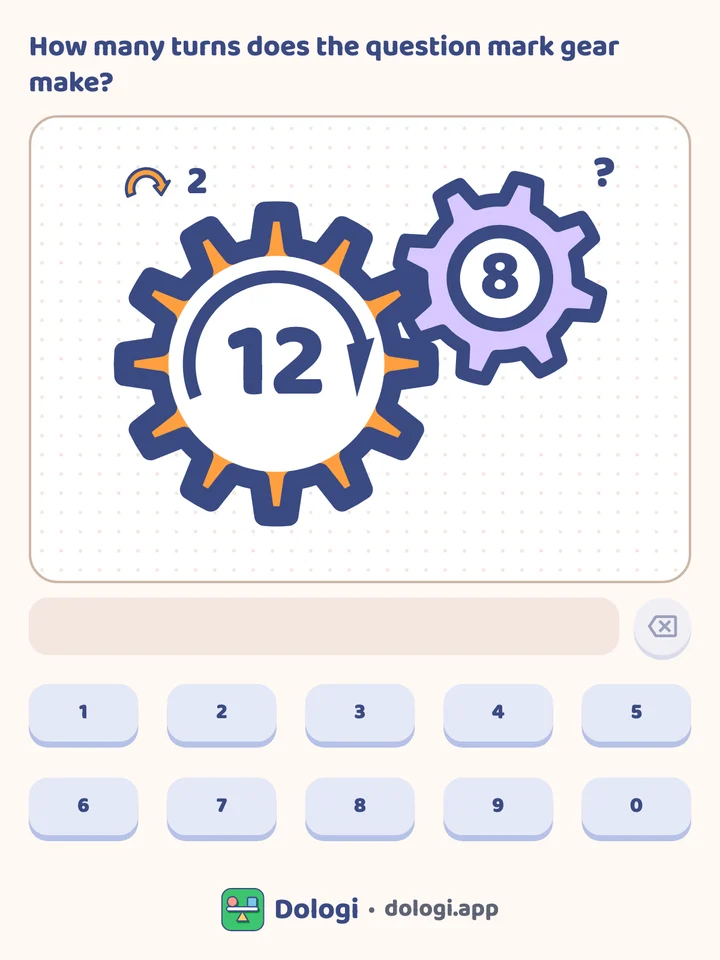
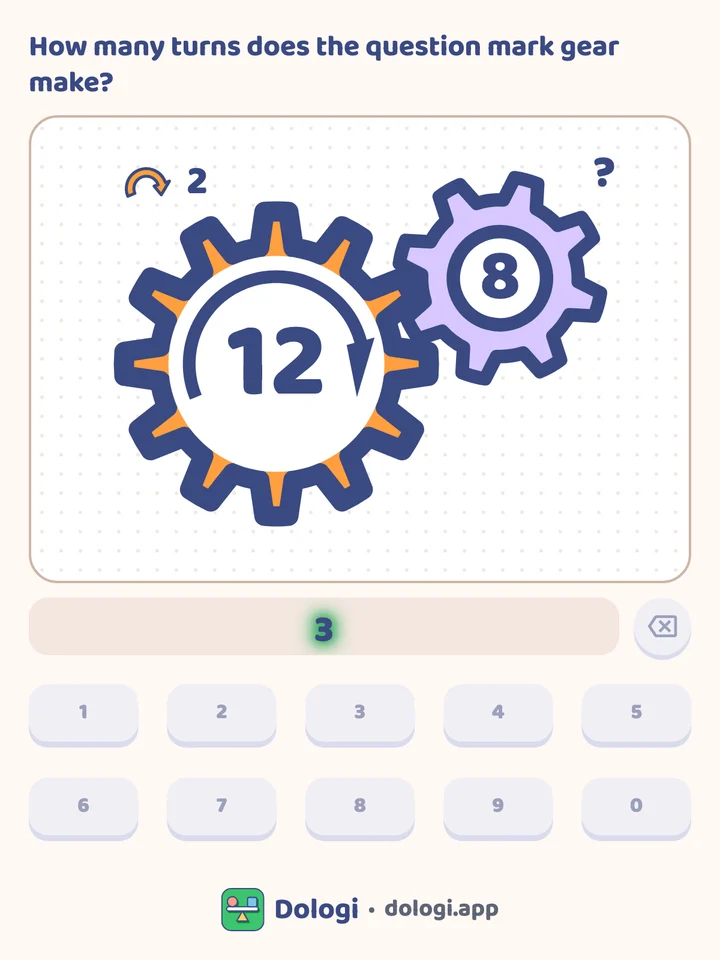
Ages 6–7
What it builds: When the big gear turns once it pushes along all of its teeth, so the small meshing gear has to turn more times to keep up; your child counts teeth to find out how many more. It is a first meeting with multiplication and division through a real machine. Keep playing: look for gears in a toy or on a bike, turn them slowly and count the small gear's turns together.
Puzzle 4: Sort into boxes
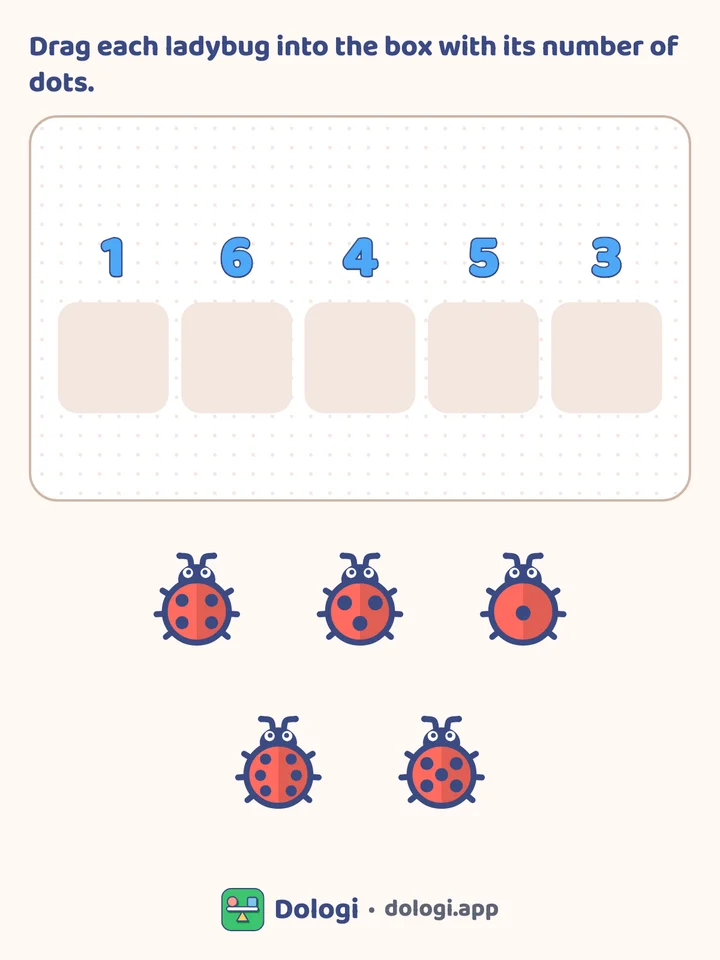
Ages 6–7
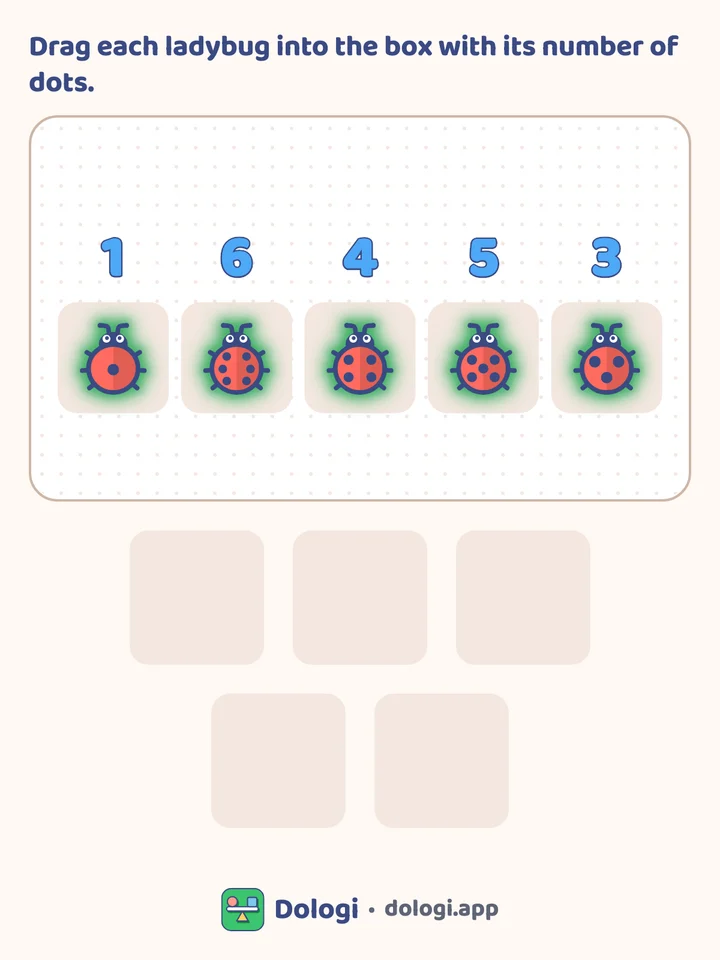
What it builds: Each ladybug has a different number of spots; your child counts them and places each bug in the box with the matching number, perhaps spotting the number from the pattern without counting one by one. Matching amounts with written numbers helps them understand what a number really means. Keep playing: draw a few ladybugs on paper and let your child draw the spots for the numbers you call out.
Puzzle 5: Just enough
Ages 6–7
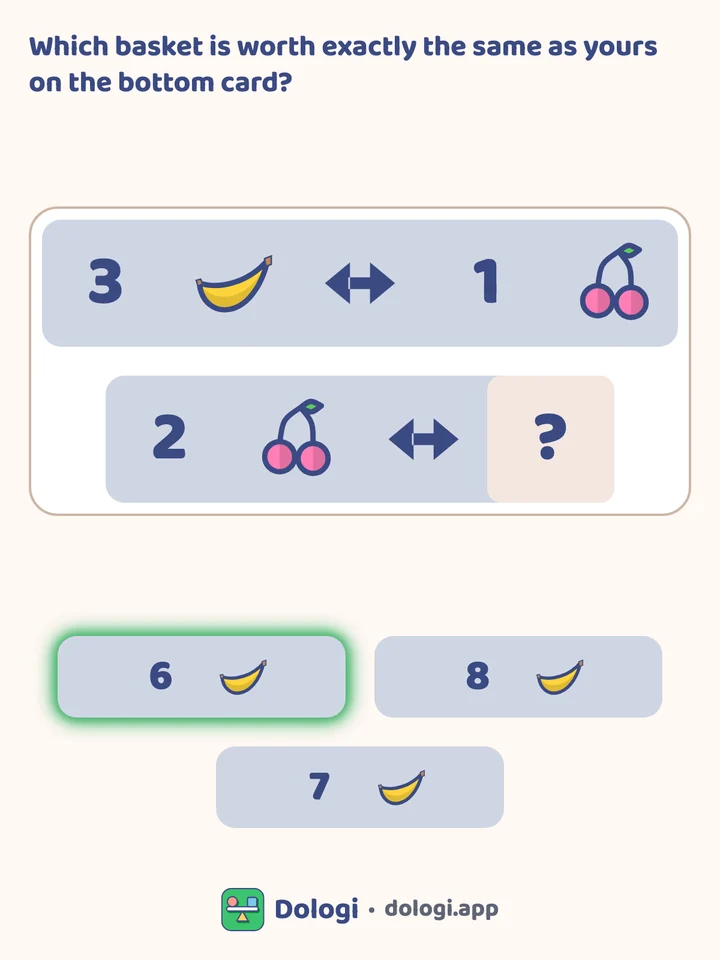
What it builds: The top card says three bananas trade for one bunch of cherries; your child uses that to work out the trade for more bunches, then picks the right basket out of three. Counting in groups of three like this is the base of the times tables they will learn later. Keep playing: arrange toys in groups of three and ask how many there are in two groups, then in three.
Did your child enjoy these puzzles? The Dologi app has many more math puzzles of the same kinds, getting harder with age and with how your child plays, so a little daily play with clocks, numbers and trading feels more like a game than homework.