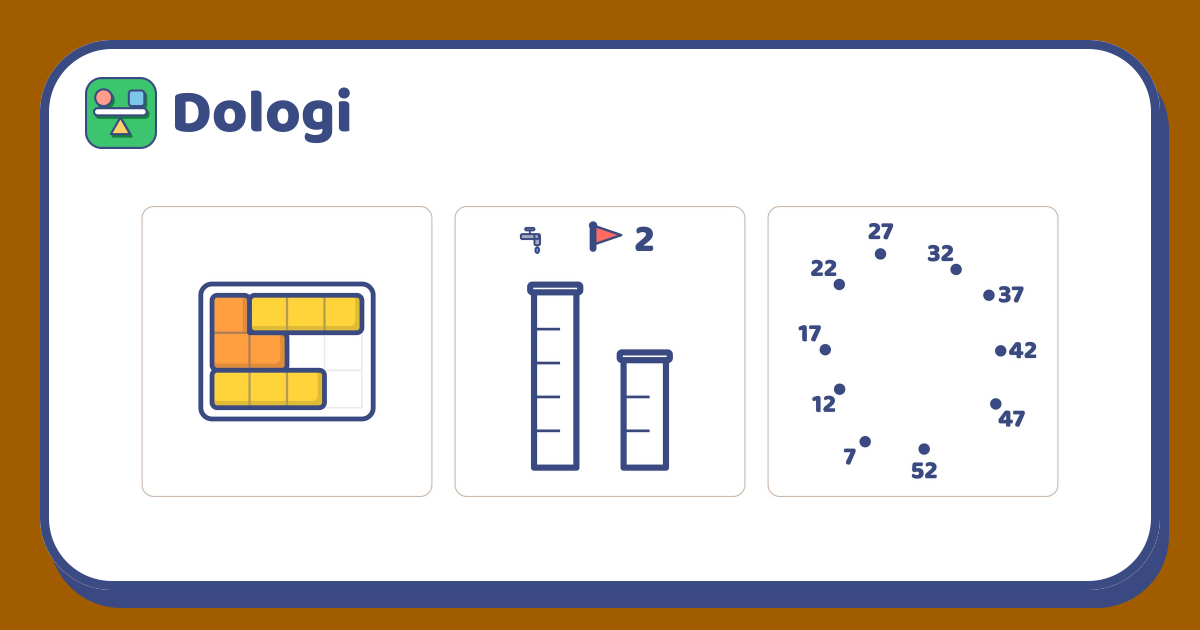
This is the third post for kids ages 6–7, with five fun math puzzles straight from the Dologi app. They go from counting squares and measuring water to joining numbers counted in steps, helping your child see numbers in everything around them: tiles, cups, jugs and rows of numbers beyond 10.
How to use this post: show your child one picture at a time, read the question together, then let them think on their own. The answer is behind the "Show answer" button under each picture. If your child answers wrongly, look at the picture again together and count slowly once more before opening the answer.
Puzzle 1: Count the squares
Ages 6–7
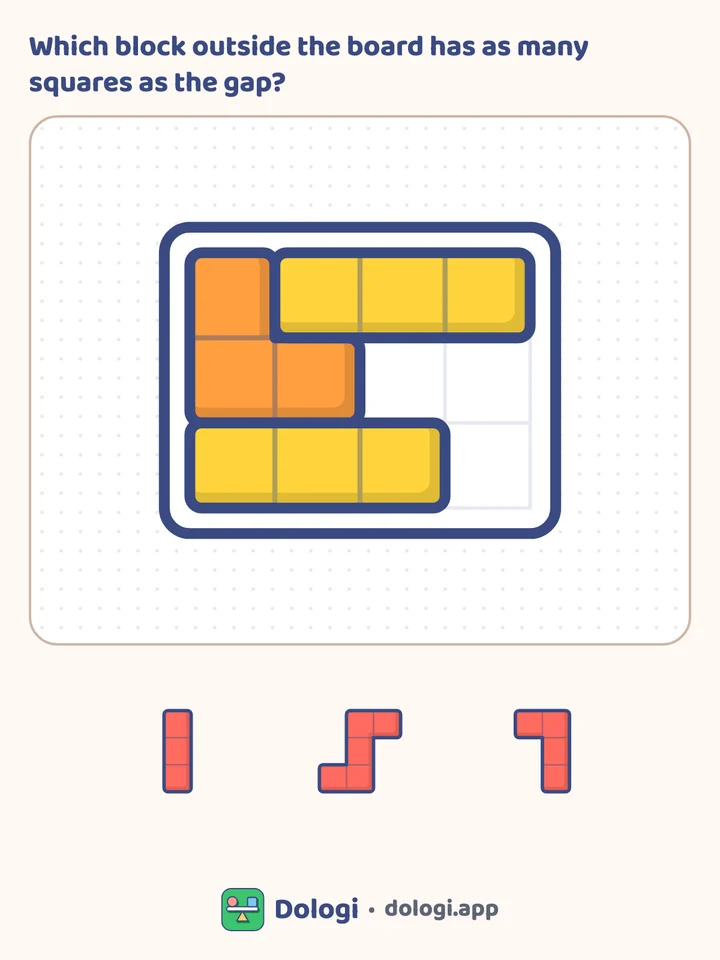
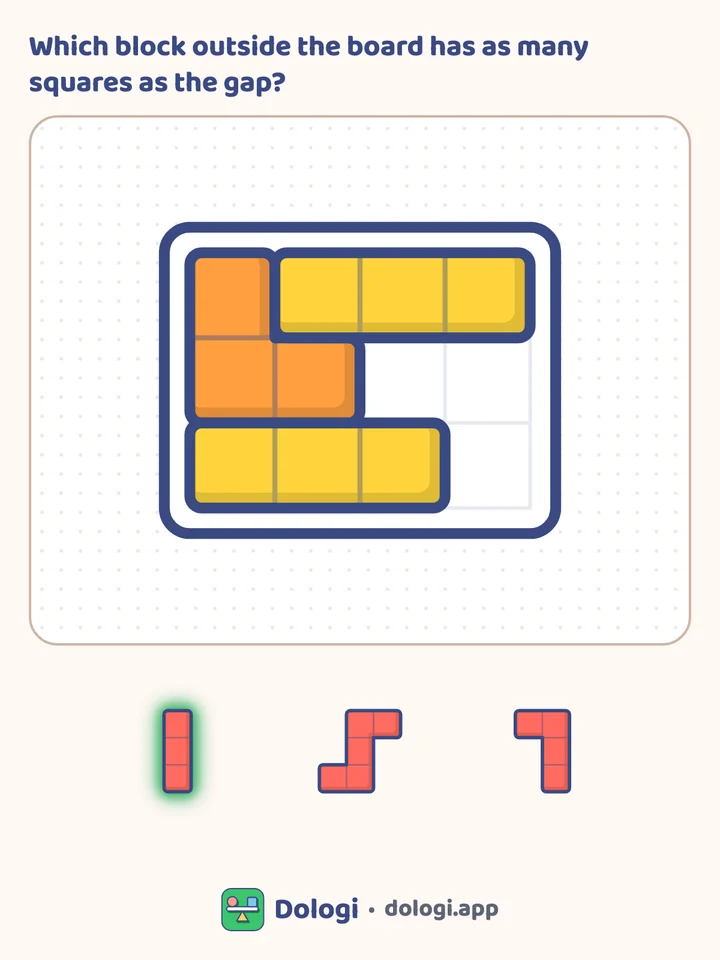
What it builds: Your child counts the empty squares on the board, then counts the squares in each block outside to find the one that fits exactly. Counting and comparing two groups is how they come to understand "the same amount", the basis of addition and subtraction. Keep playing: put some wooden blocks in a box leaving a few gaps, then ask your child which block fills the gap.
Puzzle 2: Fill the jug
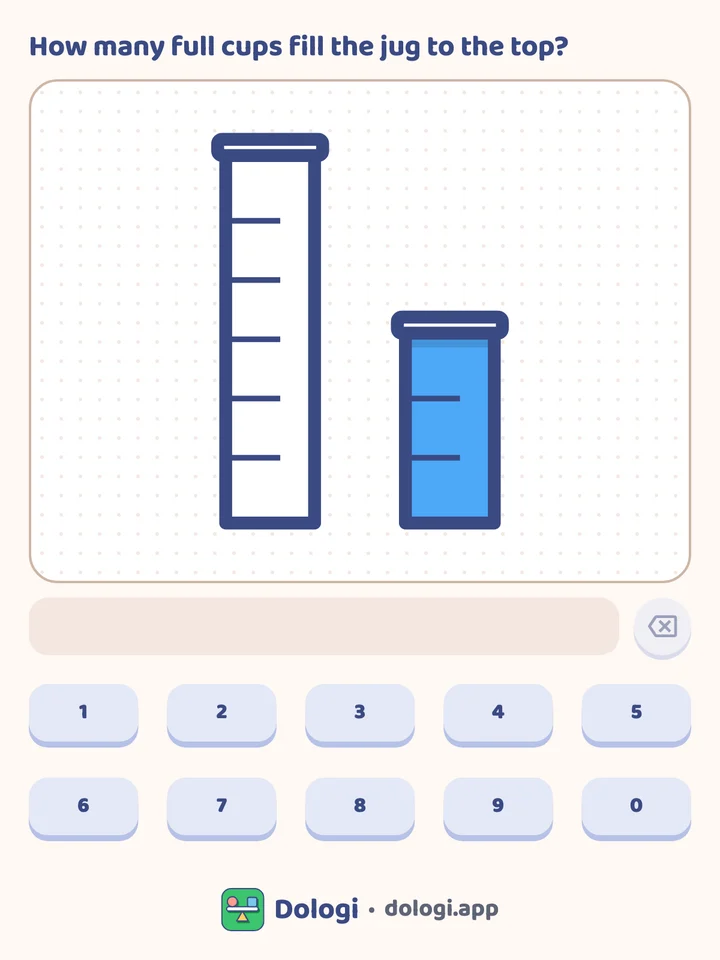
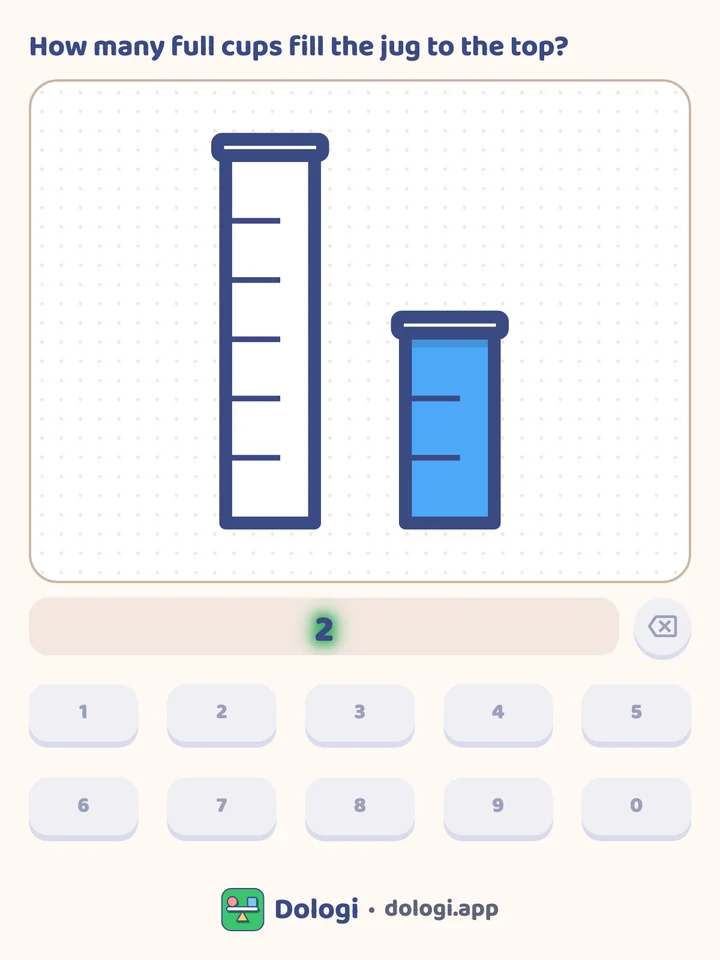
Ages 6–7
What it builds: Your child compares the marks on the big jug with how much one cup holds to work out how many pours fill it. It is the first kind of division they meet: a large amount split into equal parts. Keep playing: give your child a spoon and a small bowl, guess how many spoonfuls of water fill it, then try it together.
Puzzle 3: Pour and measure
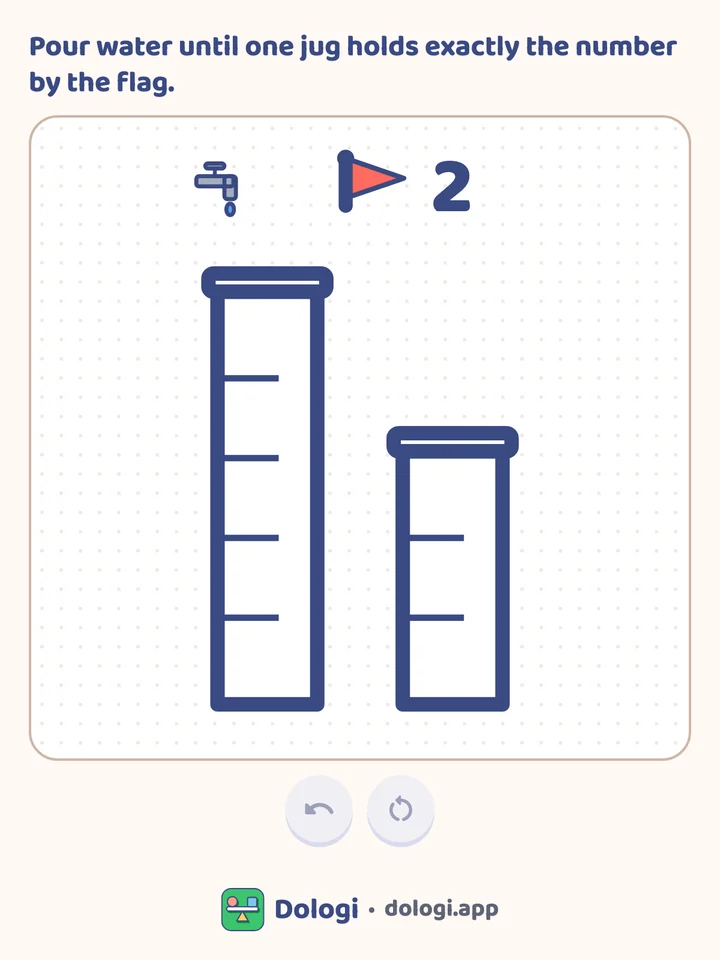
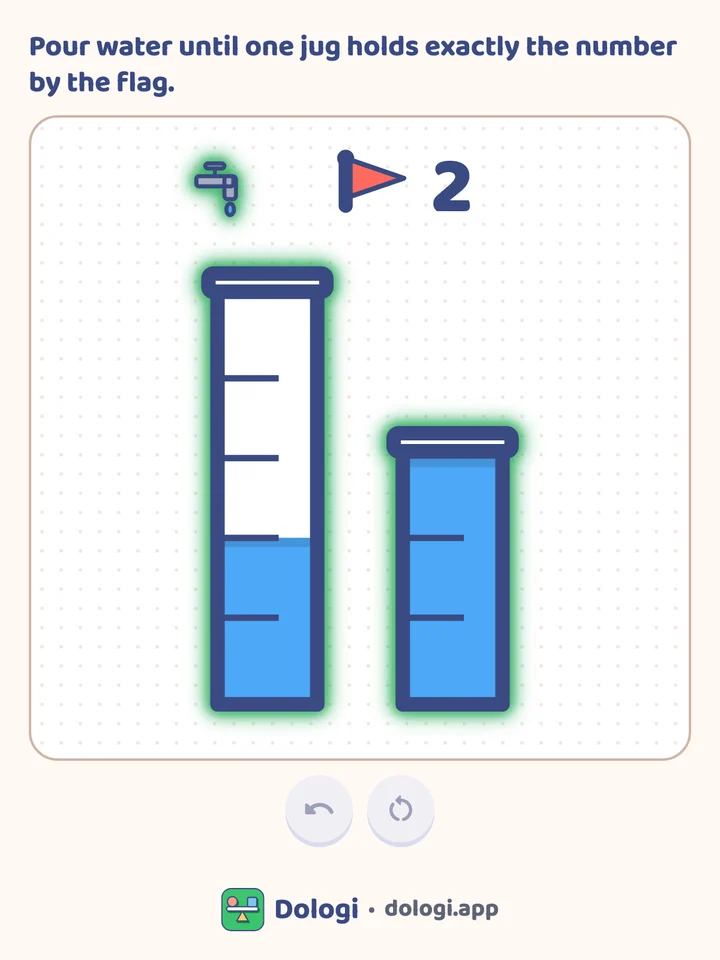
Ages 6–7
What it builds: There is a tap and two jugs of different sizes; your child looks for a way to pour back and forth until one jug holds exactly the number next to the flag. It practices mental adding and subtracting and thinking a few steps ahead, like following a recipe. Keep playing: at the sink, give your child two cups of different sizes and challenge them to measure out the difference between them.
Puzzle 4: Count and answer
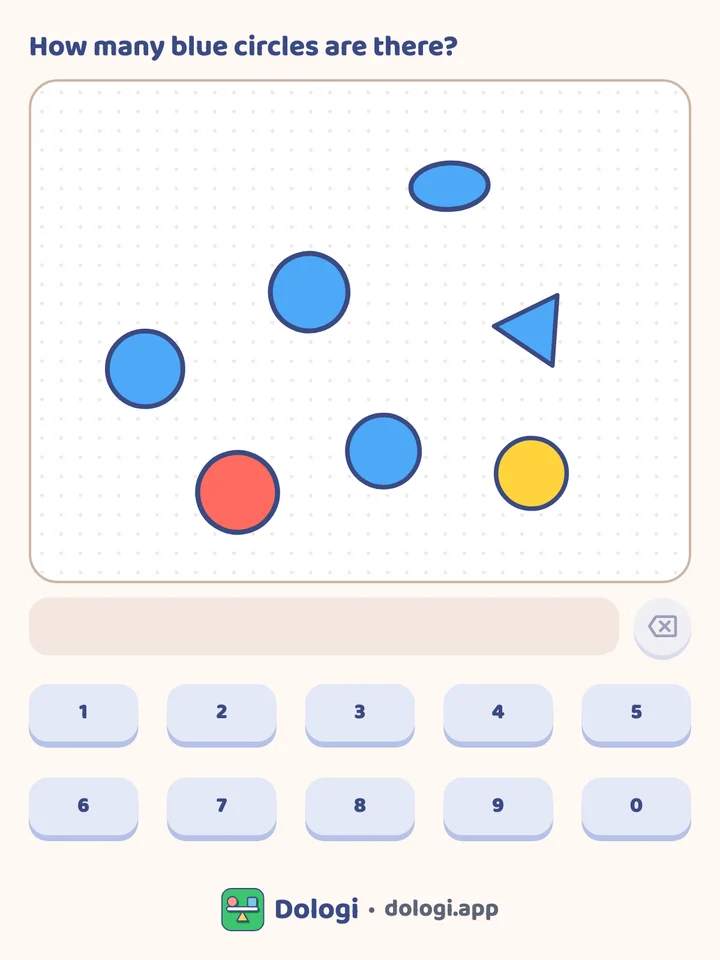
Ages 6–7
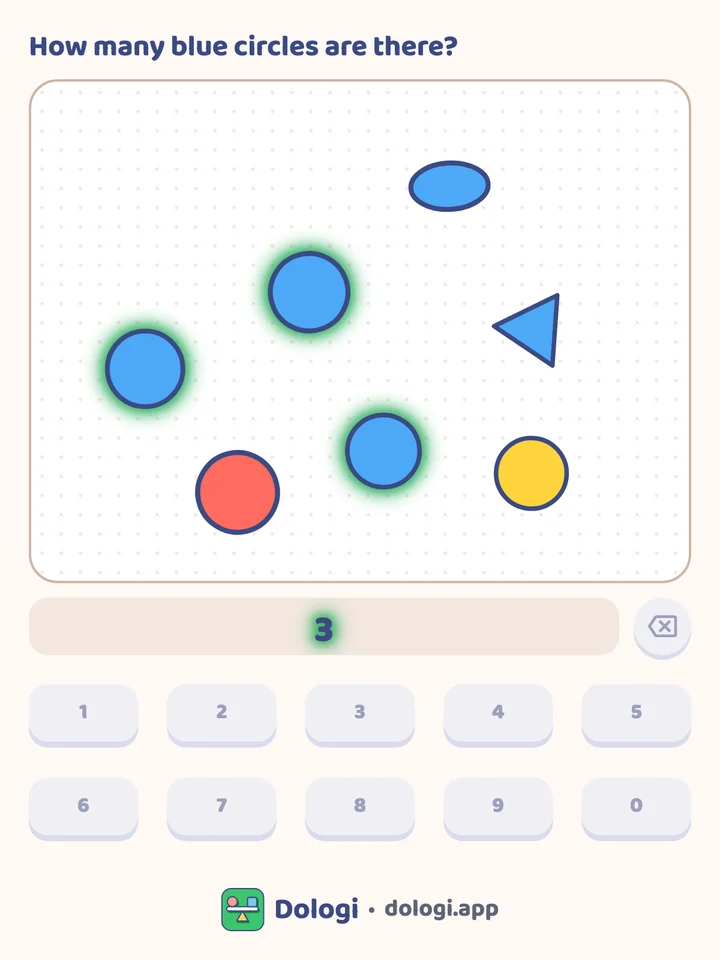
What it builds: The picture has blue circles, a blue oval, a blue triangle and circles of other colors; your child must count only the shapes that are both round and blue. Reading carefully and filtering by two conditions is a skill they use in every word problem. Keep playing: tip out a box of crayons and ask your child to count only the ones that are blue and still long.
Puzzle 5: Connect the dots
Ages 6–7
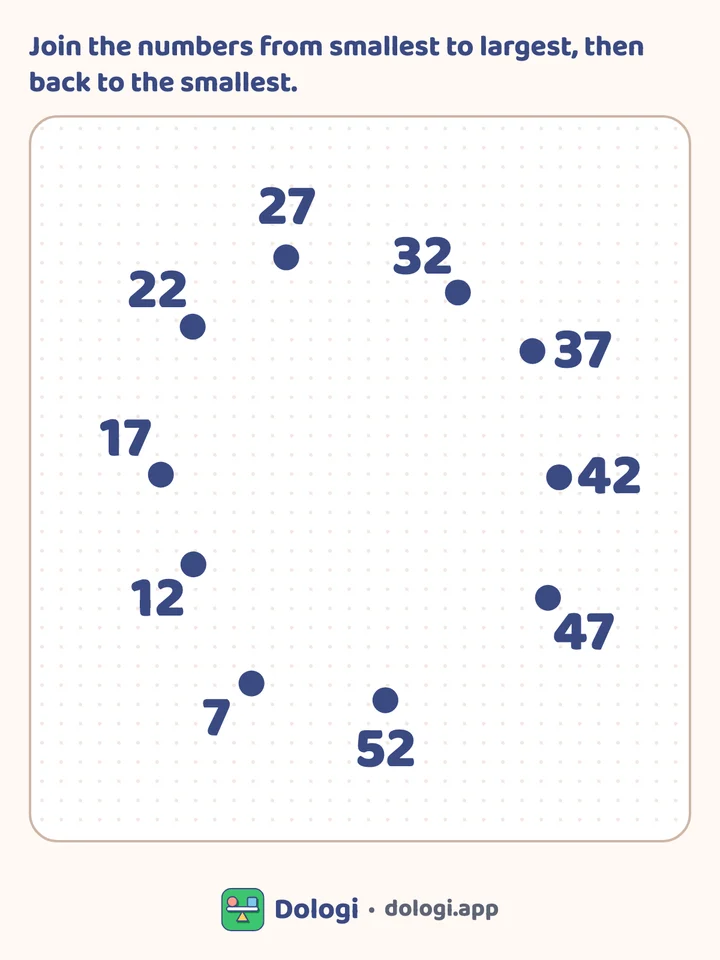
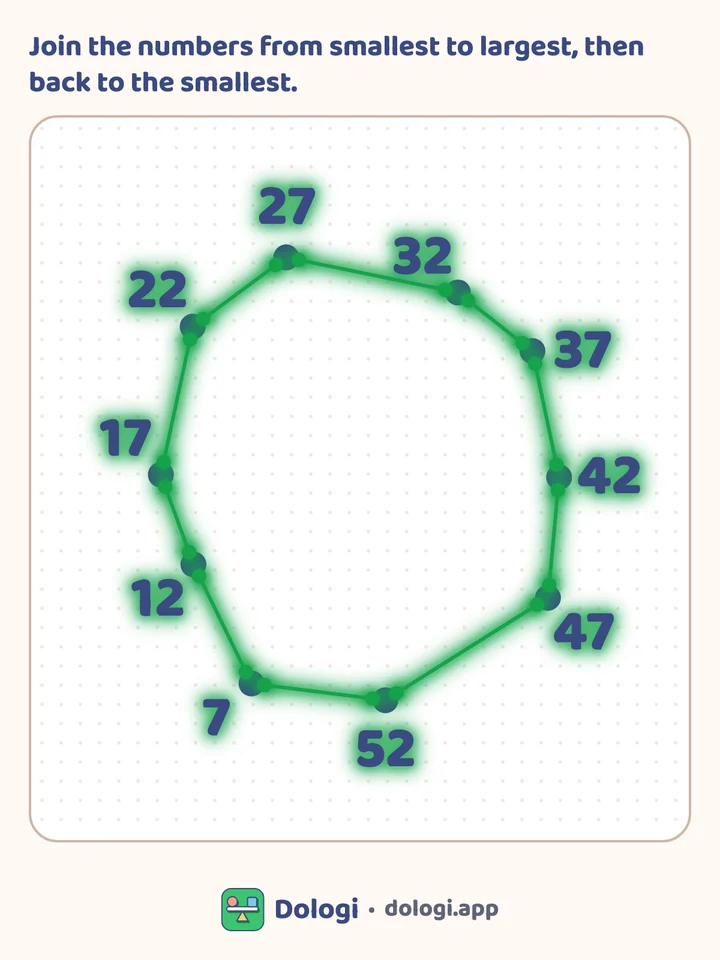
What it builds: The numbers in the picture are evenly spaced, so your child has to spot the counting step and then join them in order from smallest to largest. Skip counting gets them used to bigger numbers and is a first step toward the times tables. Keep playing: count coins in groups of five together, or count out loud in fives while skipping rope.
Did your child enjoy these puzzles? The Dologi app has many more math puzzles of the same kinds, getting harder with age and with how your child plays, so a little daily counting, measuring and comparing feels more like a game than homework.