Around second and third grade, kids move from counting to calculating: adding several numbers, understanding a half or a third, comparing amounts and starting to multiply. The five puzzles below come straight from the Dologi app, suit kids ages 7–8, and go from easy to harder, each one practicing a different area: selective adding, fractions, number order, balance and converting.
How to use this post: show your child one picture at a time and let them think before choosing. The answer is behind the "Show answer" button under each picture. Once your child answers, add one more question, "how do you know?", so they practice explaining in words.
Puzzle 1: Add and answer
Ages 7–8
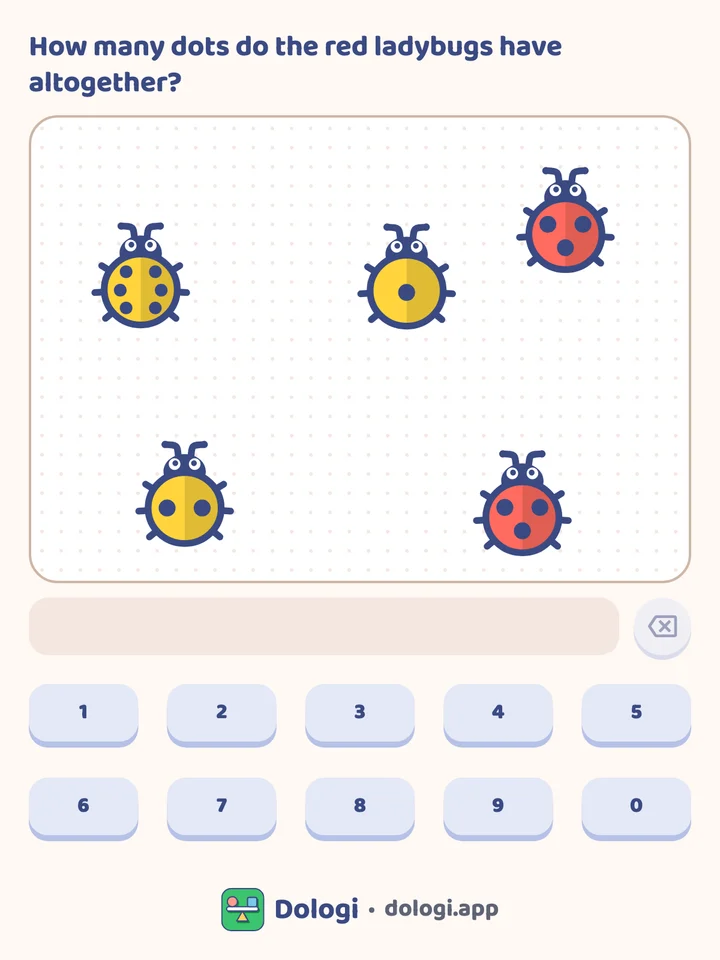
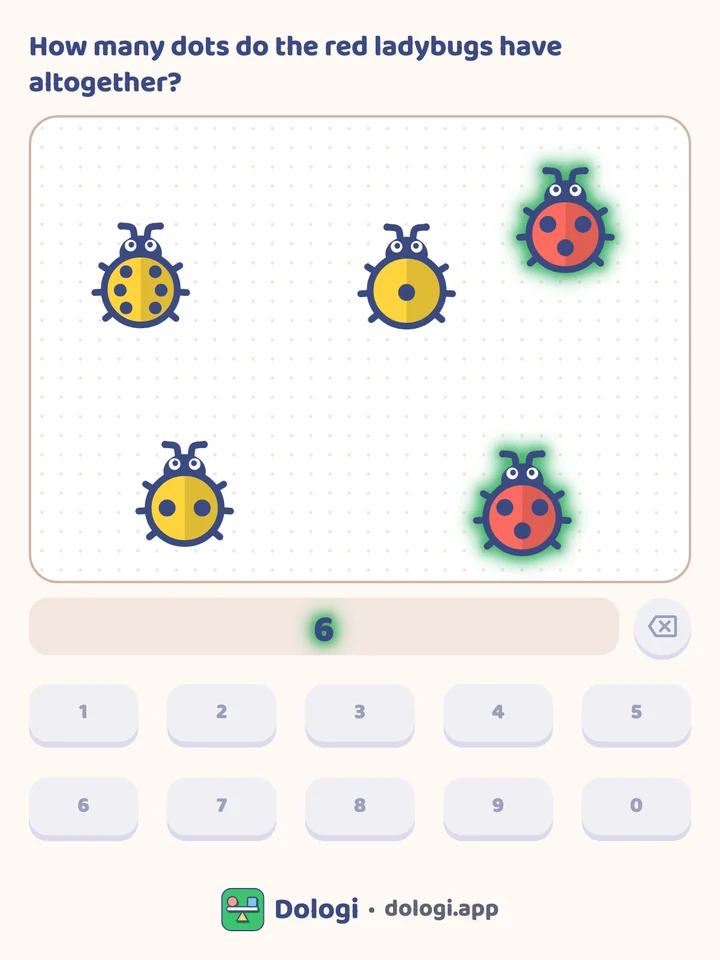
What it builds: Your child has to pick out only the bugs being asked about, count the spots on each one and add them up, without letting the other colors throw them off. This is how word problems are read: find the right data before calculating. Keep playing: roll a few dice of different colors, add up only the dice of one color, and switch colors each turn.
Puzzle 2: Equal parts
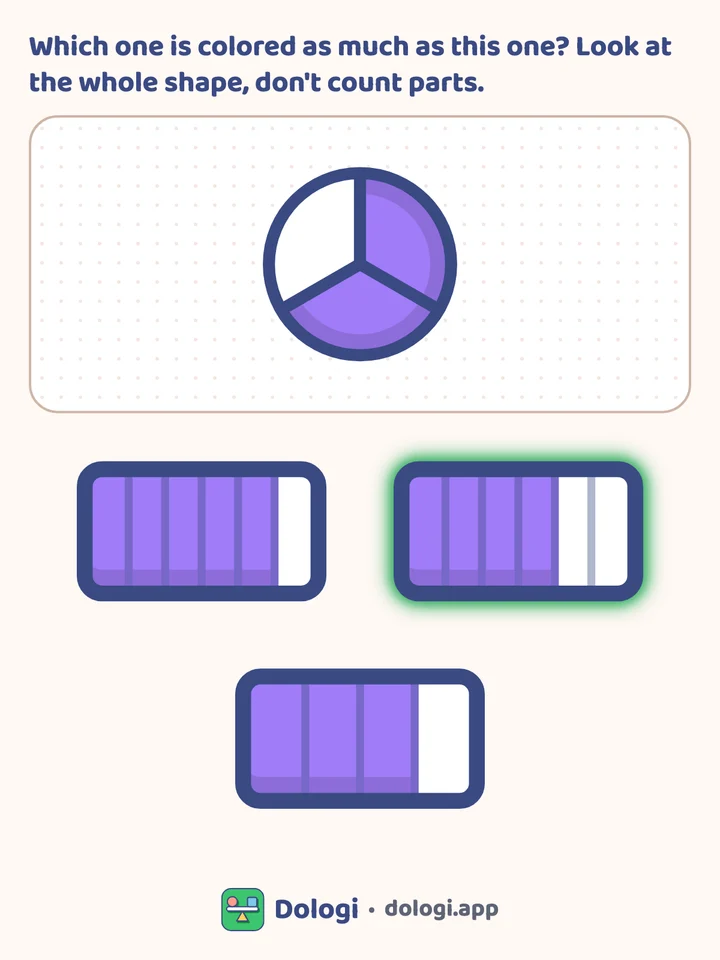
Ages 7–8
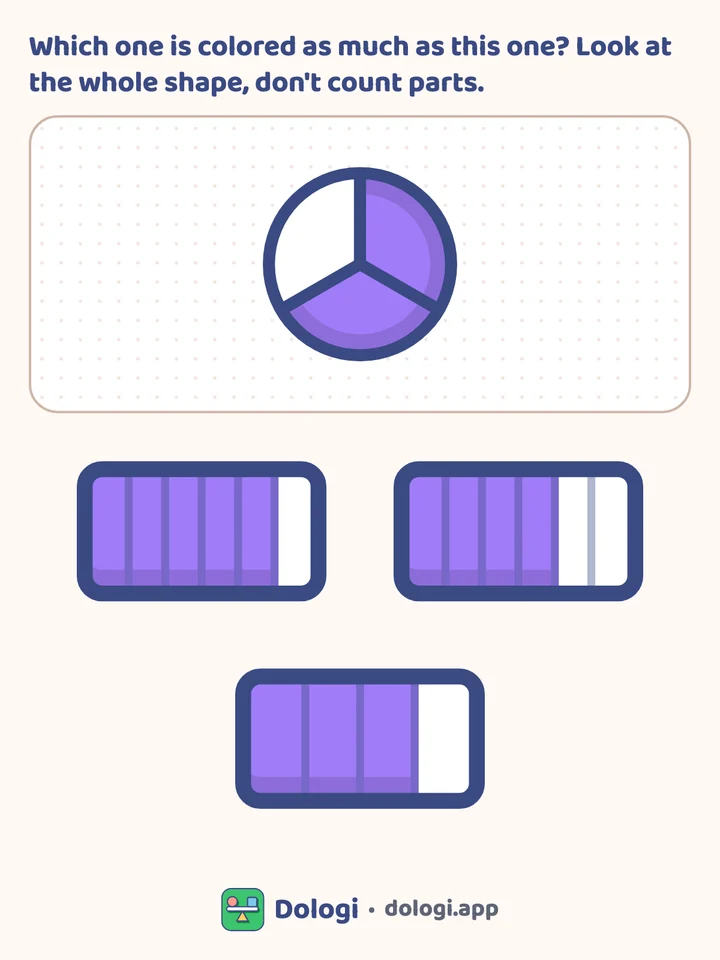
What it builds: The shapes are split into different numbers of parts, so your child cannot just count the colored parts; they have to see how much of the whole shape is colored. This is what fractions really mean: two fractions that look different can still be equal. Keep playing: cut two same-size cakes or sheets of paper into different numbers of pieces and ask how many pieces from each make the same amount.
Puzzle 3: Connect the dots
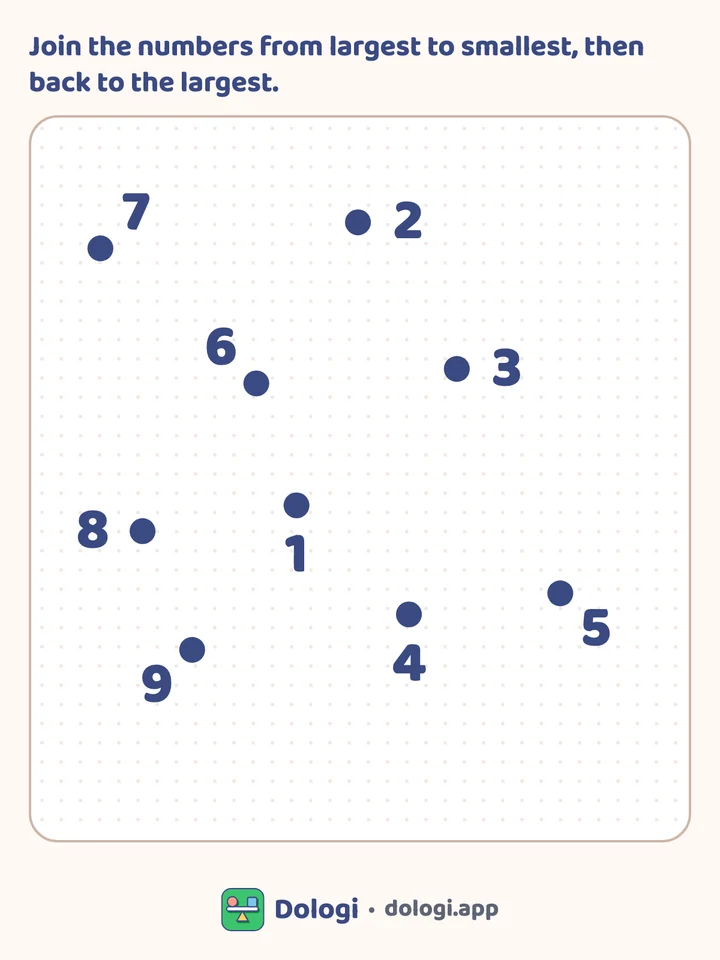
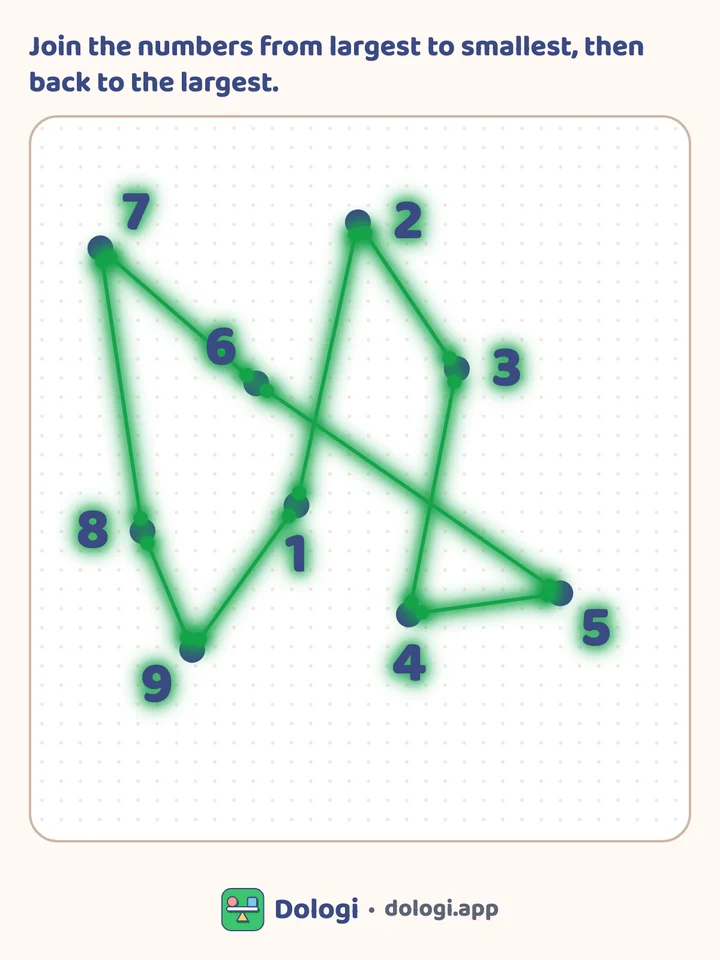
Ages 7–8
What it builds: Your child finds the largest number and counts backward to connect the dots in turn, while the numbers are scattered all over the picture. Counting backward builds confidence with subtraction, and hunting for numbers in a busy picture trains careful looking and patience. Keep playing: stick numbered notes on objects around the room and challenge your child to touch them from the largest to the smallest as fast as they can.
Puzzle 4: Balance the beam
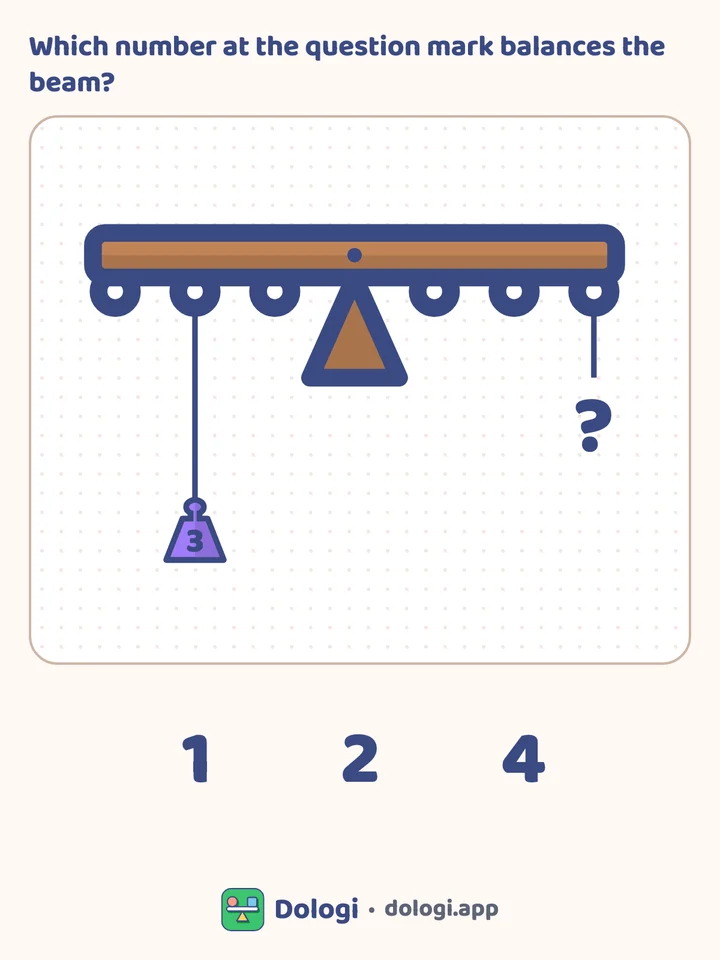
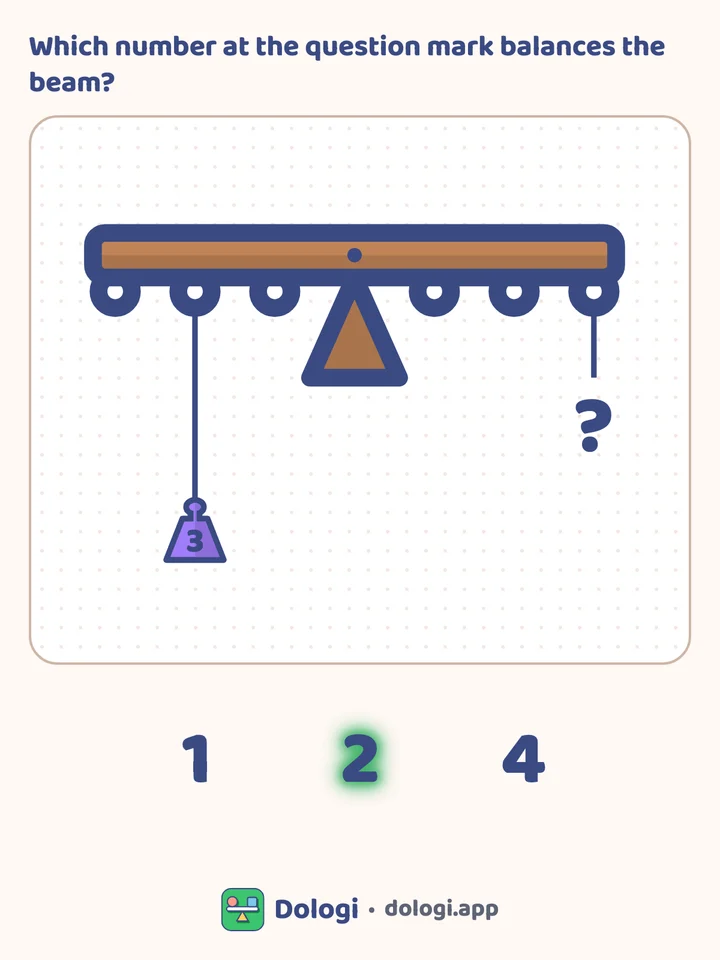
Ages 7–8
What it builds: A weight hanging farther from the middle pulls harder; your child compares the distances on both sides to work out whether the other weight must be heavier or lighter, and by how much. It is a hands-on first taste of multiplication and division, just like a seesaw at the playground. Keep playing: balance a ruler on a pencil and place coins on both sides at different distances until it levels out.
Puzzle 5: Compare the baskets
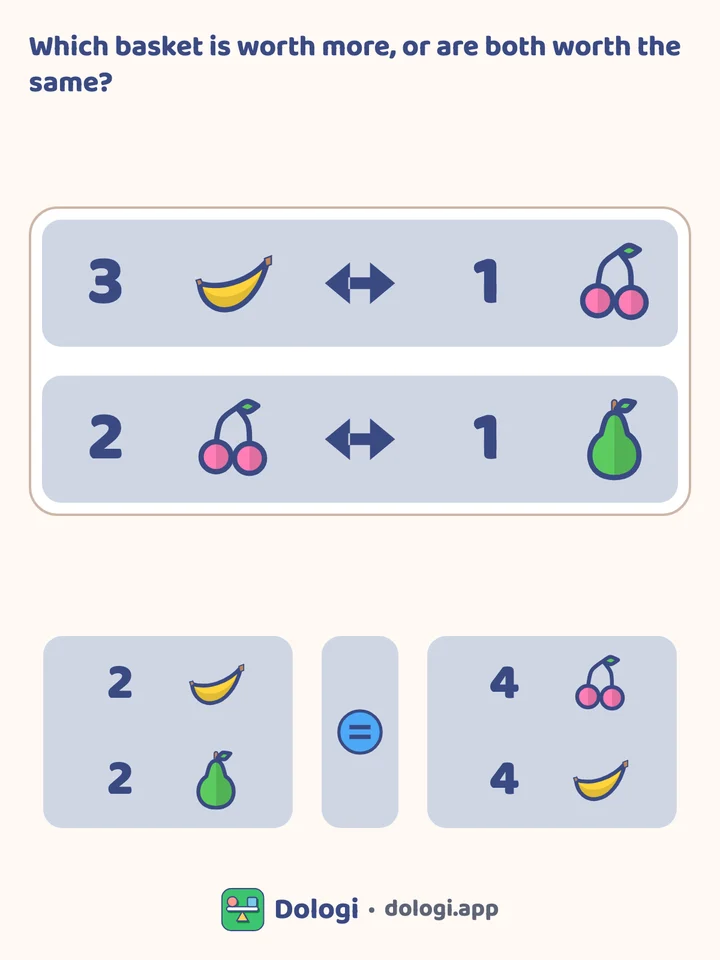
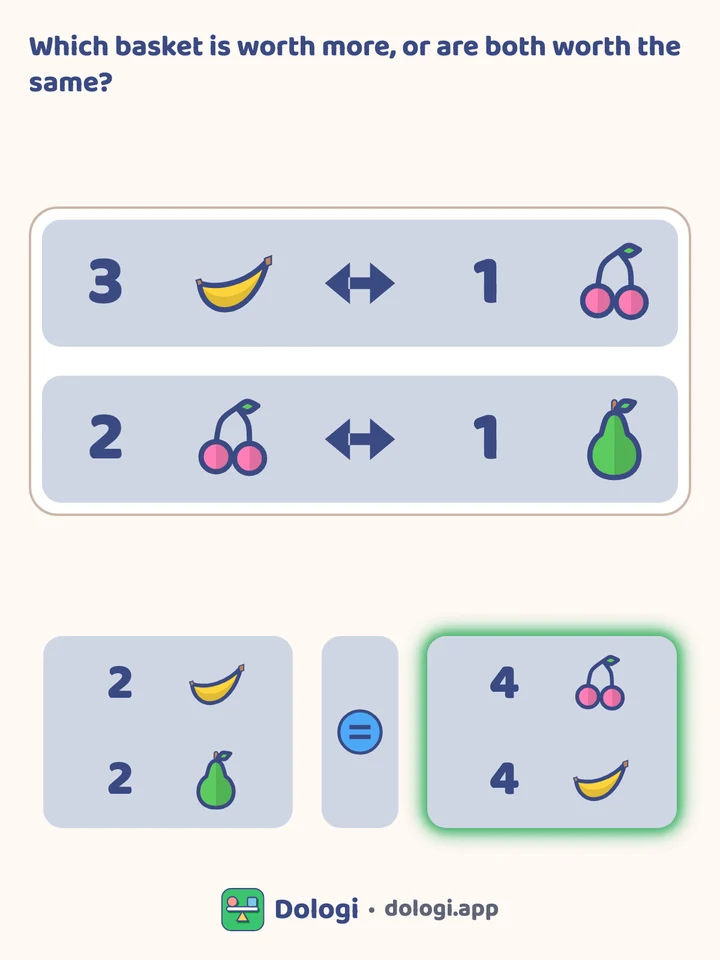
Ages 7–8
What it builds: The two baskets hold different fruits, so they cannot be compared directly; your child uses the trading cards to convert both baskets into one kind of fruit before comparing. This is the idea of using a common unit, which they will need for comparing lengths, weights or money later on. Keep playing: price a few toys in bottle caps, then ask your child which basket of toys is worth more.
Did your child enjoy these puzzles? The Dologi app has many more math puzzles of the same kinds, getting harder with age and with how your child plays, so a little daily practice with adding, fractions and comparing feels more like a game than homework.