This is the third post for kids ages 7–8, with five fun math puzzles straight from the Dologi app. They mix different areas: adding steps, counting systematically, measuring water, converting and finding a missing number, so your child sees that math is everywhere and not just in a workbook.
How to use this post: show your child one picture at a time and let them think before answering. The answer is behind the "Show answer" button under each picture. Try letting your child play "teacher" and explain the method to you after each puzzle.
Puzzle 1: Fewest steps
Ages 7–8
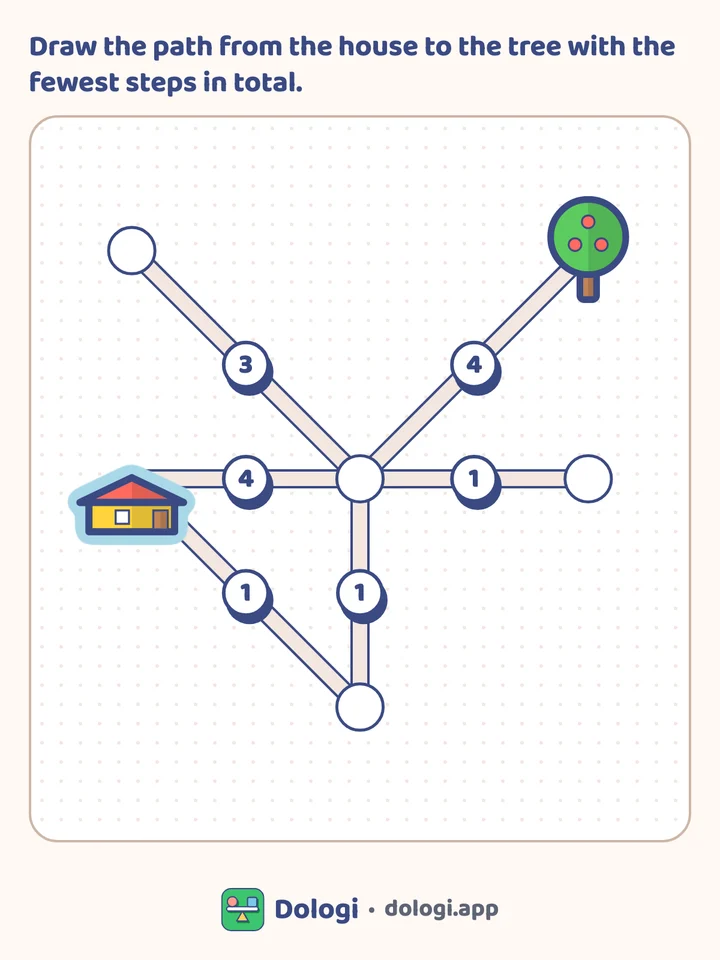
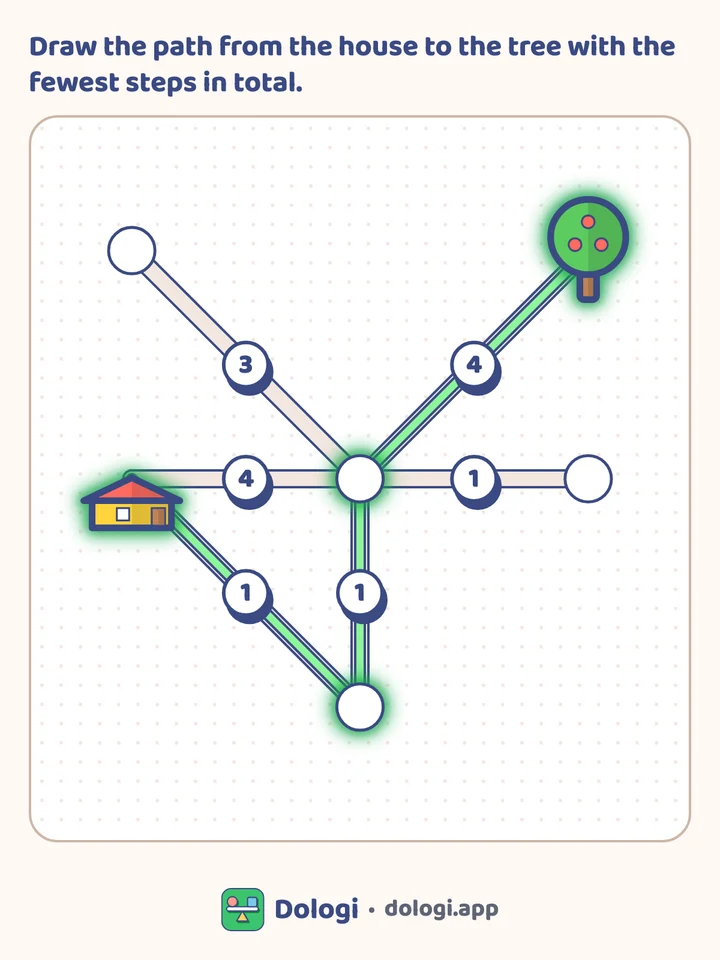
What it builds: There is a straight route through the middle and a roundabout one; your child adds up the steps on each to discover that the roundabout way is sometimes shorter. It practices mental addition and teaches them not to trust the first impression too quickly. Keep playing: at the supermarket, ask your child to guess which aisle gets you to the fruit faster, then count steps together to check.
Puzzle 2: How many sounds?
Ages 7–8
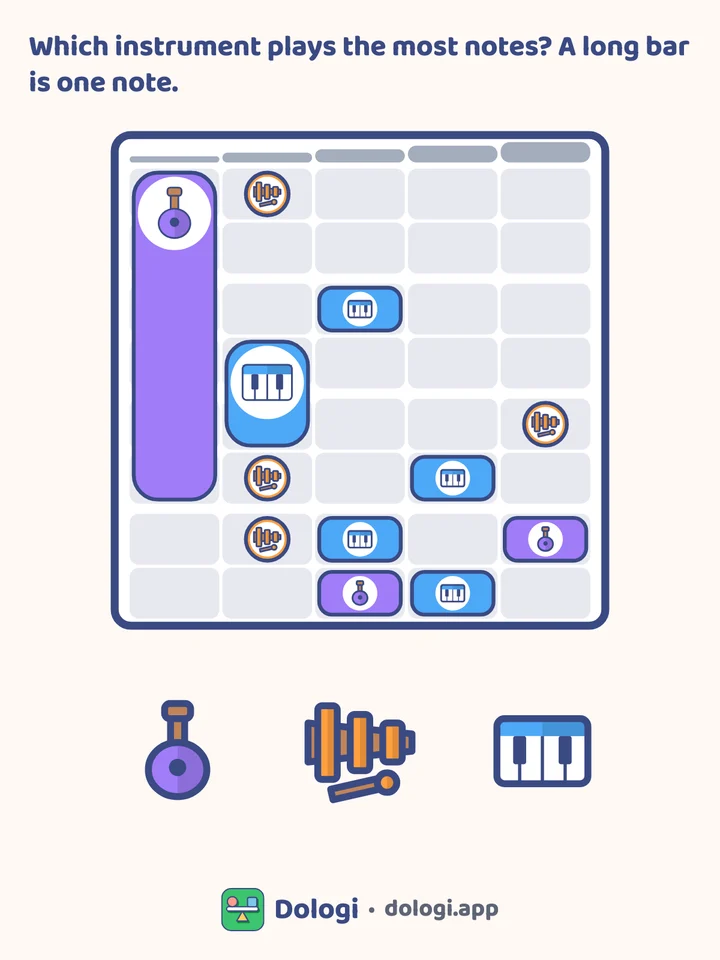
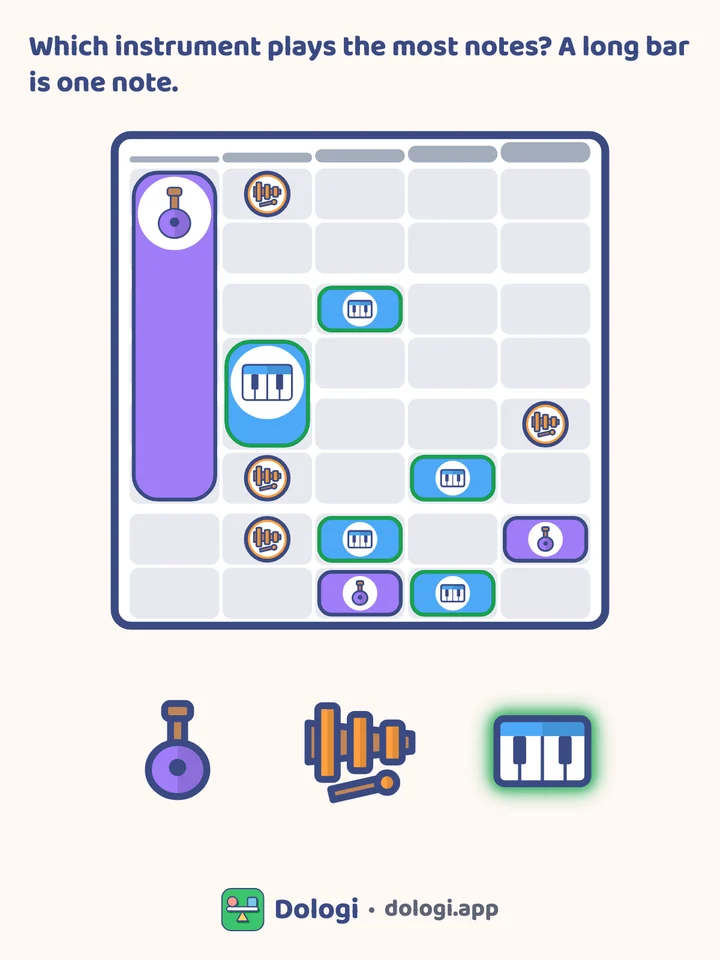
What it builds: The board mixes three instruments; your child counts the notes for each one and compares, remembering that a long bar counts as just one note. Counting by group and comparing is how they will read charts and tally tables at school. Keep playing: count together how many items of each kind are in the fridge (vegetables, fruit, dairy) and write them down as a table.
Puzzle 3: Pour and measure
Ages 7–8
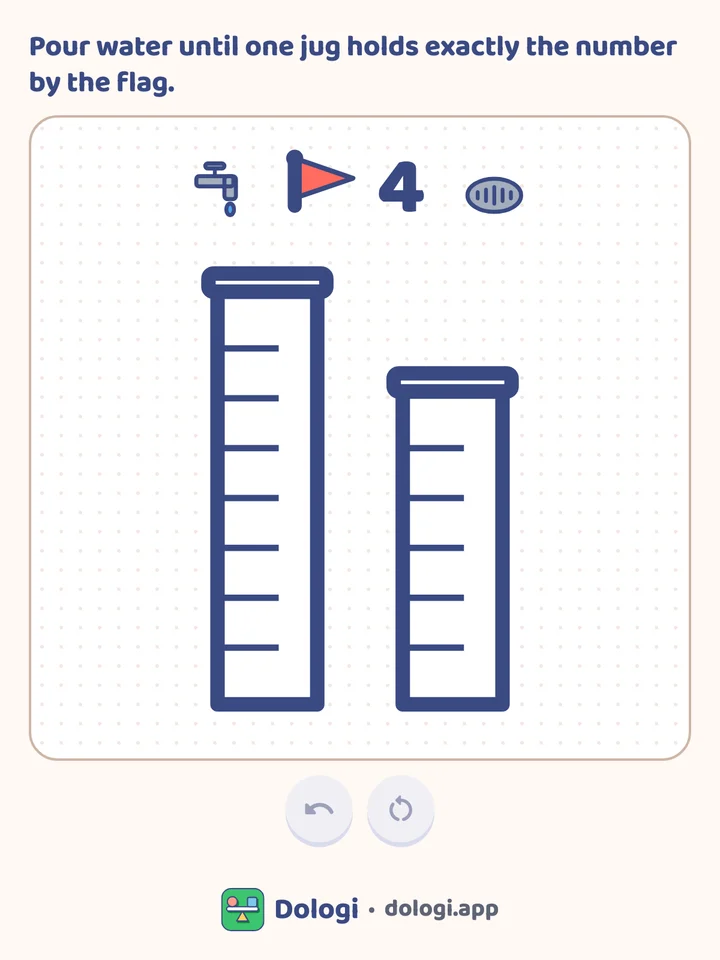
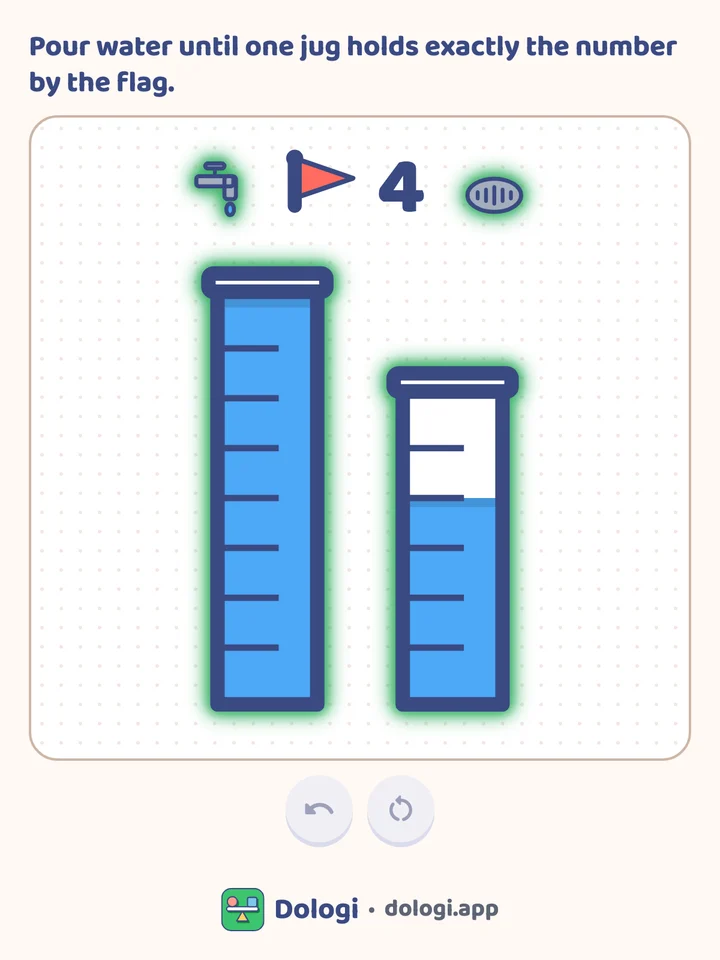
What it builds: There is a big jug, a small jug, a tap and a drain; your child uses the two jugs to measure out the amount next to the flag by pouring back and forth. It practices adding and subtracting with capacities and planning a few steps before acting. Keep playing: at the sink, give your child two cups of different sizes and challenge them to measure out the difference between the two.
Puzzle 4: Just enough
Ages 7–8
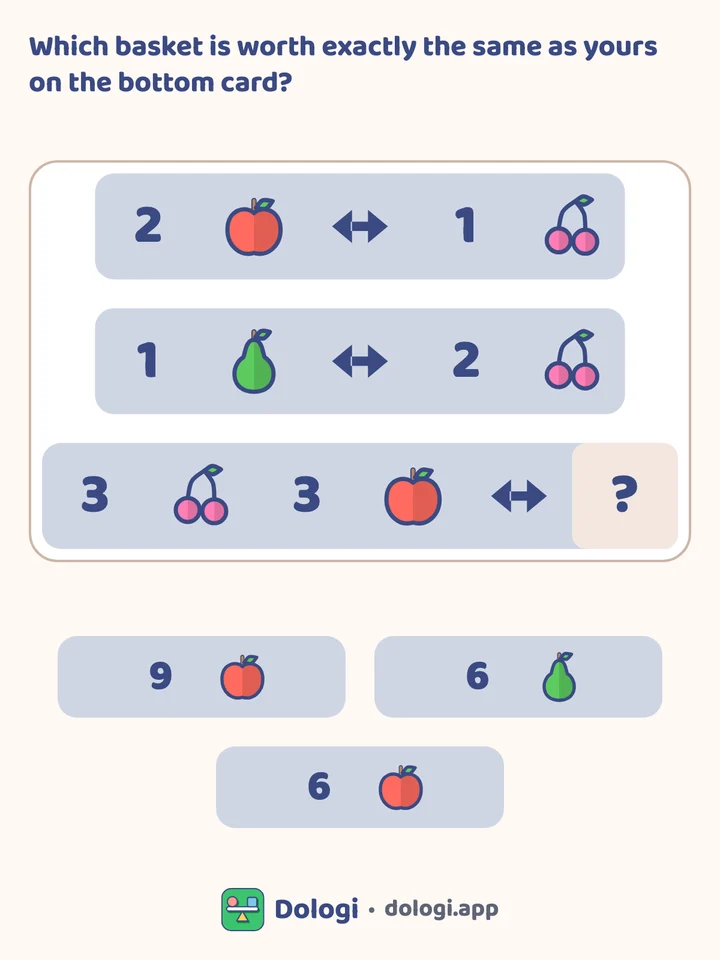
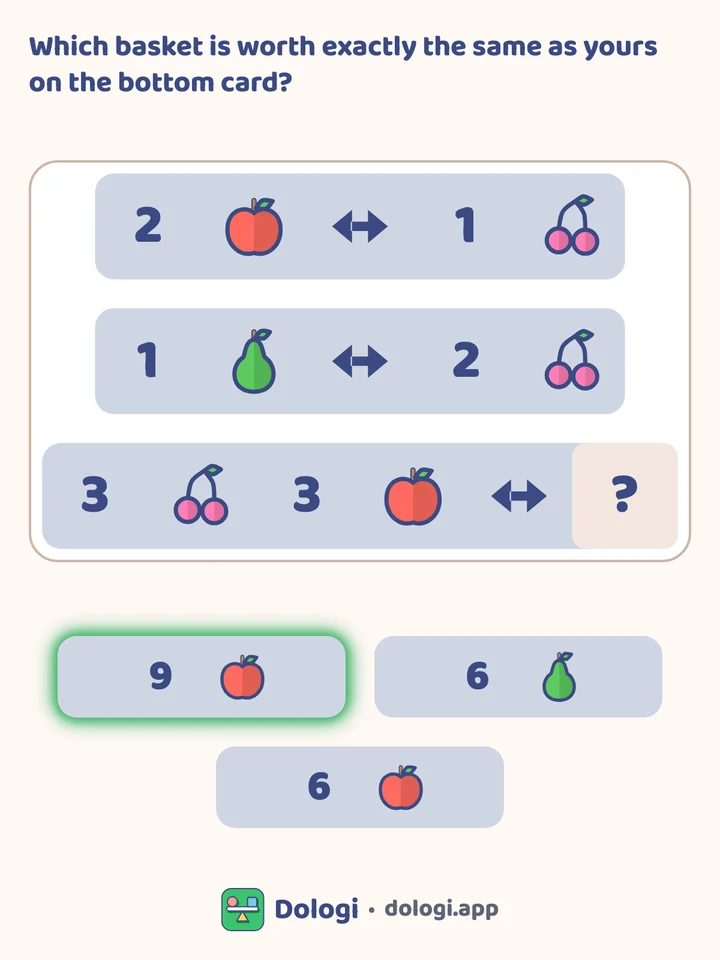
What it builds: The top two cards show how apples and pears trade for cherries; your child converts the basket on the bottom card into one kind of fruit, then finds the basket worth the same. It practices simple multiplication and the idea of converting to one unit before comparing. Keep playing: price some toys in bottle caps together, then quiz each other on which bags of toys a given bag could be traded for.
Puzzle 5: Missing number on the card
Ages 7–8
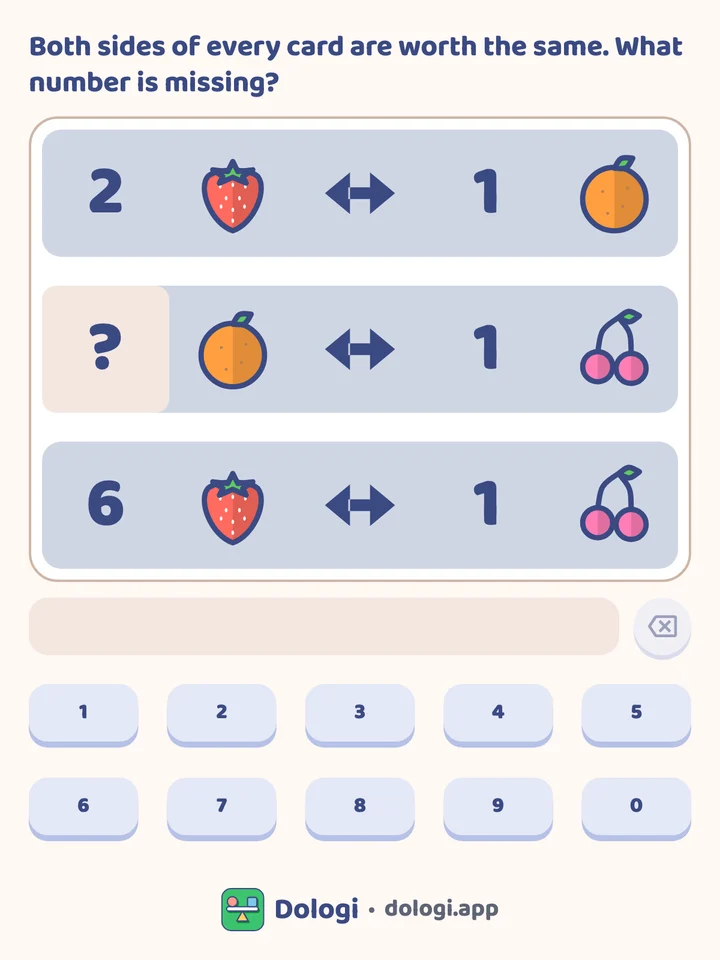
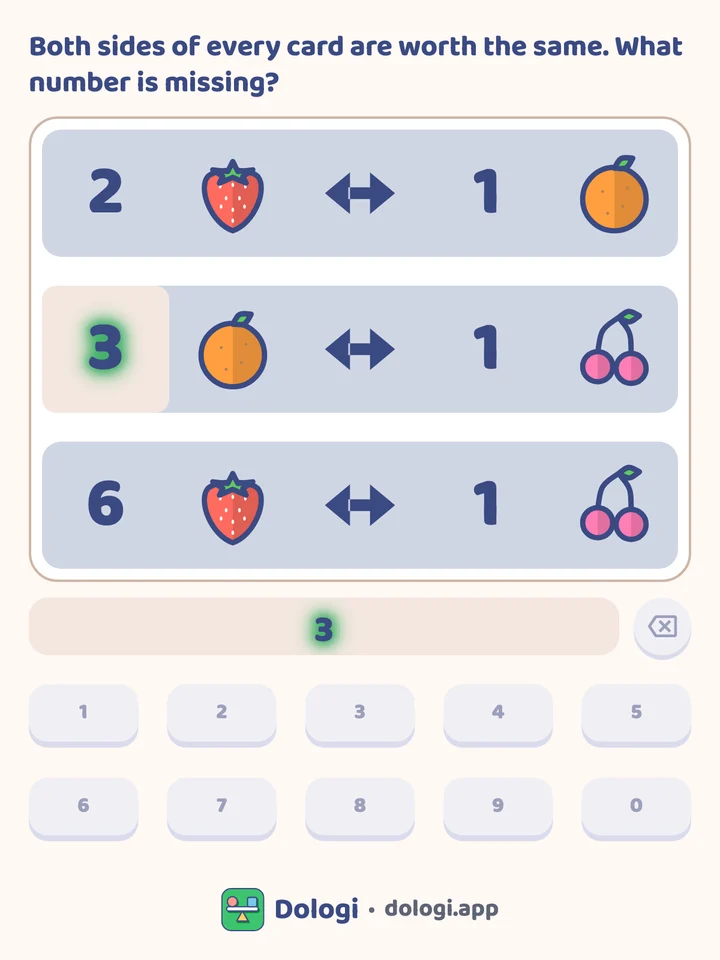
What it builds: The card with the question mark sits between two others, so your child has to use both to work out the missing number, perhaps by turning everything into one kind of fruit. Reasoning backward from what is known to what is not is the skill behind solving for x later on. Keep playing: make up three statements like "two of these equal one of those" with things at home and let your child find the missing piece.
Did your child enjoy these puzzles? The Dologi app has many more math puzzles of the same kinds, getting harder with age and with how your child plays, so each day they find fun math everywhere in a way that feels more like a game than homework.