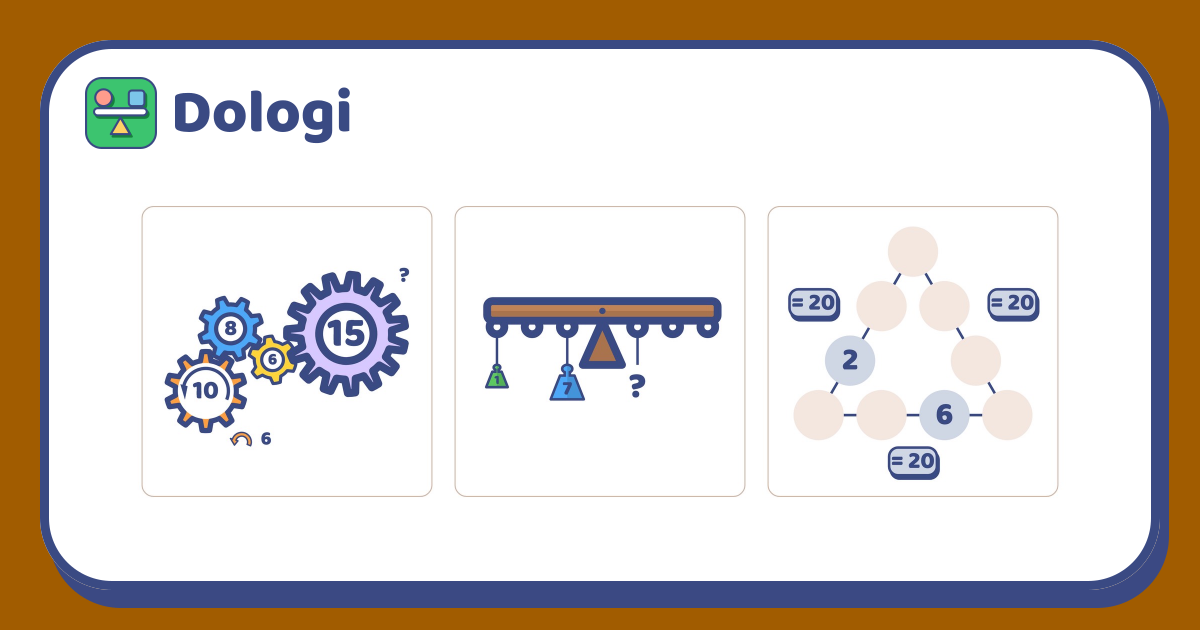
By ages 8–10, most kids can add, subtract, multiply and divide fairly well. The next step is using those operations to solve a situation: choosing which one, in what order, and checking whether the result makes sense. The five puzzles below come straight from the Dologi app, go from easy to harder, and each one puts arithmetic in a different setting: a map, machines, a balance, a fruit market and a number triangle.
How to use this post: show your child one picture at a time, let them think and use scratch paper if needed. The answer is behind the "Show answer" button under each picture. If your child gets it wrong, ask how they worked it out; kids often spot their own slip when they retell each step.
Puzzle 1: Fewest steps
Ages 8–10
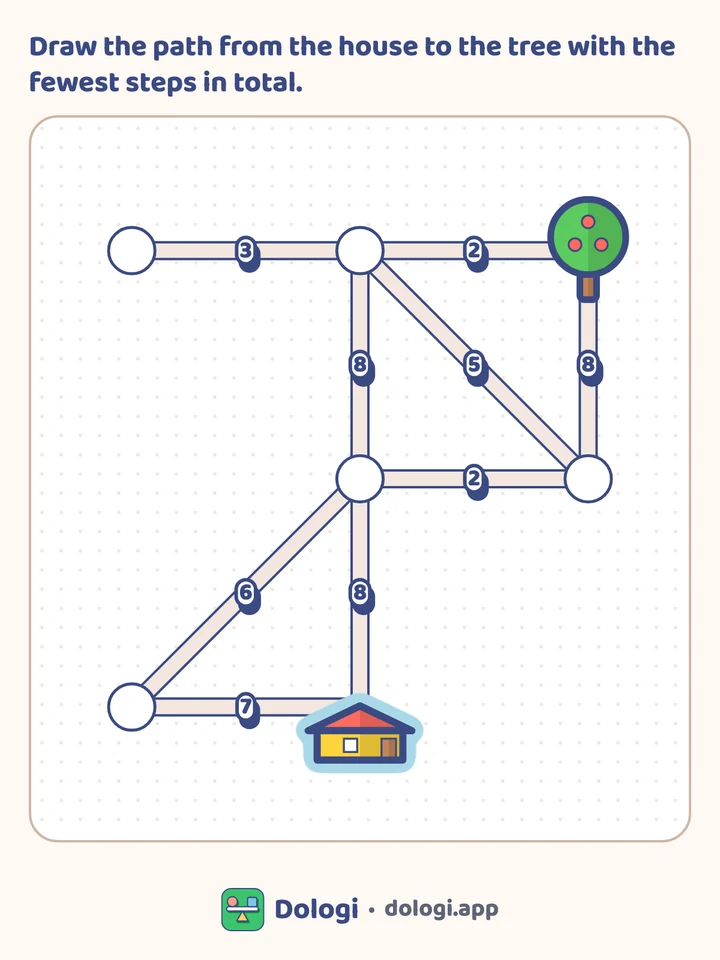
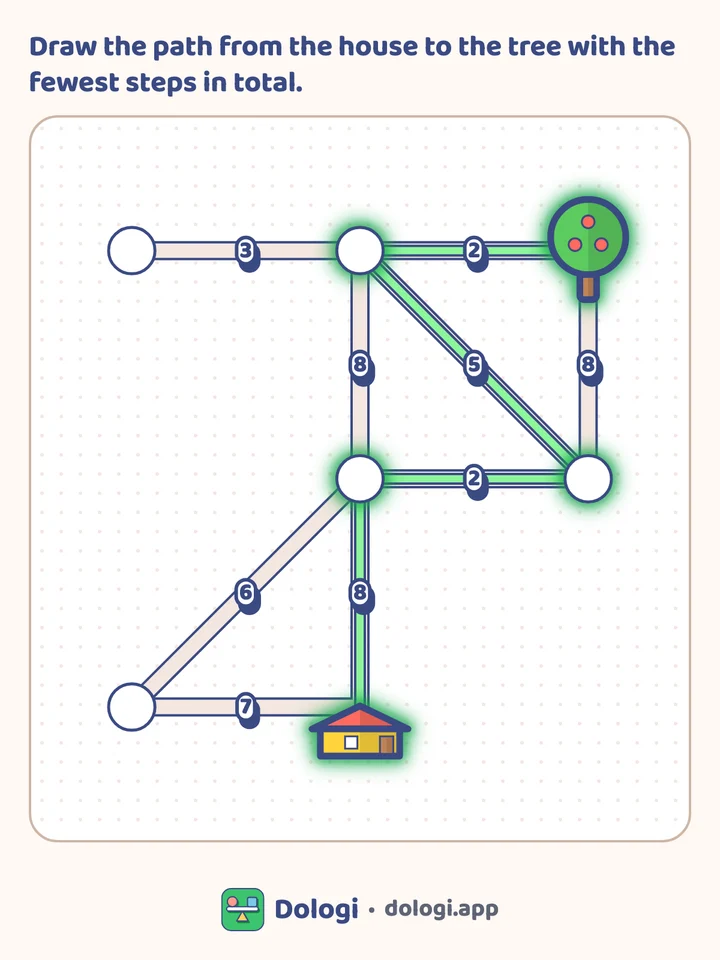
What it builds: Your child adds up the steps on the segments and compares several routes, because the route that looks most direct is not always the one with the fewest steps. It trains quick mental addition and the habit of comparing before choosing, like picking a route to school or ordering chores. Keep playing: sketch a map of a few familiar places nearby, write the walking minutes between them, and challenge each other to find the quickest route.
Puzzle 2: Count the turns
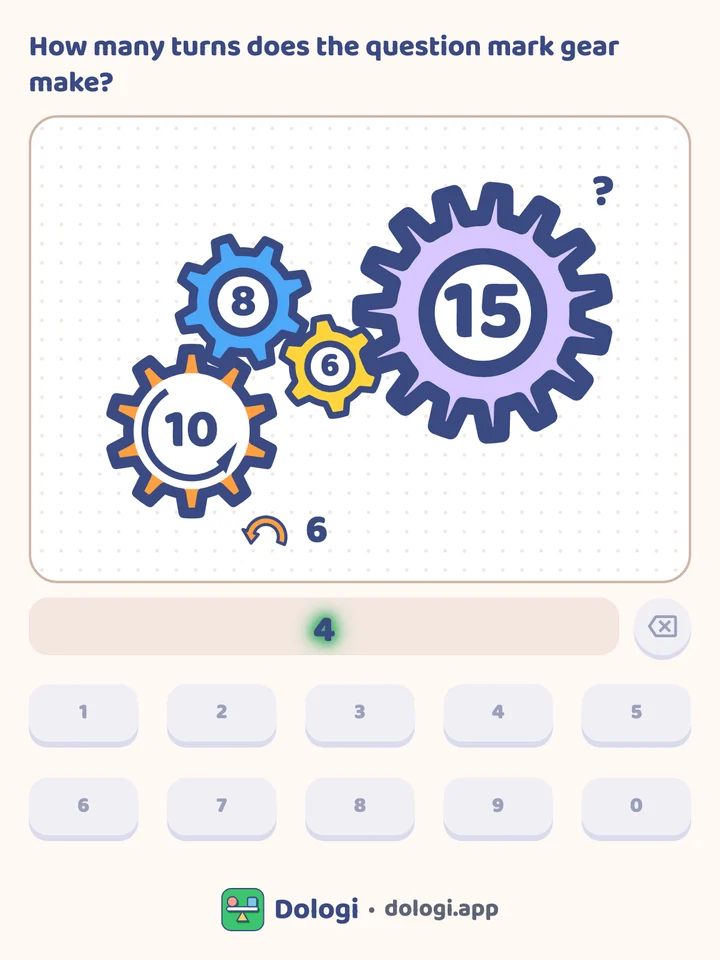
Ages 8–10
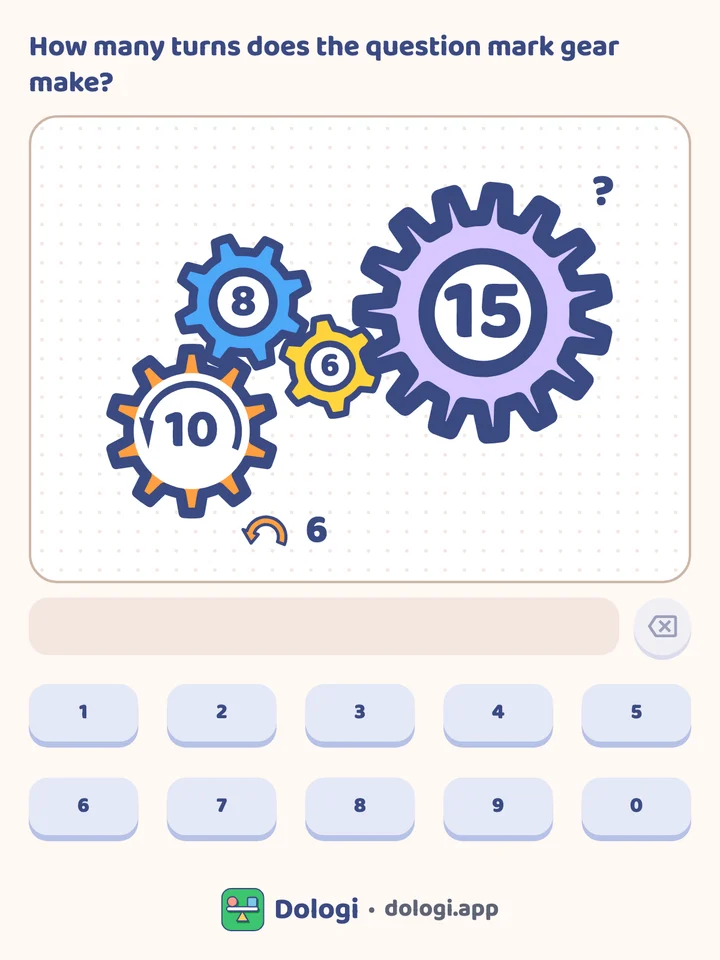
What it builds: Meshing gears pass along the same number of teeth, so your child multiplies the turns by the teeth of the turning gear, then divides by the teeth of the gear in question. They see multiplication and division working as a pair, and understand why a big gear turns slowly while a small one spins fast. Keep playing: cut two paper plates of different sizes, notch teeth into them, roll them against each other and mark one tooth to count the turns.
Puzzle 3: Balance the beam
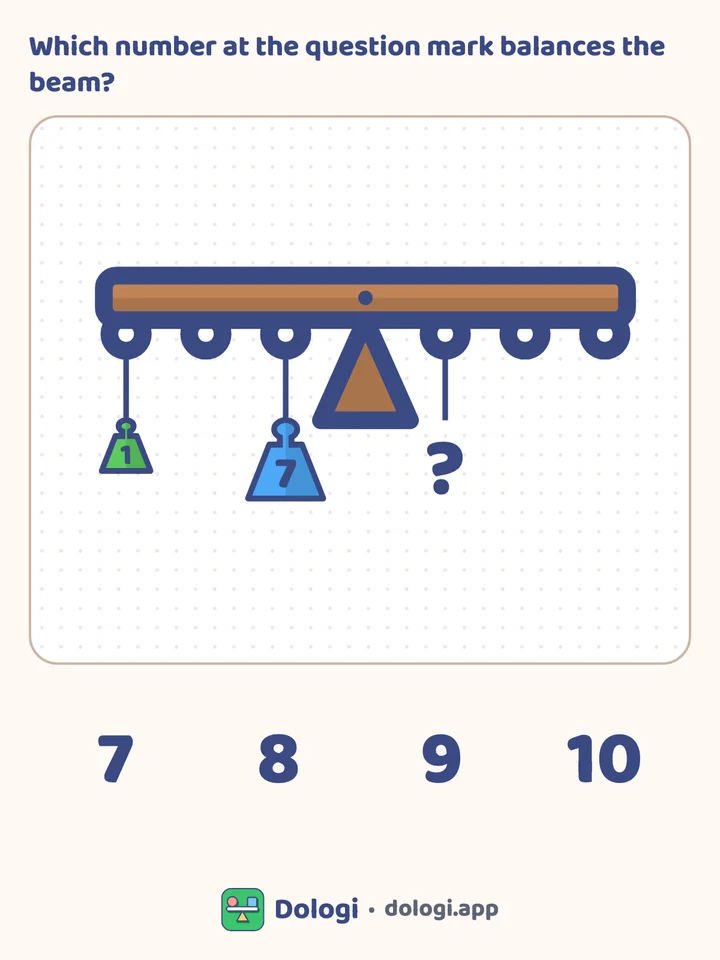
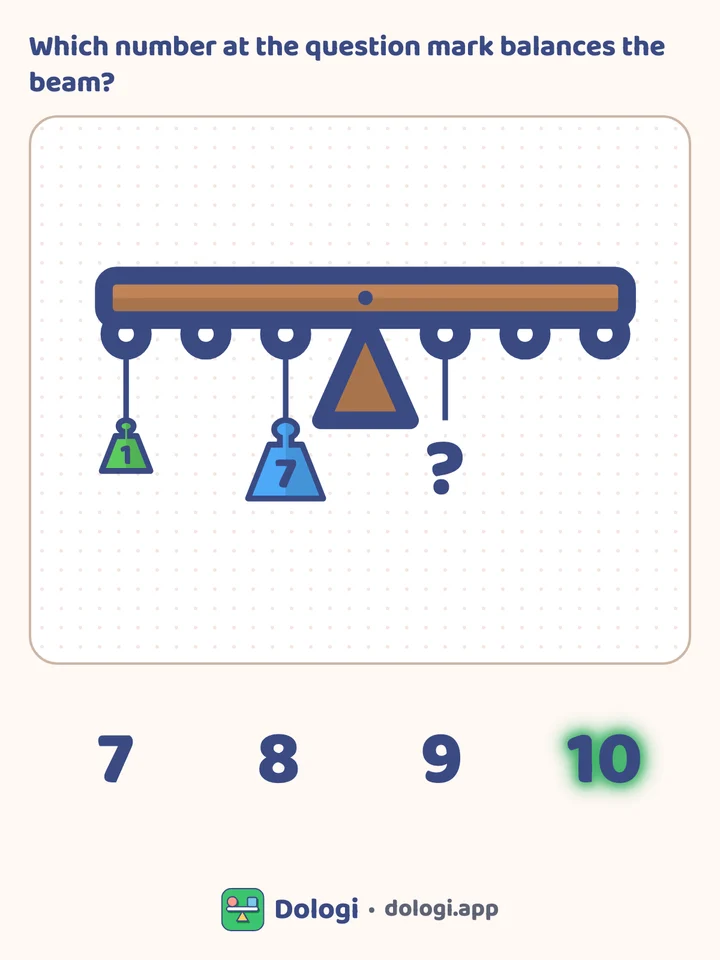
Ages 8–10
What it builds: The farther a weight hangs from the middle, the harder it tips the lever; your child multiplies each weight's number by its distance on both sides and finds the number that makes them equal. This is the lever principle found in seesaws, scissors and crowbars, and an early step toward equations. Keep playing: try a seesaw together at the playground, sitting closer to or farther from the middle to see whether the lighter person can lift the heavier one.
Puzzle 4: Just enough
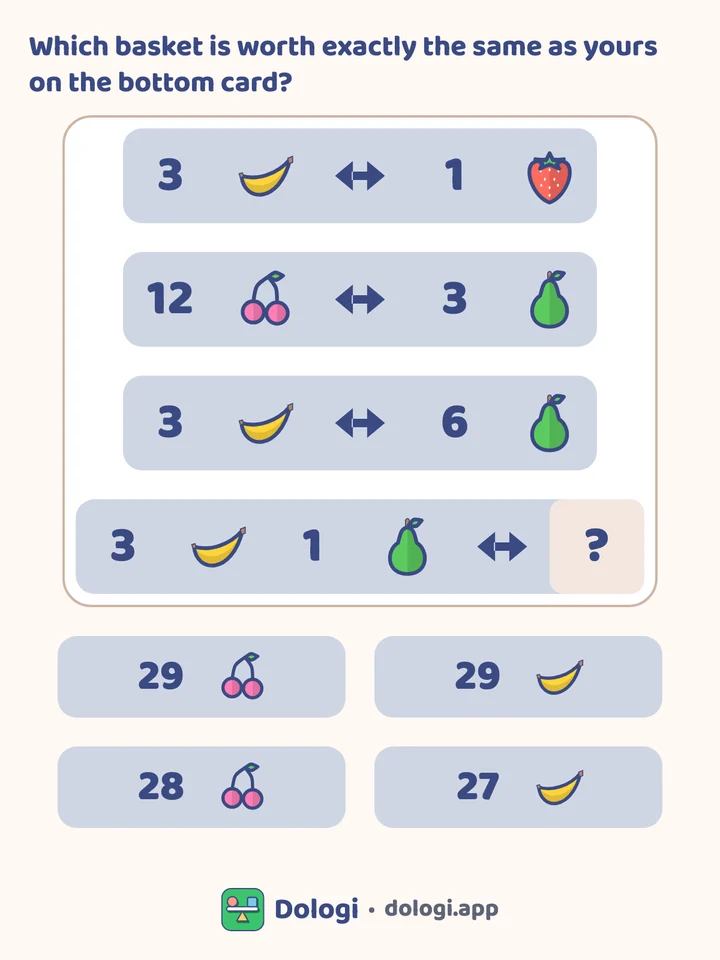
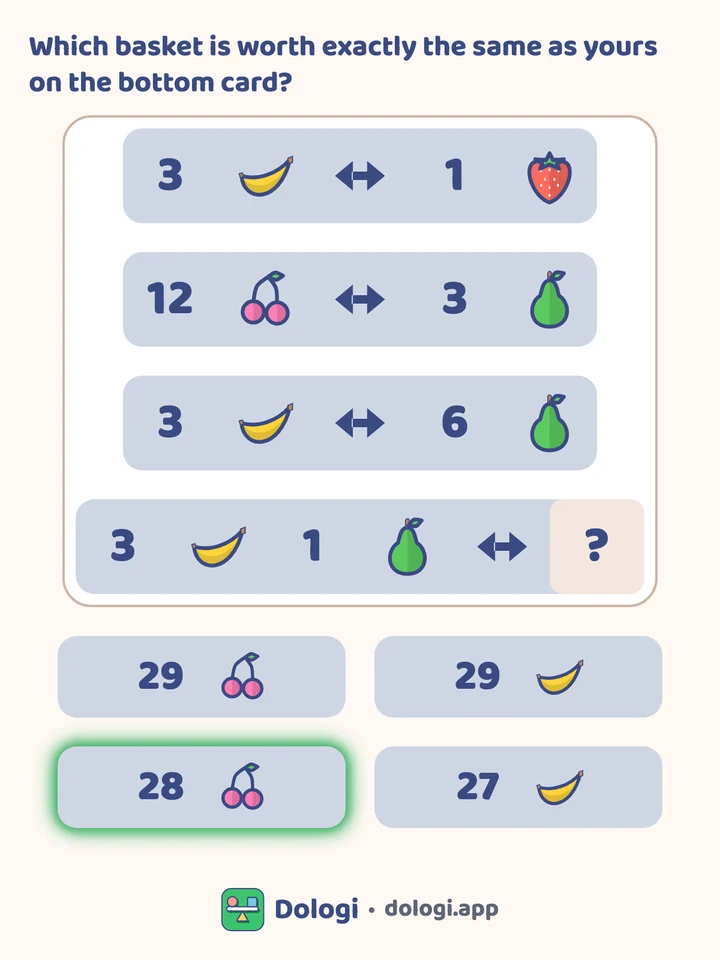
Ages 9–10
What it builds: The trading cards link up, but not every card is needed; your child picks the useful ones, converts the whole basket into one kind of fruit, then compares it with each basket below. Knowing what information to ignore is a key skill for word problems at school. Keep playing: at the store, compare two packs of different sizes together to see which one is cheaper per item.
Puzzle 5: Add along the lines
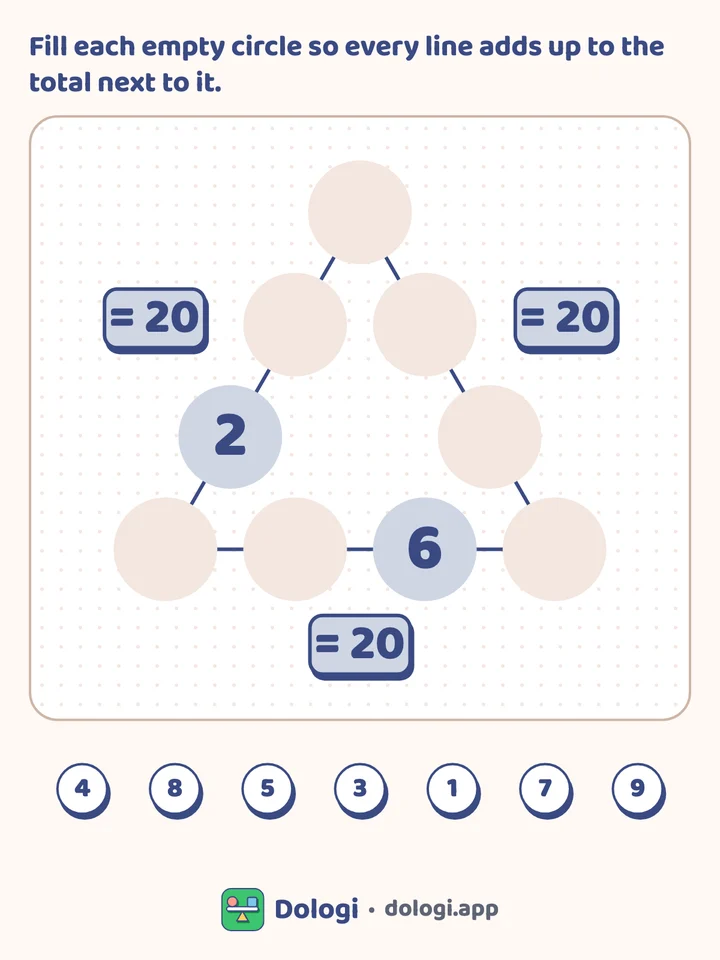
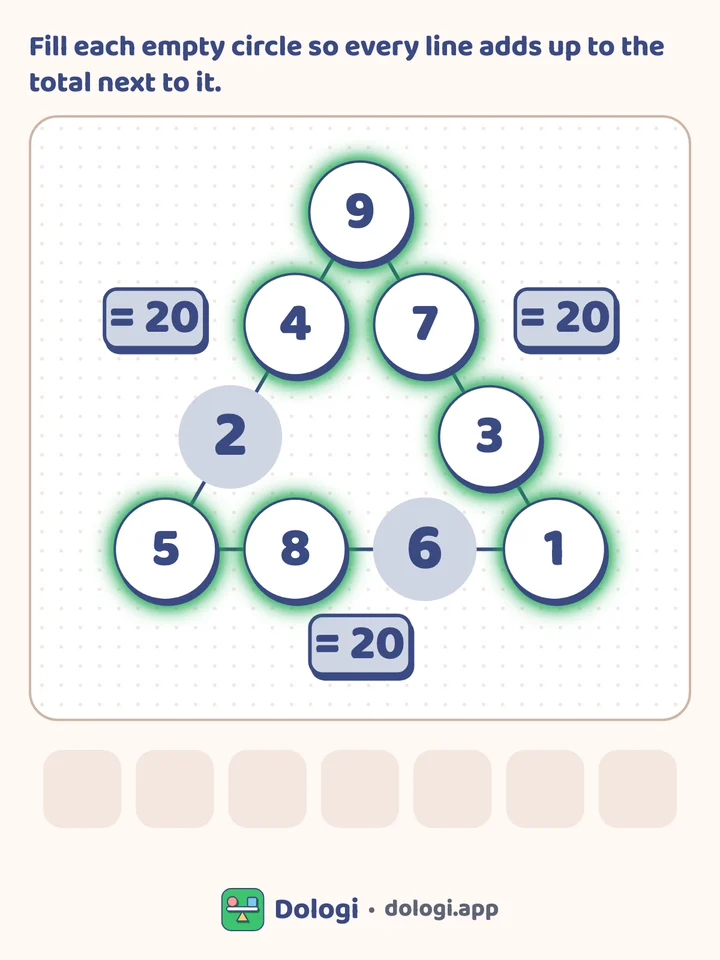
Ages 9–10
What it builds: Every side of the triangle must add up to the same total, and each corner number belongs to two sides at once; your child tries numbers, sees what each side is still missing, and swaps numbers until everything fits. It practices repeated mental addition and "if this number goes here, then that one must be…" reasoning. Keep playing: take nine playing cards from 1 to 9, arrange them together in a triangle whose three sides have equal sums, then look for another arrangement.
Did your child enjoy these puzzles? The Dologi app has many more math puzzles of the same kinds, getting harder with age and with how your child plays, so each day they take arithmetic into new situations in a way that feels more like a game than homework.