This is a follow-up for kids ages 8–10, with five new math puzzles straight from the Dologi app. This time your child converts across several cards, cracks a number code, compares fractions with pictures, adds a row of two-digit numbers and works backward in time on a clock: all things from the third- and fourth-grade curriculum.
How to use this post: show your child one picture at a time and let them think, with scratch paper if needed. The answer is behind the "Show answer" button under each picture. If your child finishes quickly, ask whether there is another way to check the result.
Puzzle 1: Compare the baskets
Ages 8–10
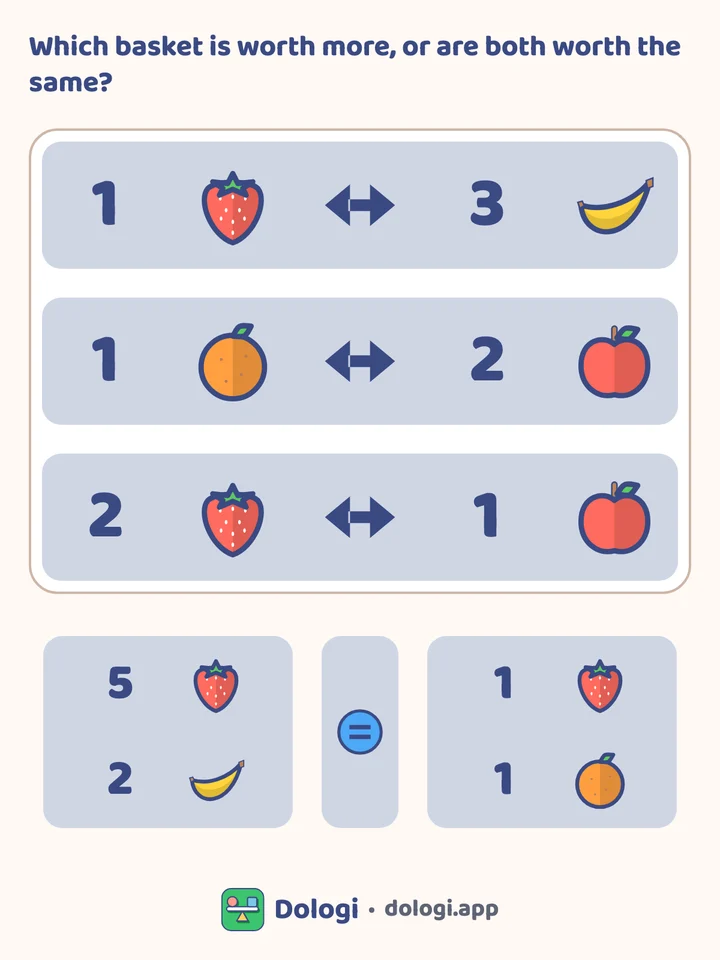
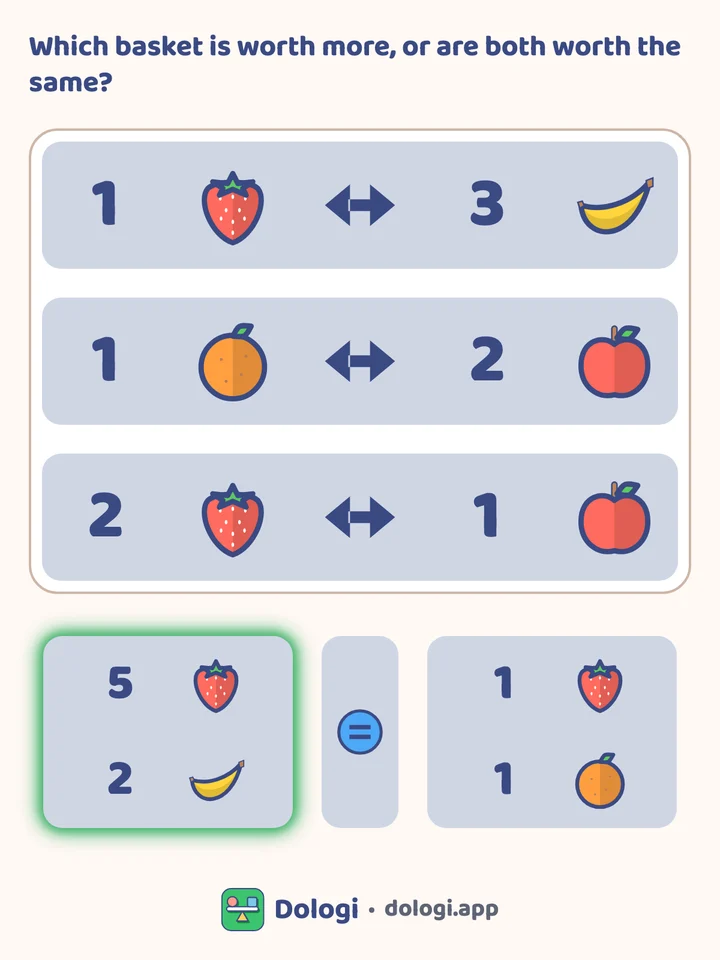
What it builds: The three trading cards link up, and one goes through a third kind of fruit; your child has to chain two cards to find how many strawberries an orange is worth, then convert both baskets to the same fruit. It practices multi-step reasoning and multiplication in a familiar setting. Keep playing: write an "exchange rate" chart between toys at home together, then challenge each other on which basket is worth more.
Puzzle 2: Shifted code
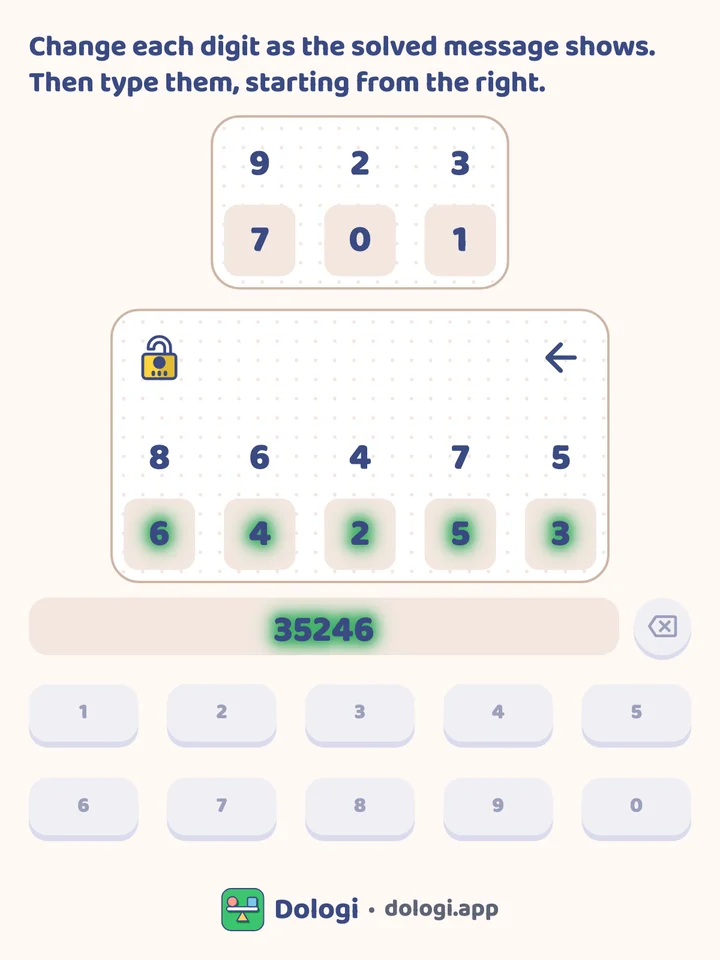
Ages 8–10
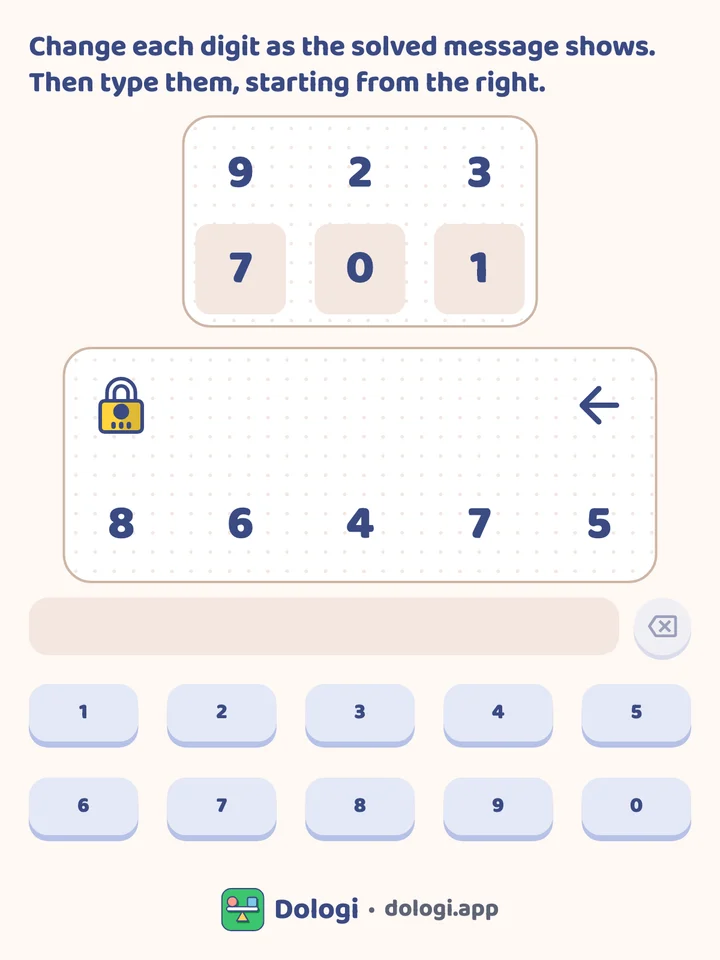
What it builds: The sample message shows that every digit changes by the same rule; your child figures out the rule from the sample, applies it to the new code, and remembers to type in the direction asked. It is a first step into code-breaking thinking: find the pattern, follow it step by step and check. Keep playing: make up your own digit-changing rule together, write a message in numbers and let your child challenge you to decode it.
Puzzle 3: Equal parts
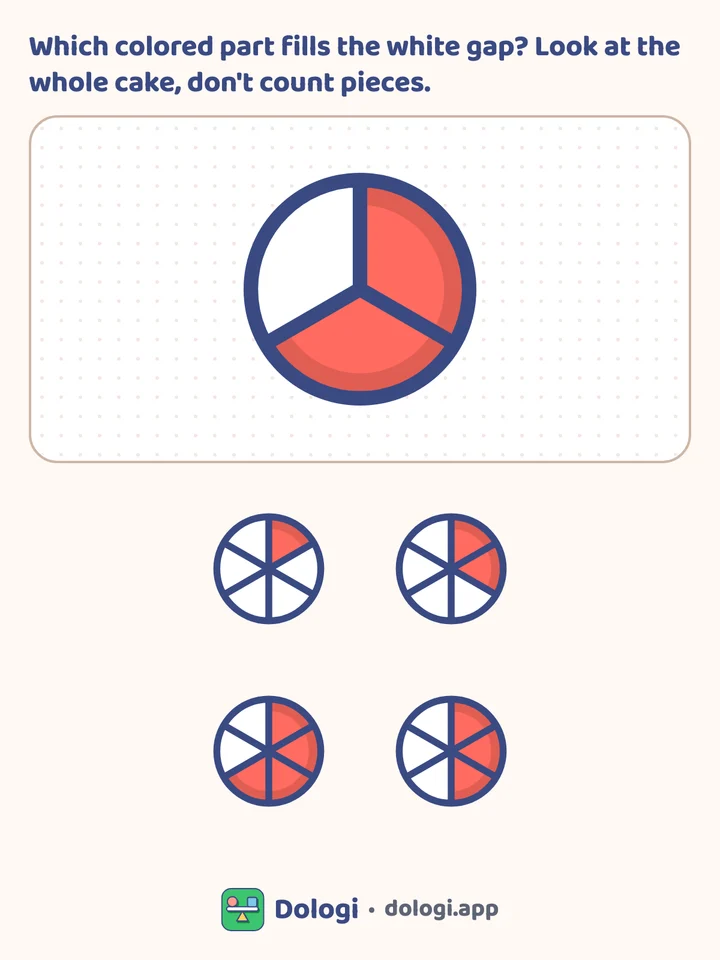
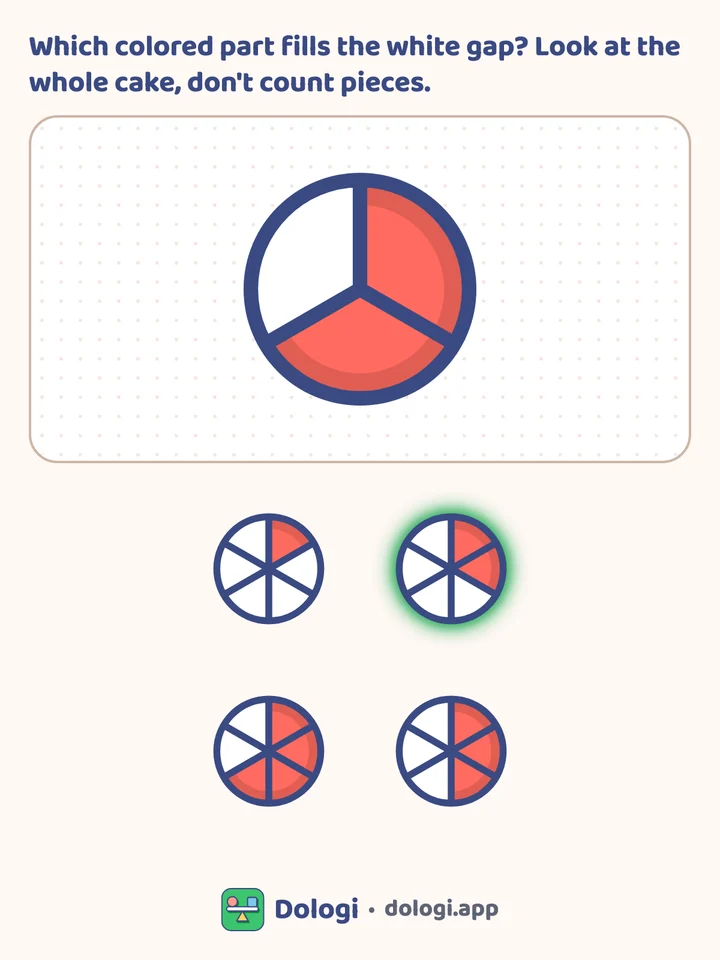
Ages 8–10
What it builds: The big pie is cut into three parts and the small pies into six, so your child cannot compare the number of slices; they have to compare how much of the whole pie each part covers. This is equivalent fractions, an idea they will use a lot when simplifying fractions at school. Keep playing: fold a sheet of paper into three parts, then fold it in half once more, and ask how many new parts each old part has become.
Puzzle 4: Add and answer
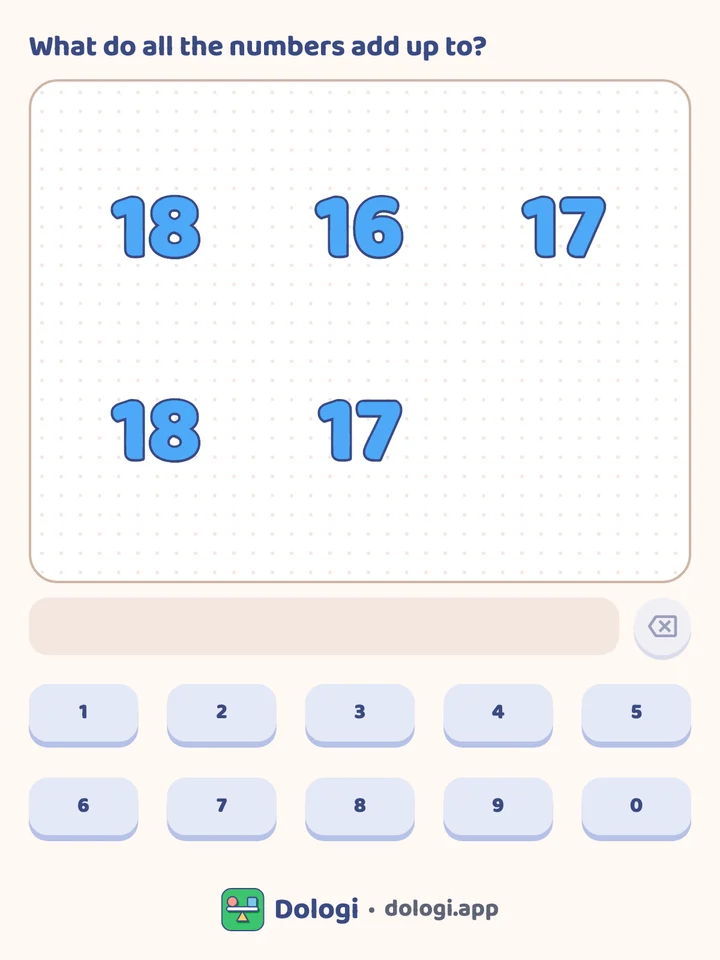
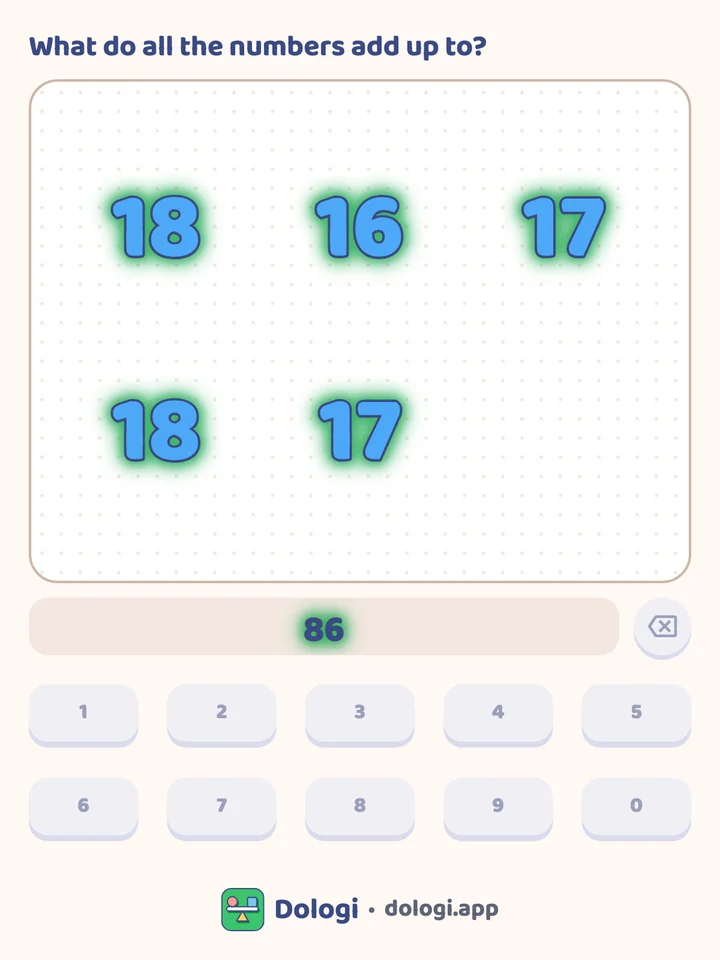
Ages 9–10
What it builds: The five numbers are close to each other, so your child can add them one by one, or spot shortcuts like pairing equal numbers, or rounding and adjusting. Choosing a smart way to add makes mental math faster and less error-prone. Keep playing: at the store, ask your child to add up a few prices rounded to the nearest dollar in their head, then compare with the receipt.
Puzzle 5: What time is it?
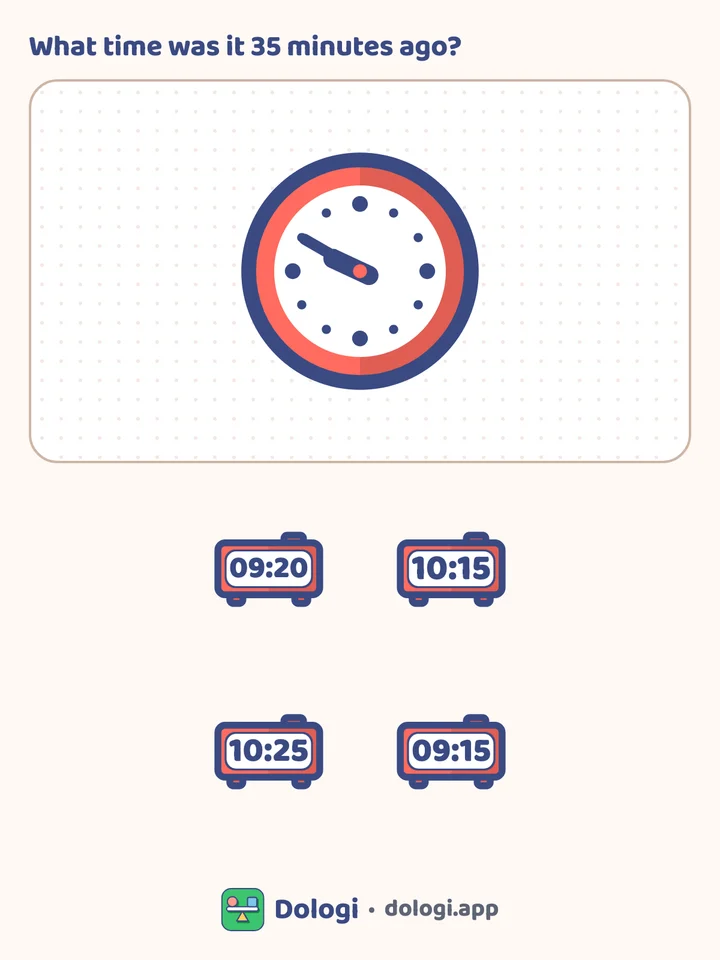
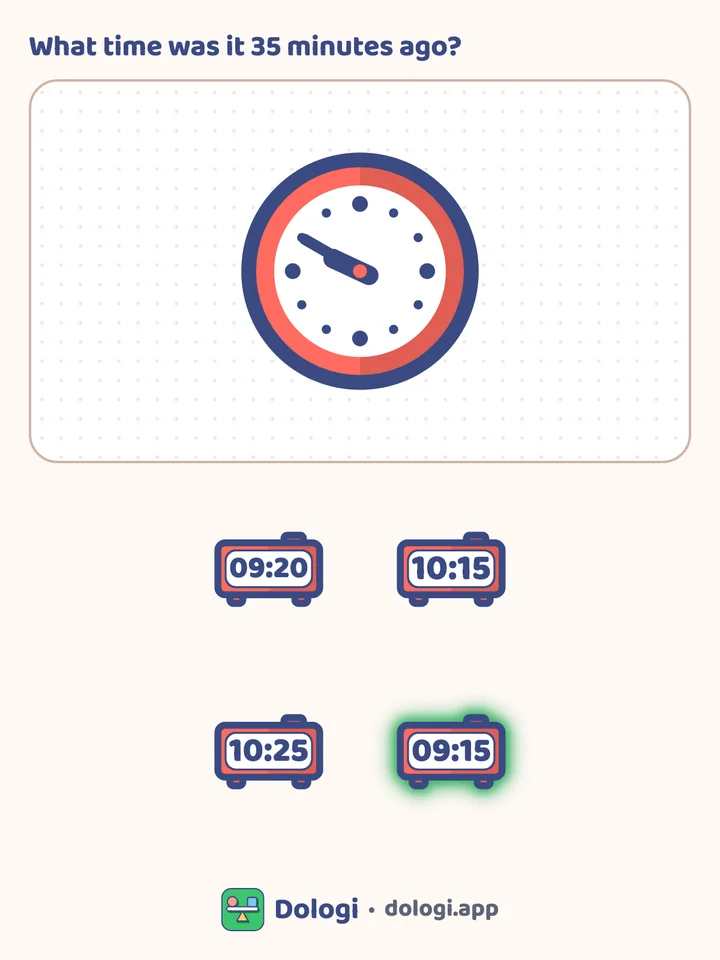
Ages 9–10
What it builds: Your child reads the clock with hands, then goes back a stretch of time, noticing that when the minutes go back past the top of the hour, the hour must go back too. Working out times before and after is something they use daily, from how long until school to how long a movie has been playing. Keep playing: ask your child, if dinner ends now and lasted a certain time, when it must have started.
Did your child enjoy these puzzles? The Dologi app has many more math puzzles of the same kinds, getting harder with age and with how your child plays, so each day they practice calculating and reasoning in a way that feels more like a game than homework.