By ages 8–10, kids are comfortable with adding, subtracting, multiplying and dividing, and they start meeting problems that take several steps to solve. The ten puzzles below follow the two earlier posts for this age group, mixing new and familiar kinds: gears, fruit standing in for numbers, fractions, pouring water, fruit trading cards, counting musical notes, a lever, mental addition and minutes on a clock. All of them come straight from the Dologi app, ordered from easy to harder.
How to use this post: show your child one picture at a time, let them think, use scratch paper if needed, then explain how they got there. The answer is behind the "Show answer" button under each picture. If an answer is off, don't open the solution right away: go back through the steps together and find where it slipped.
Puzzle 1: Count the turns
Ages 8–10
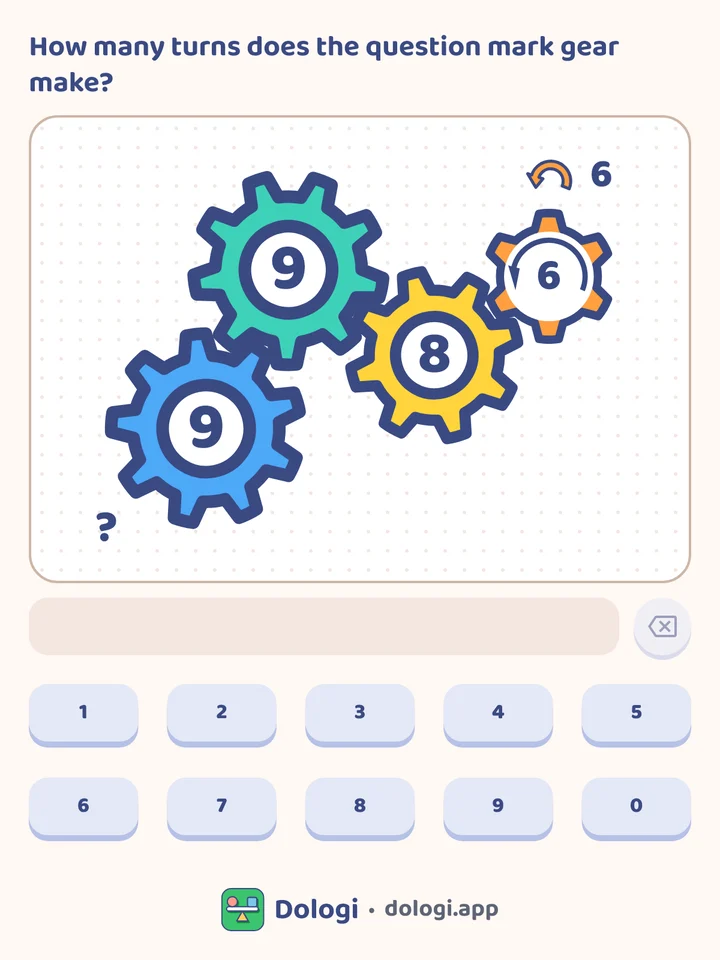
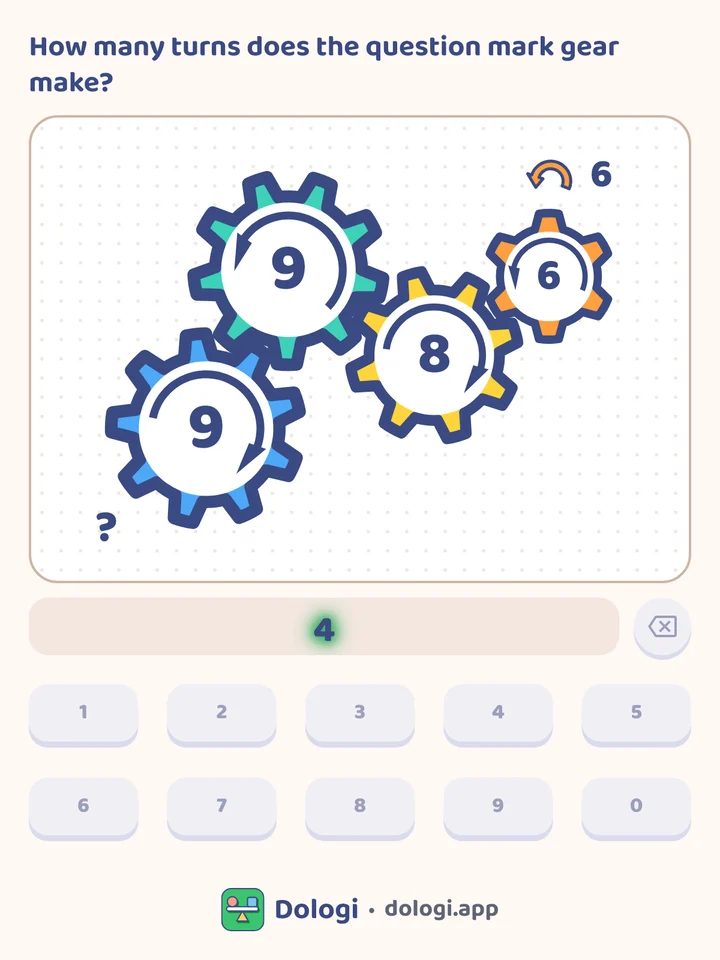
What it builds: Gears that mesh pass the same number of teeth, so a gear with few teeth turns many times while a gear with many teeth turns fewer times. Your child works out how many teeth have passed from the gear with a known number of turns, divides by the teeth on the question-mark gear, and decides for themselves whether the gears in between change anything. Keep playing: turn a bike upside down, count the teeth on the front and back sprockets, then pedal once together and see how many times the back wheel turns.
Puzzle 2: Fruit numbers
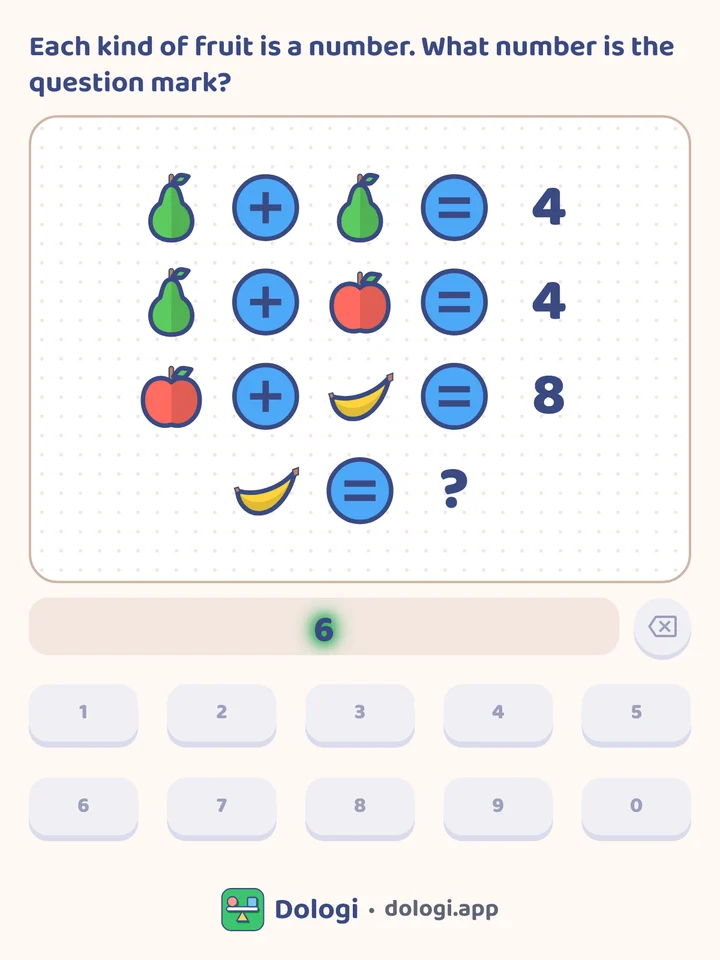
Ages 8–10
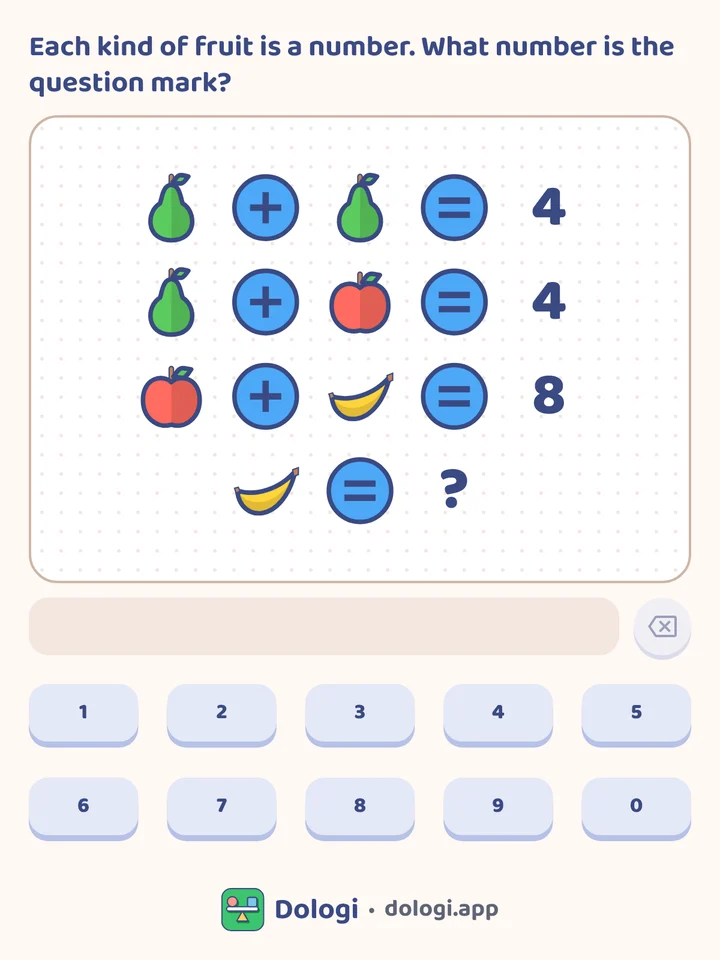
What it builds: Each row is a small equation; your child starts with the row that has only one kind of fruit to find its value right away, then carries that value down to the next row. This is exactly how they will solve for x in later grades: use what is known to find what is not. Keep playing: let three household objects stand for numbers, write a few additions, and challenge your child to find the value of each object.
Puzzle 3: Equal parts
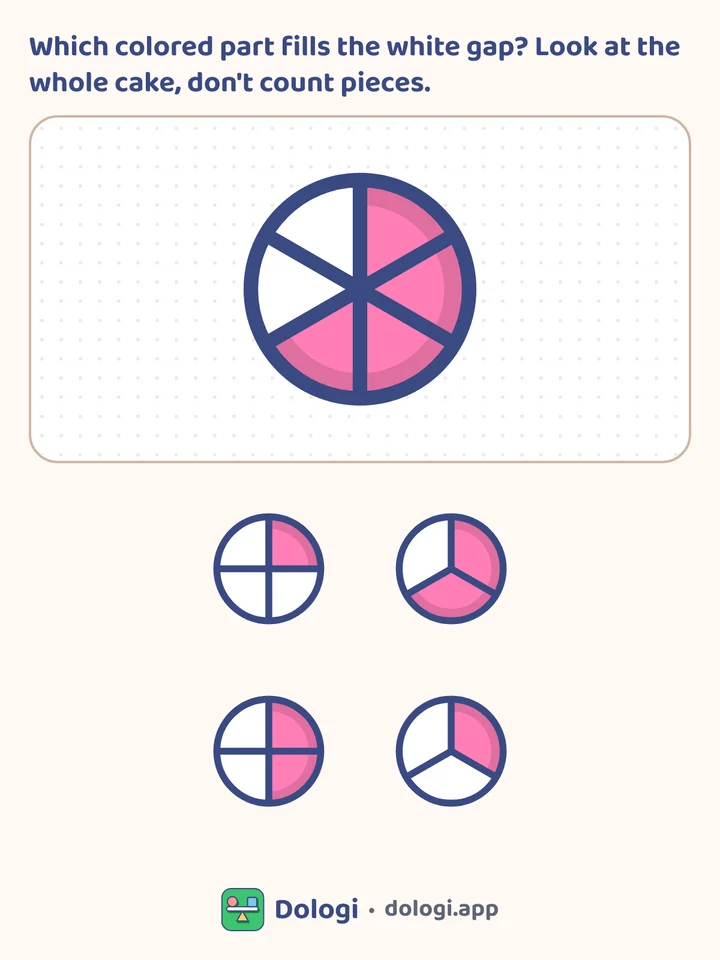
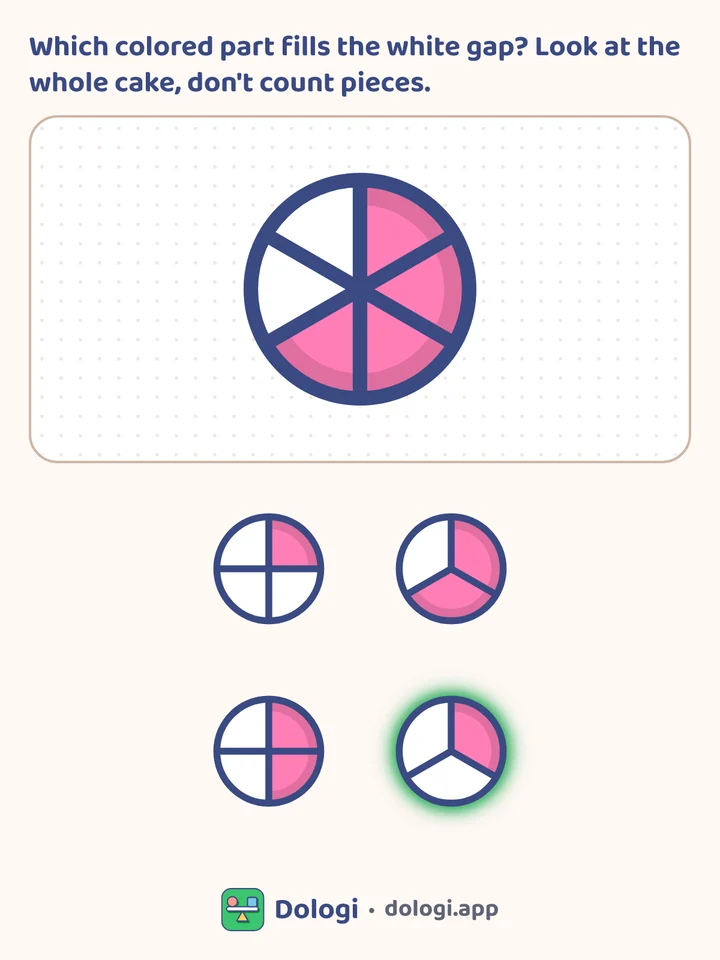
Ages 8–10
What it builds: The big pie is cut into six parts while the small pies below are cut differently, so your child cannot just count slices; they have to compare how much of the whole pie the colored part covers. It builds the idea of equivalent fractions, the groundwork for comparing and simplifying fractions at school. Keep playing: cut an orange or a cake into six pieces and ask how many pieces make exactly half.
Puzzle 4: Pour and measure
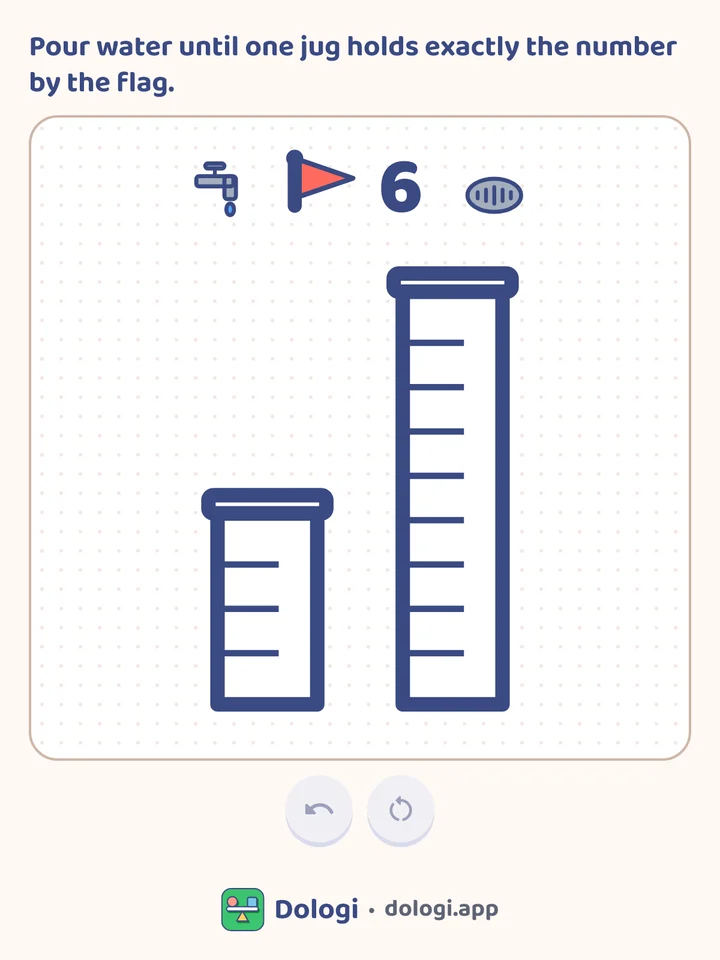
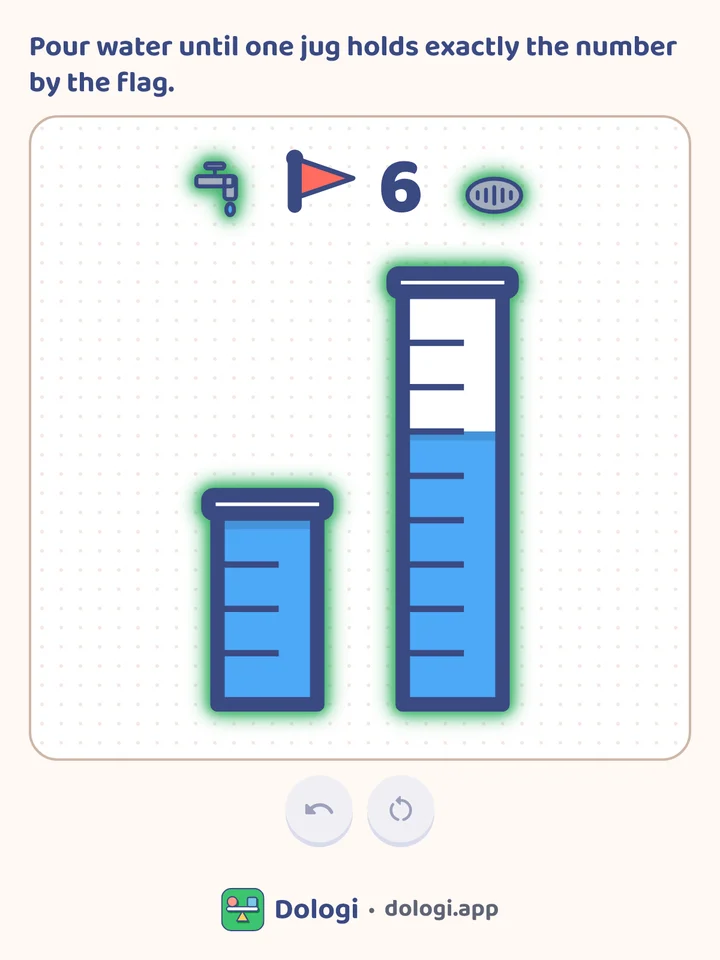
Ages 8–10
What it builds: Neither jug holds exactly the amount needed, so your child has to plan a sequence ahead: fill one, pour from one jug into the other, empty some out. It practices multi-step planning and adding and subtracting measurements, just like measuring water for cooking. Keep playing: give your child two cups of different sizes and a bowl of water, and challenge them to measure out an amount you pick.
Puzzle 5: Missing number on the card
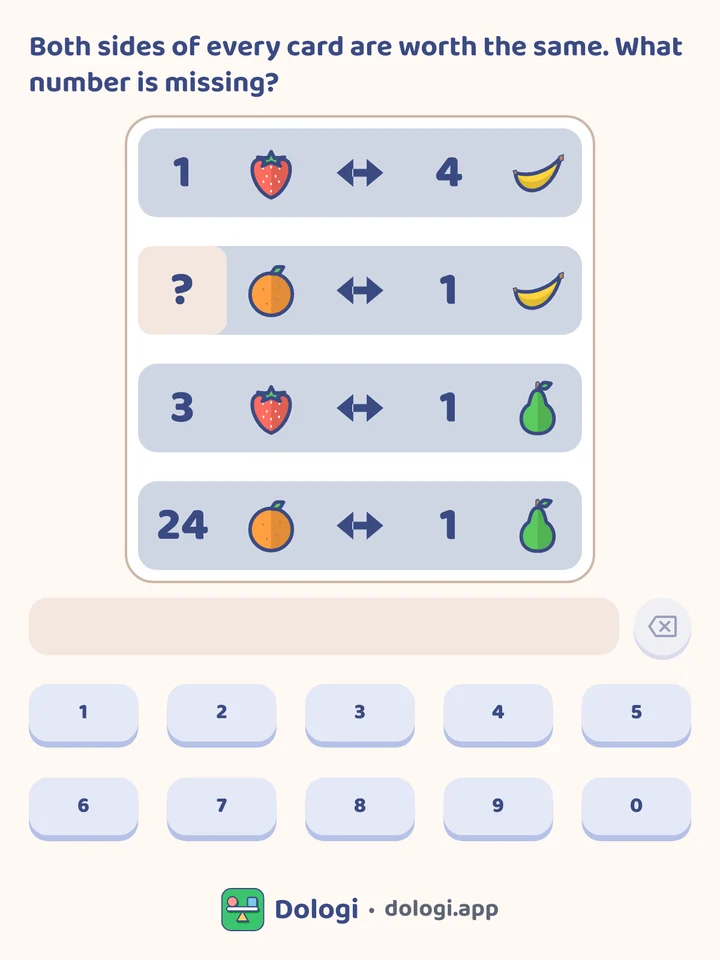
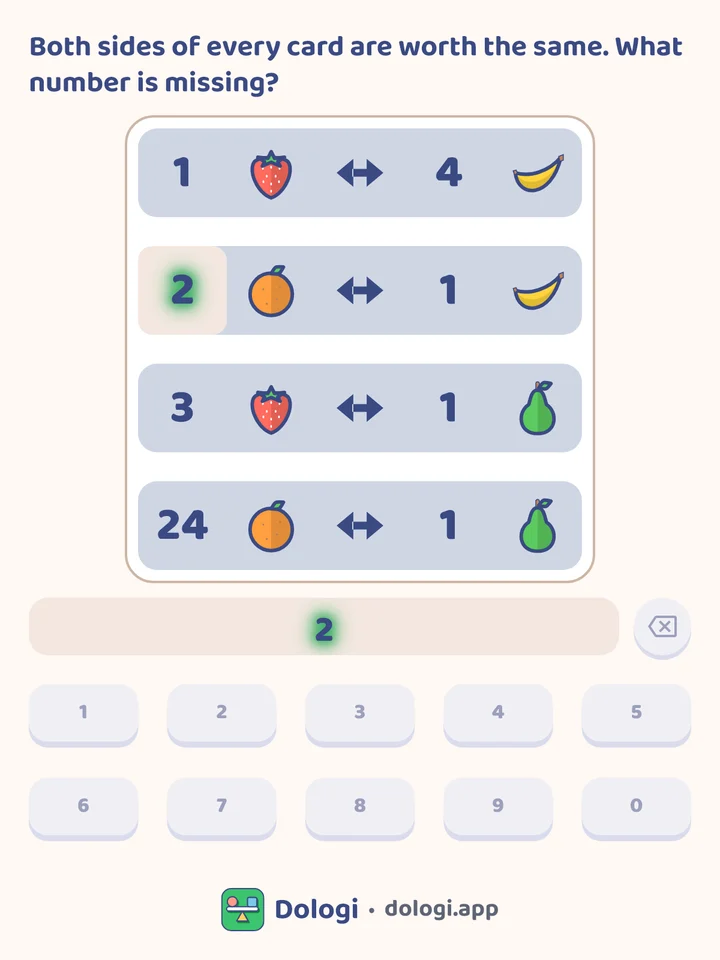
Ages 8–10
What it builds: The card with the question mark does not give enough on its own, so your child has to go around through the other cards, linking one fruit to another through a fruit in the middle, before finding the missing number. It practices chained reasoning together with multiplying and dividing. Keep playing: lay out a few toys, set trading rules between them, and challenge your child to trade from one toy to another through a toy in between.
Puzzle 6: Which instrument plays the most notes?
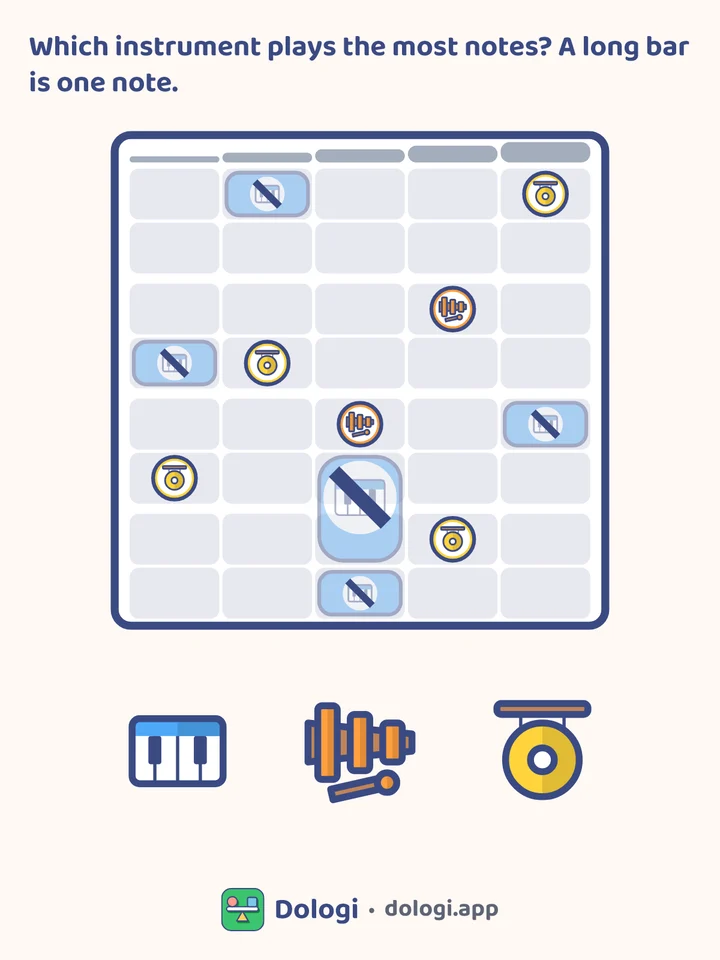
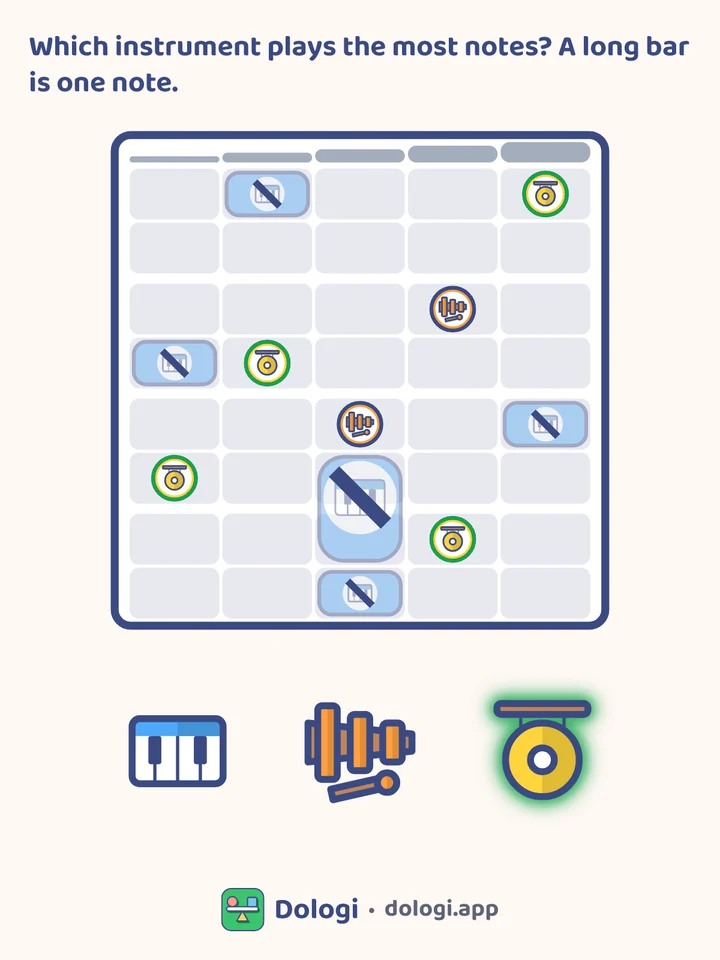
Ages 8–10
What it builds: Your child counts the notes of each instrument on the board, remembering that one long bar counts as one note and that the instrument with crossed-out notes is silent. Counting with conditions like this builds the habit of reading carefully, which they need for word problems. Keep playing: tap out a rhythm on two things (the table and a cup) and have your child count how many times each one was tapped.
Hint: The instrument whose notes are crossed out is silent. Those notes do not count.
Puzzle 7: Balance the beam
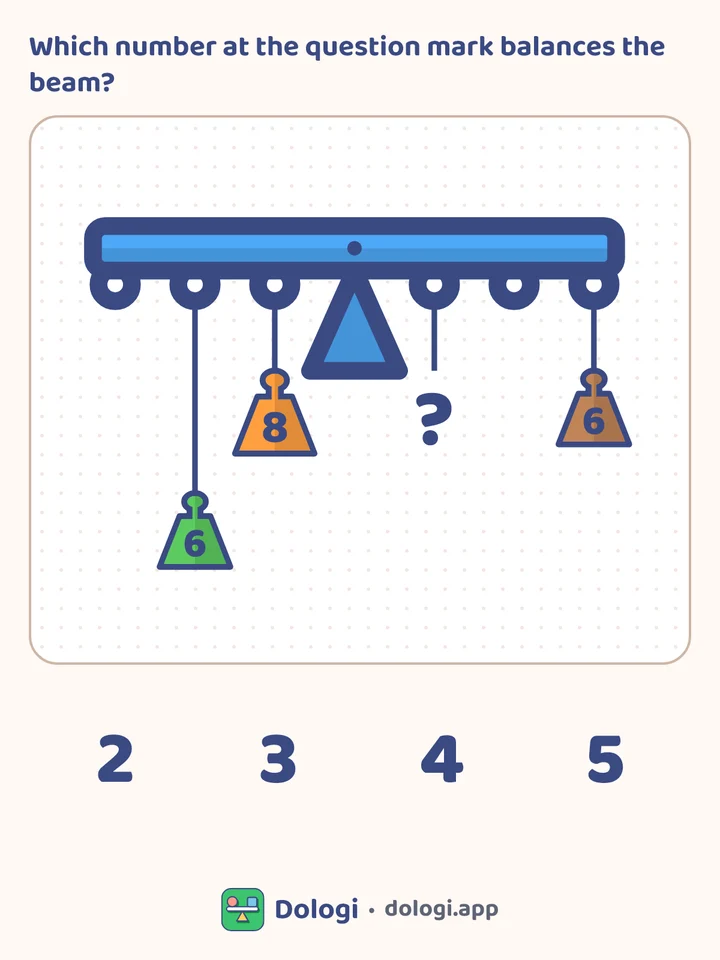
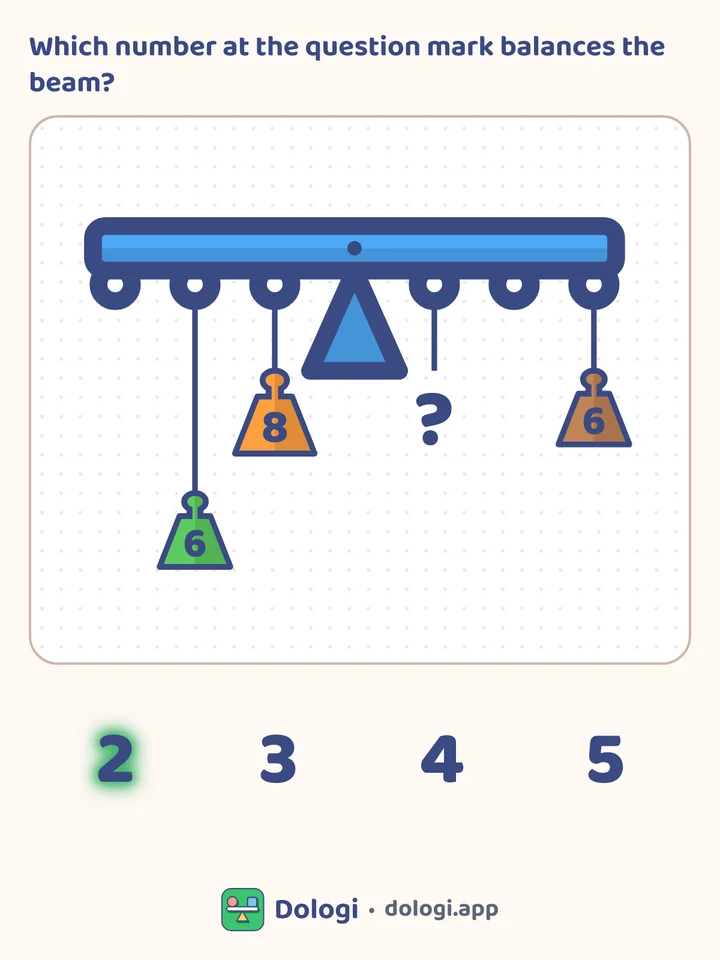
Ages 9–10
What it builds: The farther a weight hangs from the pivot, the harder it pulls, so your child multiplies the number on each weight by its distance from the pivot and compares the two sides. This is the lever principle they will meet in science class, and the reason a seesaw tips toward whoever sits farther out. Keep playing: balance a ruler on a pencil as a lever, put coins on both ends and work out together how to make it level.
Puzzle 8: Add and answer
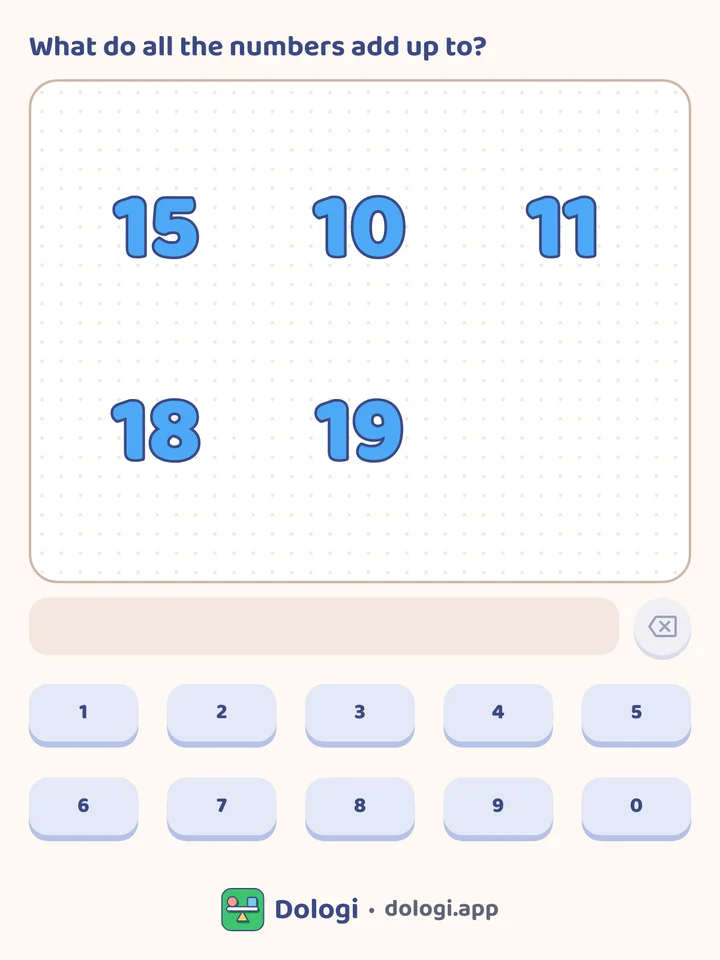
Ages 9–10
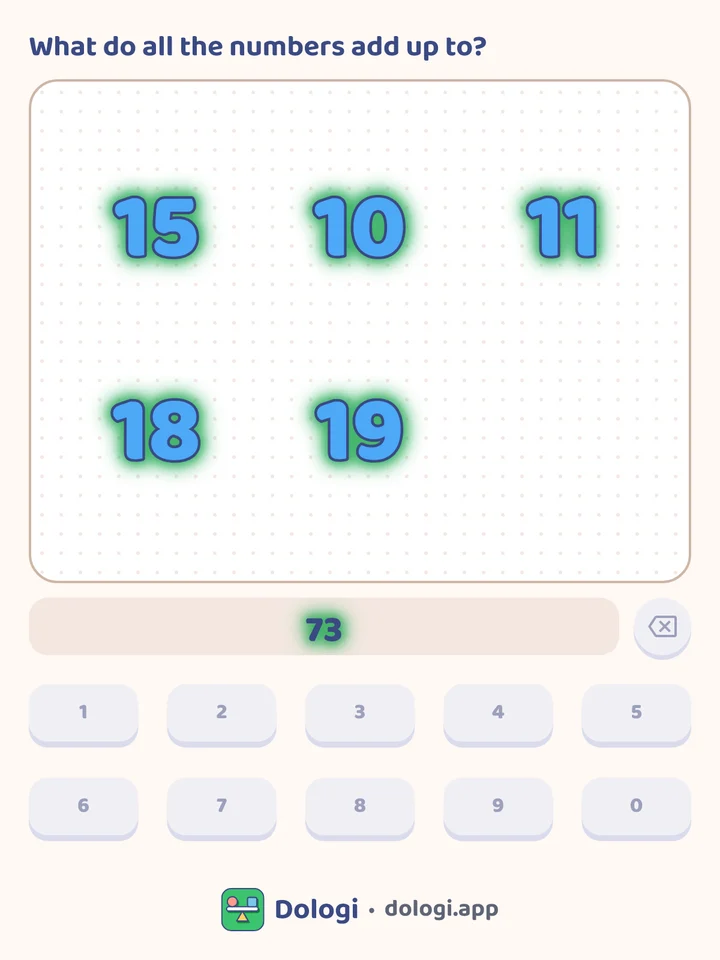
What it builds: Five two-digit numbers can be added one by one, but your child will be faster by first spotting pairs that make a round ten and then adding the rest. Splitting and regrouping numbers for mental math makes schoolwork quicker and less error-prone. Keep playing: on a car ride, challenge your child to add up the digits on license plates, and whoever gets the total first wins.
Puzzle 9: How many minutes?
Ages 9–10
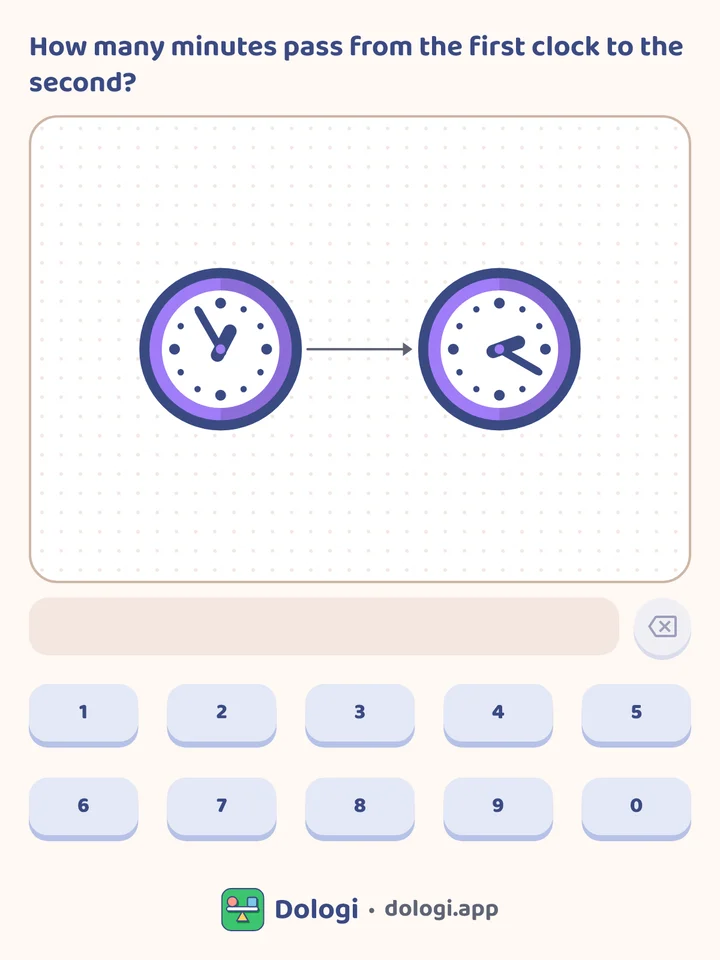
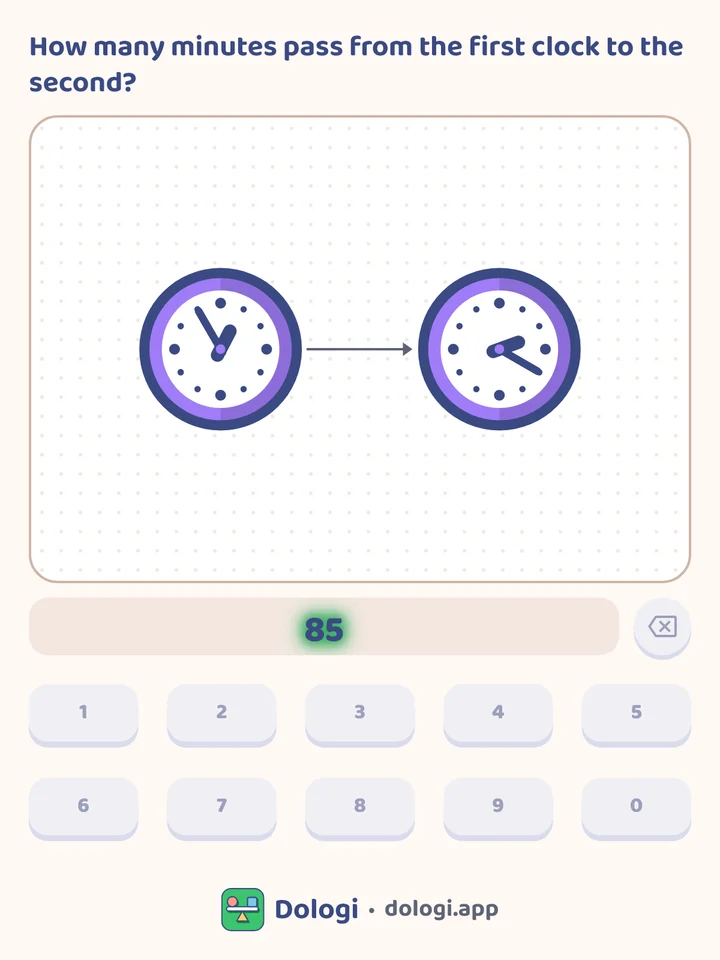
What it builds: Your child reads both analog clocks and works out the time between them; a good trick is to count up to the next full hour first and then add the rest. Working out elapsed time helps them know how long until school starts or how long something has lasted. Keep playing: when your child starts and finishes homework, have them read the clock each time and work out how many minutes it took.
Puzzle 10: Compare the baskets
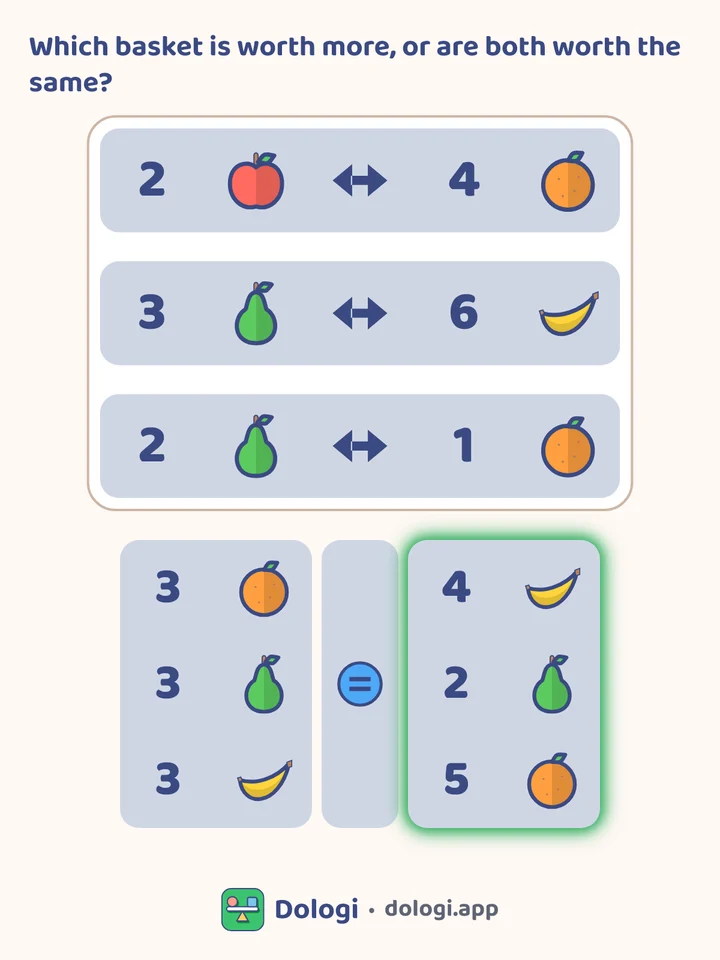
Ages 9–10
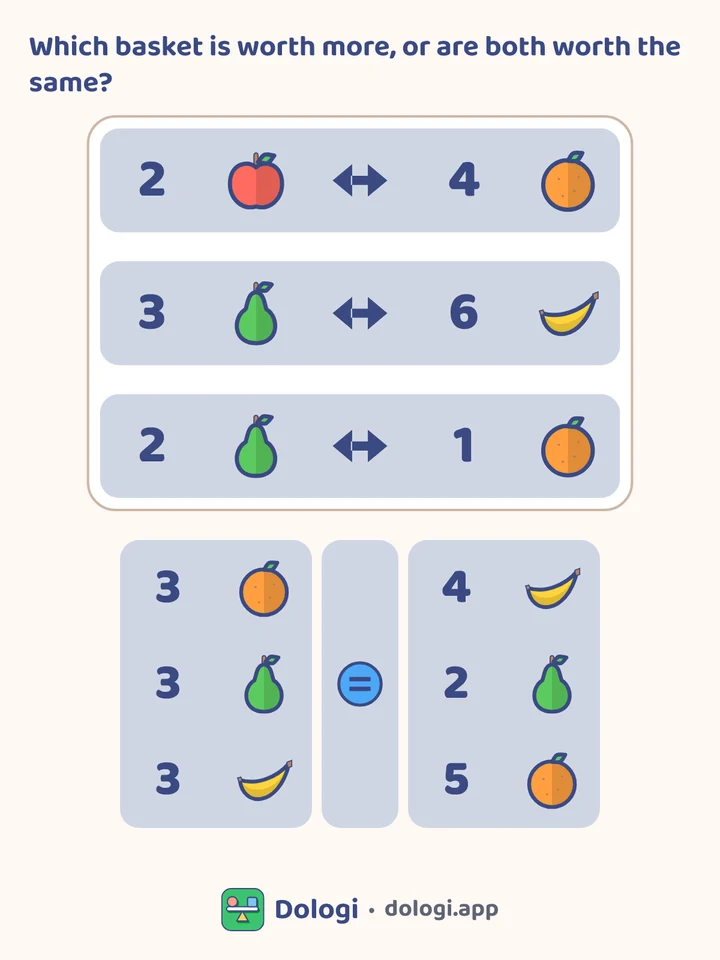
What it builds: Each basket holds three kinds of fruit, so your child has to use the trading cards to convert everything to one kind before adding and comparing. This is the hardest puzzle in the post: converting, multiplying and adding at once, while keeping track of each step to the end. Keep playing: make a snack price list in "candies" together, then compare which afternoon snack costs more.
Did your child enjoy these puzzles? The Dologi app has many more math puzzles of the same kinds, getting harder with age and with how your child plays, so each day they practice calculating and multi-step reasoning a little, as easily as playing a game.