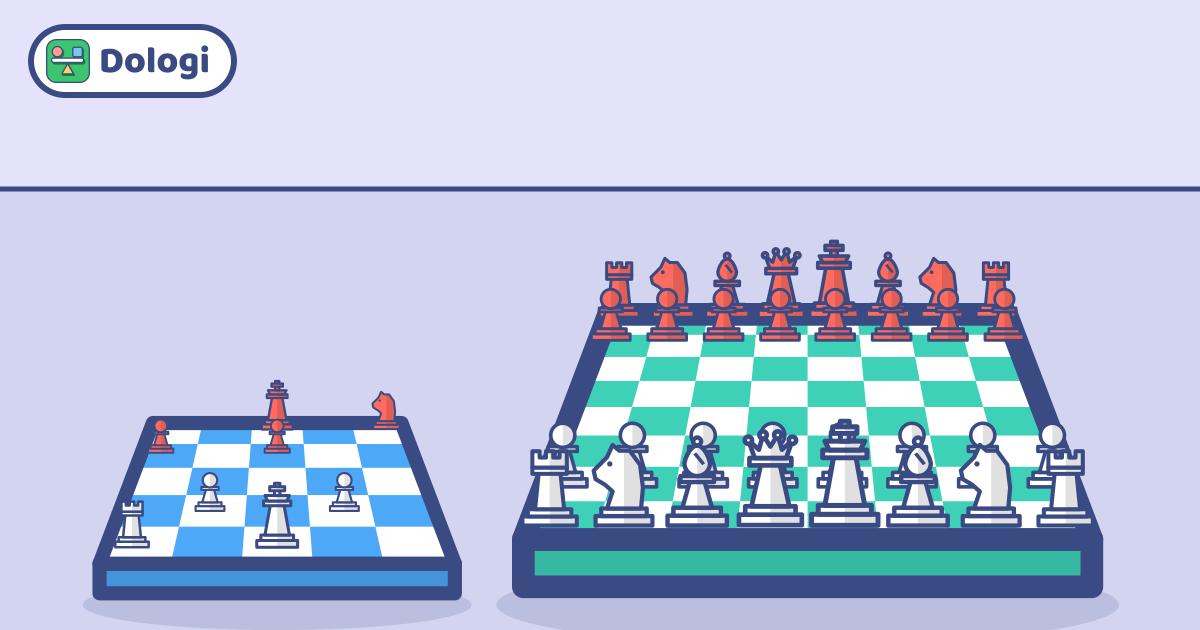
Your child has learned how every piece moves and proudly sets up all thirty-two of them. Fifteen minutes later, only a few pieces have been traded, their eyes wander to the TV, and the game quietly ends with nobody winning. Because the game never gets to the finish, your child has never actually seen what checkmate looks like.
You don't have to make them sit longer. Just shrink the board. On a 5×5 or 6×6 board, games are over in a few minutes and still end in checkmate, just like a real game. Below are three homemade setups, an endgame exercise, and thoughts on when to move up to 8×8.
Why a small board suits beginners
- Fewer pieces, fewer choices. Your child can take in the whole board at a glance instead of feeling swamped by possible moves.
- The action starts right away. The two armies meet within the first few moves, with no long stretch of shuffling pieces around.
- Games have an ending. Your child gets to play all the way through, including checkmate, the part that long games often never reach.
- Lots of games in one sitting. Lose one, set up the next right away. A loss feels lighter when the next game is seconds away.
Short games also match a young child's attention span. Three complete five-minute games beat one half-hour game abandoned in the middle.
Making the board and agreeing on house rules
You don't need to buy anything. On the board you already own, run a strip of masking tape around the 5×5 or 6×6 corner on your child's side, starting from a1, and leave the rest empty. Or draw your own board on a piece of cardboard, with squares about 1.5 inches across, alternating light and dark. A 5×5 board has an odd number of squares, so all four corners end up the same color. That's fine.
Before you start, agree on a few house rules for the small board:
- Pawns move one square at a time (no two-square jump on the first move) and still capture diagonally.
- No castling.
- A pawn that reaches the last row becomes a queen.
- Checkmate wins. If a player isn't in check but has no legal move, it's a draw, same as on the big board.
Setup 1: 5×5, kings and five pawns
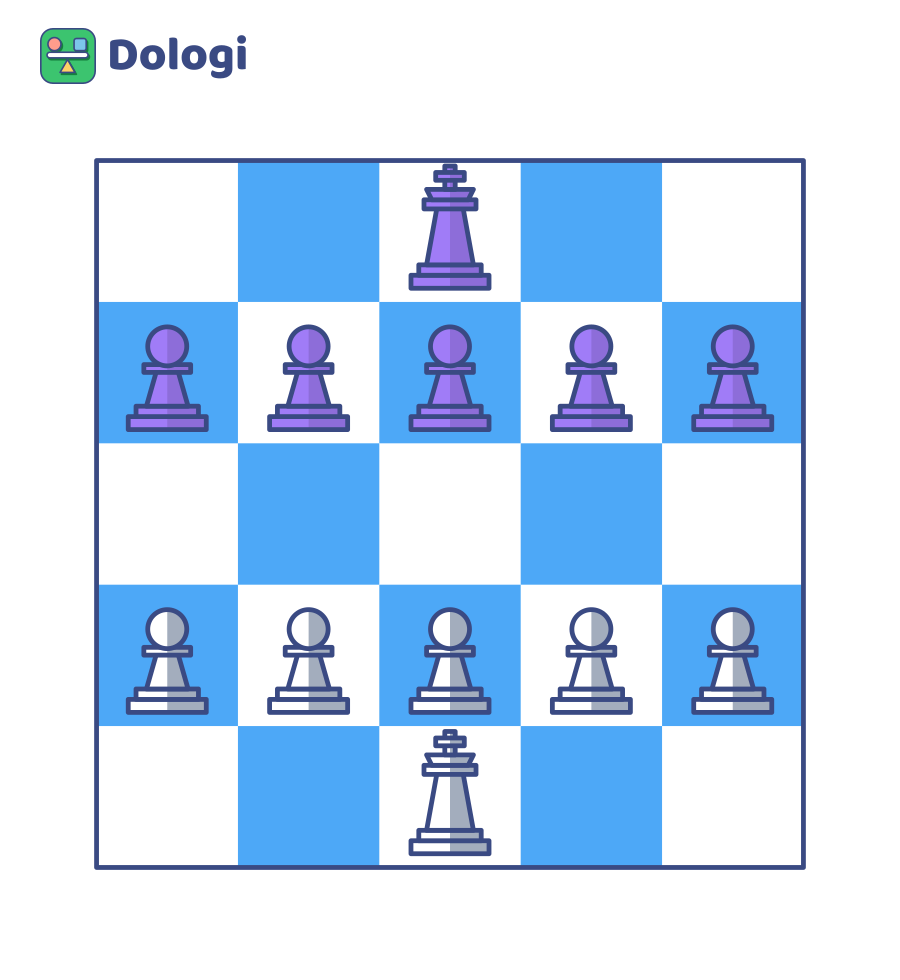
Each side gets a king in the middle of the back row and five pawns right in front. Only one empty row separates the two lines of pawns, so even the first move takes thought: if I push this pawn, can it get captured?
This setup works well for a child who has just learned the pawn and the king. They practice three ideas: a pawn moves straight but captures diagonally, a blocked pawn is stuck, and a pawn that sneaks through to the last row becomes a queen. Once they have a queen, they need to use it together with the king to deliver checkmate, a small endgame lesson built right into the game.
Setup 2: 5×5, add a rook and a knight
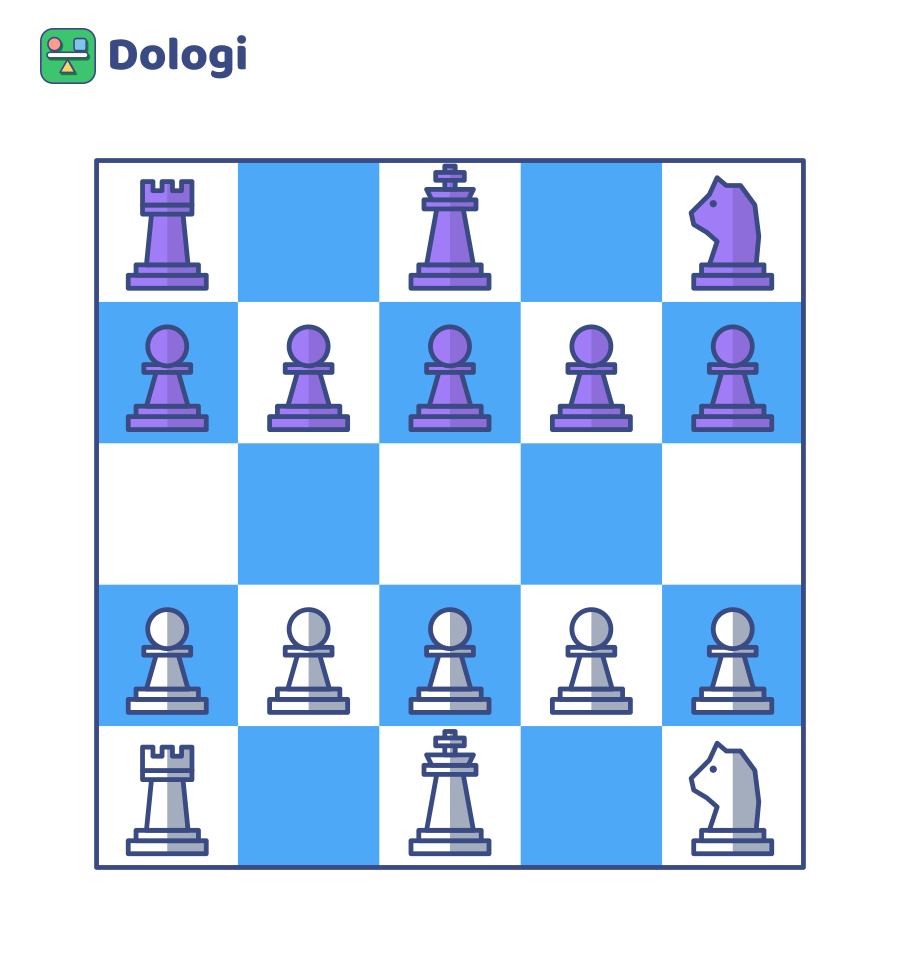
Keep everything from setup 1 and add a rook in the left corner and a knight in the right corner of the back row. These two pieces feel very different. The rook is strong once rows and columns open up, while the knight can hop over the wall of pawns from the very first move. Your child will figure out why it pays to open a path for the rook, and why the other side's knight is more dangerous than it looks.
If you're a much stronger player, take your own rook or knight off the board to even things out.
Setup 3: 6×6, everything except bishops
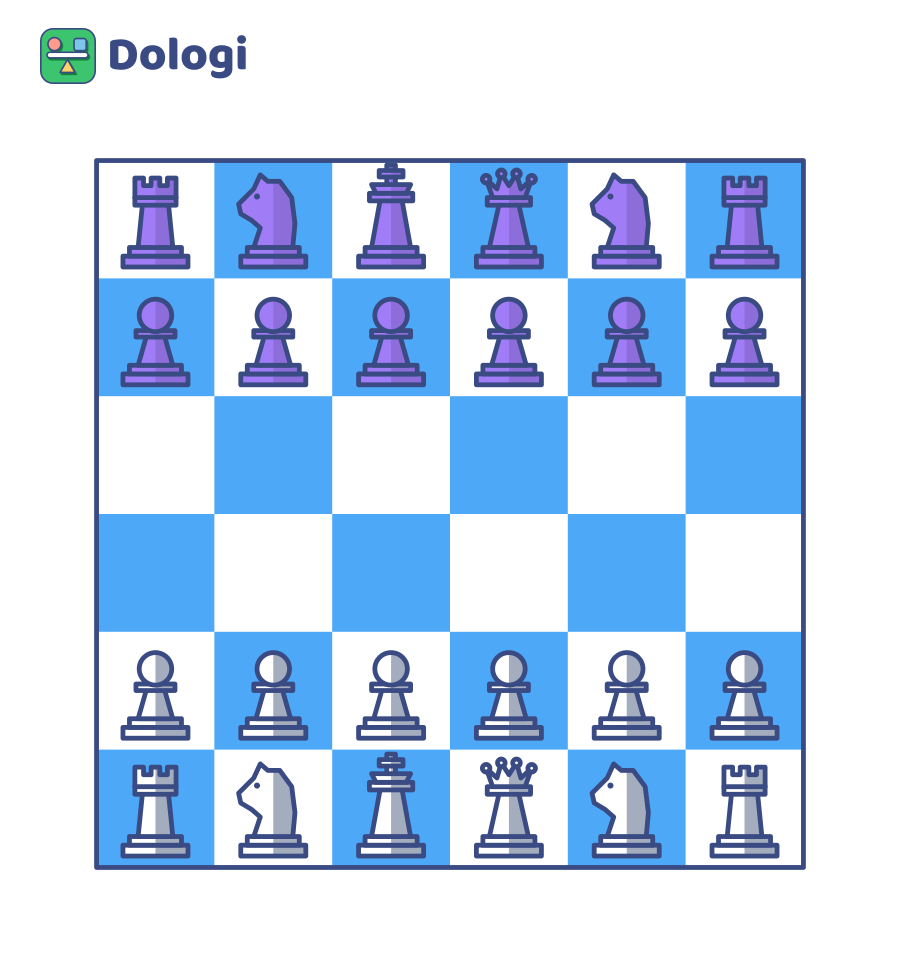
The back row only has six squares, so the bishops sit this one out: rook, knight, king, queen, knight, rook, with the white queen on a light square. Six pawns go on the second row, and Black mirrors White on rows 6 and 5, queen on d6. This is the closest to a real game: every type of piece except the bishop, a real middlegame, pawn promotion, and still much shorter than a game on 8×8.
Try this one once your child is comfortable with setup 2 and starts asking for "a bigger game."
Teaching endgames on a small board
Checkmating with a king and rook is hard for children on an 8×8 board. The other king keeps running away and your child gives up. On a 5×5 board that king has nowhere to hide, so the main idea clicks faster: push the king to the edge, bring your own king face to face with it, then check along the row with the rook.
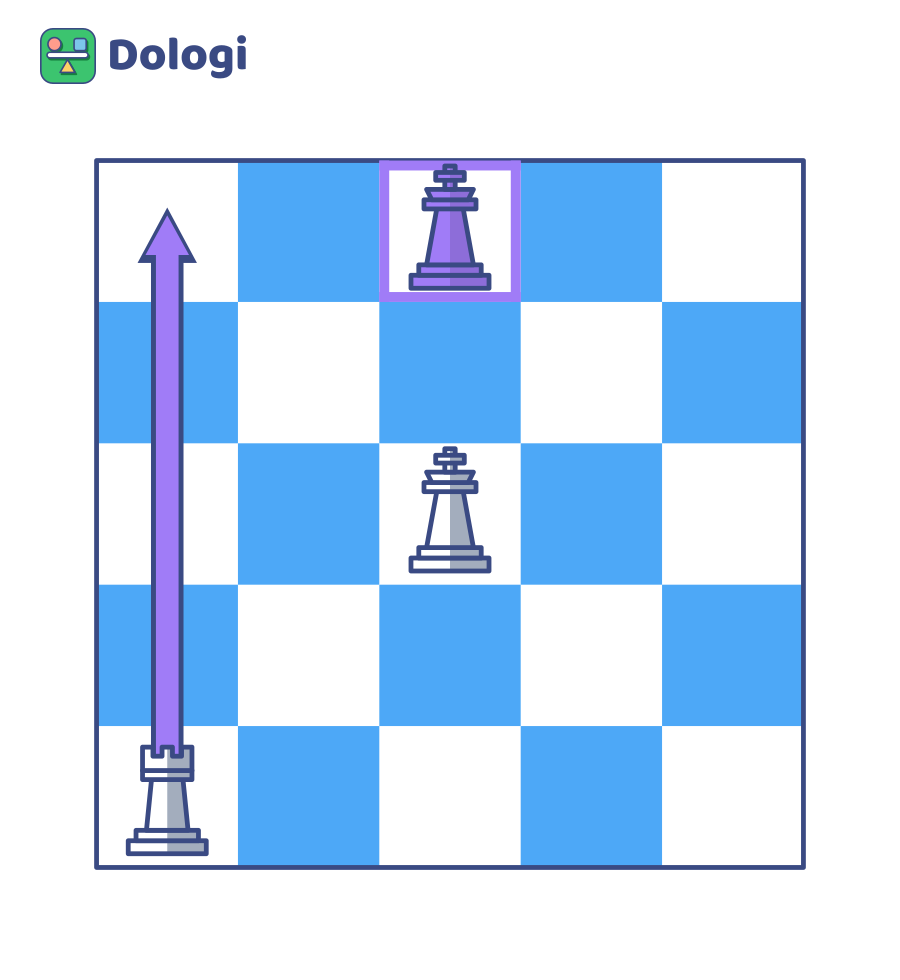
Give your child this puzzle: White to move and checkmate in one. Answer: the rook goes from a1 up to a5, and it's the only move that works. The black king on c5 is in check, the three squares below it (b4, c4, d4) are covered by the white king, and the two squares beside it (b5, d5) are on the rook's row, so there's no escape. Then ask a follow-up question: if this were an 8×8 board, where could the black king go? Your child will notice it could step up to b6, c6 or d6, which is why on a full board you have to drive the king all the way to the real edge before you can mate it.
You can practice king and queen checkmates the same way, and they're easier than king and rook.
When to move up to 8×8
There's no fixed age or milestone. A few signs your child may be ready:
- They play small-board games all the way through and still ask for another one.
- They notice when they're giving check, and know how to get out of check.
- They ask about bishops and castling, or say they want to "play like the grown-ups."
Moving up doesn't mean retiring the small board: quick games on school nights, a full game on the weekend. It's also handy for practicing one piece or one endgame.
In the Chess room of Dologi's Creative corner, there are six Little games, short games with only a few pieces such as Pawns and rook, Pawns and knights and King and pawns, which your child can play against a chess buddy or against someone sitting next to them. In Set up a board, your child can pick the Small 6 × 6 board, place a few pieces and tap Play with a chess buddy, just like your homemade board.
In short
- A 5×5 or 6×6 board gives short games with few pieces that still end in checkmate, a good fit for children who can't stay with a long game yet.
- Three setups from easy to harder: kings and pawns; add a rook and a knight; a 6×6 board with everything except bishops.
- A small board makes king and rook (or king and queen) checkmates easier to understand.
- Move up to 8×8 when your child finishes small games and asks for more, and keep the small board for quick games.
Read more: Make a homemade chess set with your child, Does chess help kids focus?