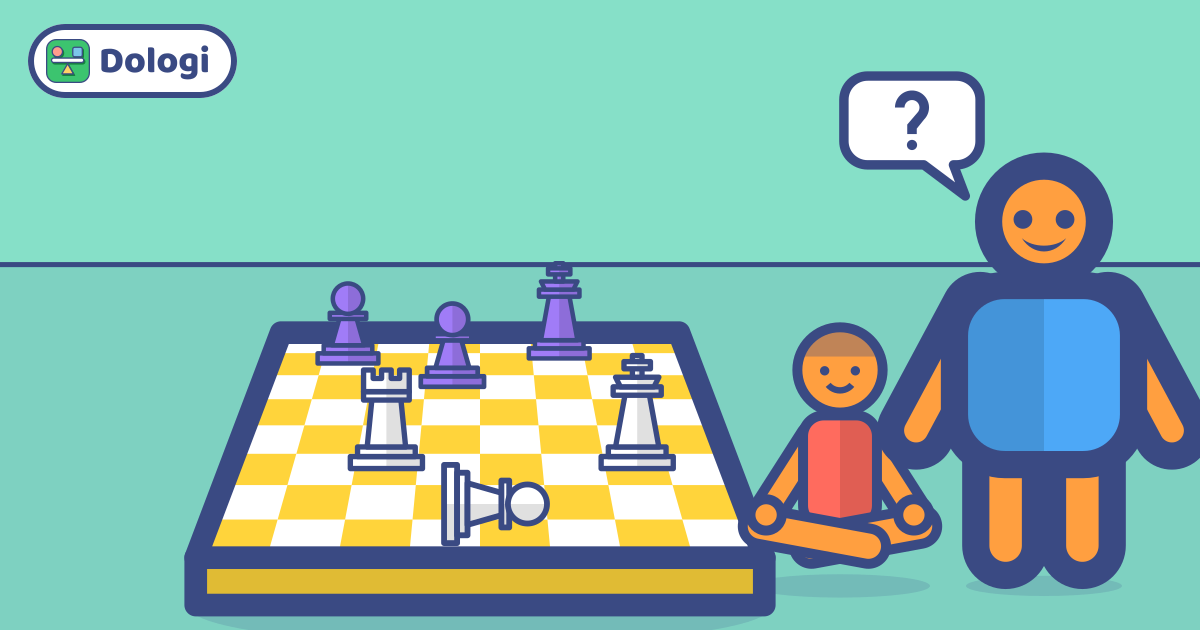
A few months ago your child begged to play chess every night. Now they drift away when the board comes out, find reasons to skip chess club after school, and one evening announce: "I want to quit chess."
Most parents jump to one of two answers: "You made a commitment, you're finishing the season," or "Fine, if you don't like it, stop." Either can be right, but only once you know why your child is fed up. This post helps you ask the right questions, try a few changes before deciding, and make a call that leaves your child on good terms with chess, whether they keep playing or not.
Ask before you decide
When your child says they want to quit, don't answer on the spot. Wait for a calm moment, not right after a loss, and ask:
- "What's the most boring part of chess right now?"
- "Is there any part you still enjoy?"
- "At club, who do you like playing with? Is anything bugging you there?"
- "If you could change one thing, what would it be?"
Listen all the way through before you respond. Often the answer shows your child is tired of one part of chess, not chess itself.
| What your child says | It might mean | Try this first |
|---|---|---|
| "I always lose" | Opponents are too strong for now | Find evenly matched opponents, play with odds, try small games with fewer pieces |
| "Club is boring" | Lots of listening, little playing | Talk to the coach, ask about a different group or another program |
| "My friend quit" | Chess was mostly about the friend | Invite another friend, play with siblings or cousins at home |
| "I'm tired" | Too many activities, not enough free time | Cut back sessions, keep each one shorter |
| "I like something else more" | They've found a new interest | Respect it and keep chess as a family game |
Change how they play before quitting for good
Sometimes what's wearing your child out is long, tense games, not the board itself. Shake things up for a few weeks:
- Pawn race: only pawns on the board; the first to get a pawn to the far side wins. Short games, and anyone can win.
- Puzzles instead of full games: one small position a night. Solve it and you're done, and nobody loses.
- Same team: sit on the same side and figure out the best move together.
- New opponents: grandparents, cousins, the kid next door. One game against someone their own age can be more fun than ten against an adult.
- New places: a travel set at the park, on a road trip or at a family reunion.
If losing has become so painful that your child avoids playing, My child cries every time they lose has more ideas on helping kids handle winning and losing.
A break is a real option
Taking a break isn't the same as quitting. You might say, "Let's take a month off chess, and then we'll talk about it again." During the break:
- Don't bring chess up or compare your child with friends who are still playing.
- Leave the board somewhere they can see it. If they pick it up on their own, play along.
- When the month is up, ask, "Do you miss chess at all?" "No" is an acceptable answer.
Some kids come back after a few weeks feeling much lighter. Some don't, and that tells you something useful about what they really enjoy.
Short and regular beats long and rare
If your child agrees to keep going, aim for a rhythm that fits them rather than long, heavy sessions:
- About fifteen minutes a few times a week (a rough guide, every child is different) works better than two hours on Saturday.
- Stop while they're still having fun, not when they're worn out.
- One small thing per session: a puzzle, a quick game, or looking back at a nice move.
- Let your child choose what to do today. When they get to choose, chess feels like theirs, not homework from you.
When they've tried and still want to stop
If you've talked it through, changed how you play and taken a break, and your child still doesn't want to continue, respect their choice. A few things to avoid:
- Don't bring up what you spent on lessons or that fancy chess set to keep them going.
- Don't call them a quitter. They gave it a real try, and that takes persistence too.
- Don't pack the board away for good. Chess can still be a family game you pull out now and then.
What they learned, how the pieces move and the habit of thinking before moving, stays with them. Plenty of people come back to chess years later. If your child seems to lose interest in many things they used to enjoy, have a chat with their teacher so you can look at the bigger picture together.
If your child wants a low-pressure way back in, the Chess room in Dologi's Creative corner has Challenges: positions from easy to hard, where your child can start anywhere, and each solved one gets a ✓ so they can see how far they've come. When the Creative corner is turned on, a short chess puzzle sometimes shows up in a lesson, and it always has a Skip button: on days your child isn't in the mood, they can skip it with no reminders.
In short
- When your child says they want to quit, ask first to find out which part bores them: losing, a tense class, a friend who left, or a new interest.
- Change how you play (pawn races, puzzles, same team, new opponents) before giving it up.
- A break with an agreed end date is a good option, and short, regular sessions are easier than long, rare ones.
- If they've tried and still want to stop, respect it, skip the guilt, and keep the board within reach.
Read more: Chess class, chess club or learning at home: which is right for your child?, When your child gives up on hard problems: helping children keep trying and not fear mistakes