"Can I have it?" Most parents hear this at the store, in front of a screen, or the moment a friend shows off something new. Saying yes or no is quick, but it leaves your child out of the thinking. A small sorting game at home can change that: your child learns to stop and ask, "Do I need this, or do I want it?"
This game works for children aged roughly 5 to 10 and takes about twenty minutes. It is not about saying no to everything. Wanting things is normal and fine. The goal is to notice the difference, and to see that choosing one thing usually means not choosing another.
Need and want, in a child's words
Keep the definitions short and concrete:
- A need is something we cannot do well without: food, a coat for the rain, shoes that fit, a bed to sleep in.
- A want is something that makes life more fun or nicer, but we would be fine without it: a new toy, a balloon, a second ball when we already have one.
Give a few clear examples first, then ask your child to come up with their own. If they say "candy is a need", don't correct them straight away. Ask "What would happen if we didn't have any?" and let them work it out.
| Clearly a need | Clearly a want |
|---|---|
| Bread, rice, fruit | A toy from the shelf at the checkout |
| A raincoat when it rains a lot | A balloon at the fair |
| Shoes in the right size | A sticker album |
| A toothbrush | A third teddy bear |
Making the two baskets
You need:
- Pictures of things: cut them from old catalogs or flyers, or draw them on small cards together. Choose a mix of food, clothes, toys and household things.
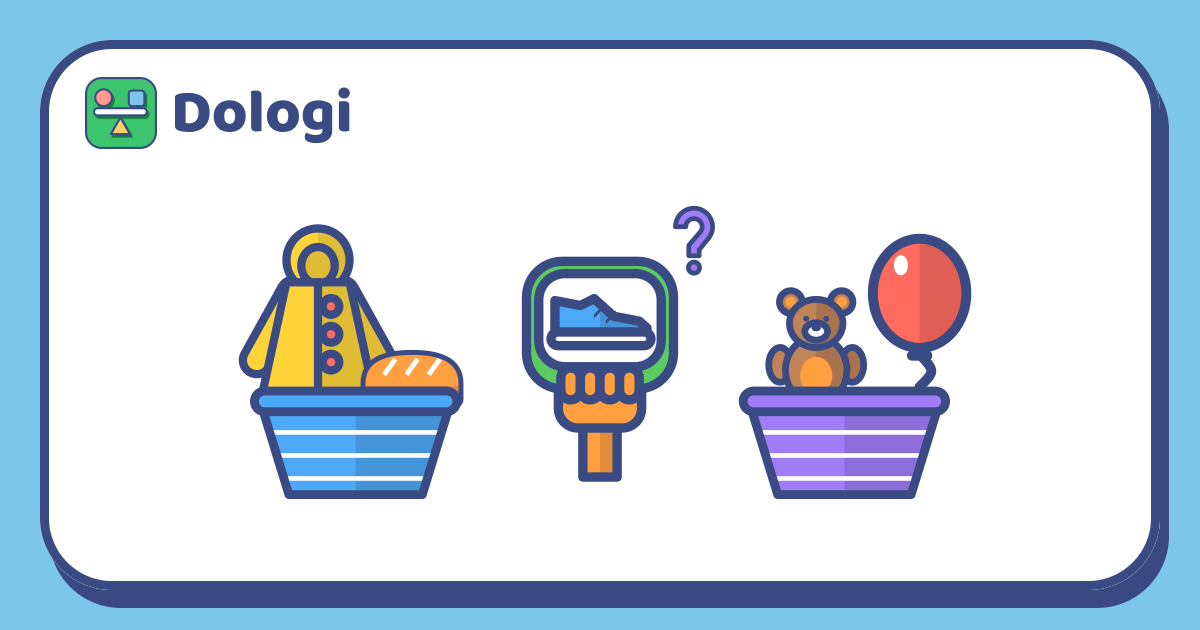
- Two baskets or boxes, one for "need" and one for "want". A drawing on each (a loaf of bread, a balloon) is enough for children who do not read yet.
- A third spot on the table for "not sure".
Your child picks up one picture at a time, says what it is, and puts it in a basket. Ask for a reason each time: "Why does it go there?" The reason matters more than the basket. Sorting by a reason, not just by color or shape, is a step up from the sorting games younger children play.
The in-between pile
The most interesting pictures are the ones that do not fit neatly. New shoes, when the old ones still fit. A winter coat in summer. A book: is it a need for school or a want for fun?
Put these in the "not sure" spot and talk them through with a few questions:
- What do we already have? New shoes are a want if the old ones fit, and a need if they are too small.
- When would we use it? A raincoat is a need in the rainy season and can wait in the dry season.
- What happens if we wait? If nothing bad happens, it is probably a want.
Your child will discover that the same thing can move from one basket to the other depending on the situation. That is real reasoning: the answer depends on the conditions, not only on the object.
Five things and a handful of beans
Now add a choice. Lay out five pictures your child likes, a mix of needs and wants. Give them a small number of beans, enough to "buy" only two. Each picture costs one bean (for older children, give the pictures different prices in beans).
Your child chooses, puts the beans on their two pictures, and explains why. Then ask:
- "Which ones did you leave out? How do you feel about that?"
- "If you had one more bean, what would you add?"
- "Did you choose a need, a want, or both?"
The beans make one idea easy to see: choosing this means not choosing that. There is no right answer here. A child who picks two wants is not wrong; they have simply made a choice and noticed what they gave up.
Taking it to the store
After a few games at home, the question travels well. When your child asks for something, try:
- "Need or want?" Let them answer first.
- "Let's write it on the wish list." A want can go on a list and be looked at again in a week. Many wishes fade by then, and the ones that stay are worth a conversation.
- "Which would you swap it for?" If your child gets a little allowance, they can compare the new thing with something else they wanted.
Stay calm and curious, not strict. The aim is a habit of thinking, not a rule about spending.
| Age (rough guide) | What to try |
|---|---|
| 5–6 | Two baskets with very clear examples; one reason for each picture |
| 7–8 | Add the "not sure" pile; choose two out of five with beans |
| 9–10 | Different bean prices; a wish list checked again a week later |
In Dologi, the Sort into groups puzzles ask children to put things into groups by a shared feature they can see, such as color or shape. The need-or-want game uses the same sorting skill, with one difference: the reason for each group comes from your family's situation, so it is a good one to talk through together.
In short
- A need is something we cannot do well without; a want makes life nicer but we would be fine without it.
- Sort pictures into two baskets and ask for a reason each time; keep a "not sure" spot for in-between items.
- Choosing two out of five with a few beans shows that choosing one thing means leaving another.
- At the store, ask "need or want?" and use a wish list, calmly and without lecturing.
Read more: Teaching children to make decisions: what you gain and what you give up, Teaching children about money: recognizing coins, saving and shopping together, Sorting and comparing: the first thinking skills children use