"Two, four, six, eight…" Many children can chant it before they know what it means. When they discover that the numbers they're saying follow a rule, something clicks: numbers stop being a long list to memorise and start to look like a pattern you can predict.
Number patterns sit where maths and pattern-spotting meet. This article suggests hands-on ways to explore odd and even numbers, counting in twos and other steps, and simple "what comes next?" games, starting with objects and movement before moving to written numbers.
What is a number pattern?
A number pattern is a list of numbers that follows a rule:
- Adding the same amount each time: 2, 4, 6, 8 (add 2 each time).
- Repeating: 1, 2, 1, 2, 1, 2.
- Growing in other ways: 1, 2, 4, 8 (doubling), for older children.
For young children, the rule is much easier to see with objects and bodies than with written numbers. Beads, steps and claps come first; digits on paper come later.
Odd and even with pairs
The simplest way to understand odd and even is to make pairs.
- Take a handful of objects: socks, buttons, toy cars.
- Put them in pairs, side by side, like children holding hands.
- Look at what's left. If everyone has a partner, the number is even. If one is left on its own, it's odd.
- Try different amounts and sort them: "6 is even, 7 is odd, 8 is even…"
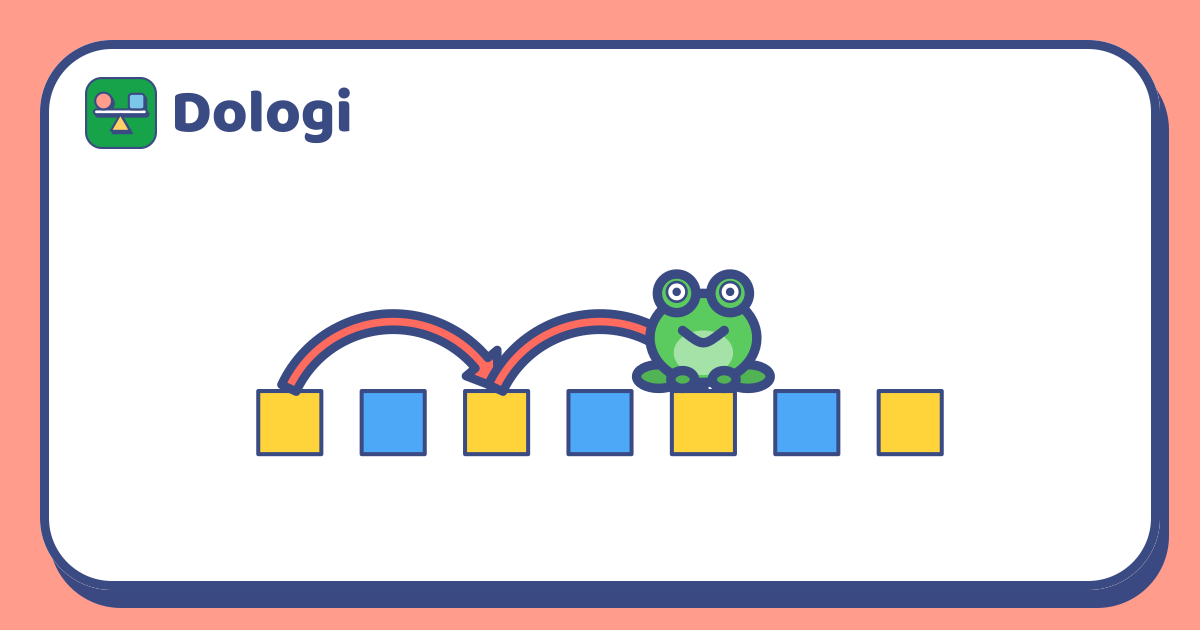
Children soon notice that odd and even take turns: even, odd, even, odd. Lining up squares in two alternating colours, like a path of tiles, makes this rhythm visible.
Skip counting with hops and claps
Skip counting means counting in steps larger than one: 2, 4, 6 or 5, 10, 15. Movement makes it stick.
- Hop on every other tile or paving stone, saying the numbers only on the tiles you land on.
- Whisper and shout: count to 20, whispering the odd numbers and saying the even ones loudly.
- Clap on every second (or fifth) number while counting out loud.
- Count pairs of shoes by the door: 2, 4, 6. Count hands in the family: 5, 10, 15.
- Count coins of the same value, if you have them, in fives or tens.
Start with twos, then fives and tens, which are especially useful later for telling time and money.
Colouring a number grid
A grid of numbers in rows of ten is a wonderful way to see patterns.
- Draw or print a grid from 1 to 20 for younger children, or up to 100 for older ones.
- Colour every second number in one colour. Columns of colour appear.
- On a new grid, colour every fifth number. Two neat columns appear.
- Try every third number. Diagonal lines appear. "Why do you think that happens?"
You don't need to explain the maths behind every pattern. Noticing and wondering is the point.
"What comes next?" with numbers
Once your child is comfortable with steps, play quick guessing games, out loud or with number cards.
| Approximate age | Example | What it practises |
|---|---|---|
| 5–6 | 2, 4, 6, ? | Counting on in twos |
| 6–7 | 5, 10, 15, ? | Counting in fives |
| 7–8 | 20, 18, 16, ? | Counting back in steps |
| 8–10 | 1, 3, 6, 10, ? | A rule that changes (add 2, then 3, then 4) |
Ages are rough guides; every child is different. The best version of the game is when your child makes up a rule and you have to guess it. Inventing a pattern requires them to understand it fully.
In Dologi, "Next number" puzzles in the Patterns topic show a row of numbers that follows a rule, and children work out which number comes next.
In short
- A number pattern is a list of numbers that follows a rule, such as adding the same amount each time.
- Explore odd and even by making pairs, and notice that they take turns.
- Skip count with hops, claps and objects, starting with twos, then fives and tens.
- Colour number grids to see patterns, and play "what comes next?", including rules your child invents.
Read more: Patterns all around: why children love "what comes next?"