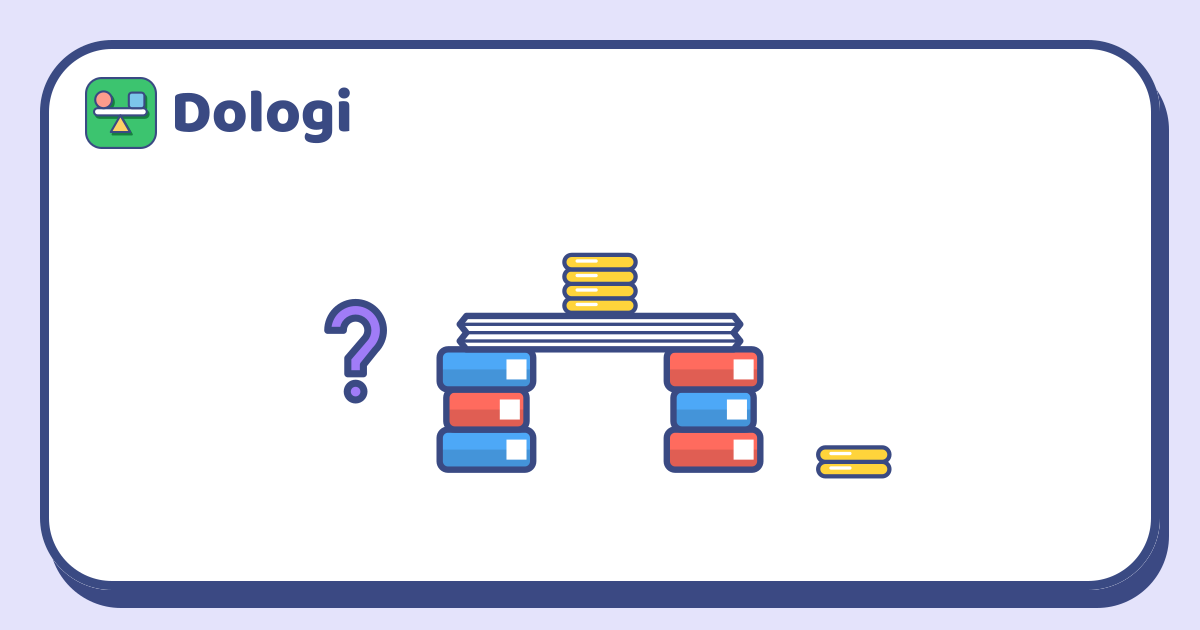
Lay a sheet of paper between two piles of books and put a coin in the middle. It usually sags and drops straight away. Now fold the same sheet into a fan and try again: often it carries ten, twenty or even more coins. Same paper, same coins, a completely different result.
That surprise is what makes the paper bridge challenge such a good home experiment for children of roughly 5 to 12. It needs almost nothing, it takes half an hour, and it leads to a big idea that engineers use every day: the shape of a material matters as much as the material itself.
What you need
- Paper: several sheets of the same ordinary printer paper. Using the same kind every time keeps the test fair.
- Two piles of books of equal height, set about a ruler's length apart.
- Coins of one kind, or other small identical weights such as metal washers. Keep coins away from children who still put things in their mouths.
- Optional: sticky tape, a ruler and a sheet for recording results.
Your child can do every step here. Your role is to ask questions and help keep each test the same.
Guess first: the flat sheet
Start with the plainest bridge: one flat sheet laid across the gap. Before placing anything, ask: "How many coins do you think it will hold?"
Then add coins one at a time to the middle of the sheet, counting aloud, until the bridge sags so far that the coins slide off or the paper falls. Write down the last number it held. For most flat sheets that number is very small, often zero or one, and many children are amazed.
Ask your child to describe what happened: "Where did it bend first?" "Did it bend in the middle or at the edges?"
Try different shapes
Now give your child a fresh sheet each time and challenge them to change only the shape. Some ideas to try:
| Bridge shape | My guess | Coins held |
|---|---|---|
| Flat sheet | ||
| Edges folded up on both sides, like a gutter | ||
| Folded like a fan, folds running from one pile to the other | ||
| Rolled into a few tubes, side by side | ||
| Fan with a flat sheet laid on top as a road |
Younger children can choose a shape and guess "more" or "fewer" than the flat sheet. Older children can predict a number, then compare their guess with the result.
The fan usually needs a moment of thought: the folds must run across the gap, from one pile of books to the other, not along it. If your child folds it the other way, let them test it anyway. Discovering that the same folds work in one direction and not the other is part of the lesson.
Why folds make paper stronger
A flat sheet is very thin, so it bends easily when something presses down on it. When you fold the paper, part of it stands up on its edge, and paper is much harder to bend that way. Try it with your child: hold a sheet flat and push down on it gently, then hold the same sheet on its edge and push down on that edge. The difference is easy to feel.
A fan-folded bridge is full of little walls standing on edge, each one helping to carry the weight. The same idea is all around your home:
- Corrugated cardboard: tear the edge of a cardboard box and look inside. Between the two flat layers there is a wavy layer, just like the fan.
- Metal roofs and some fences are pressed into waves for the same reason.
- Bridges, shelves and steps often use folded or ribbed shapes rather than flat slabs.
You don't need to use words like "force" or "stiffness". "Folding makes the paper stand up, and standing paper is harder to bend" is enough for most children.
Make it fair, then make it harder
Once your child has a favourite design, talk about what makes a test fair:
- Same kind of paper, same gap between the books, coins always placed in the same spot.
- Change only one thing at a time: the shape, the number of folds, or the width of the gap.
- Count the same way each time, for example "the last number before it fell".
Then raise the challenge. Move the books further apart. Use only half a sheet. Allow only two pieces of tape. Older children can draw a simple bar chart of the results, with one bar per design, and look for the winner at a glance.
In Dologi, the "Build from the plan" puzzle asks children to find the stack of cubes that matches a plan drawn from above, another way of thinking about how parts fit together into something solid.
In short
- A flat sheet of paper across two piles of books holds very few coins; the same sheet folded the right way can hold many.
- Guess first, add coins one at a time, and record the last number each bridge held.
- Folds make paper stand on its edge, and paper on its edge is much harder to bend: the same idea as corrugated cardboard.
- Keep tests fair by changing one thing at a time, then make the challenge harder.
Read more: How many coins can a paper boat carry?